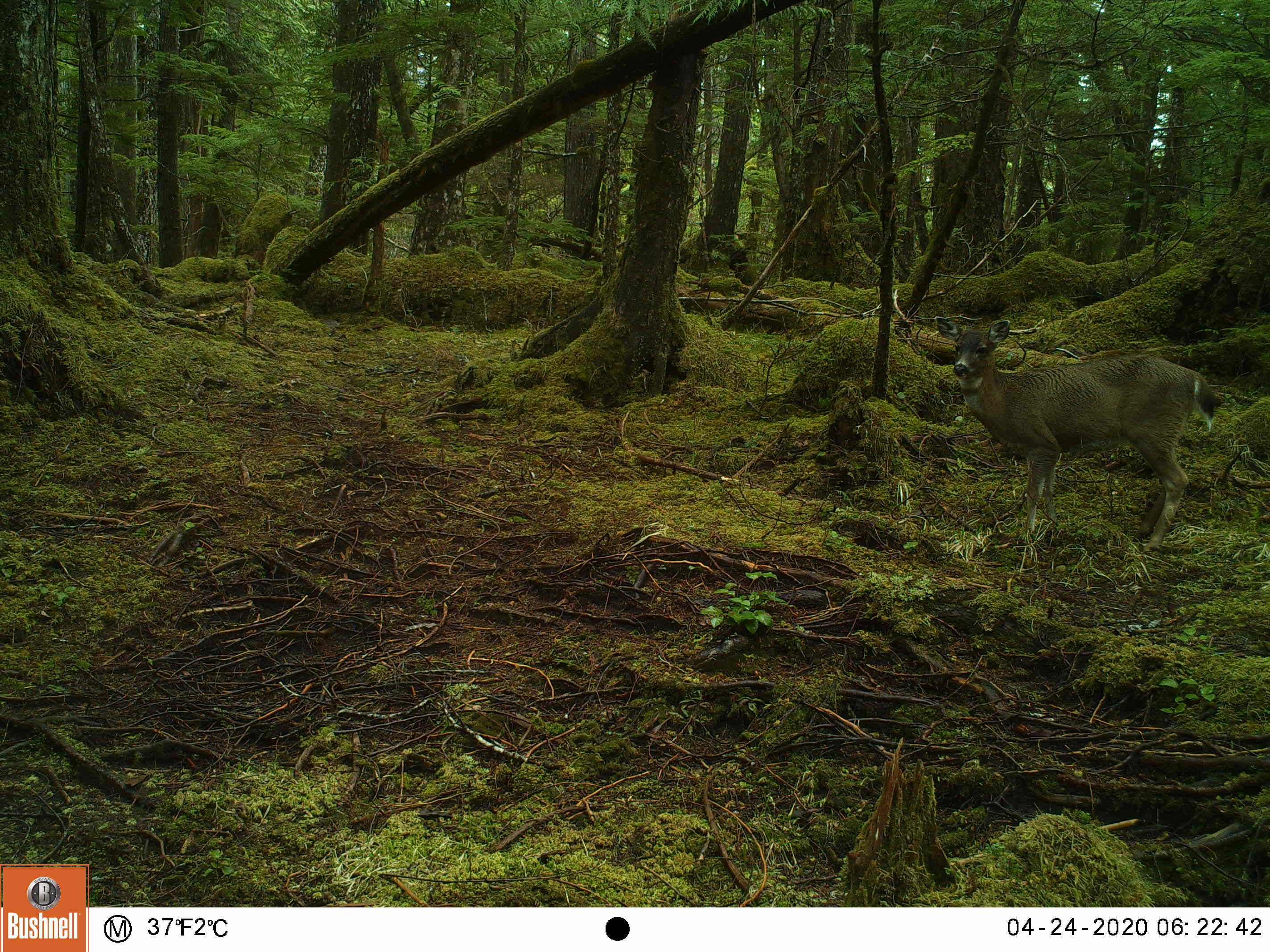
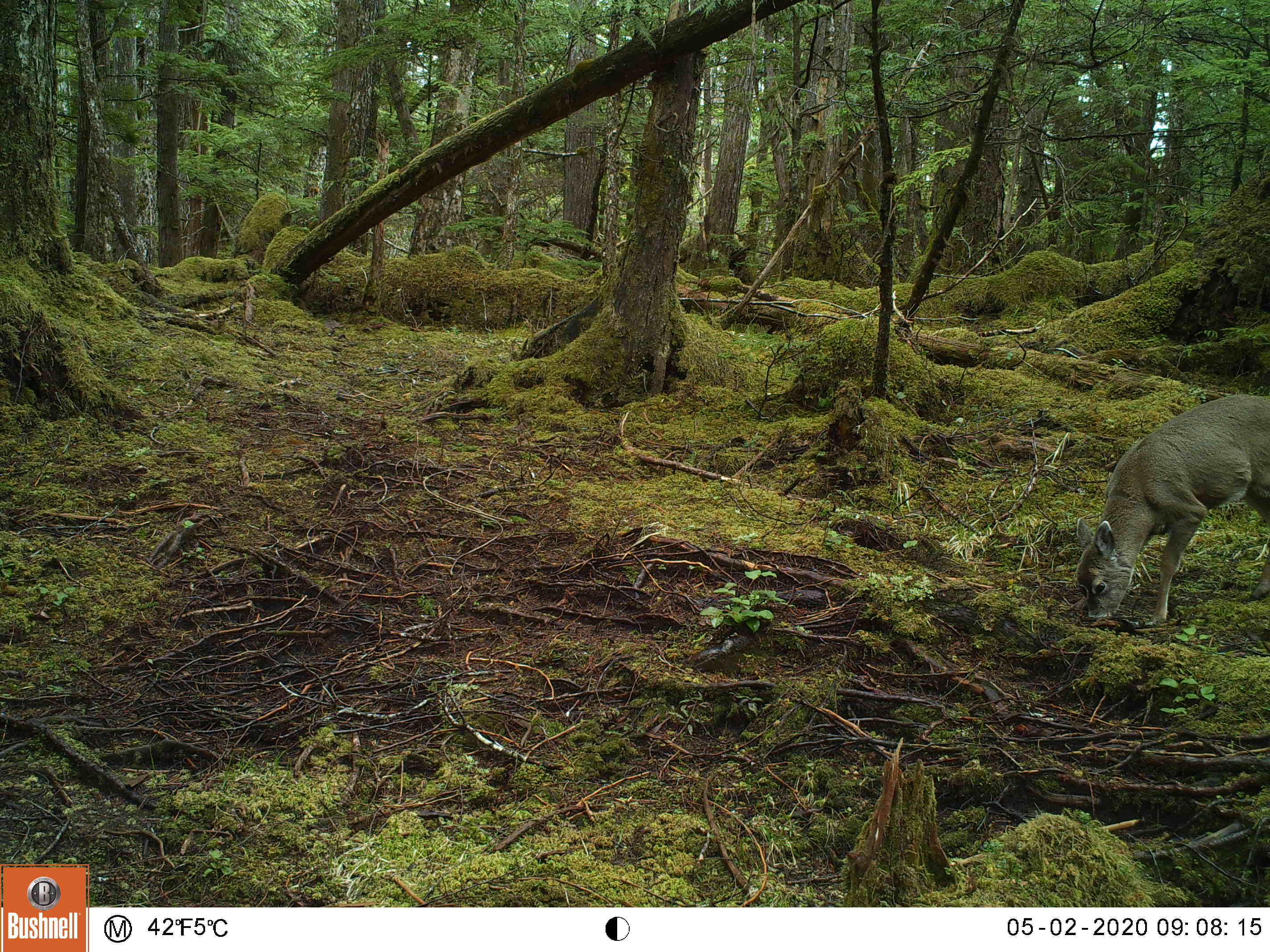
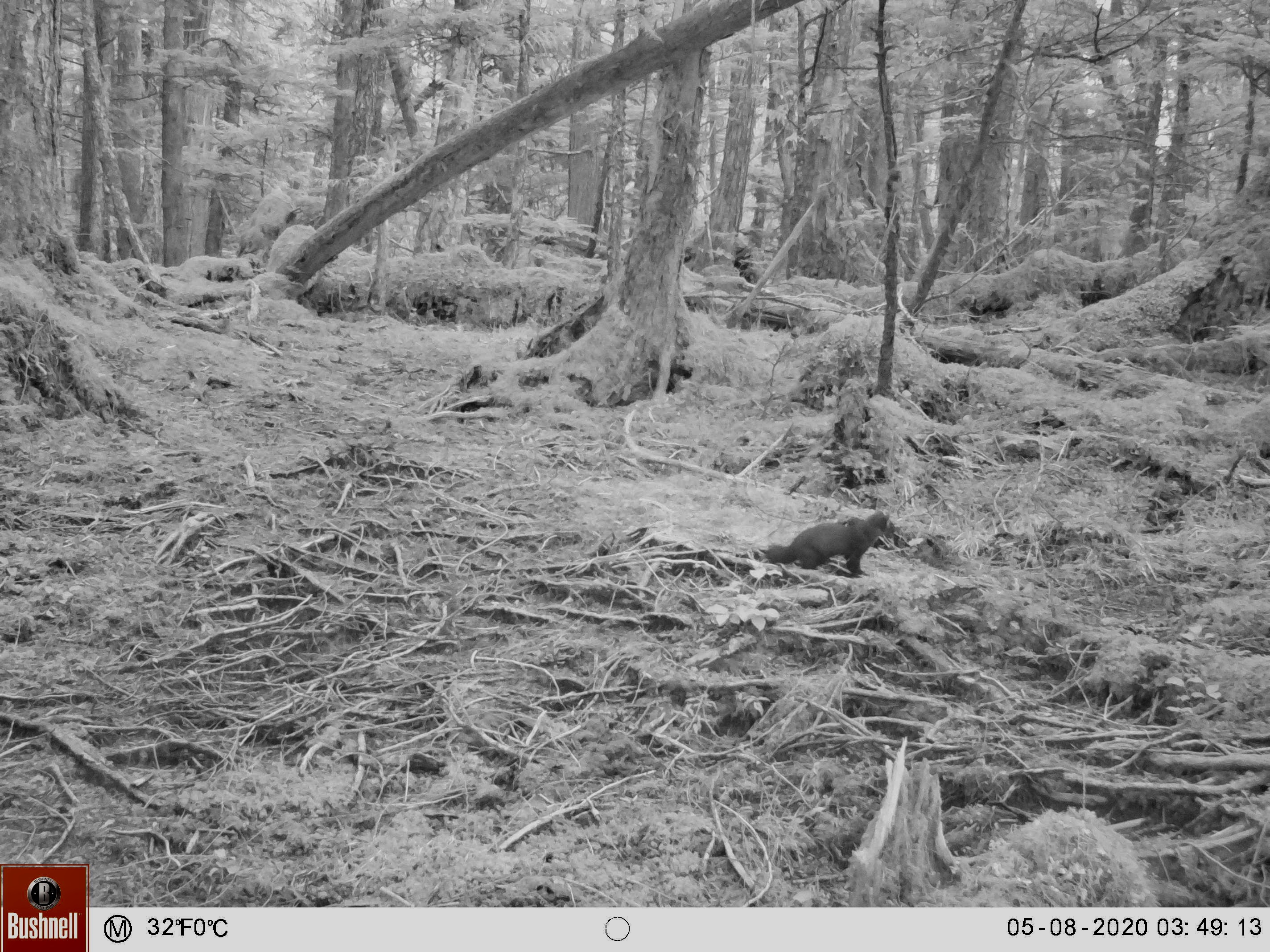
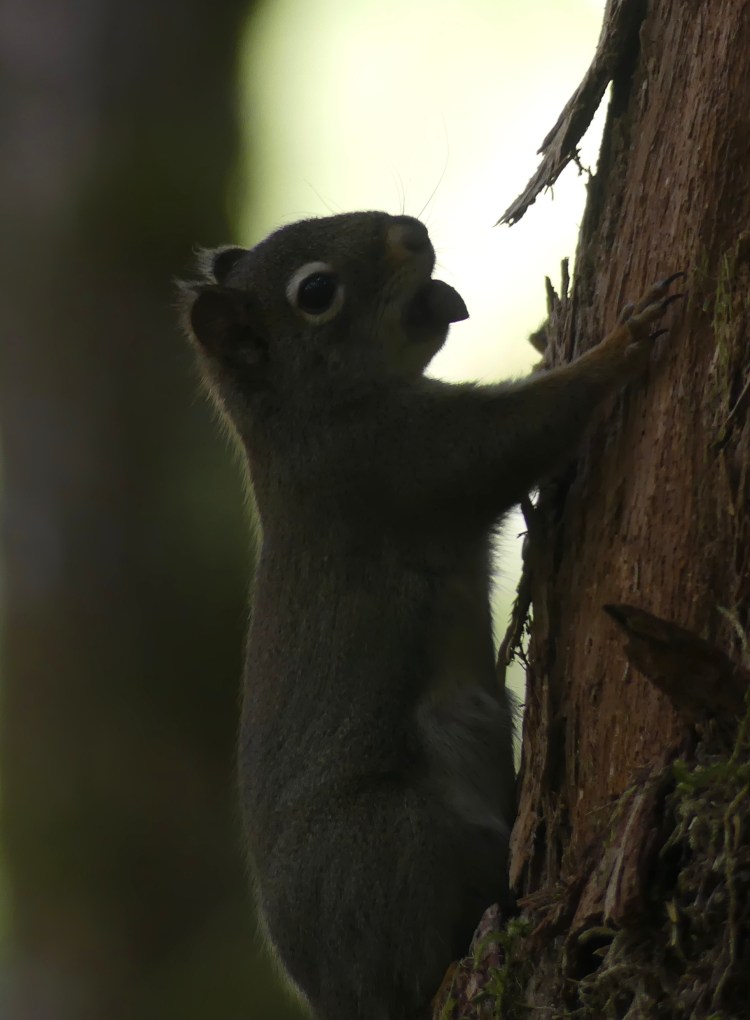
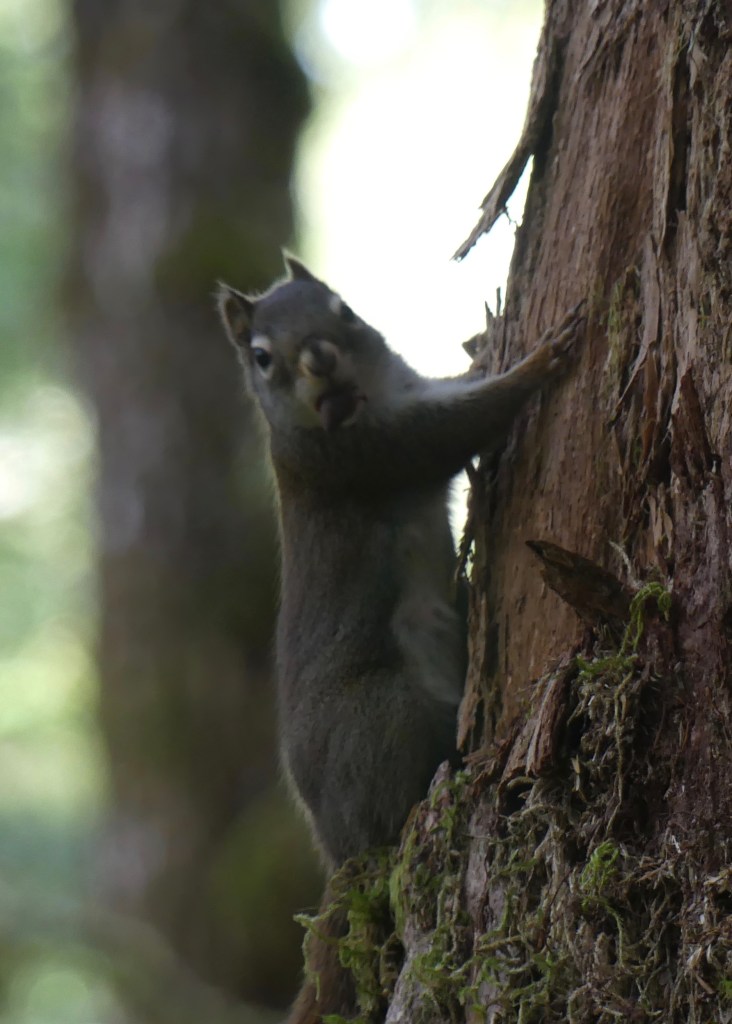
This is a good spot, but a little too popular with squirrels, so I moved it in order to avoid spending so much time deleting pictures of them.




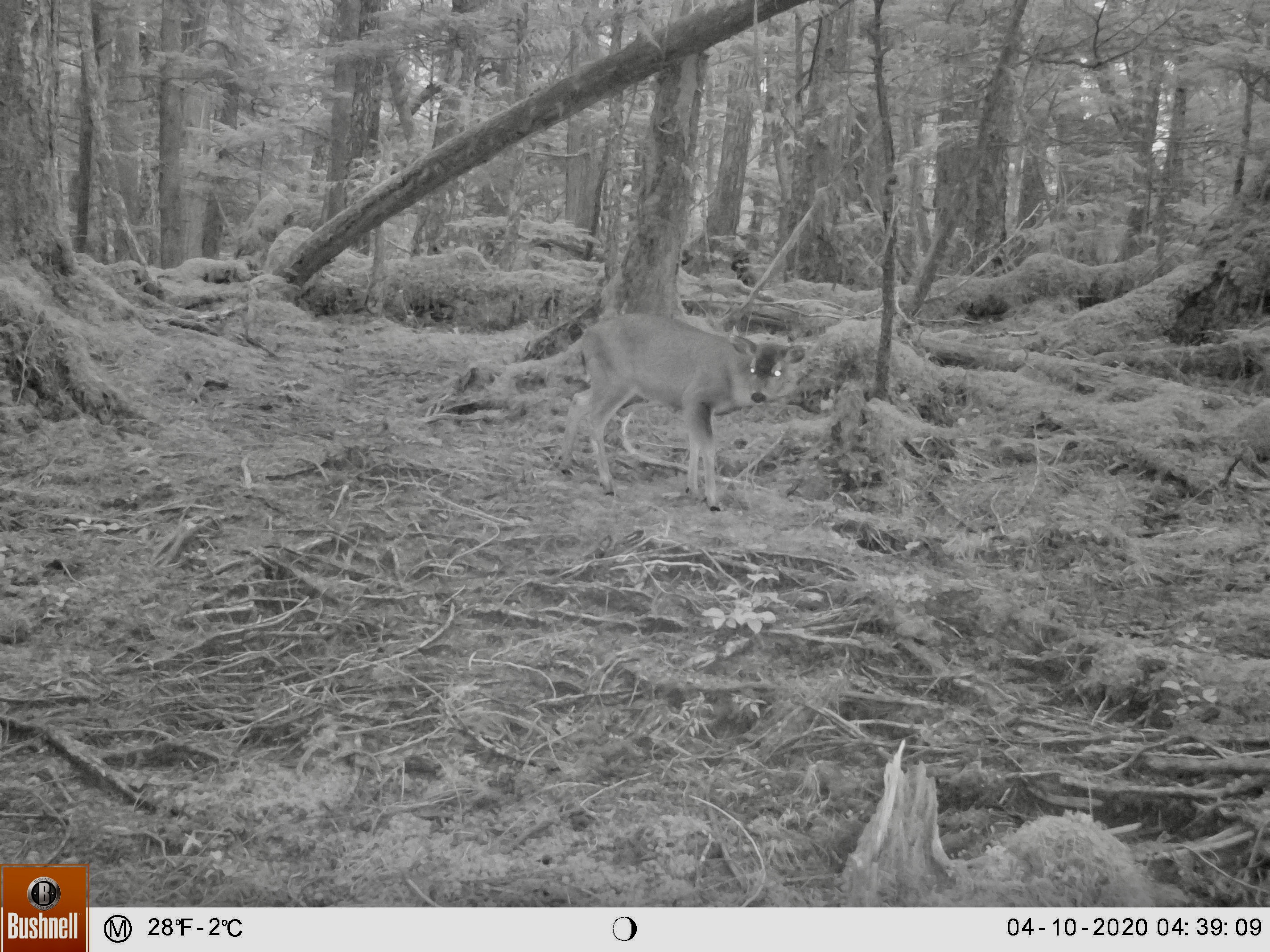
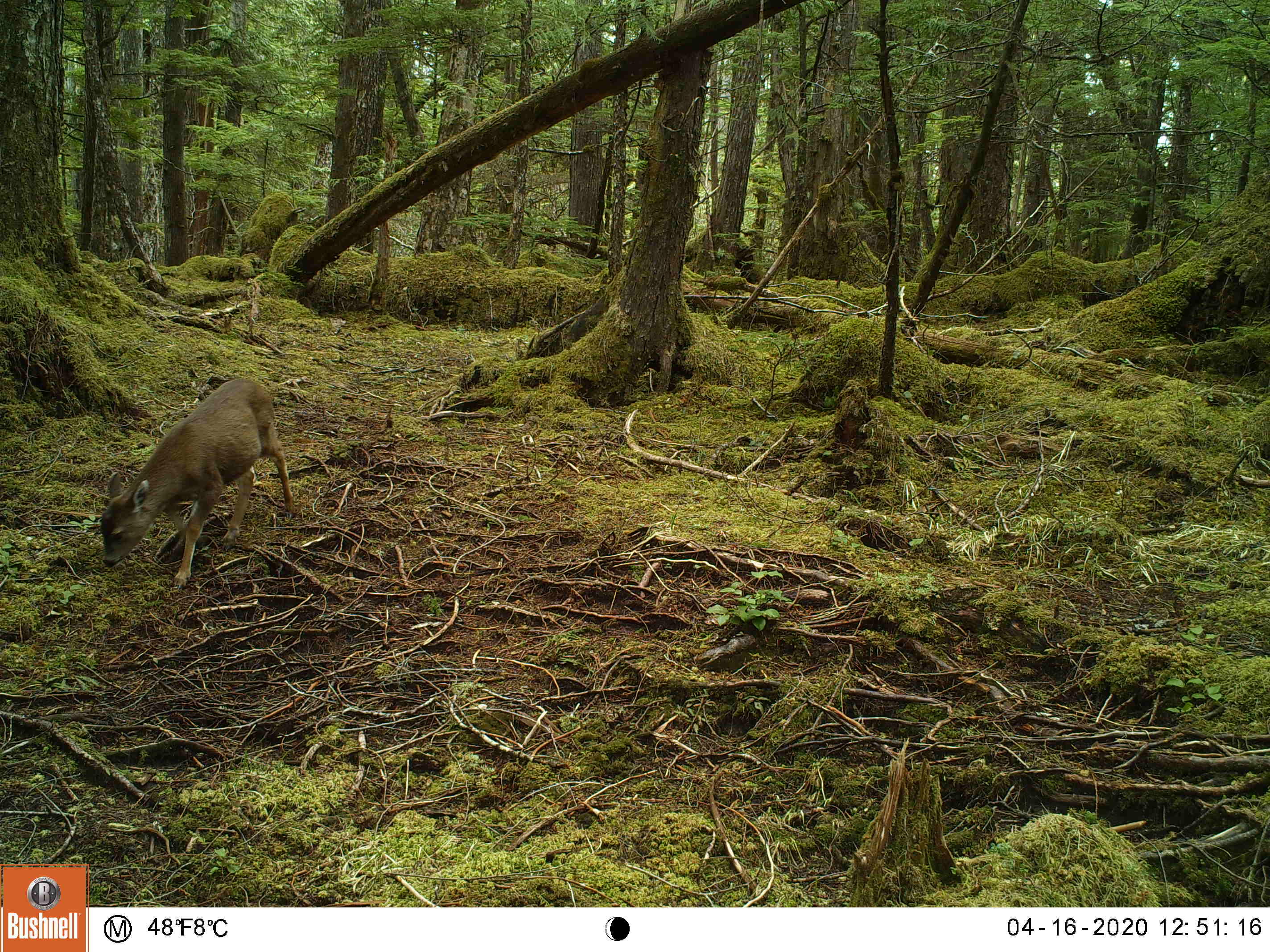

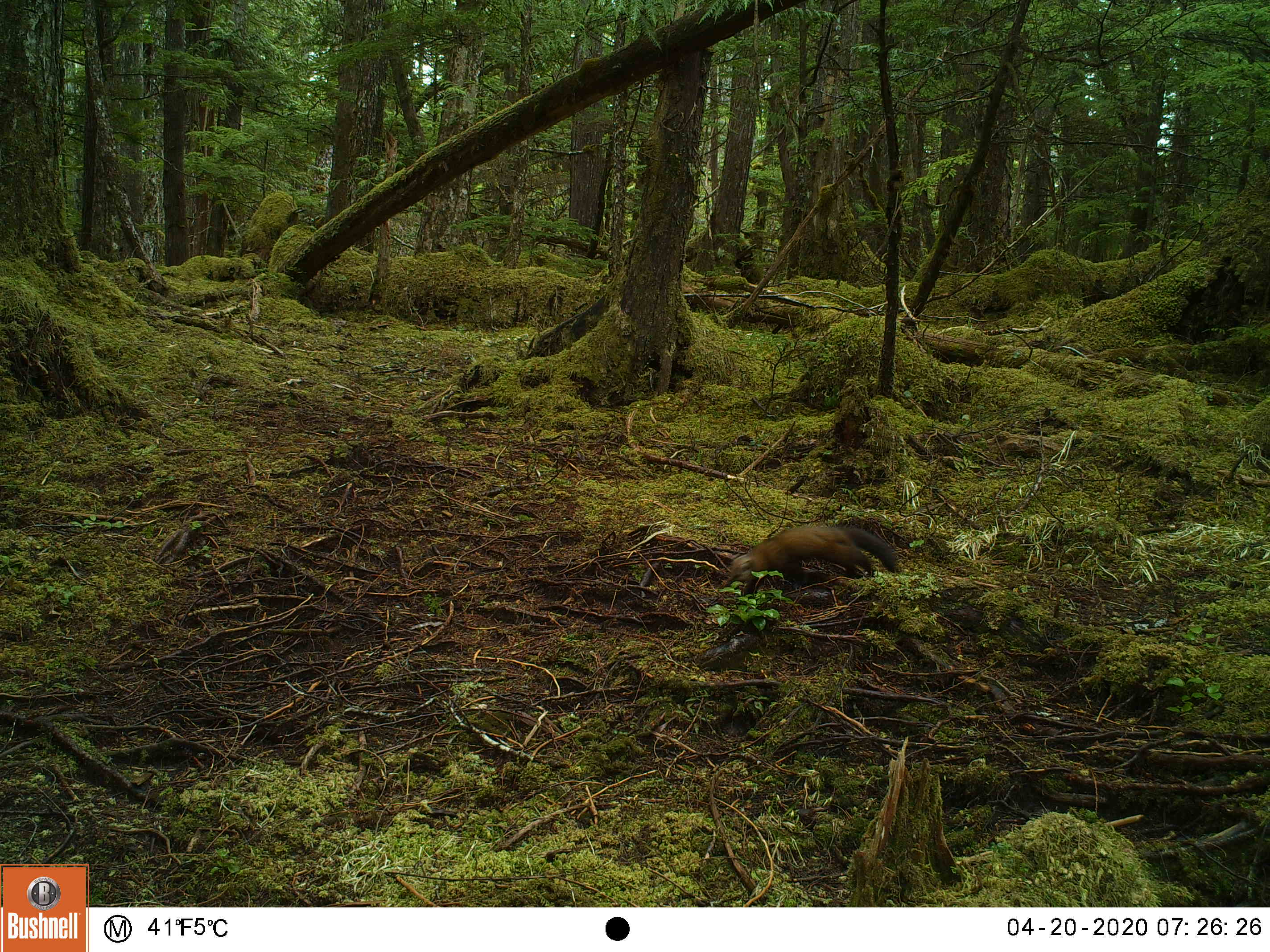
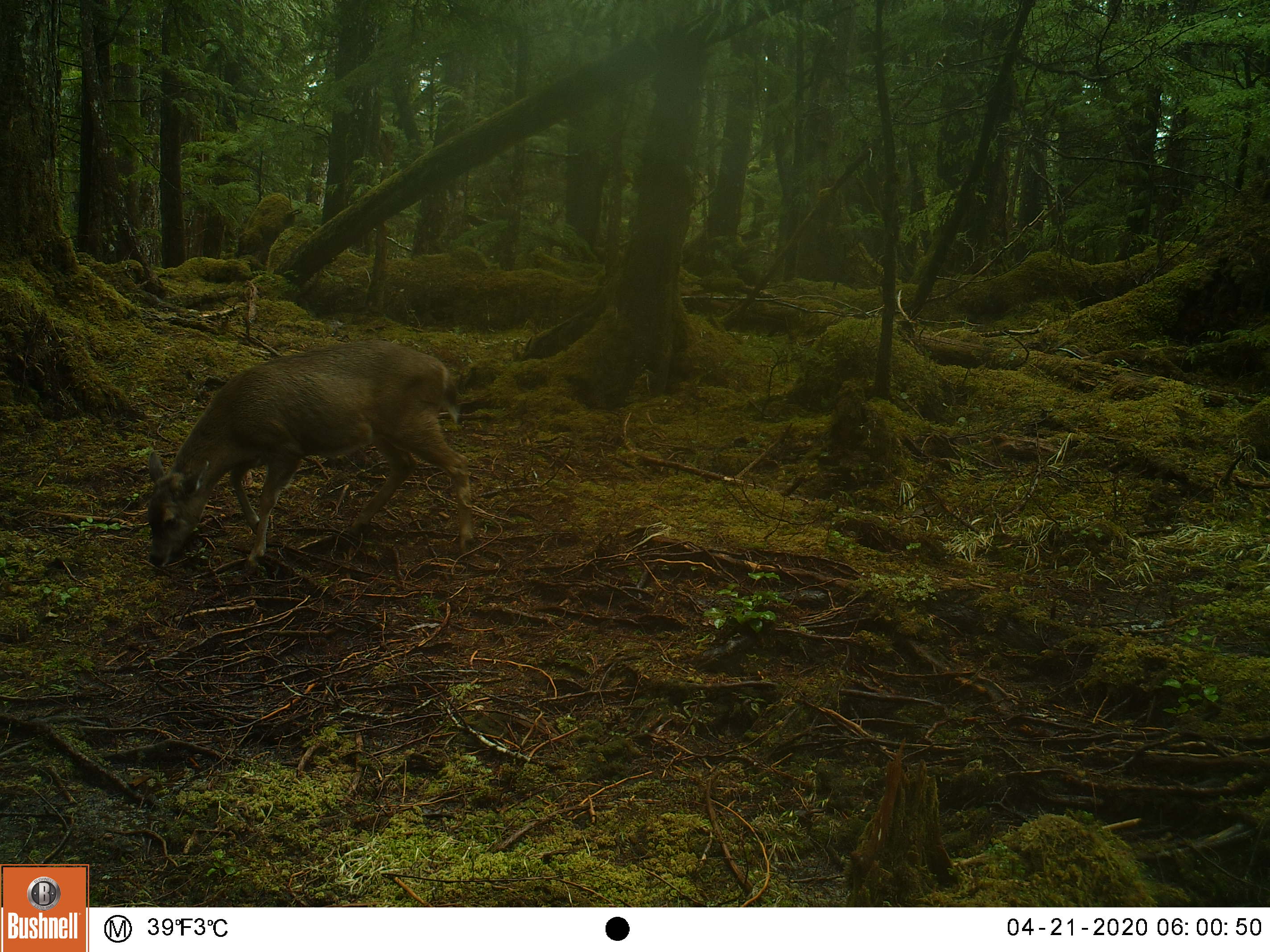




This site is about running trail cameras in Southeast Alaska and other outdoor activities.
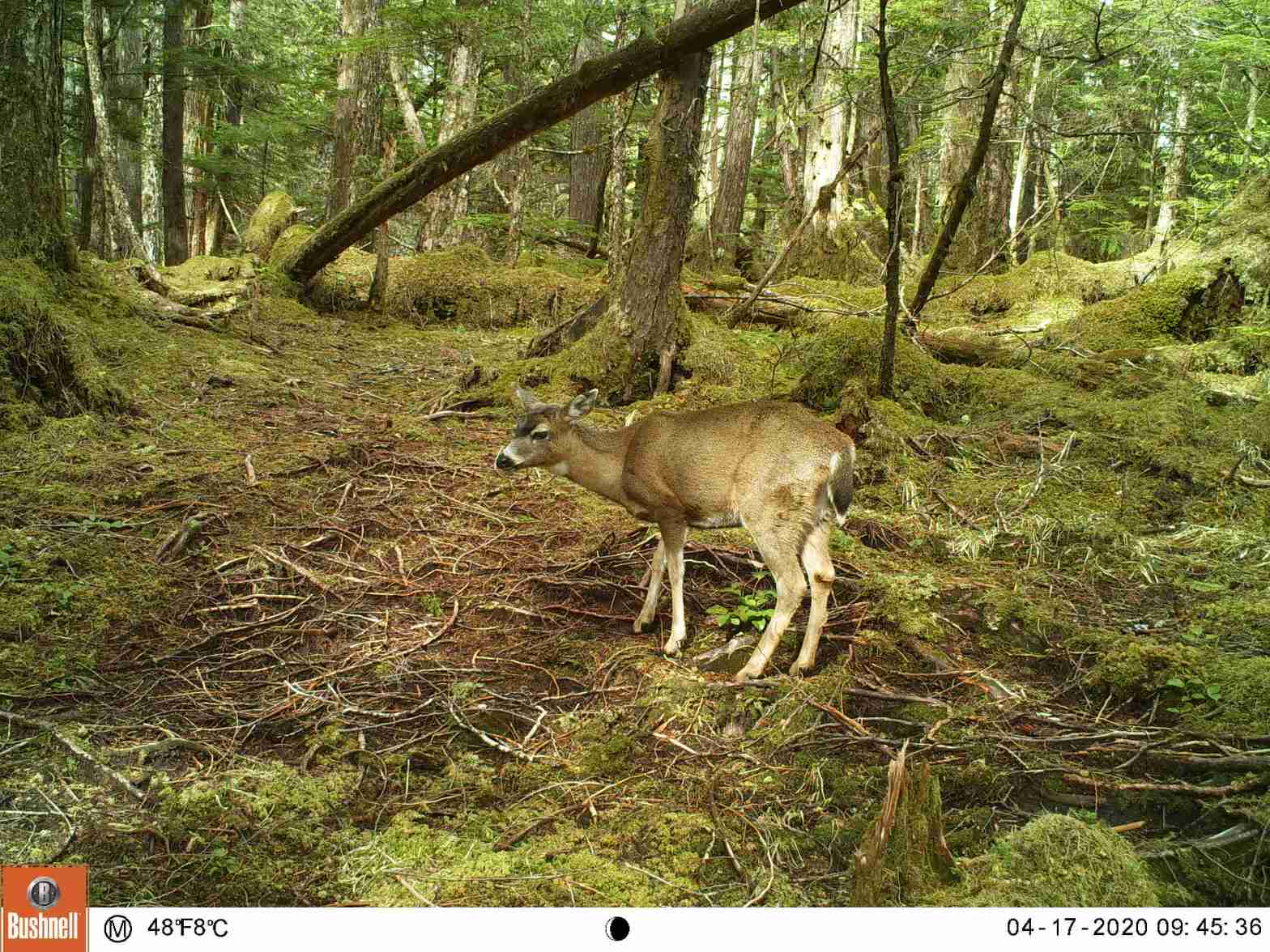
This is a good spot, but a little too popular with squirrels, so I moved it in order to avoid spending so much time deleting pictures of them.

This was a good spot but moved this camera to spread them out a little farther.


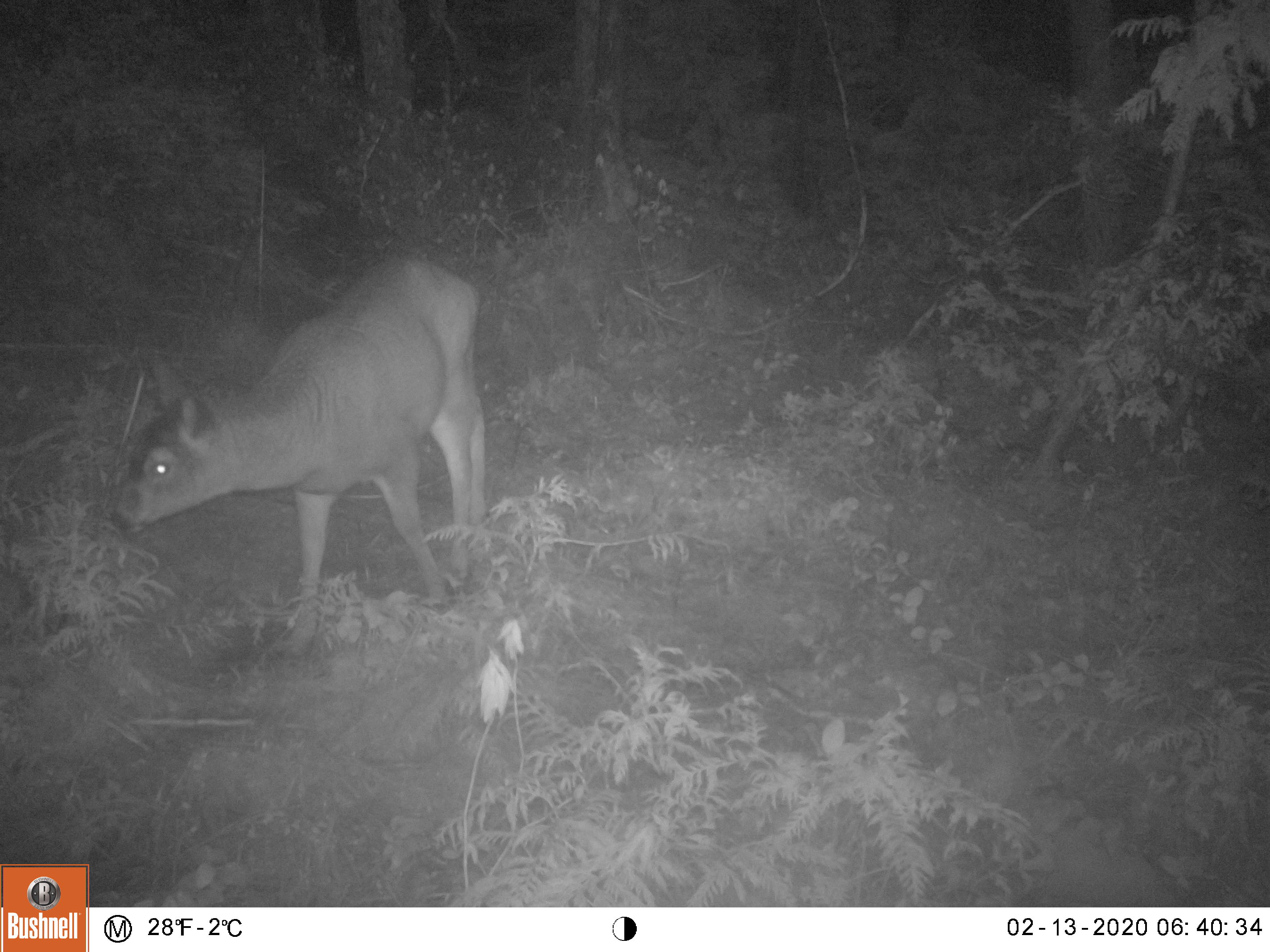


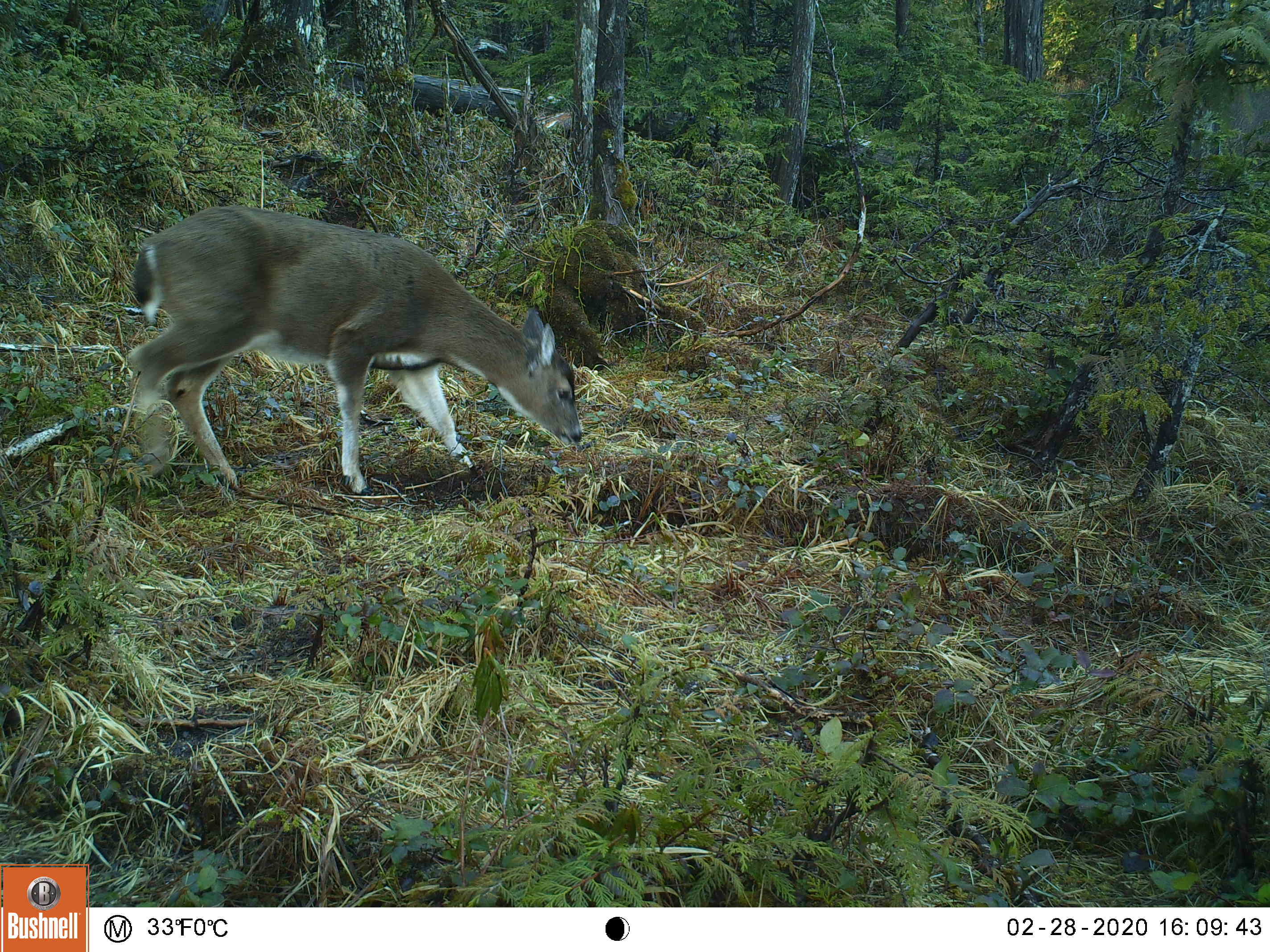


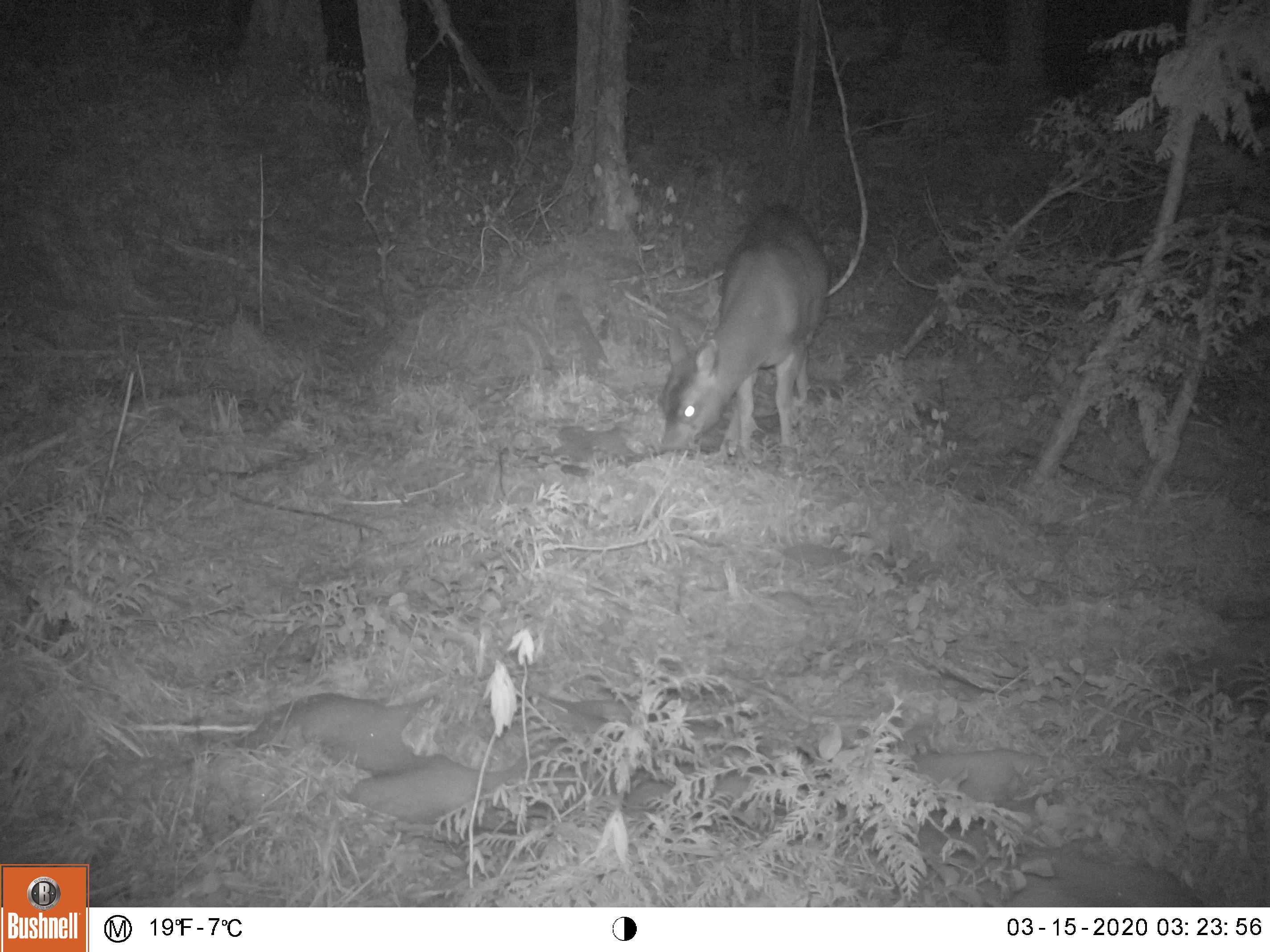


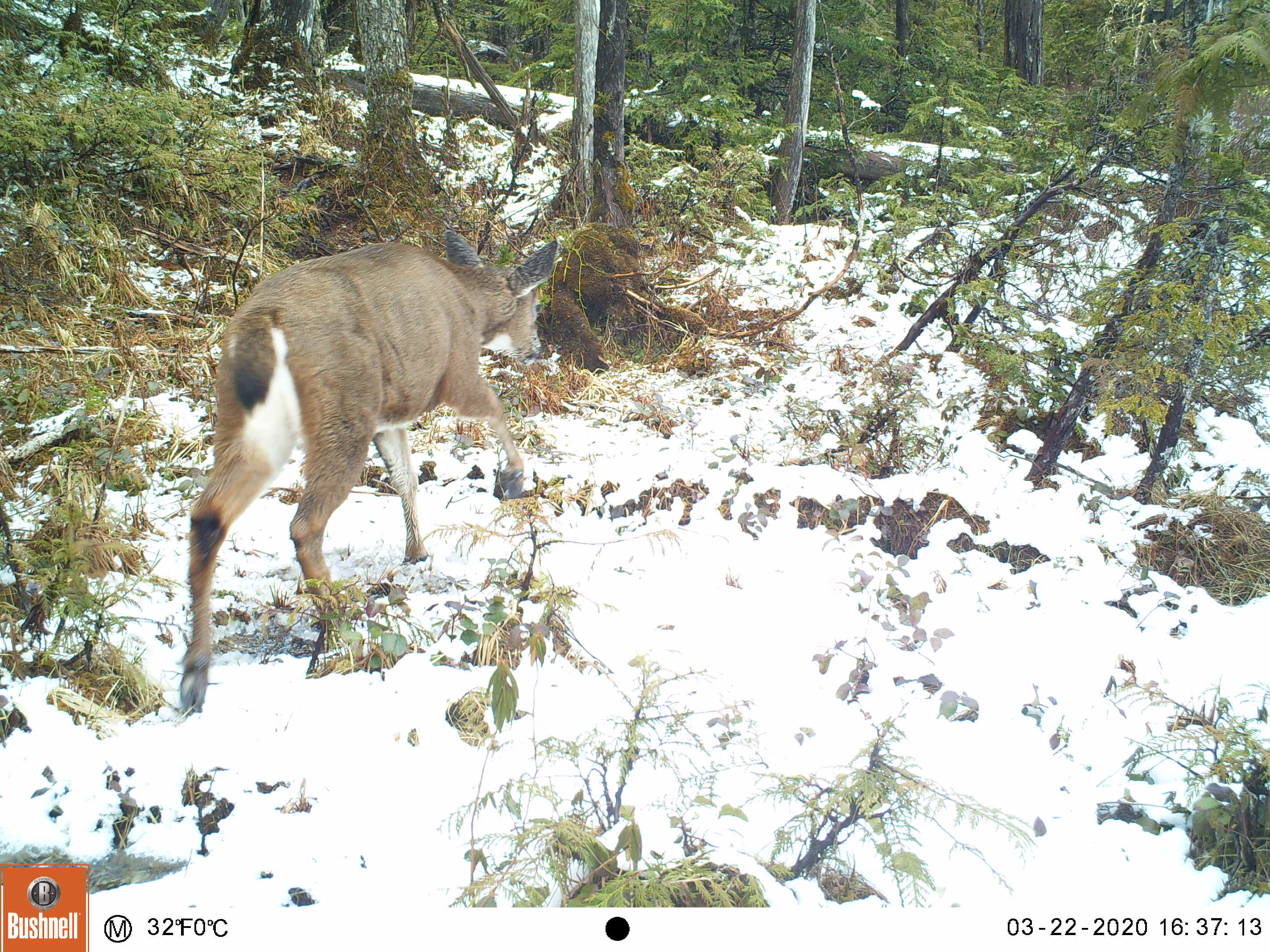
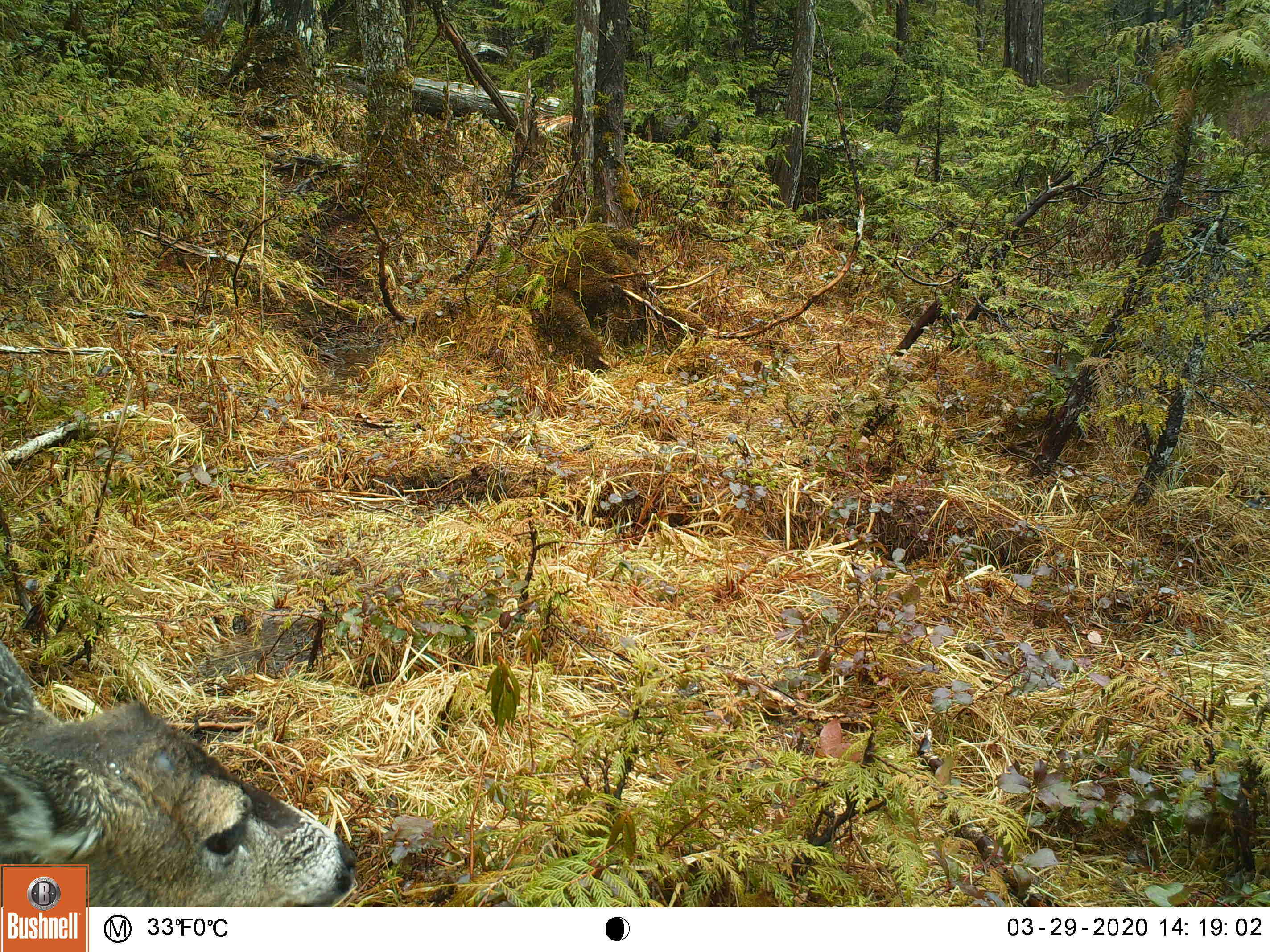


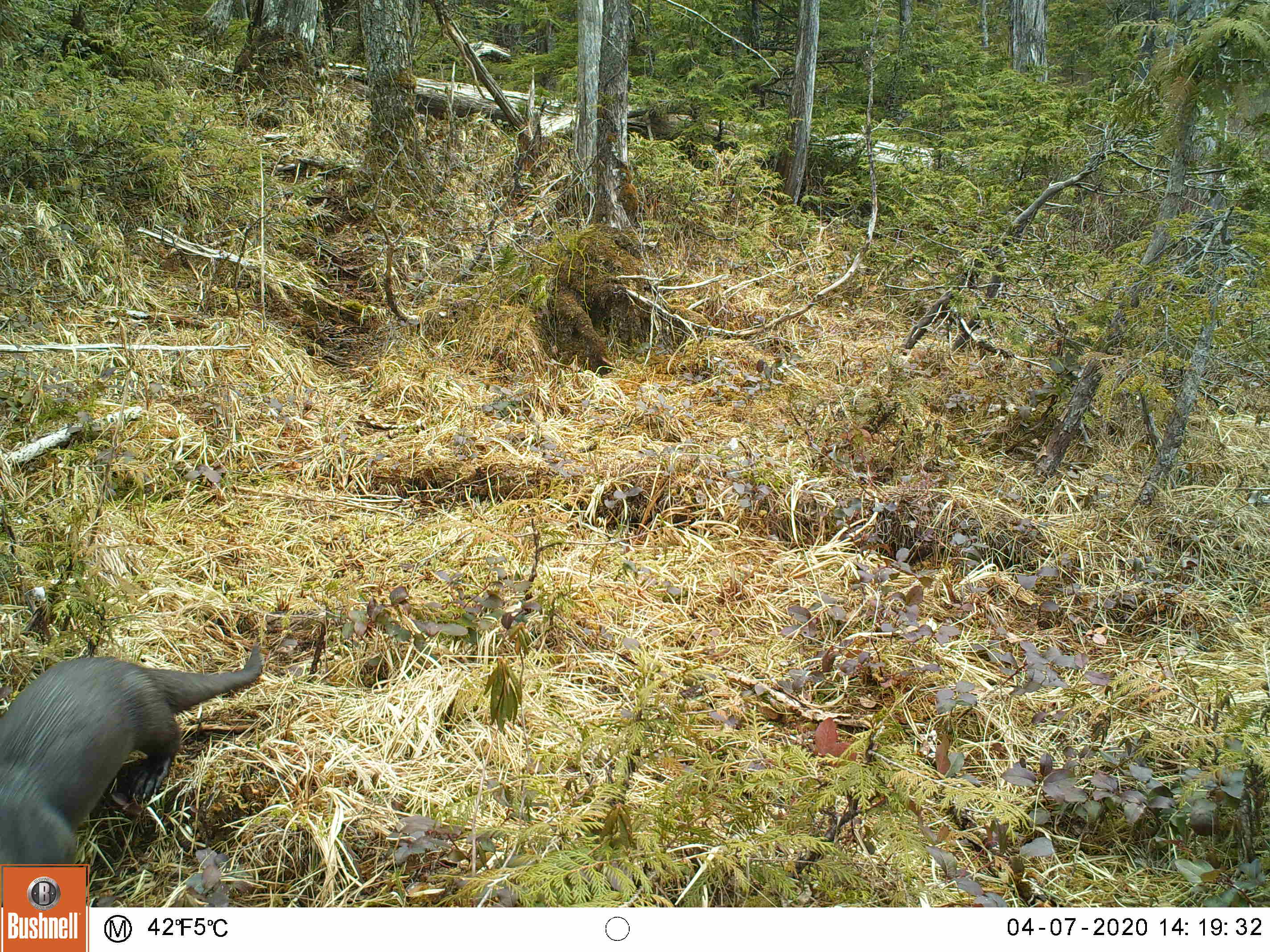


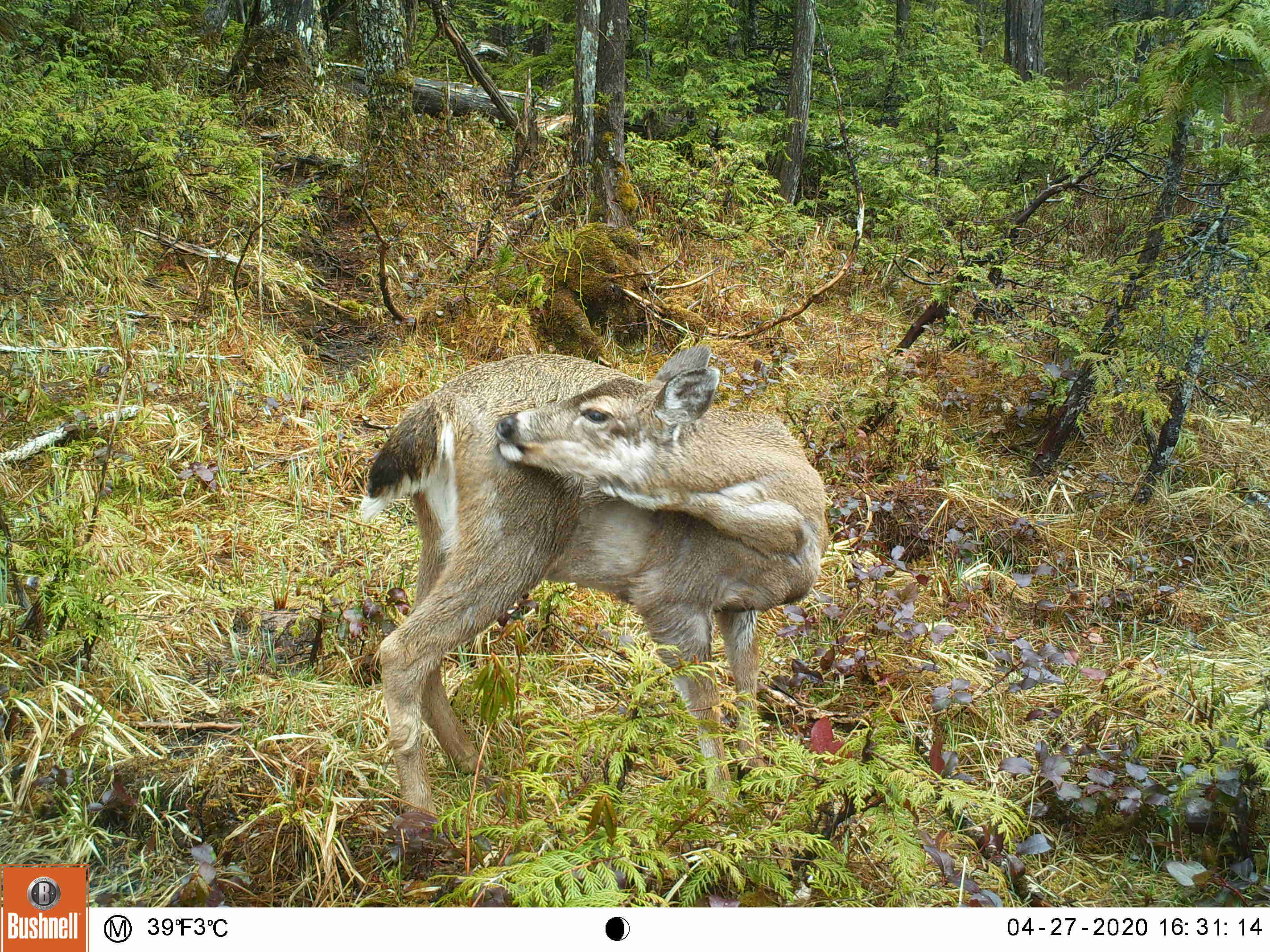
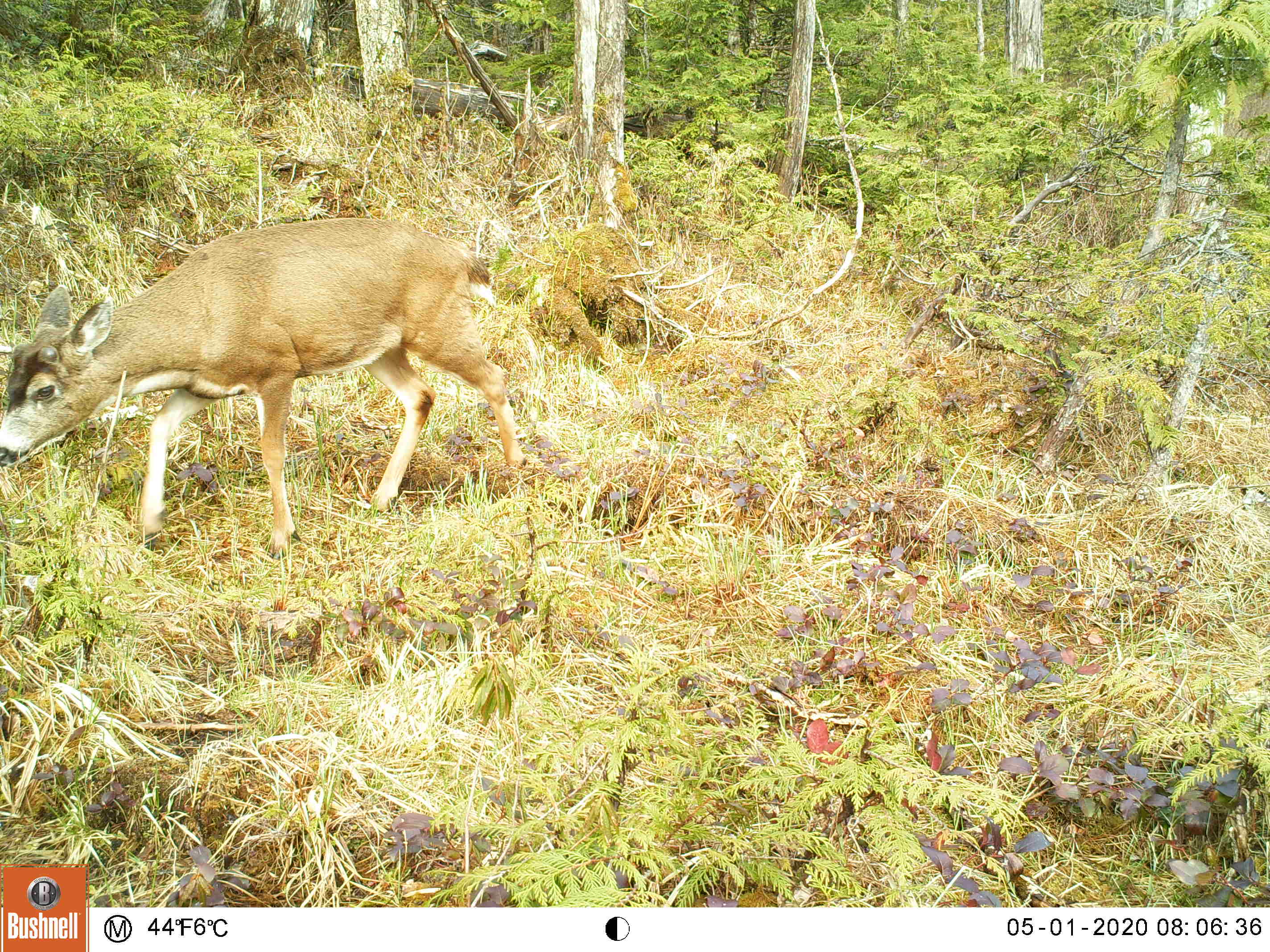
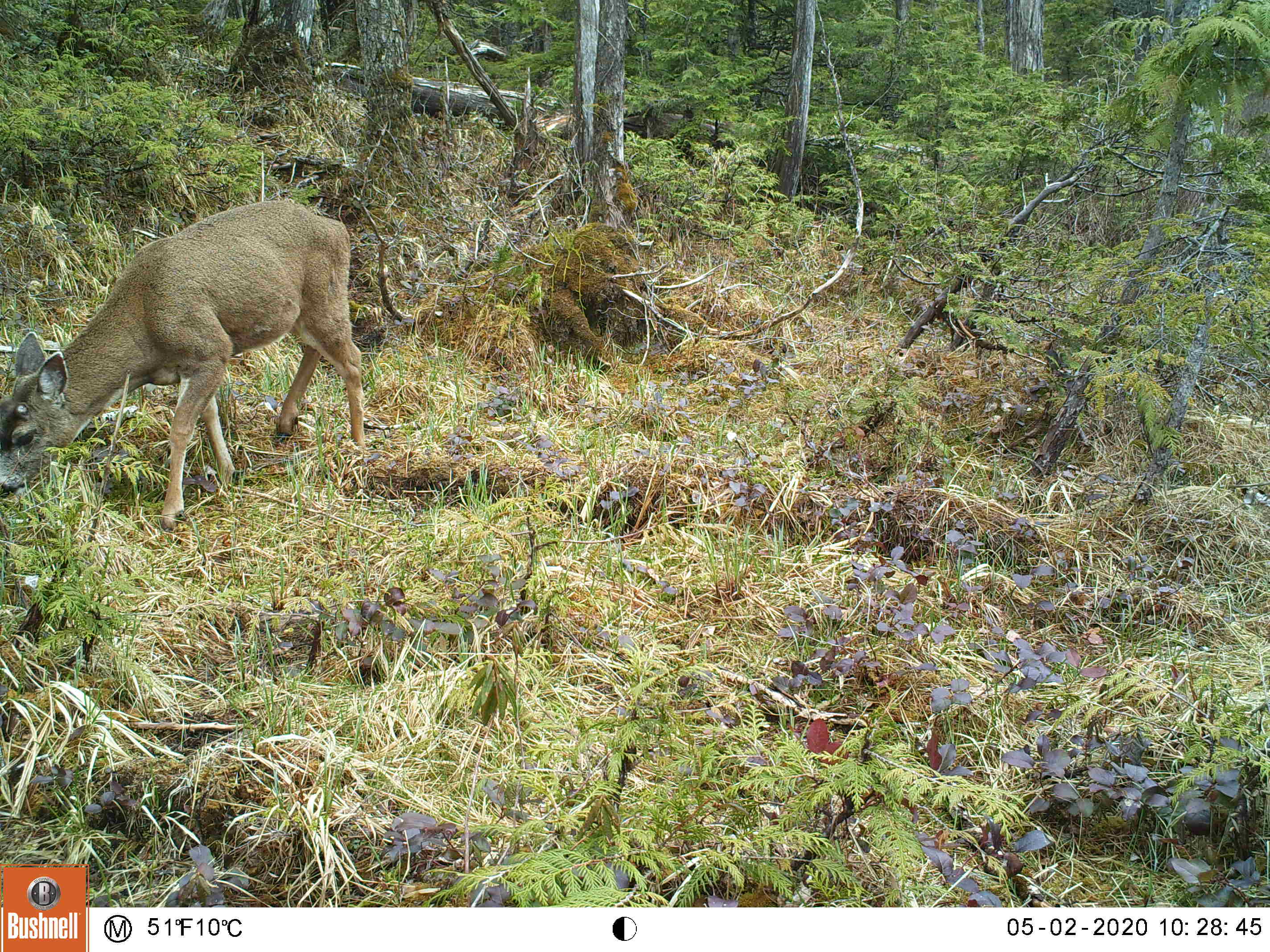


This spot has been really good for a few years, especially for bucks, they really like to scent mark on that low hanging branch.
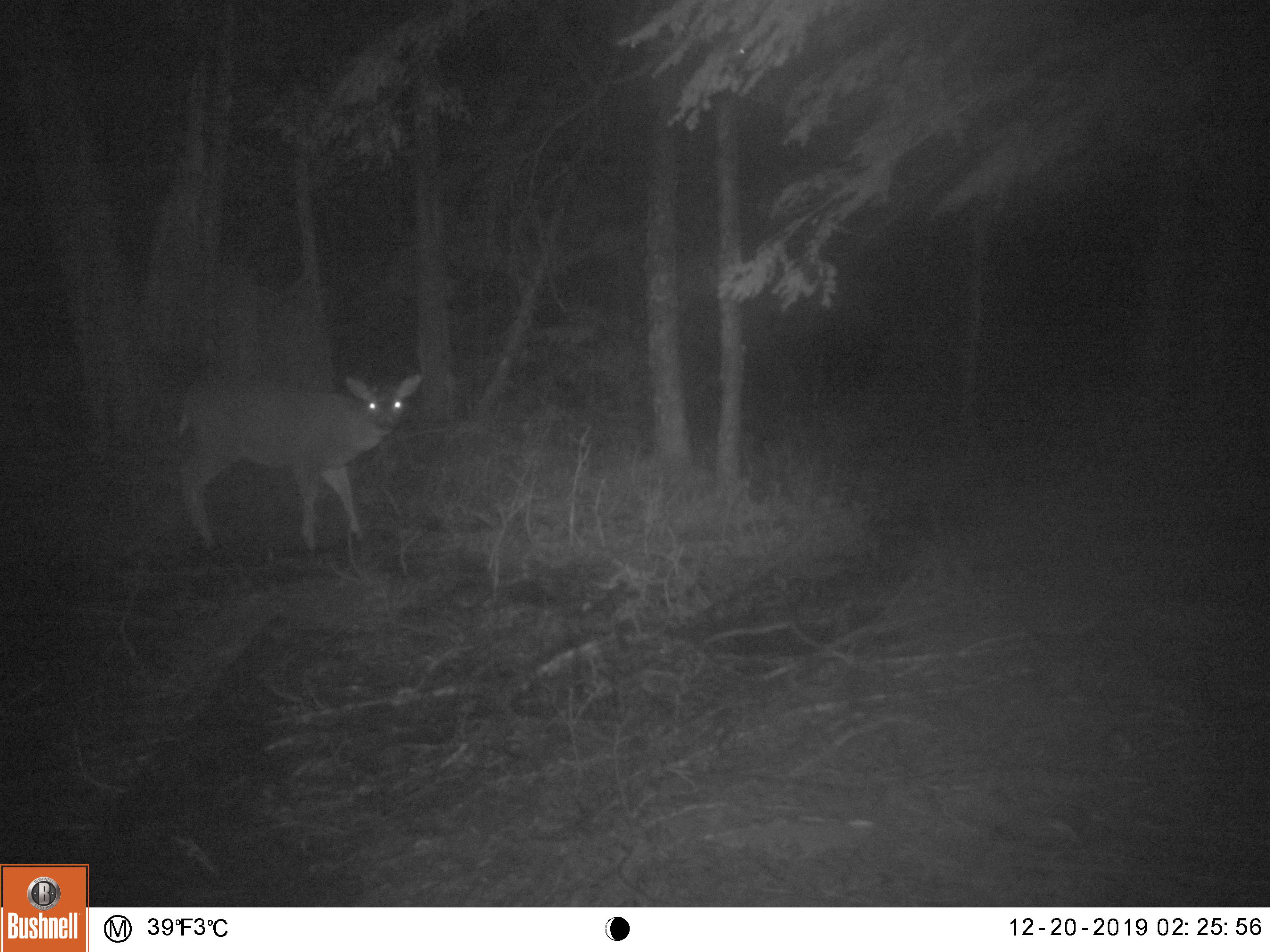

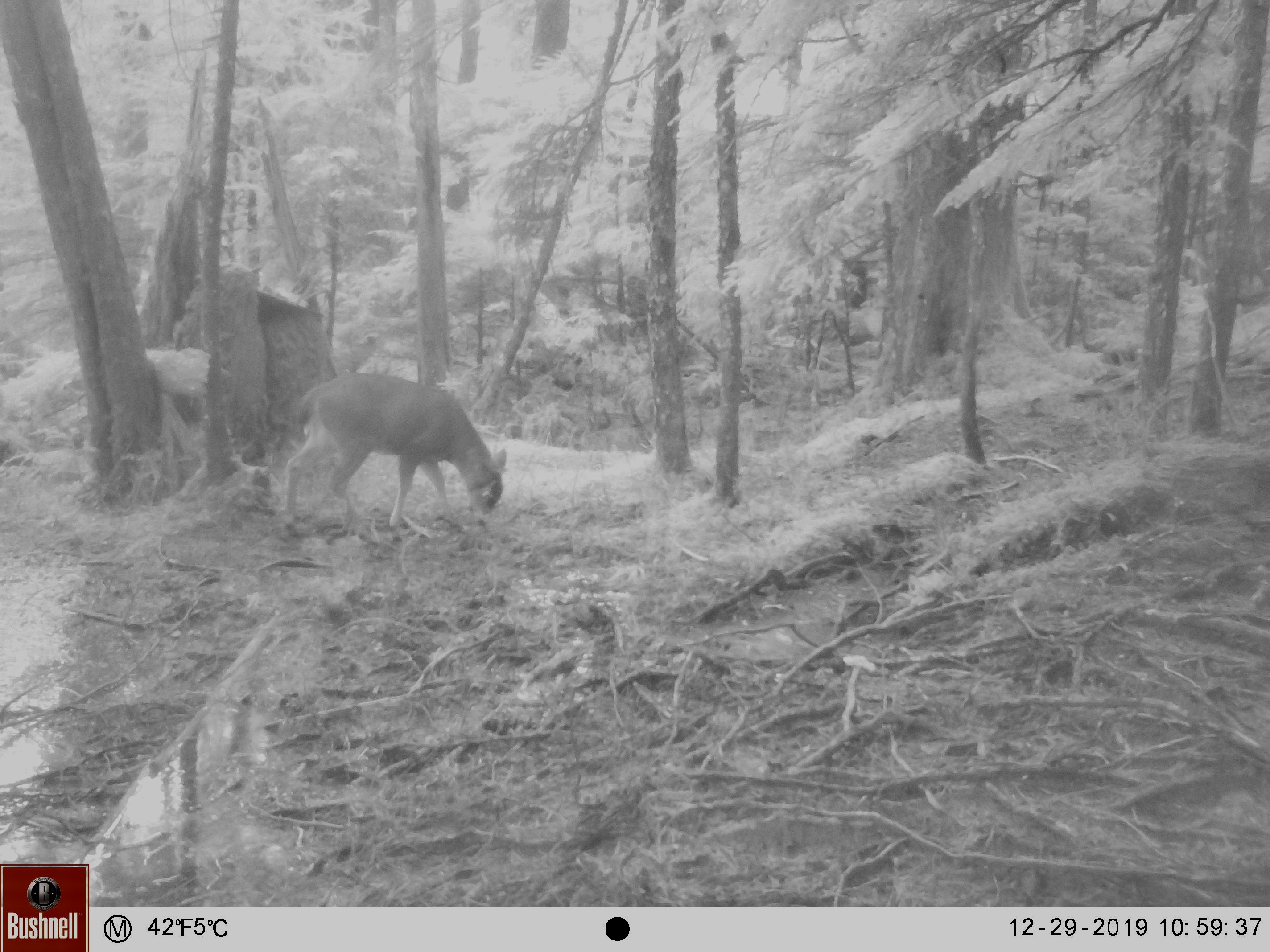

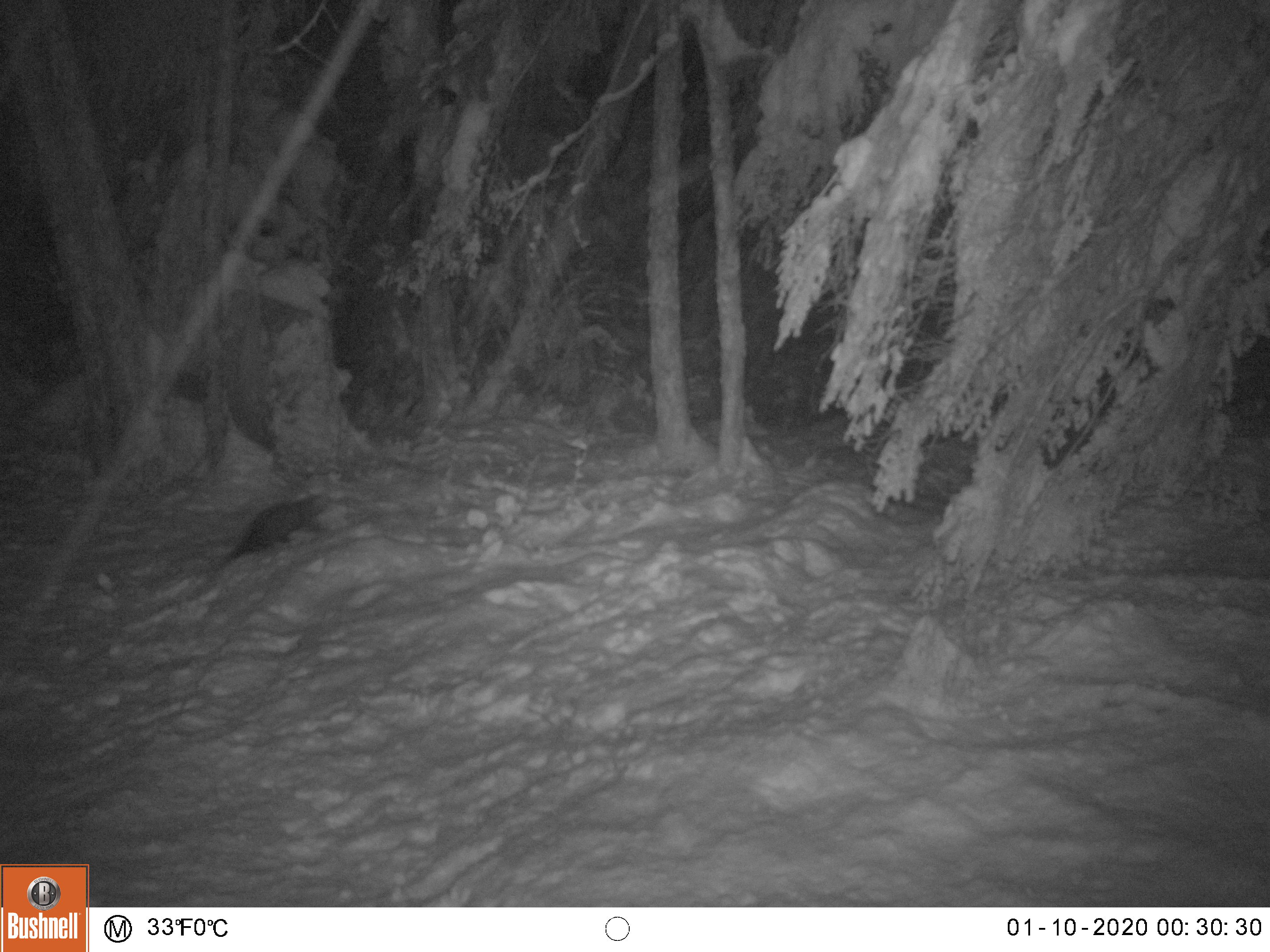

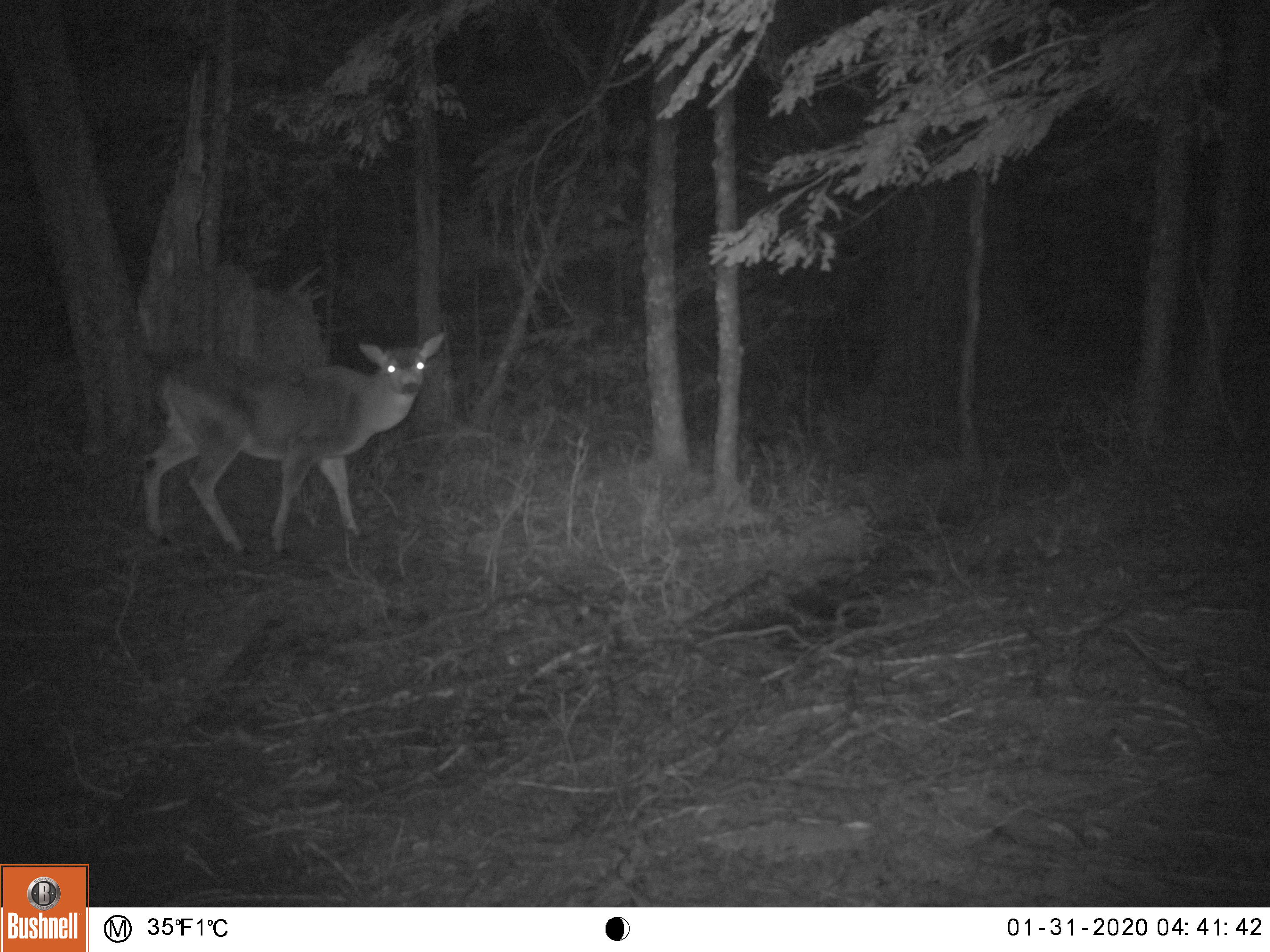
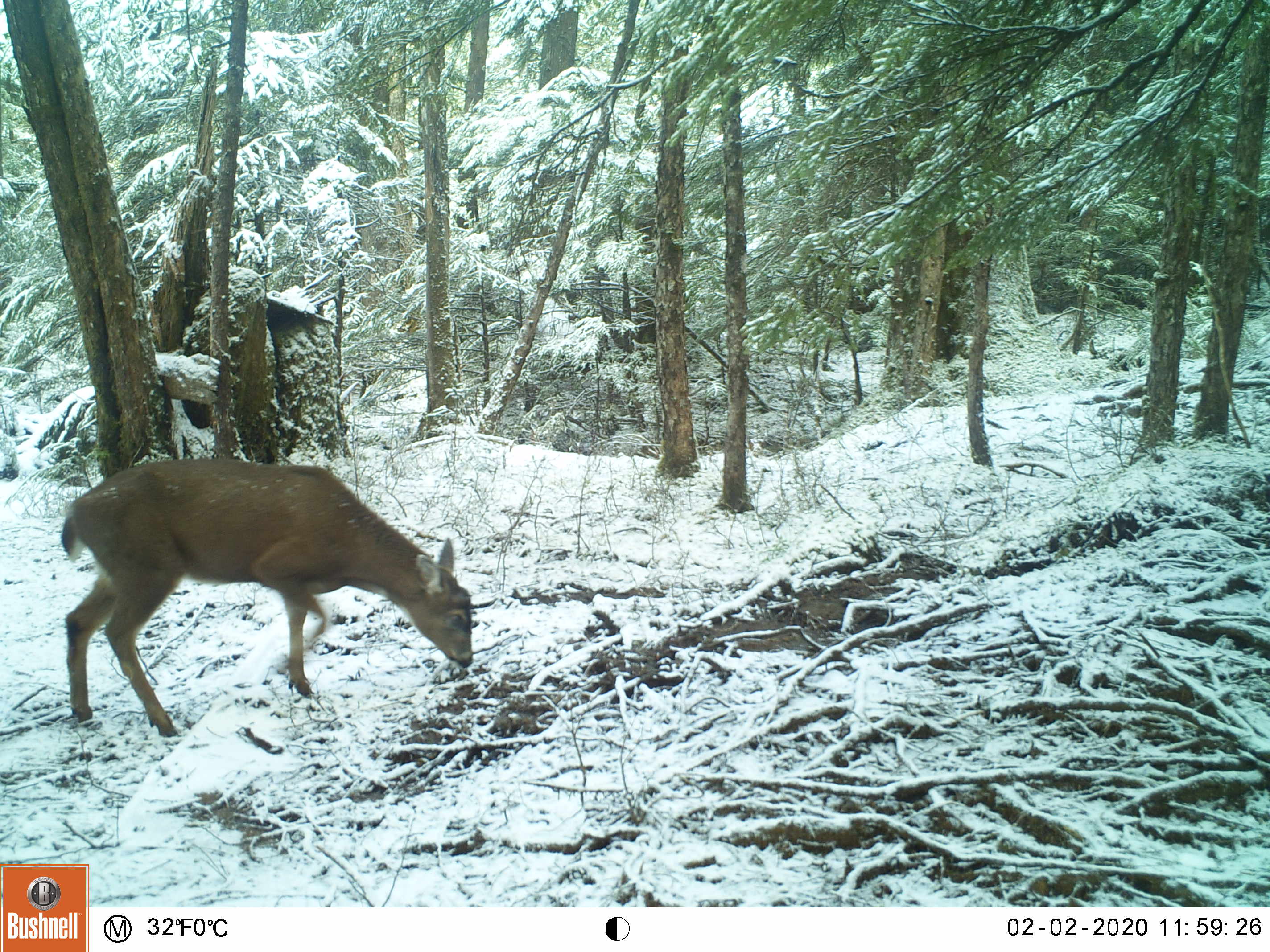

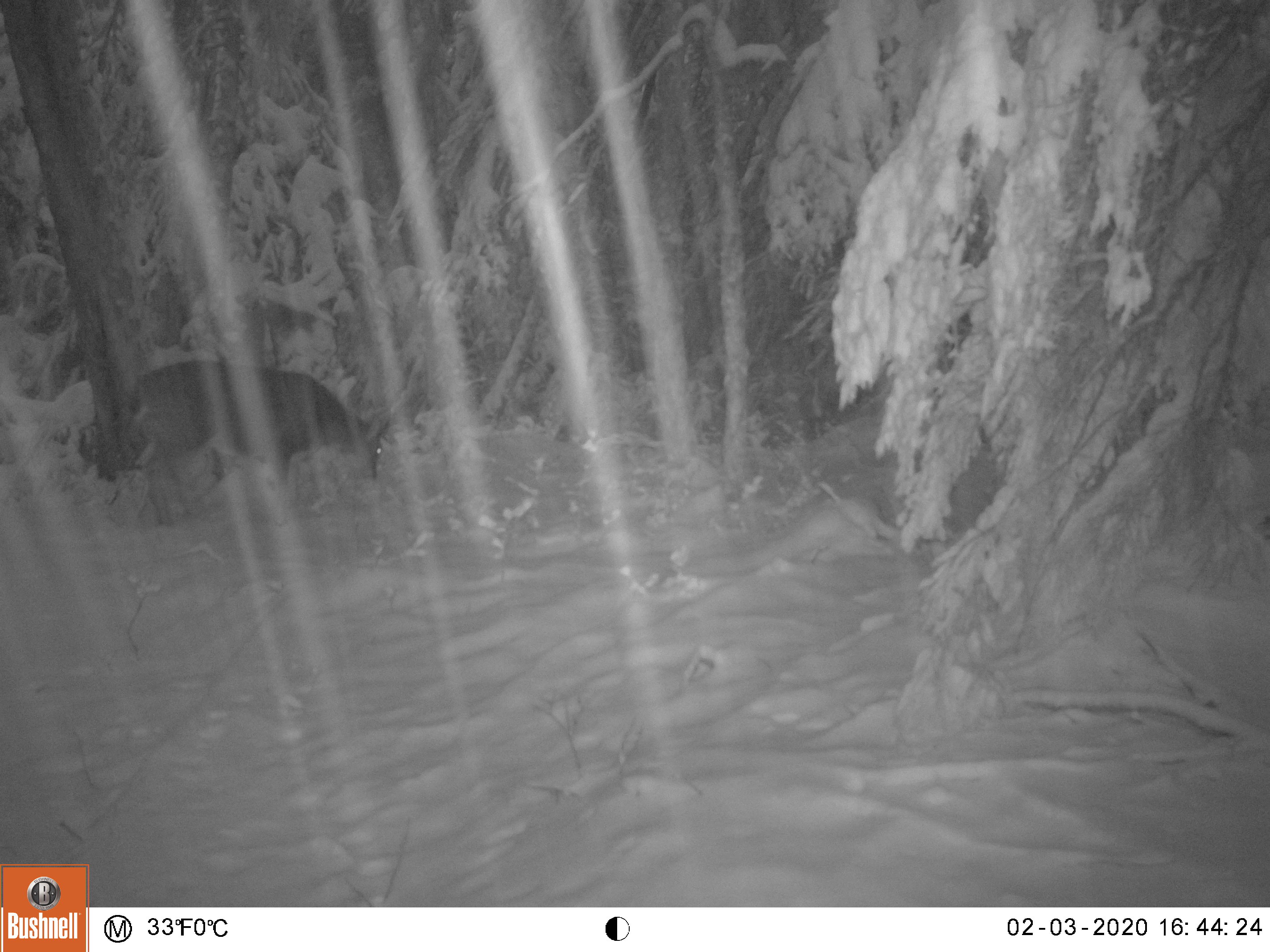
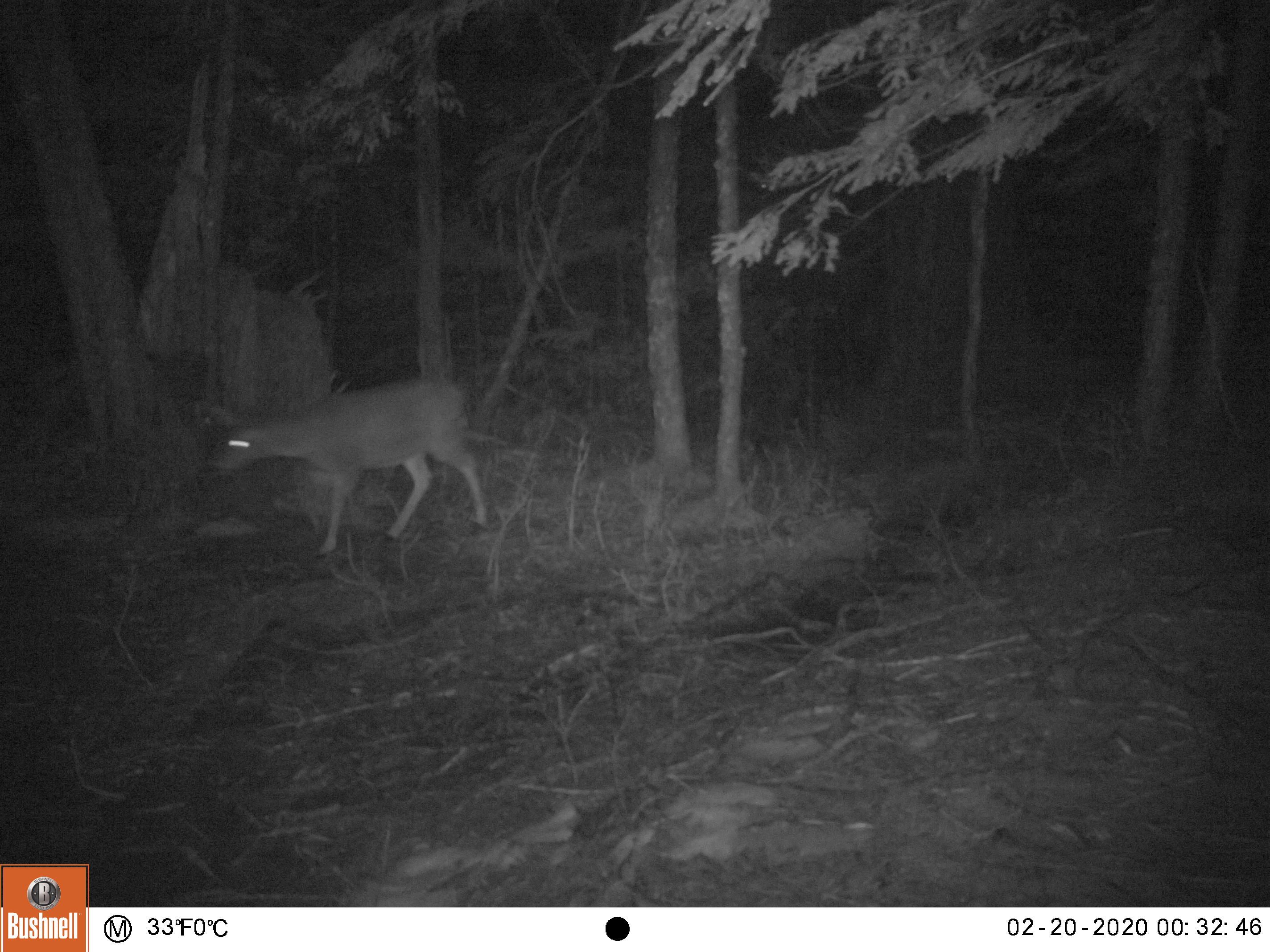
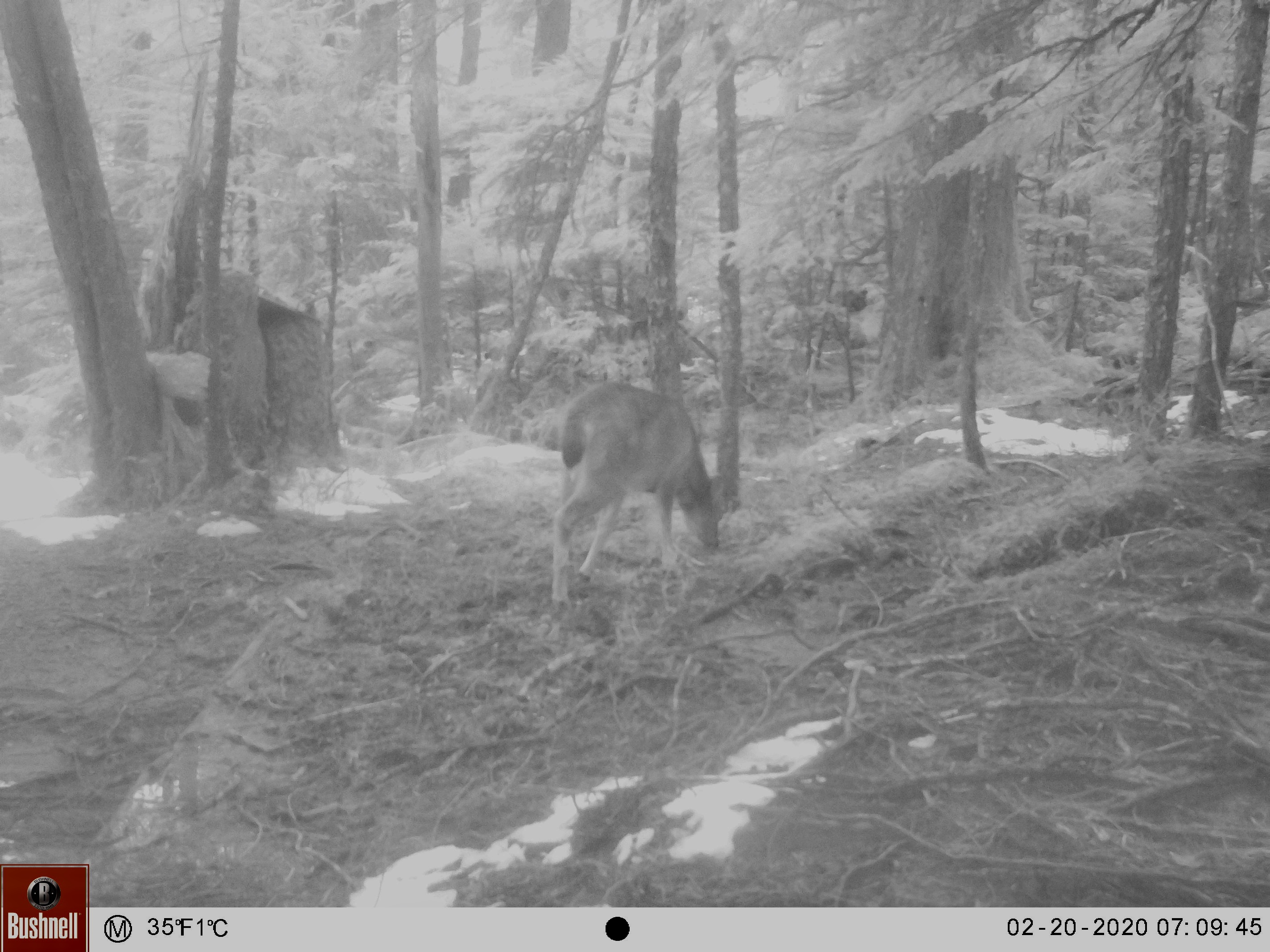
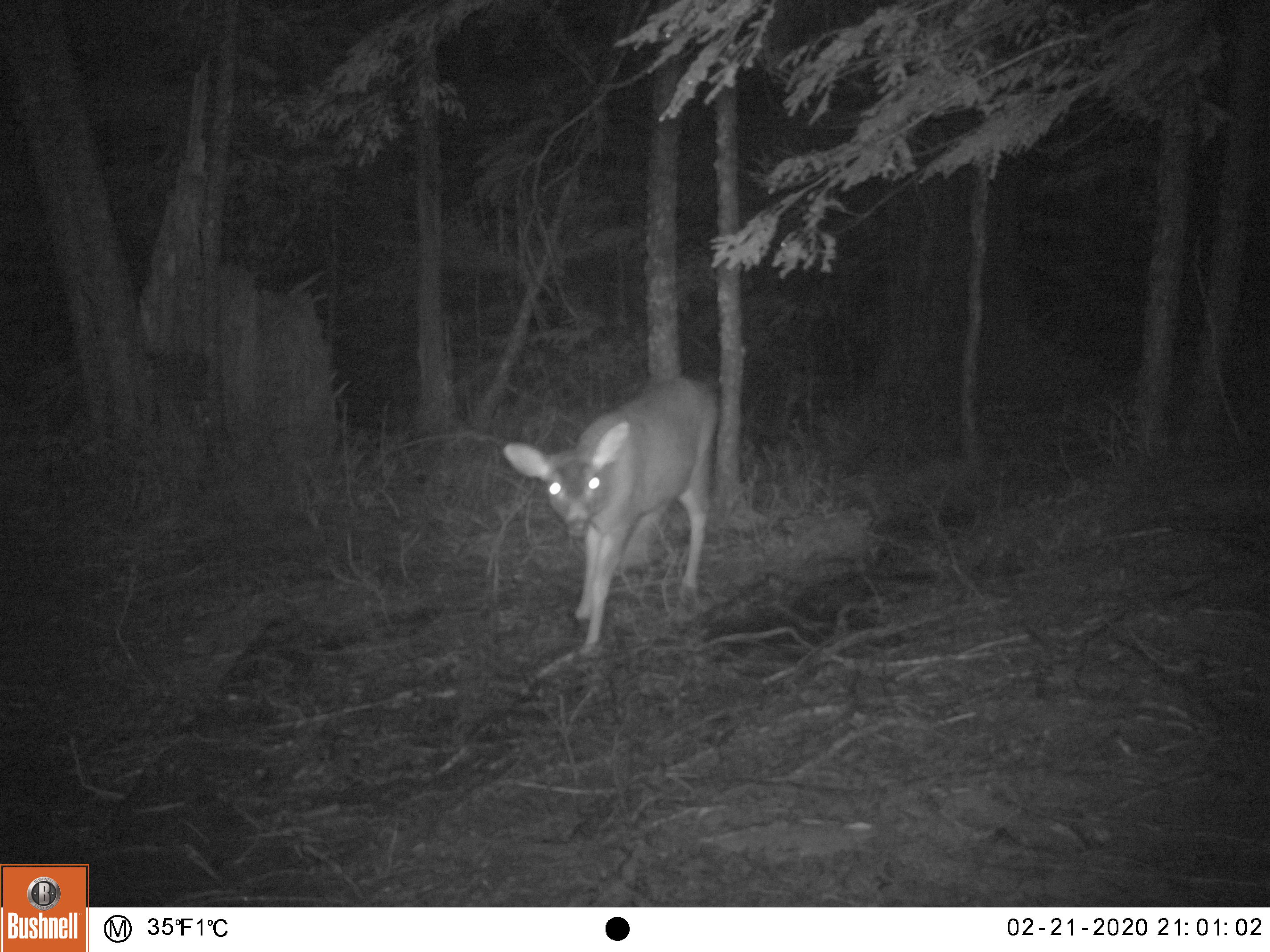


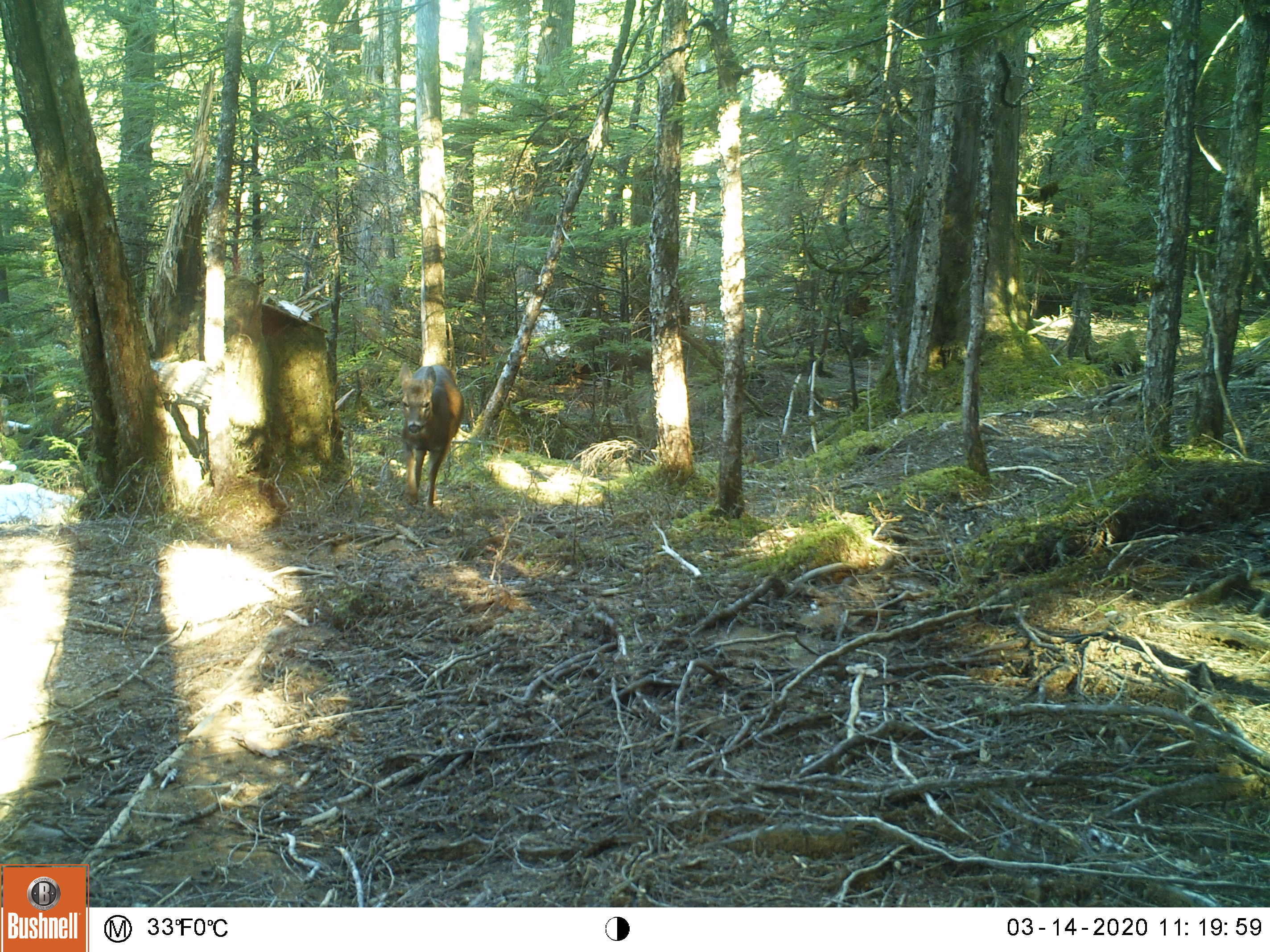

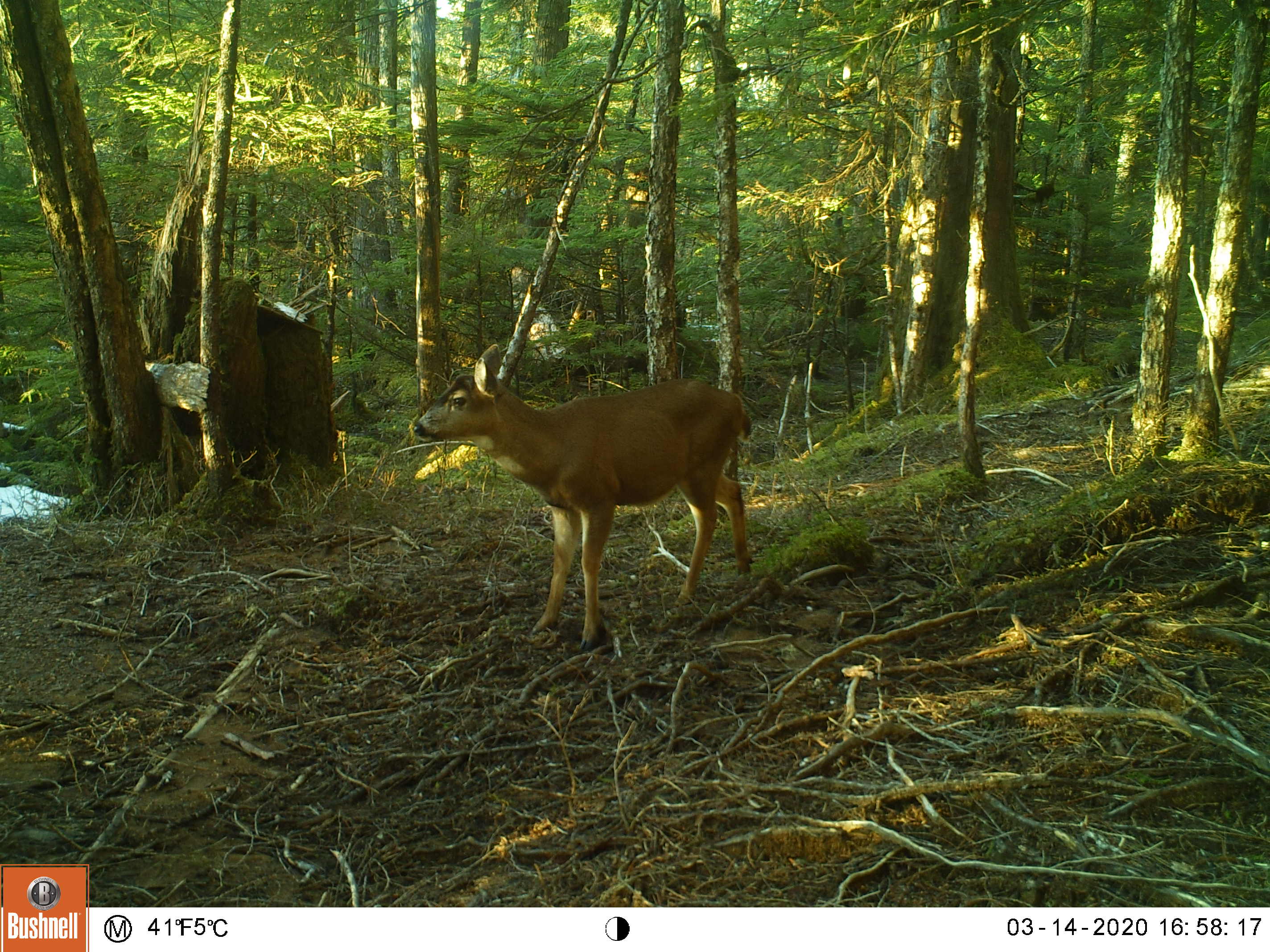
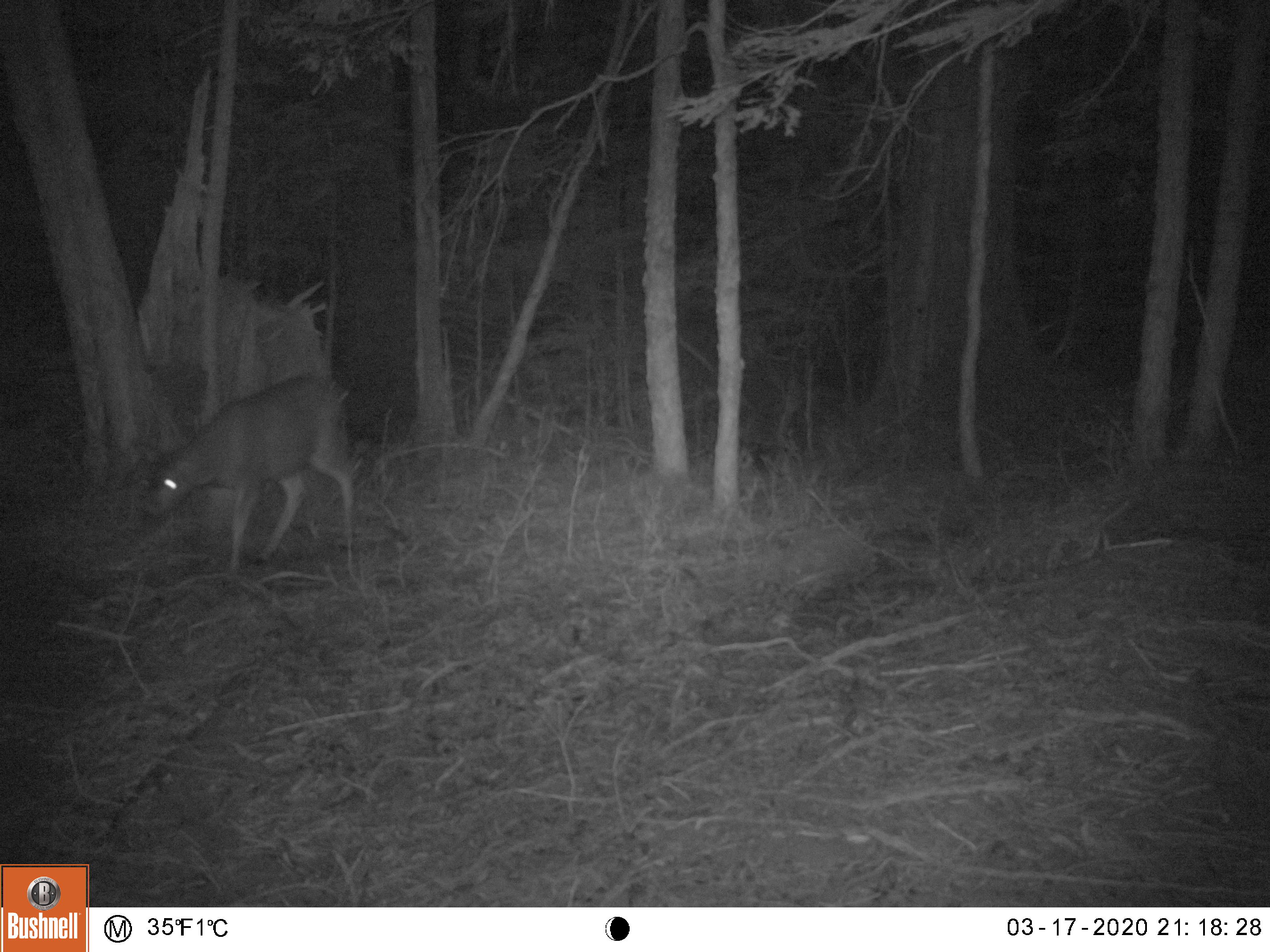

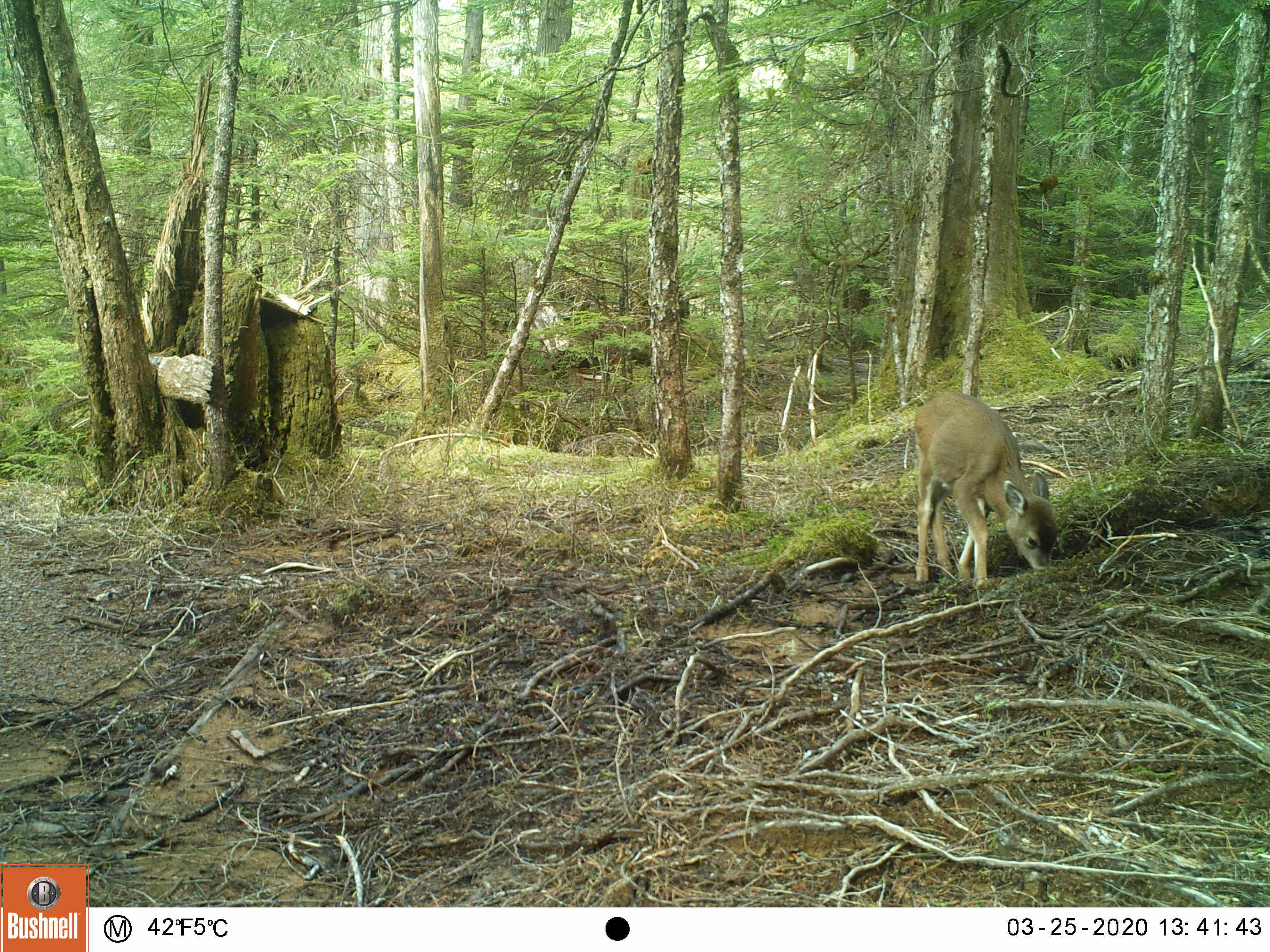
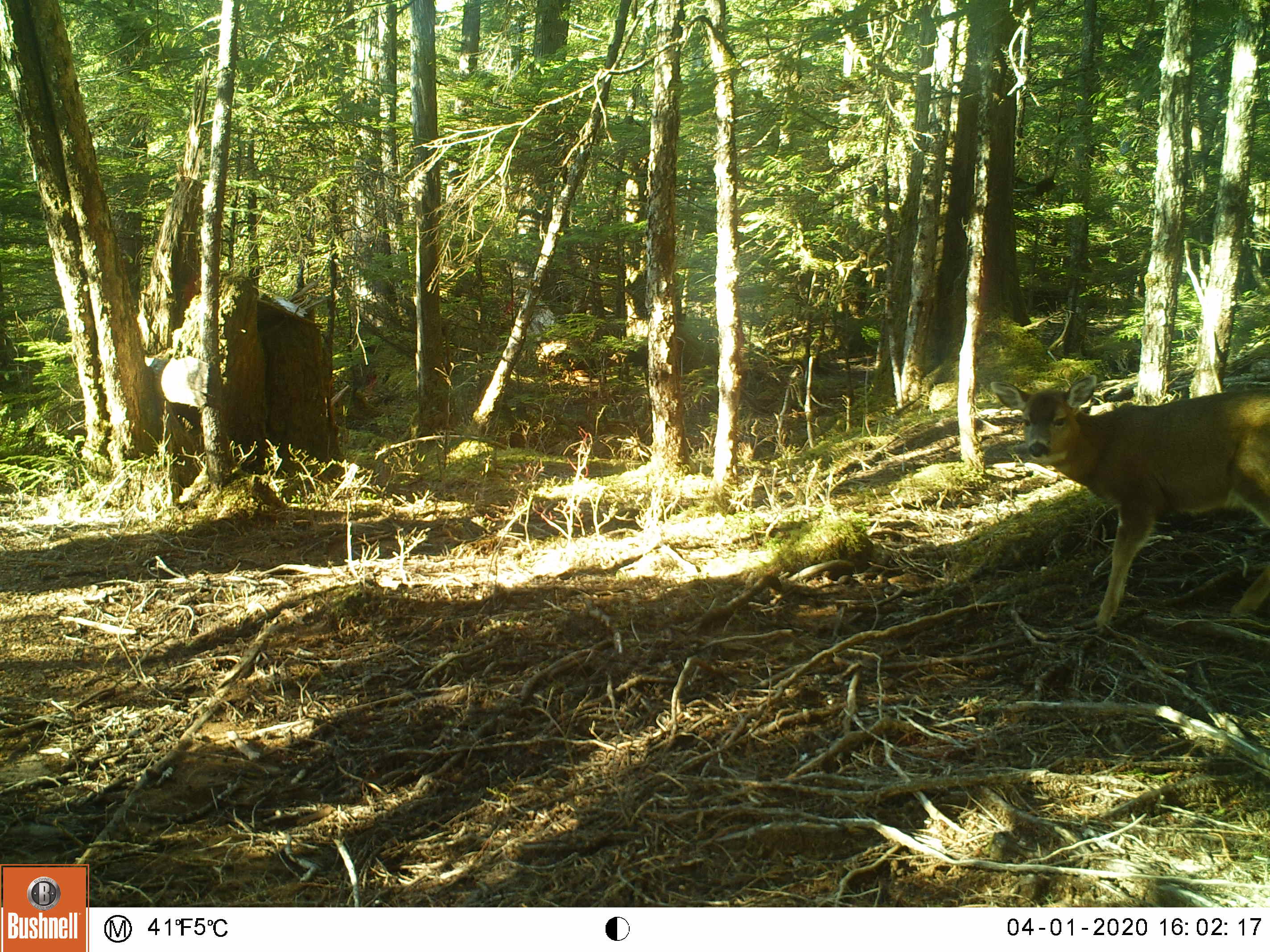

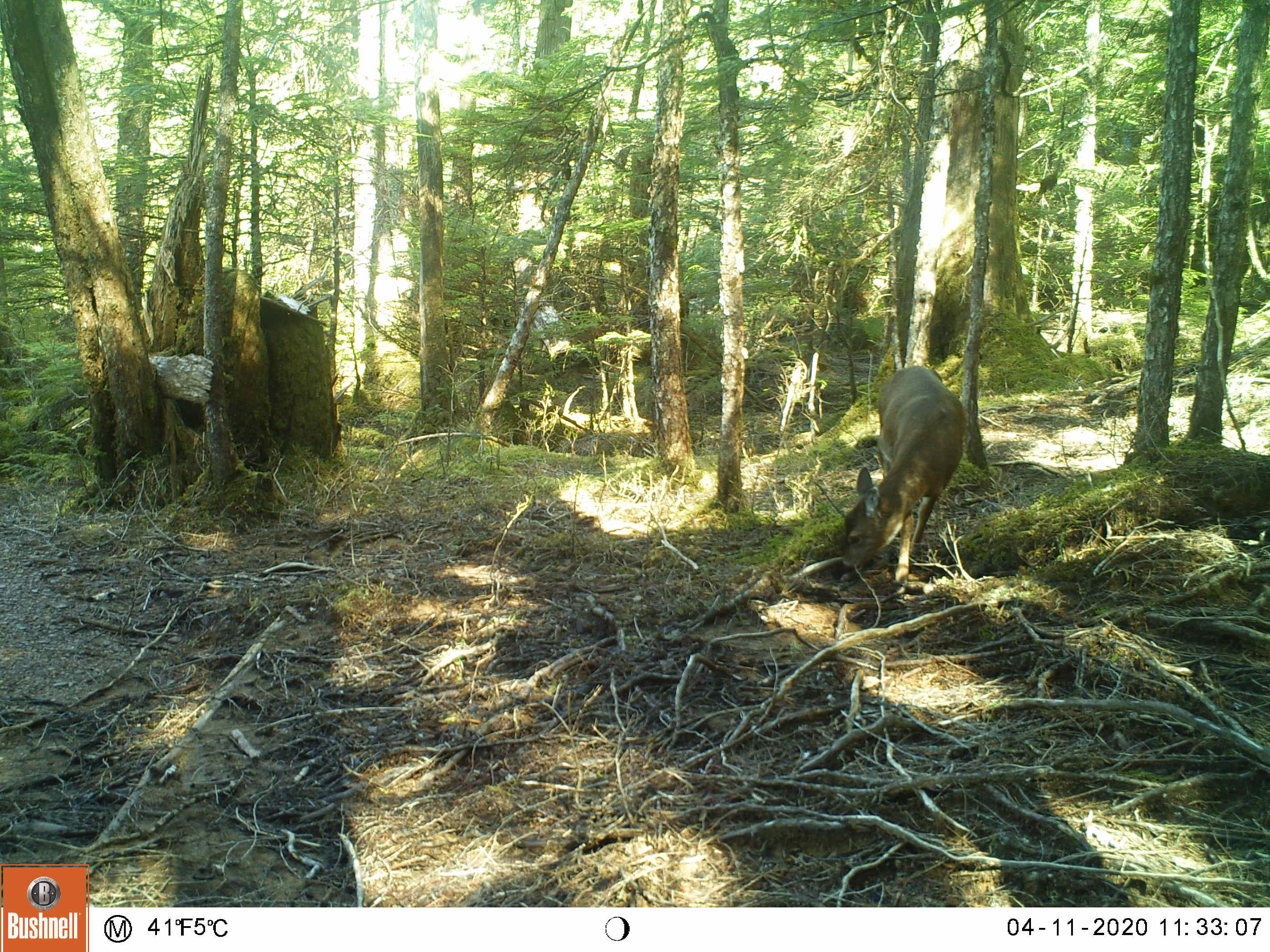
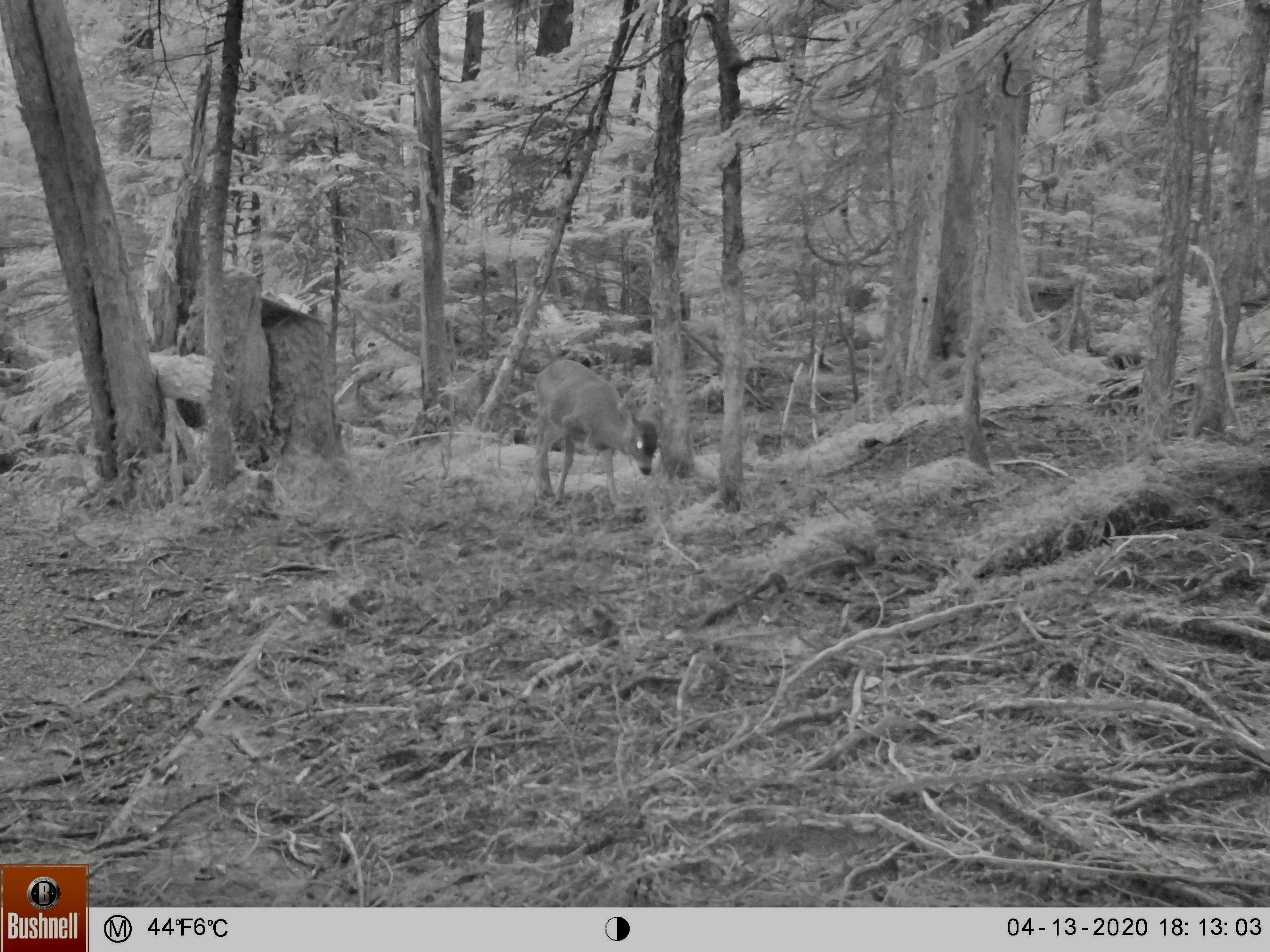
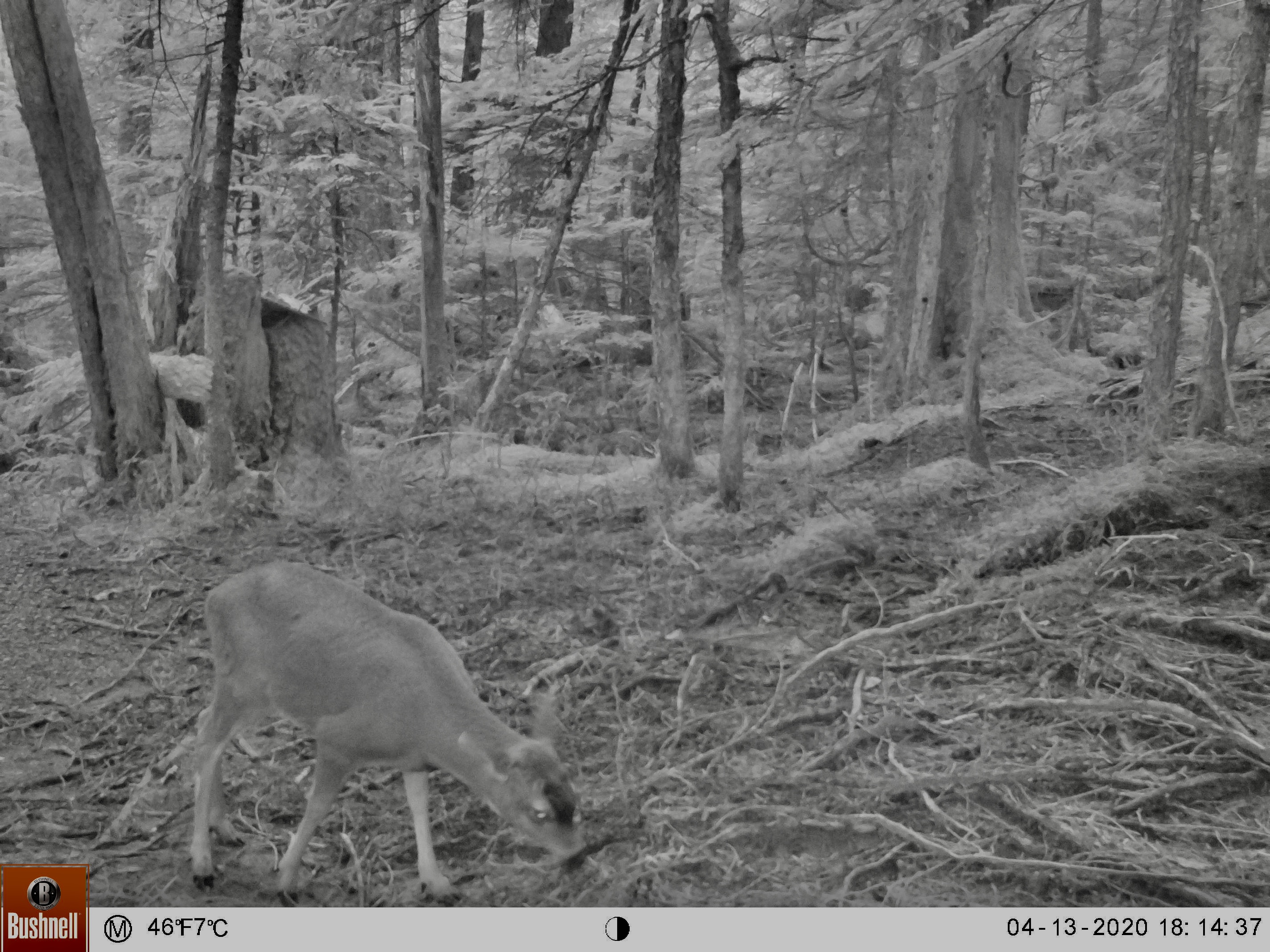

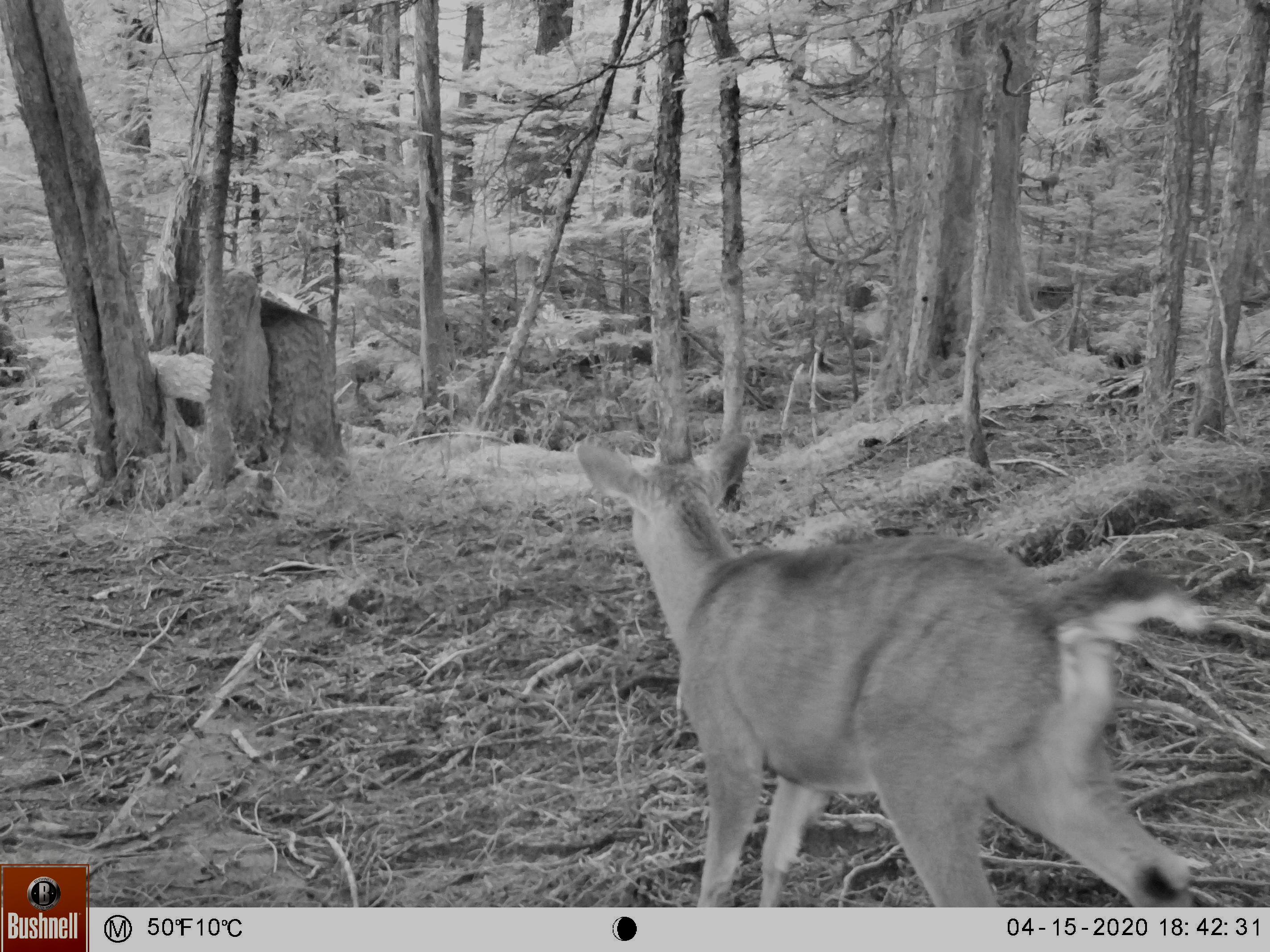
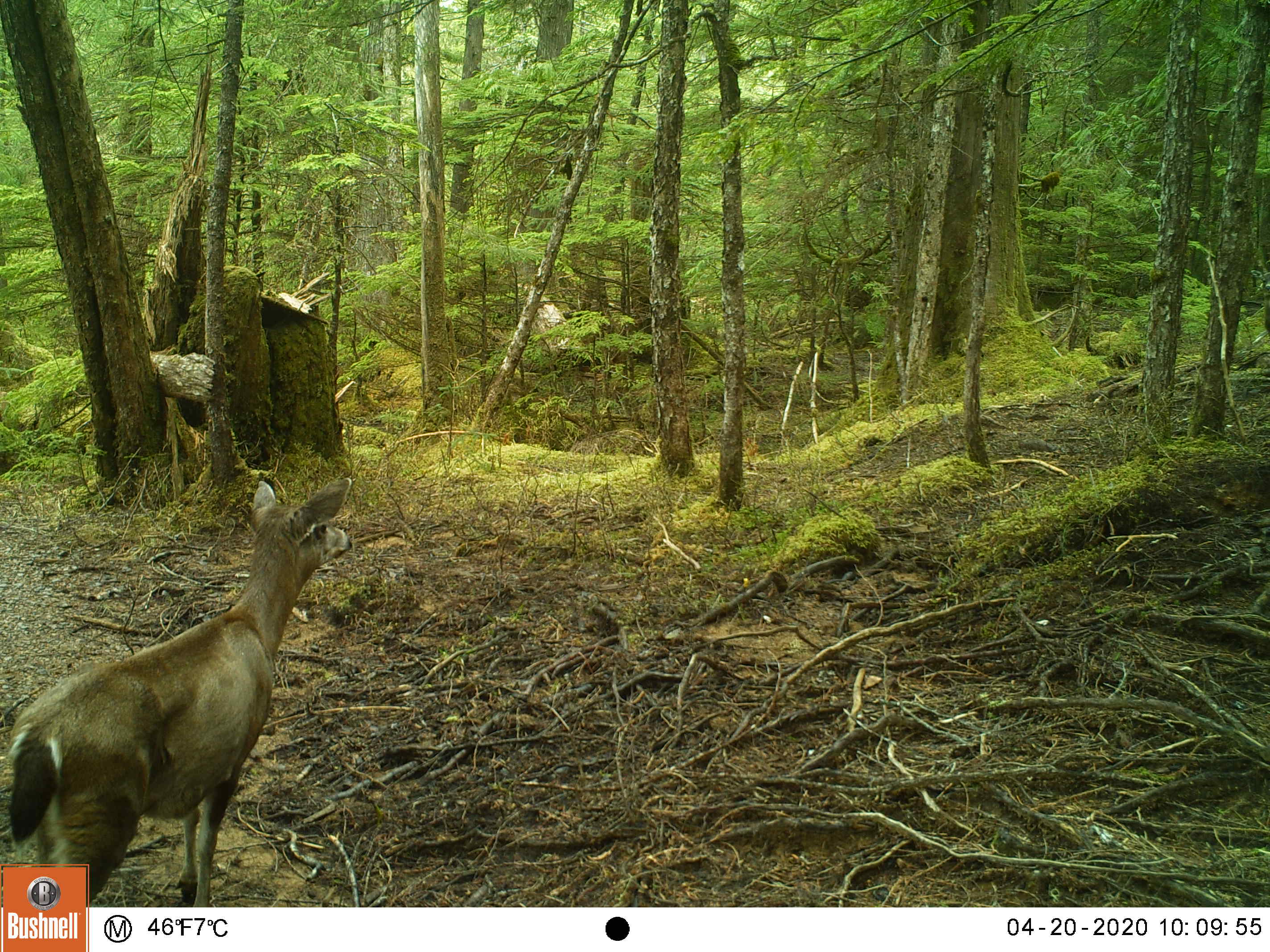
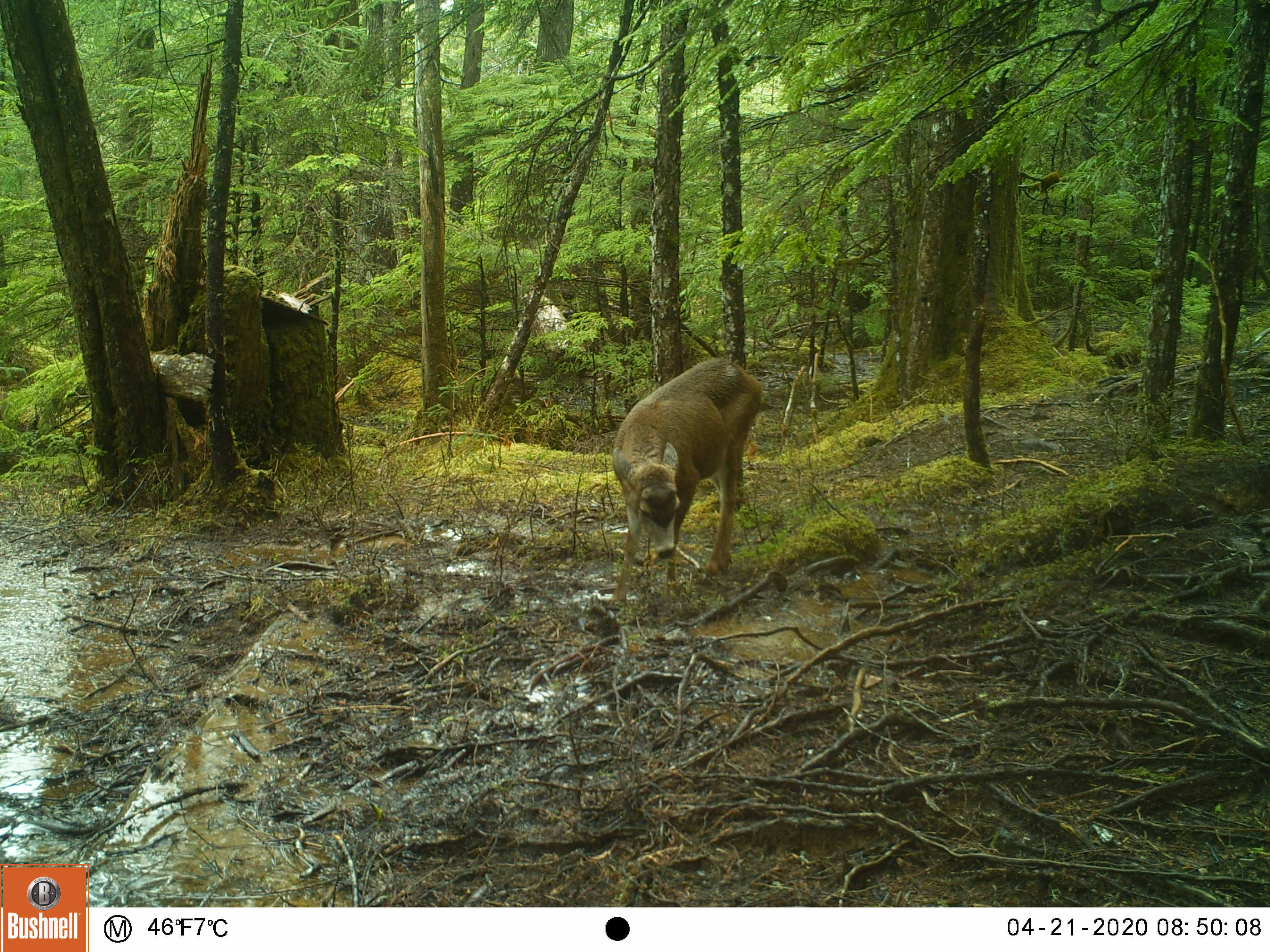
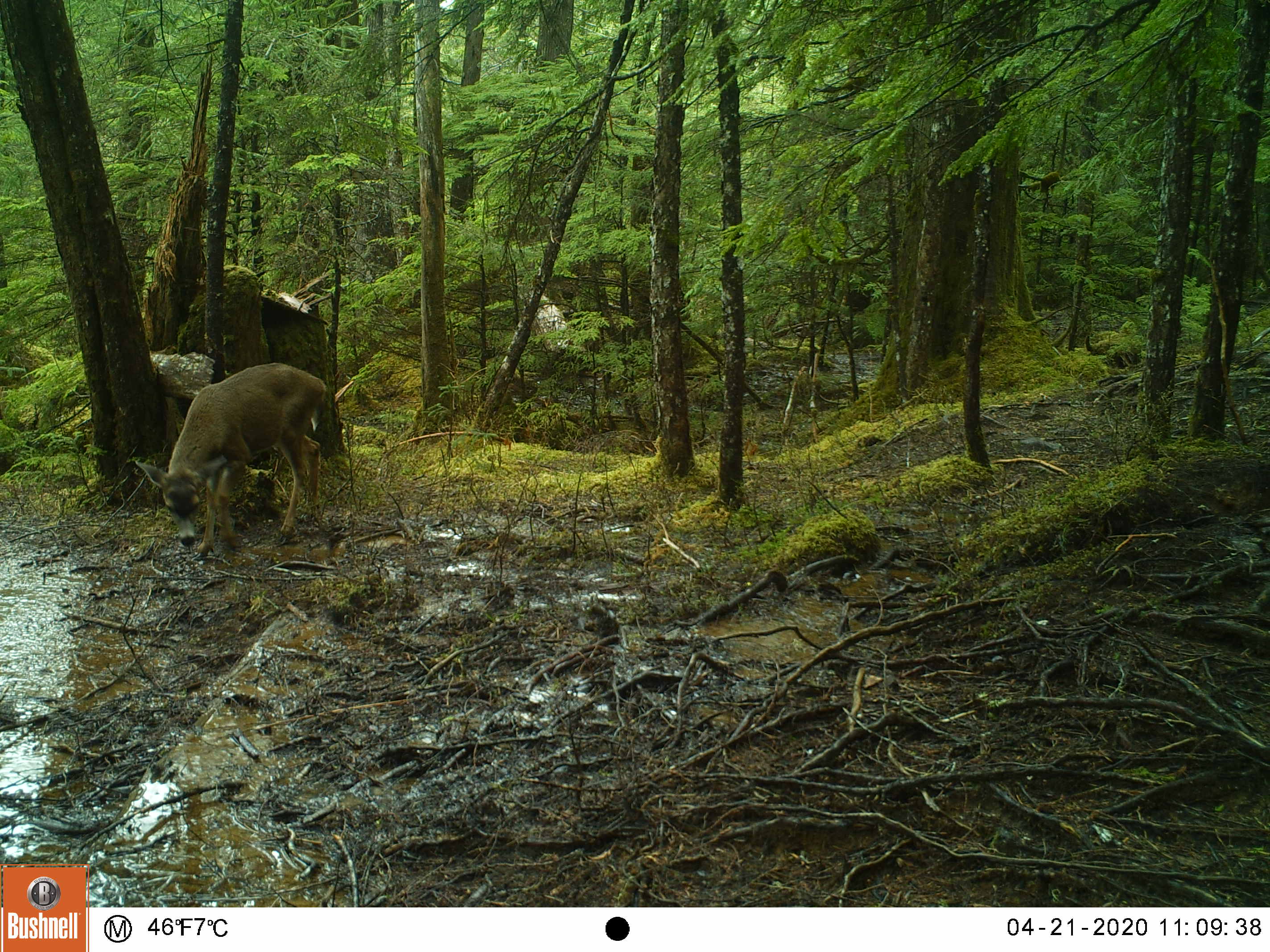
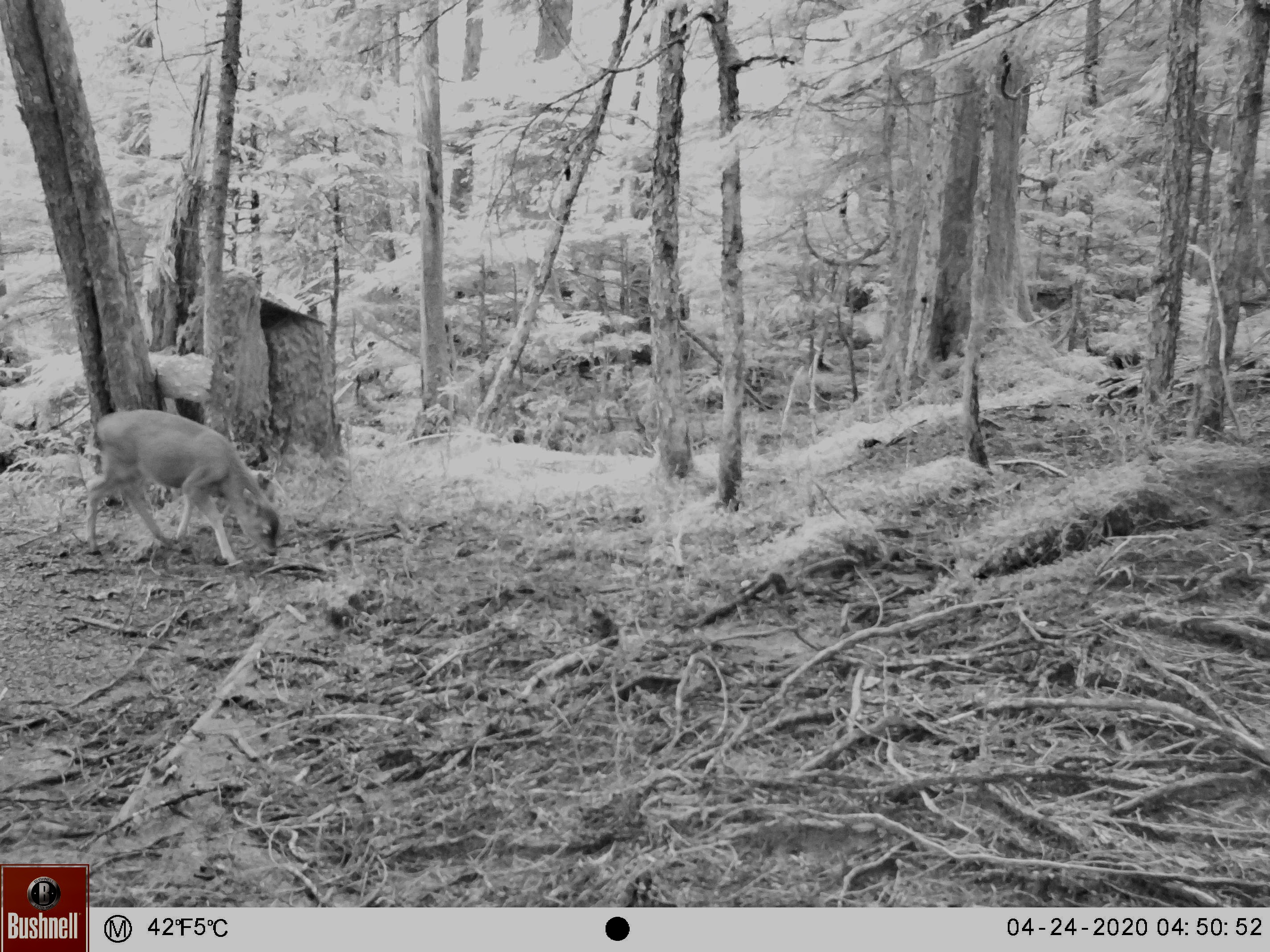
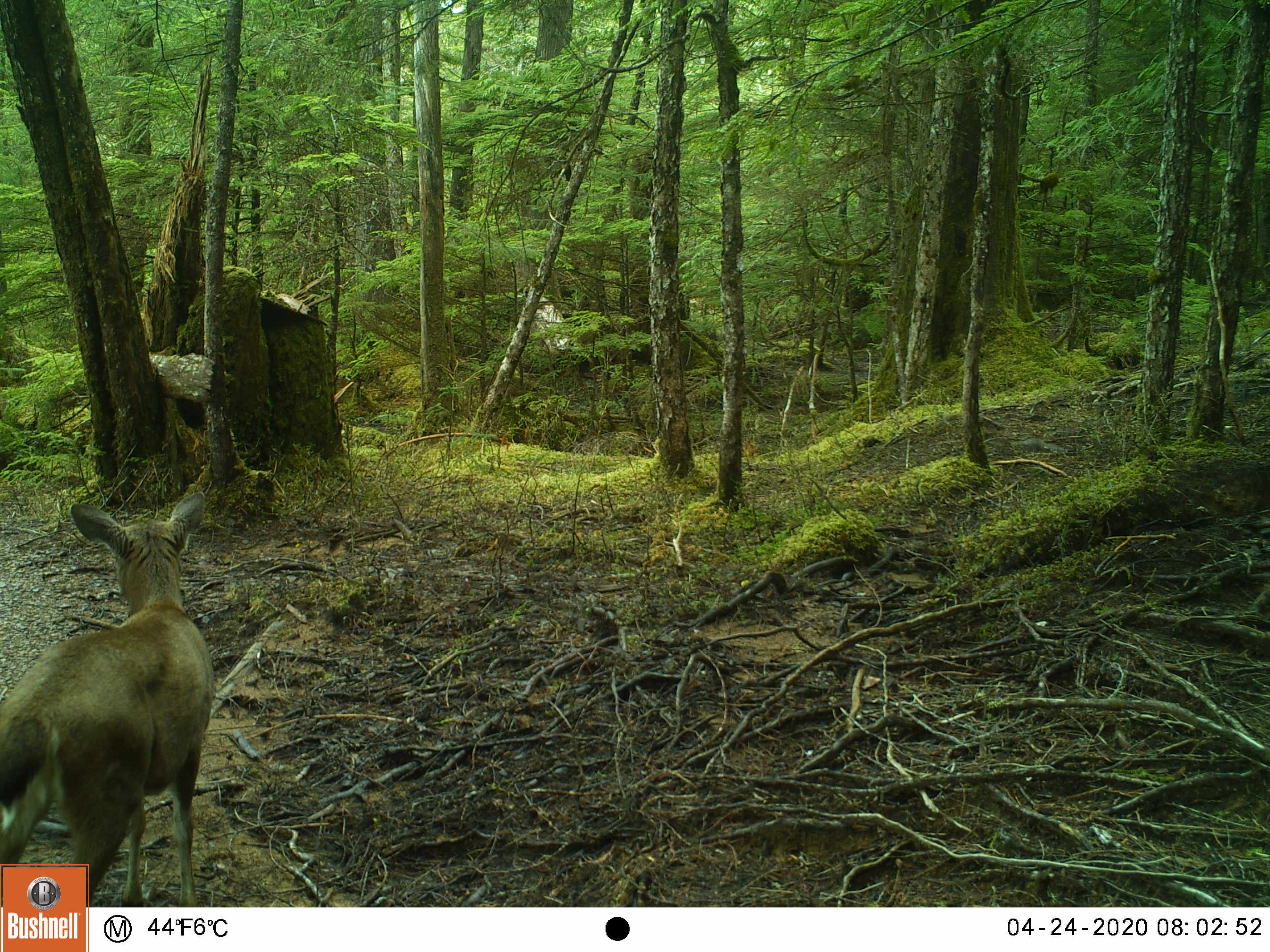
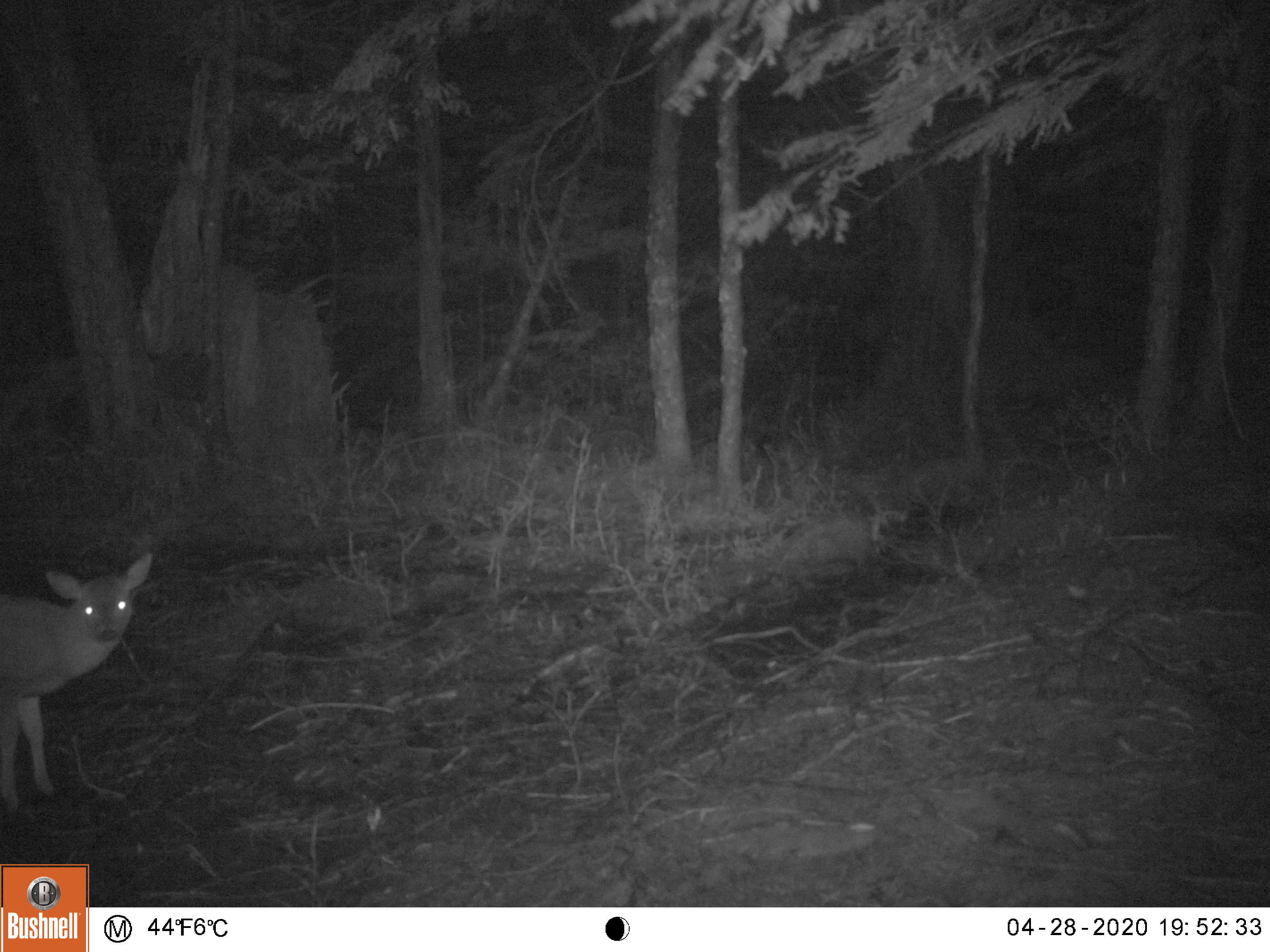
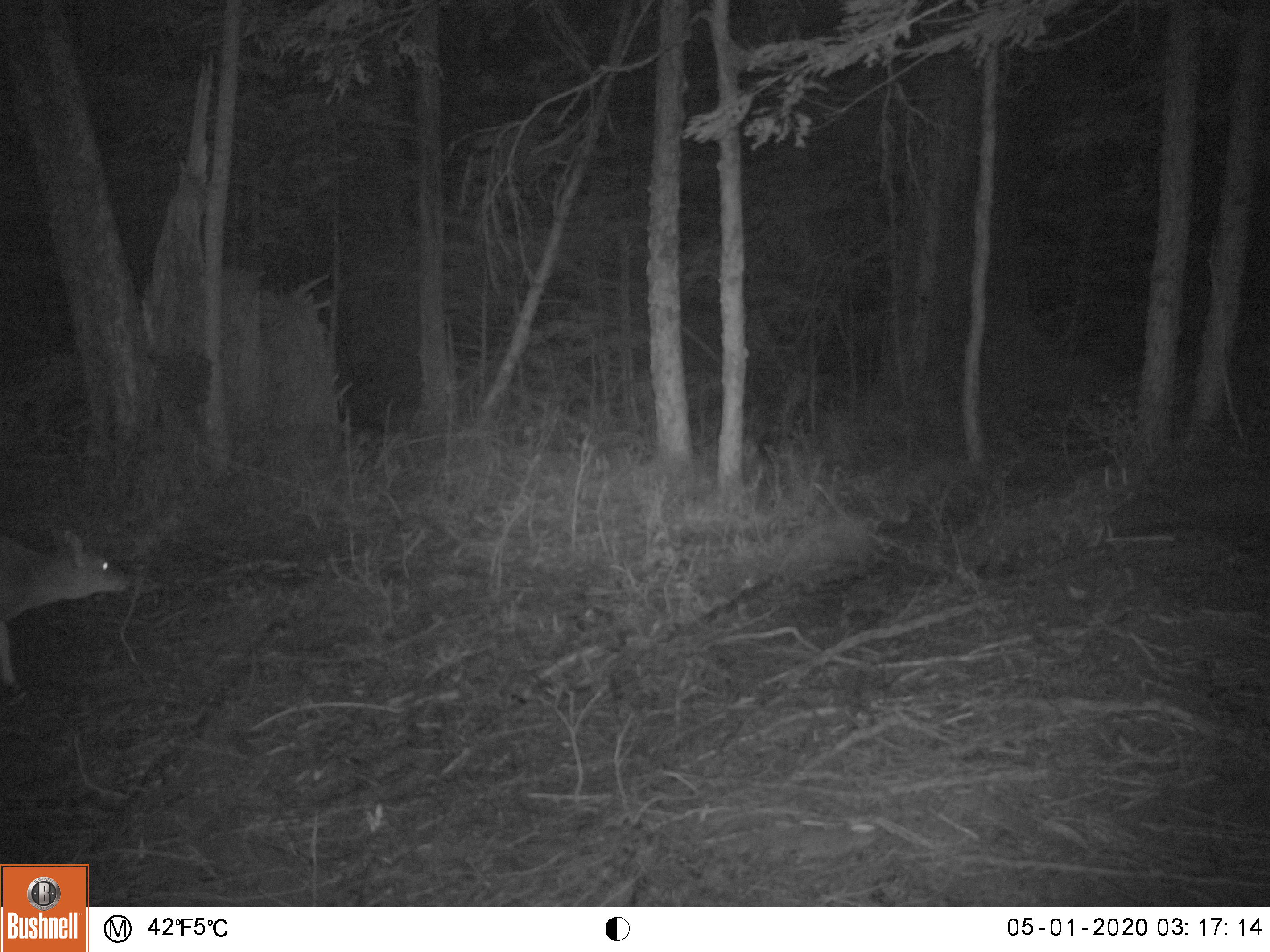
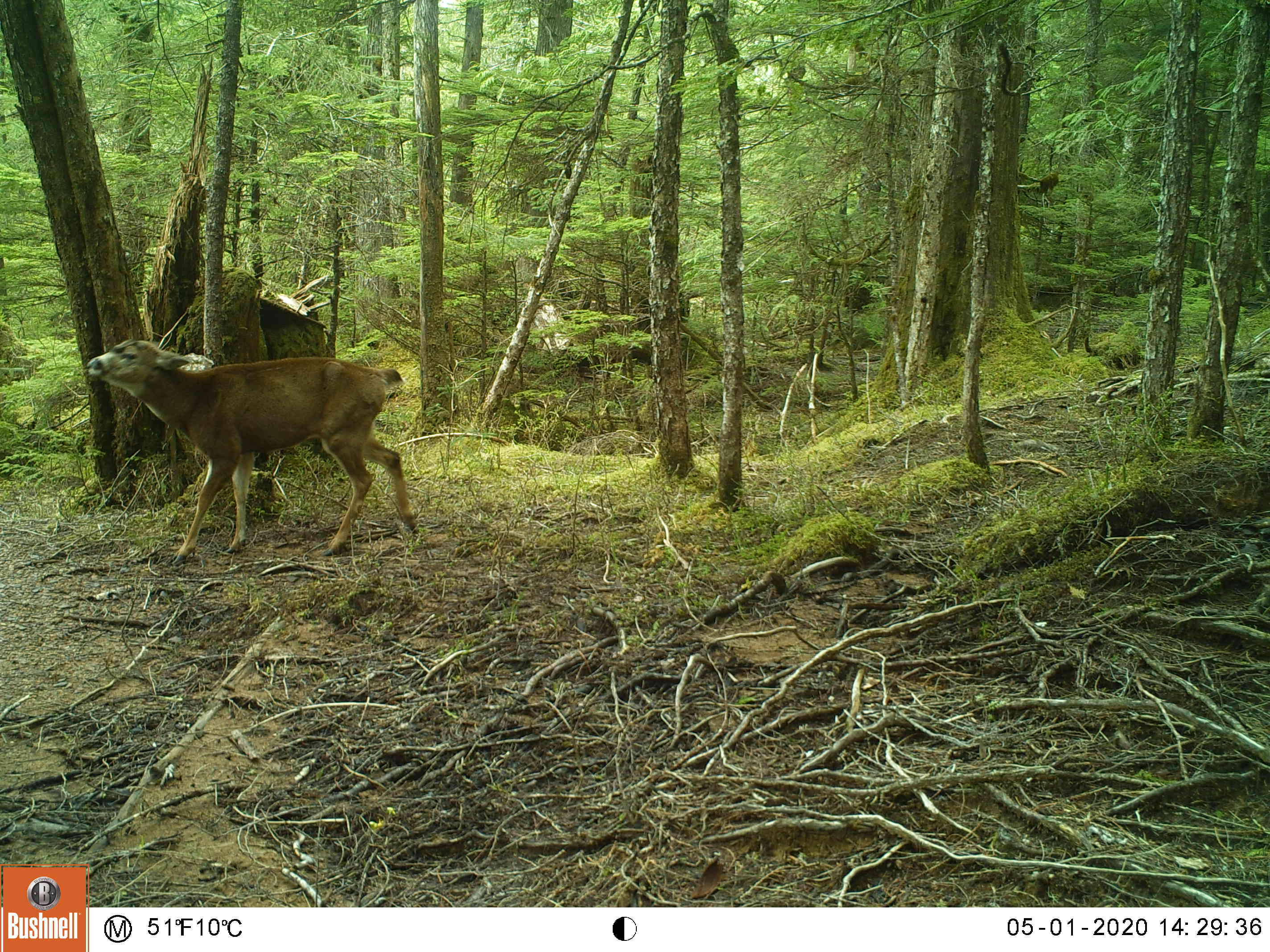

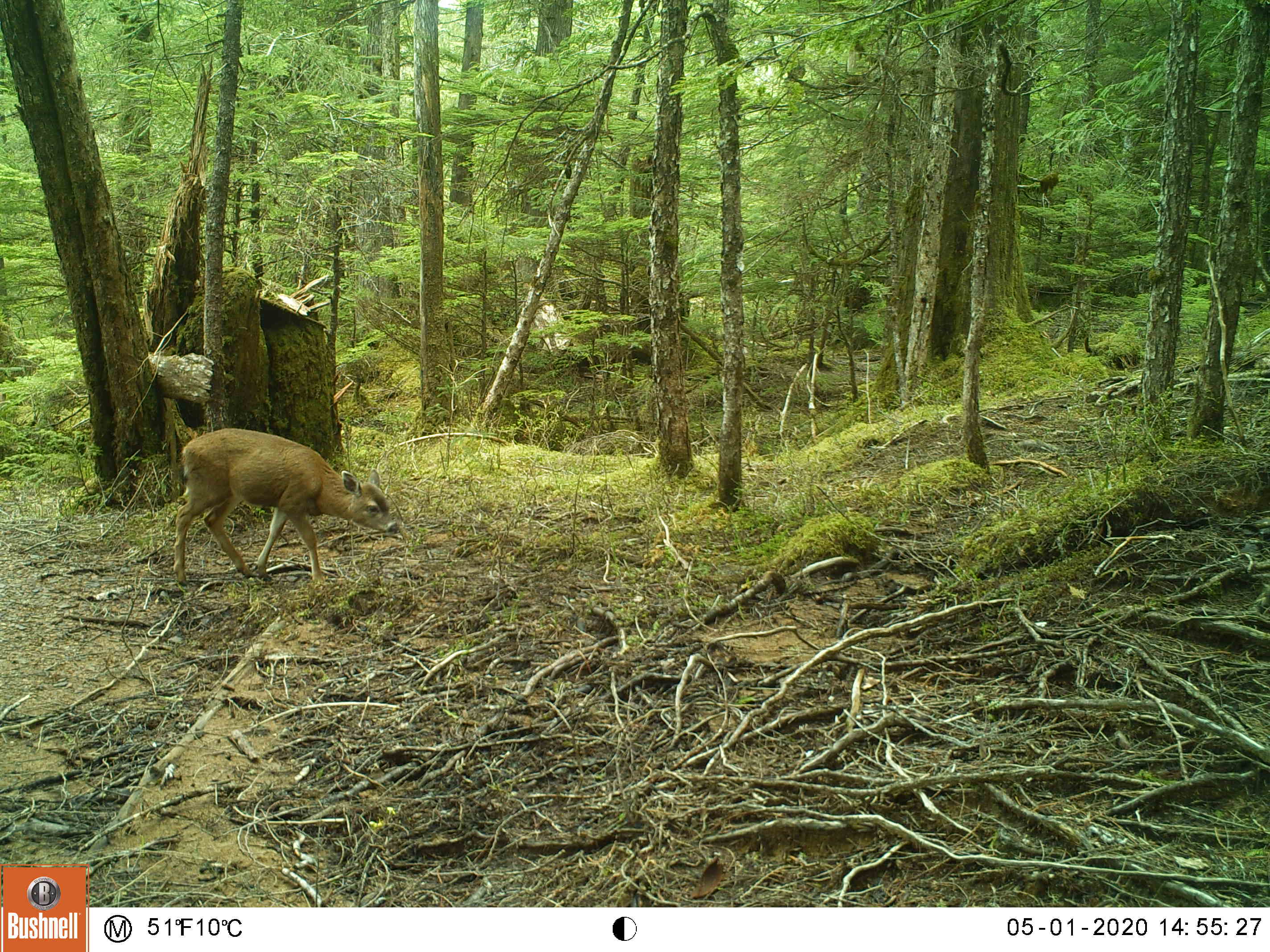
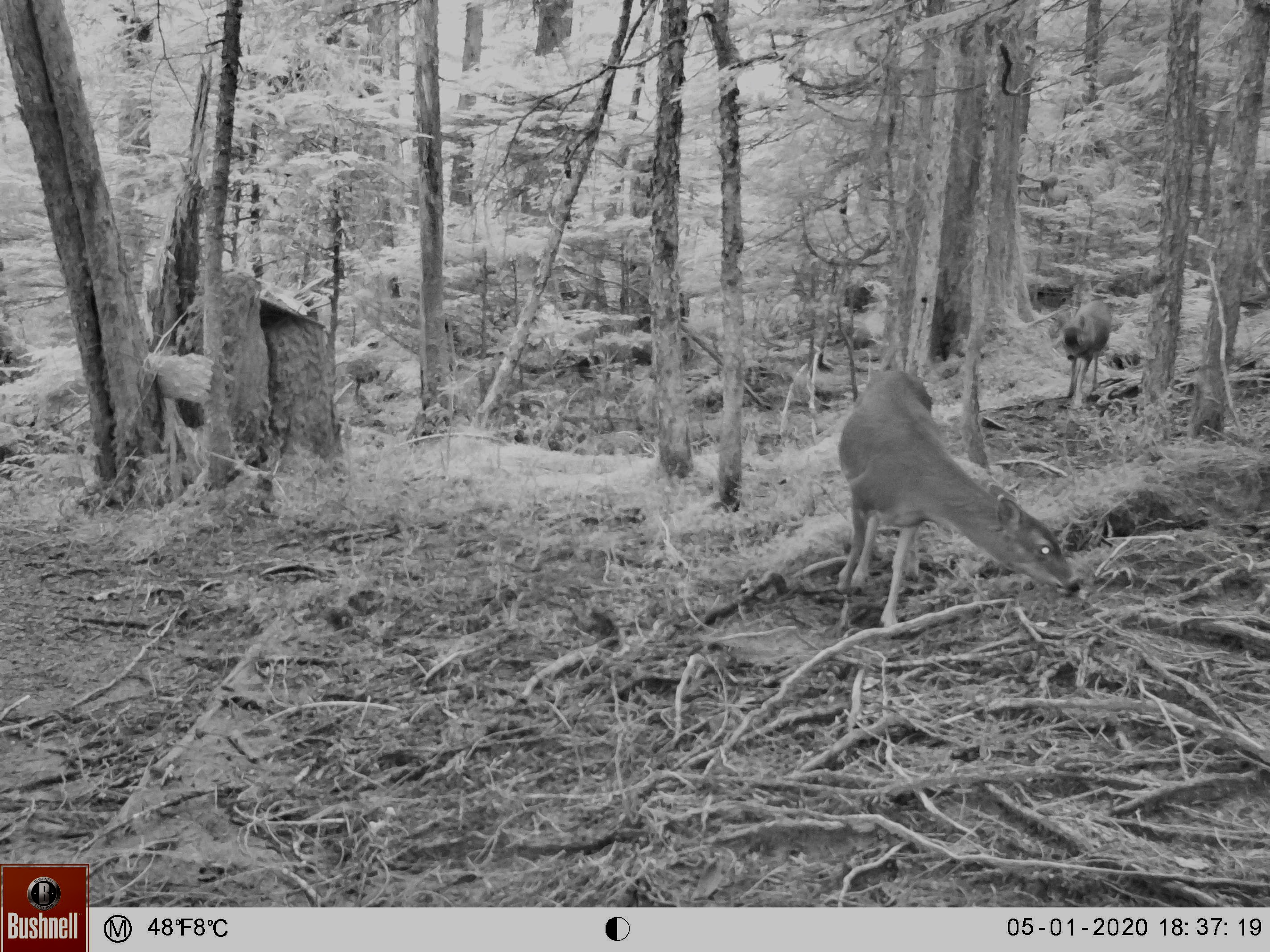
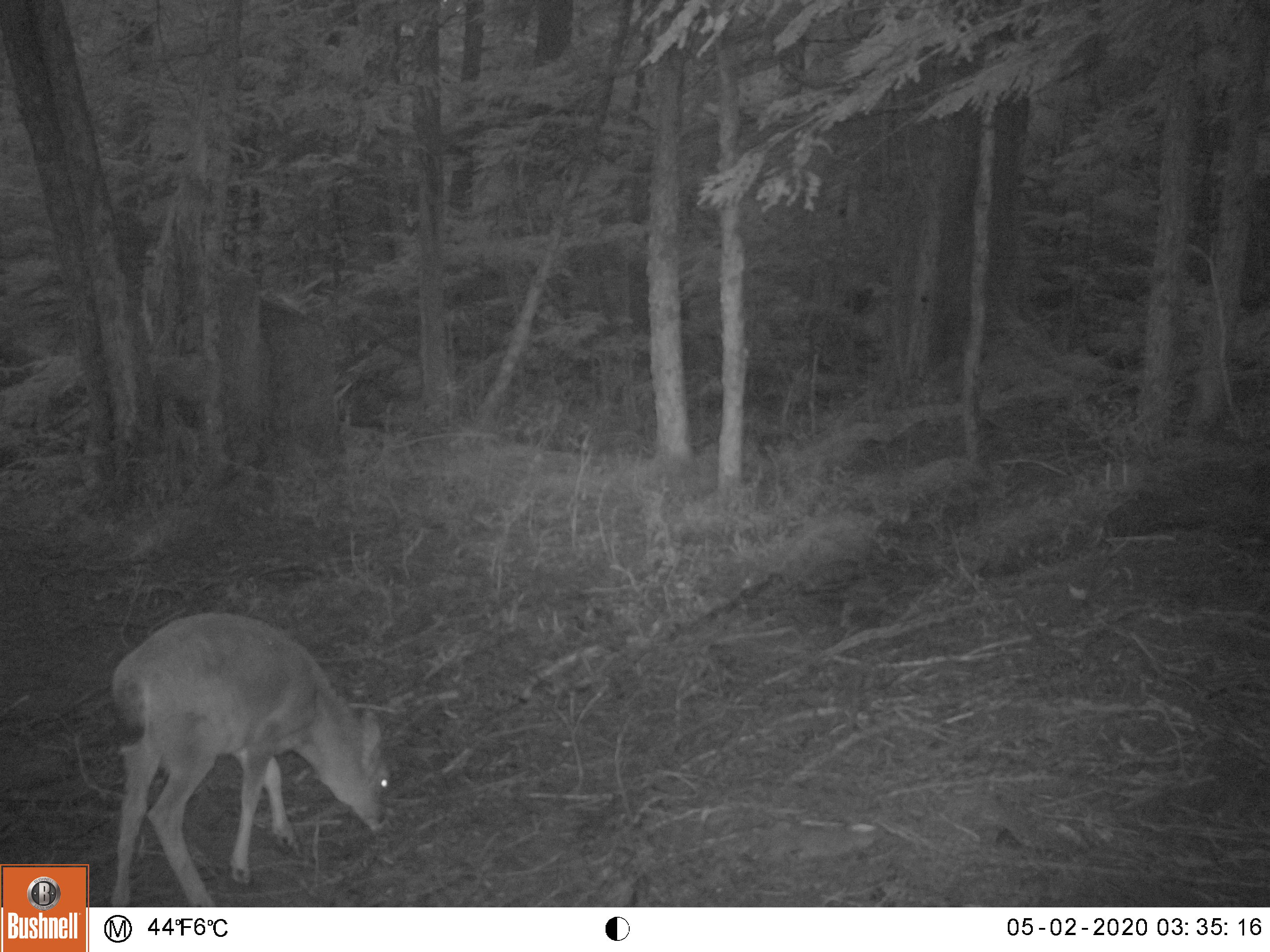
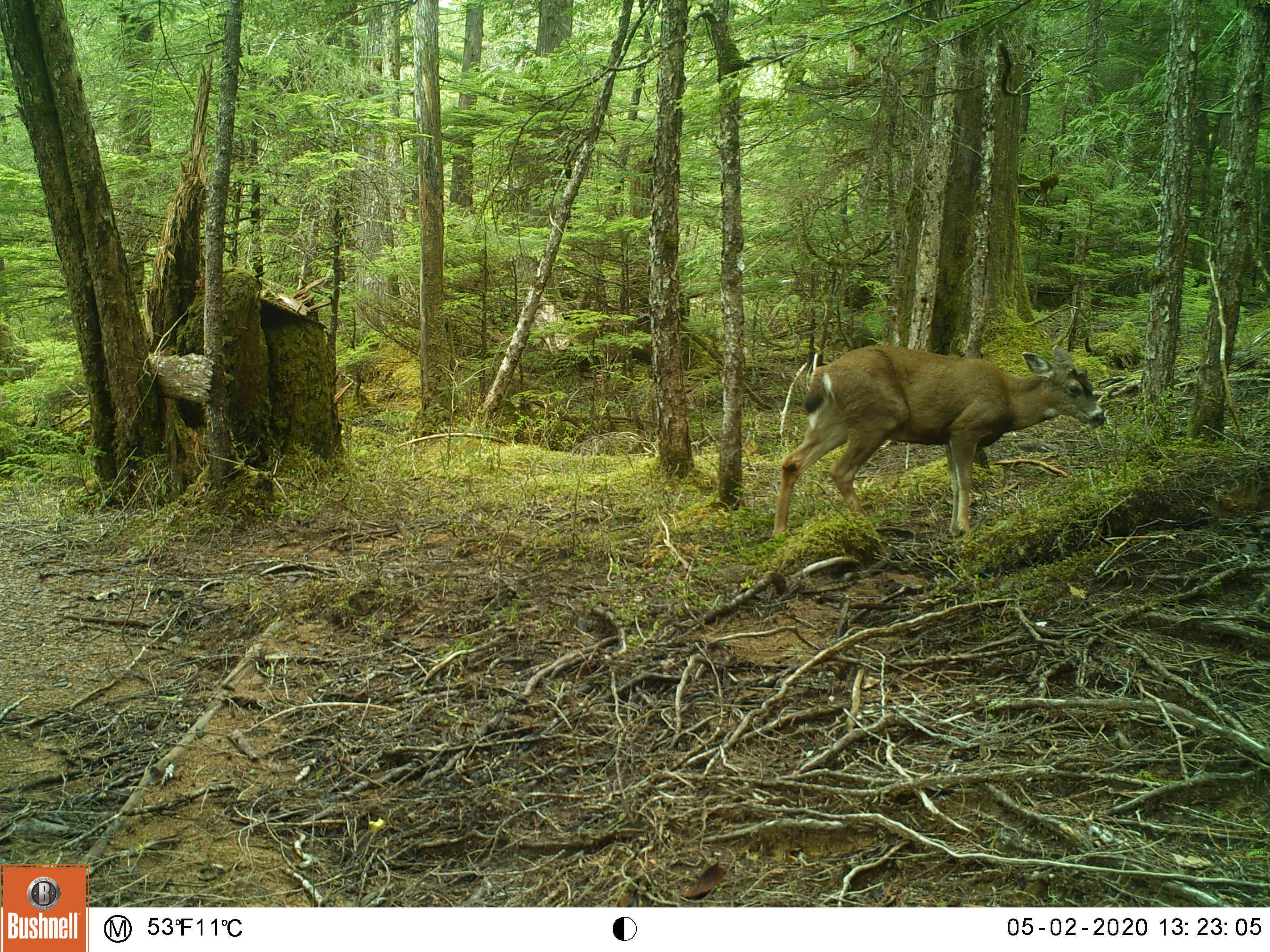
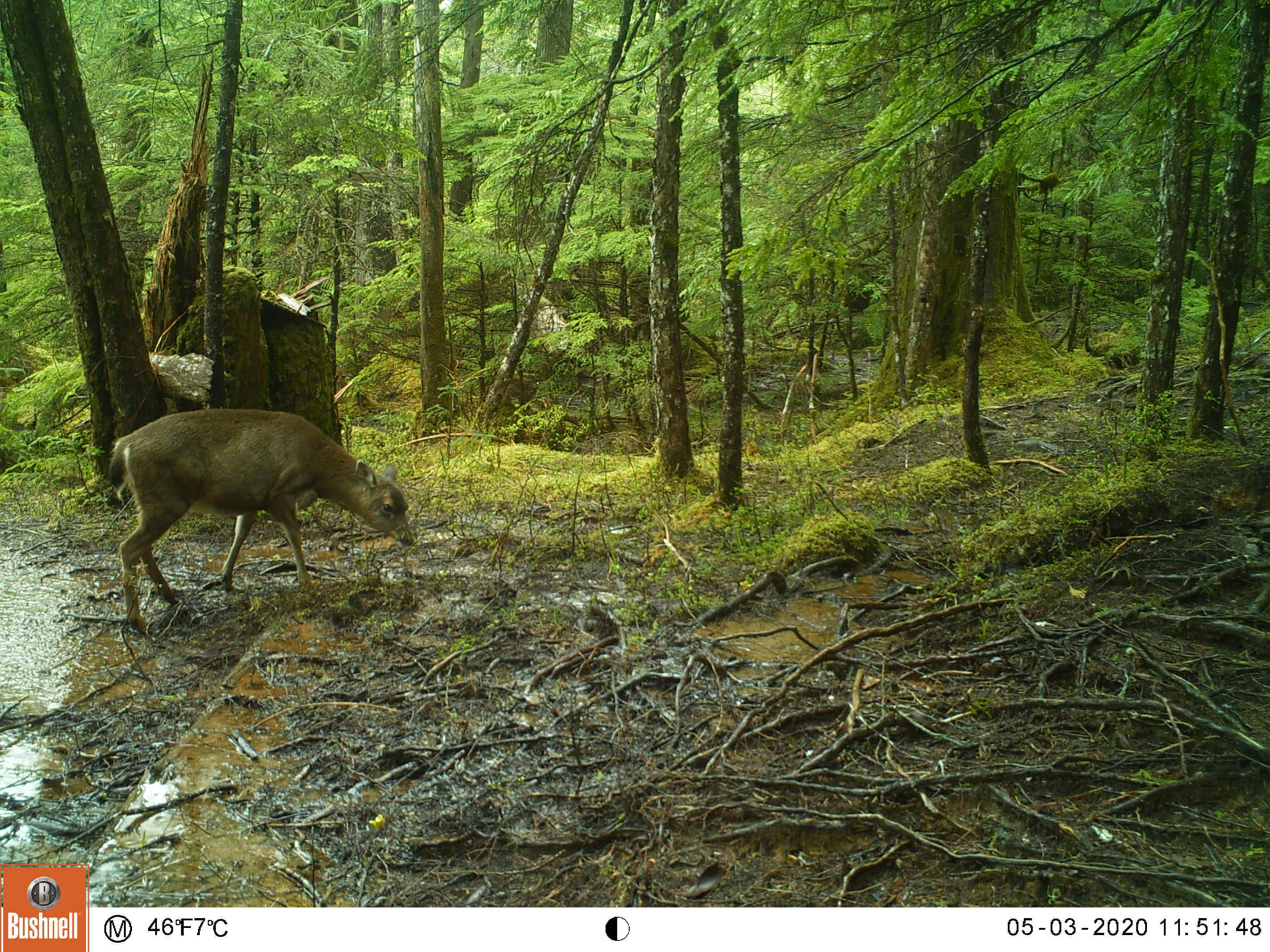
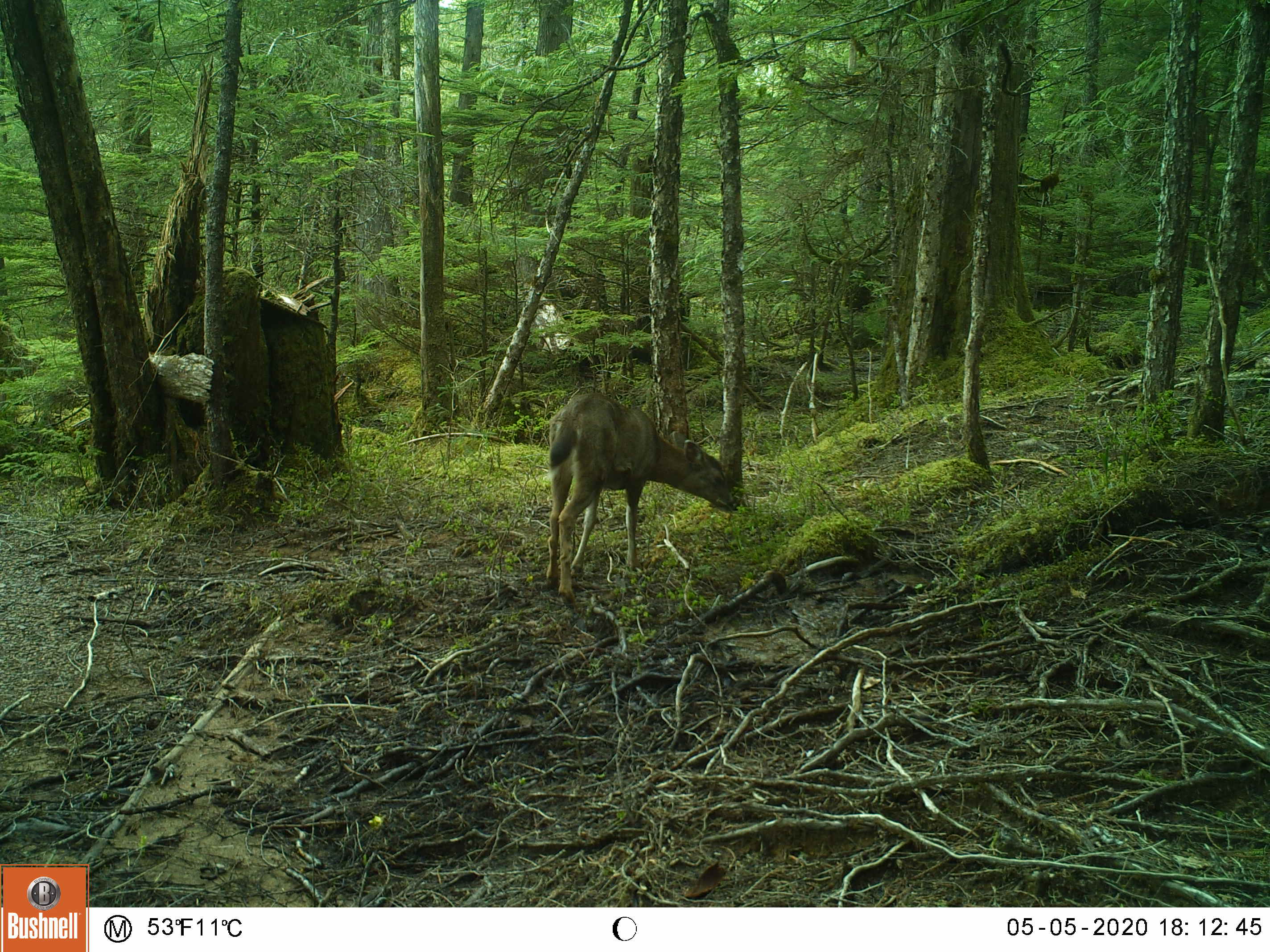
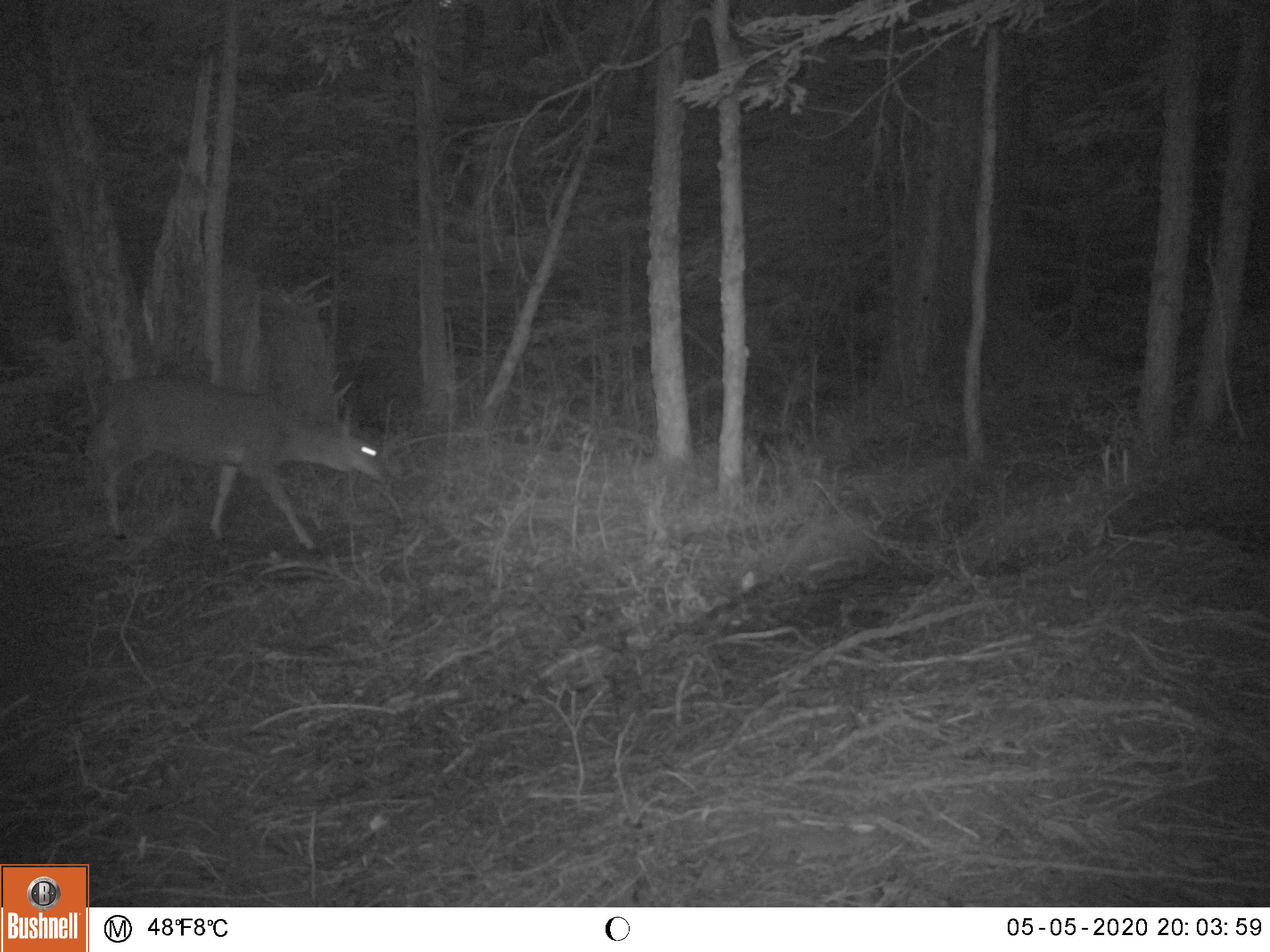
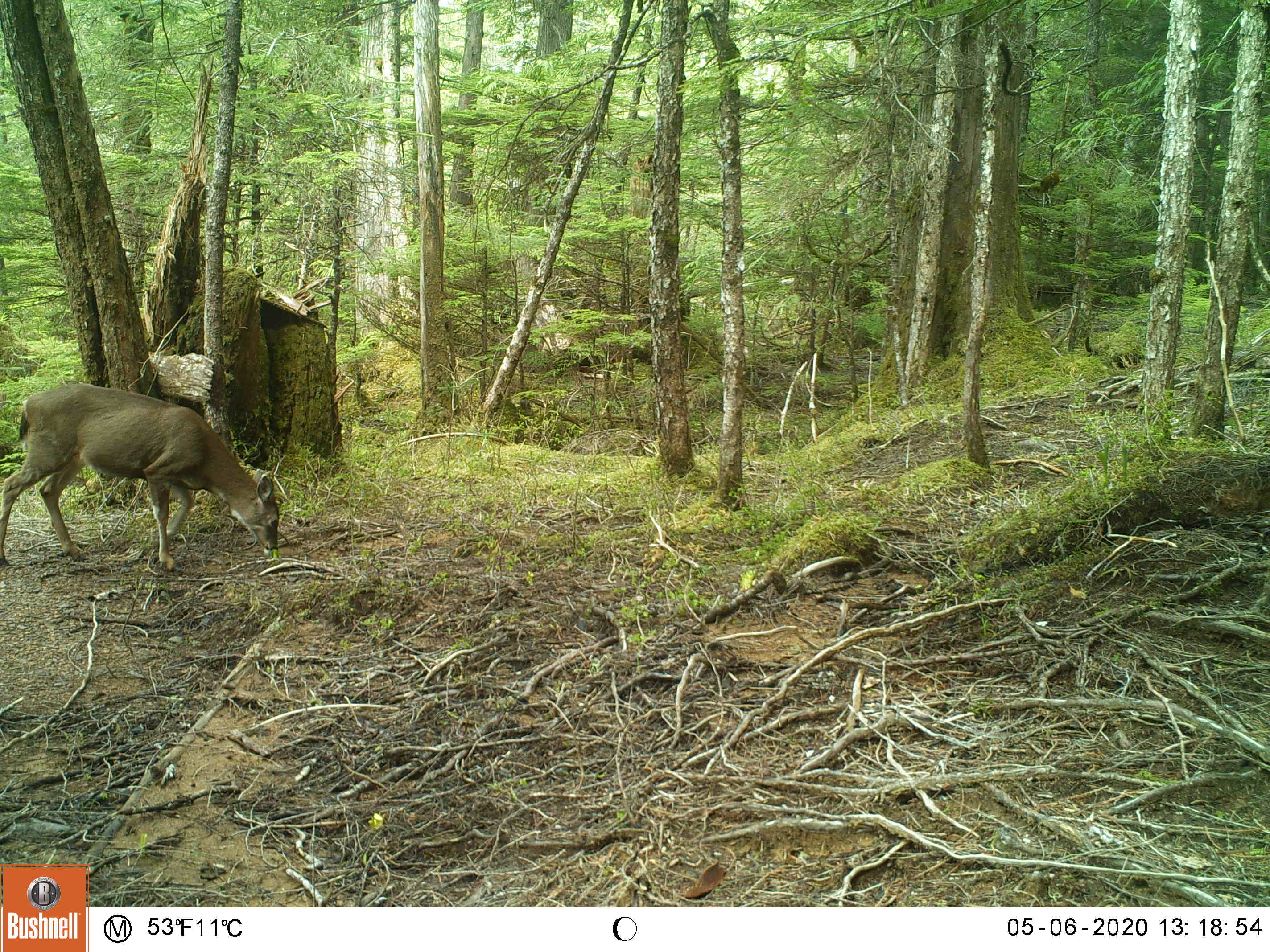

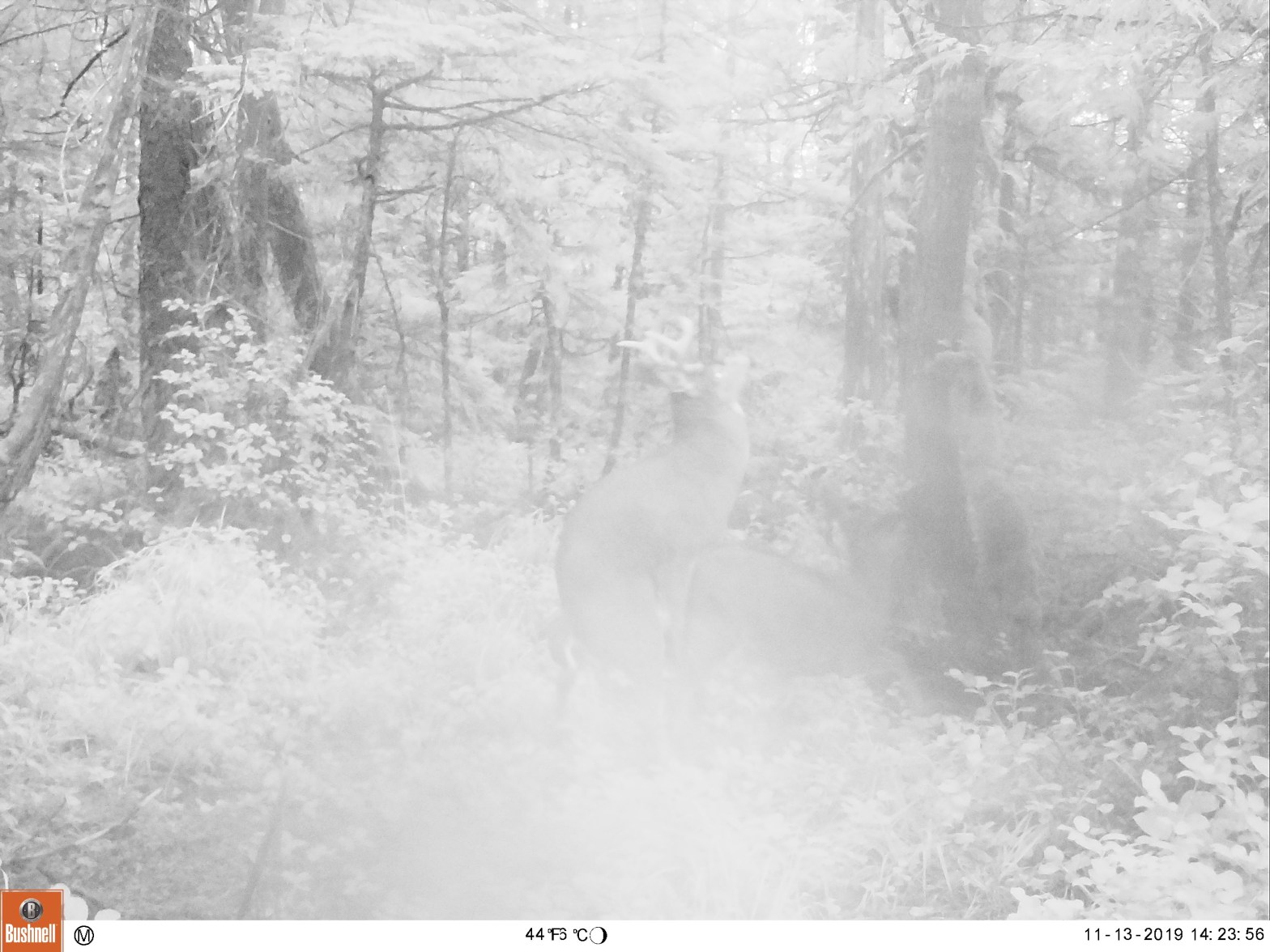
If you are new to using trail cameras, it’s easy to become frustrated when checking cameras and finding out that many – or even most – of the pictures are blurry or poorly exposed. Don’t be; your camera is on its own in the elements, and you have no control over what nature will dish out. The main purpose of a trail camera is to see what is out there, and a beautiful picture is a bonus. If 1% of your images are worth framing, you’re doing pretty well!

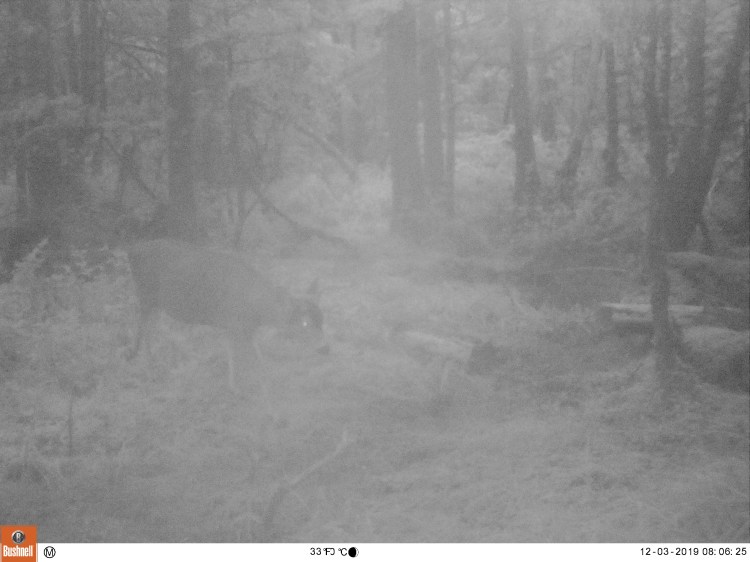

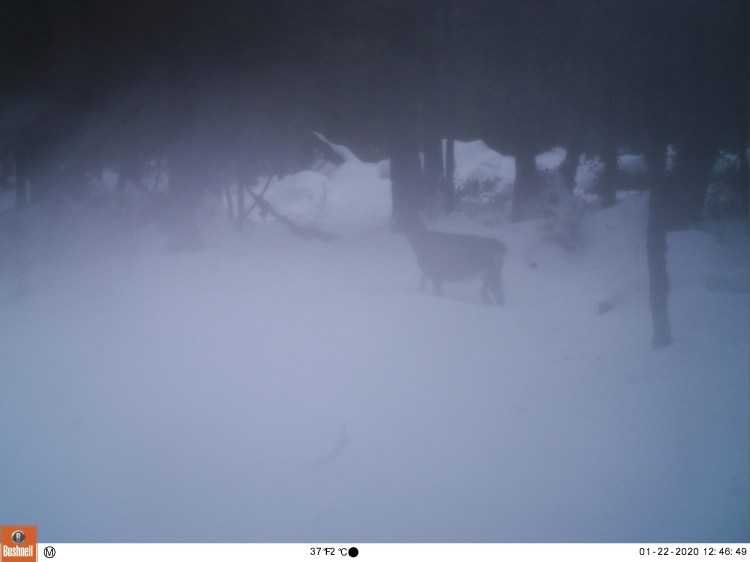
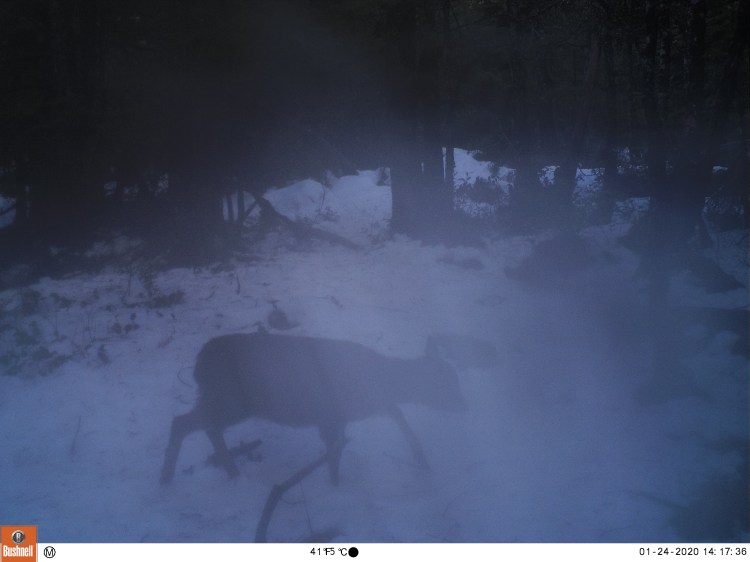

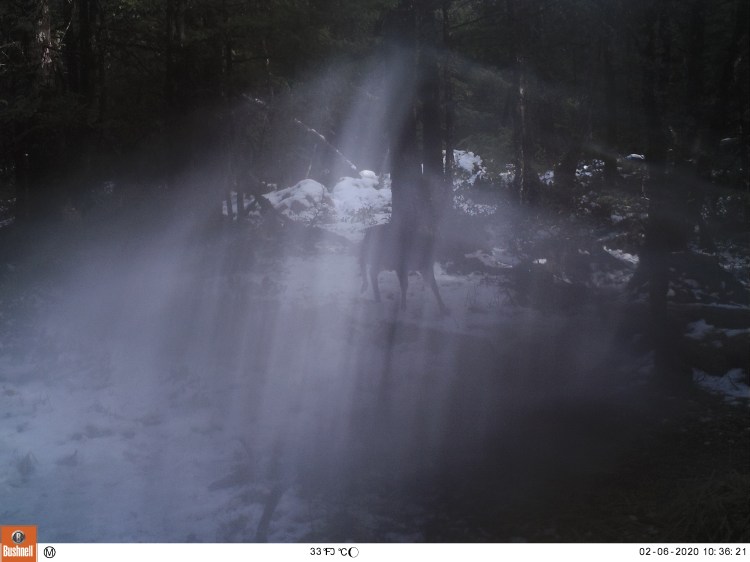

While lousy pictures are unavoidable, there are a few things you can do to improve your chances of not getting burned by the weather or the lighting.


2. Always aim your camera at a downward angle, even if only slightly. If storms usually come from one direction, point your camera the opposite way. If there is a choice, a good size tree between your camera and a driving rain storm helps a lot; plus the bases of big trees don’t shake in the wind.
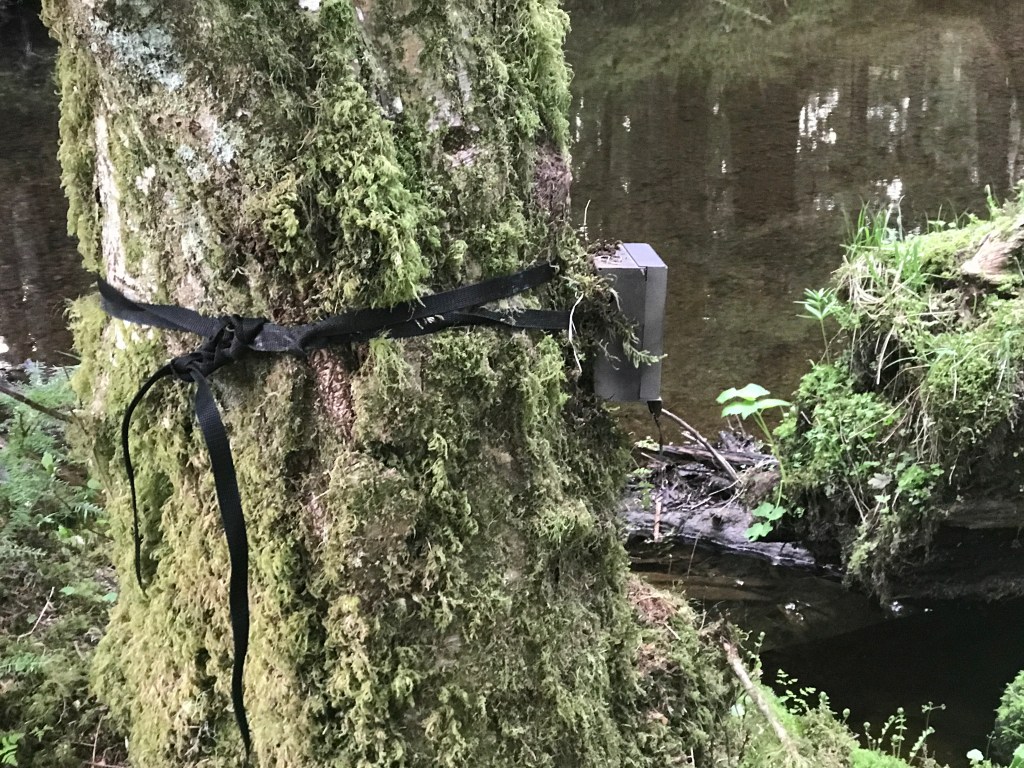
Tie your cameras on tightly after you buckle the belt and pack them in with moss, leaves, or whatever is handy to prevent another act of nature – known as bears or rutting bucks – from tearing them down or readjusting your aim.
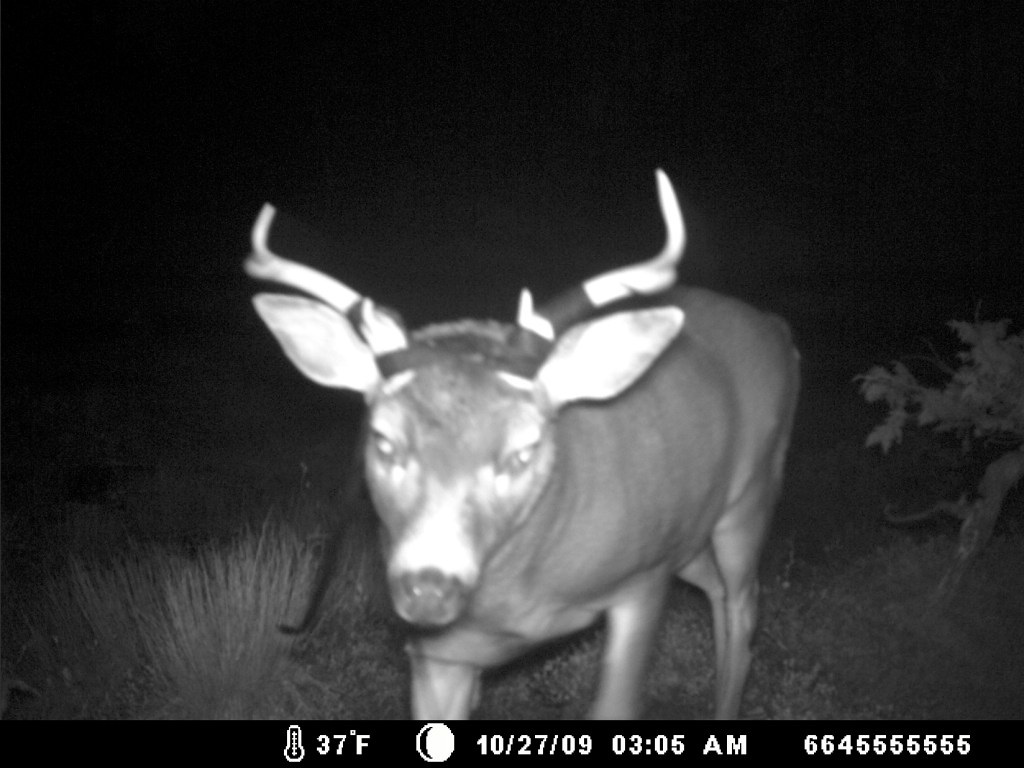
This young buck taught me to tie cameras on tightly; he tore one camera off the tree and wore the strap on his antlers for the rest of the rut, but that didn’t stop him from thrashing my other camera almost every day. Somehow, that one stayed up.
3. Photo editing software can save a lot of pictures and make a mediocre picture a good one. At the very least, it can make a blur identifiable.
I use the adjustment tools that come standard on Macs in Photos, but I’m sure there are other programs that are as good or better.
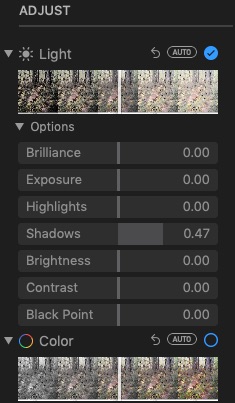
The main tool I use for daytime or full color photos is the shadow tool. Dark images can be a problem, especially if you put your cameras in the big timber or in the brush. I also find black bears don’t photograph well in less than optimal lighting, but adjusting the shadows can help bring out some of their details.
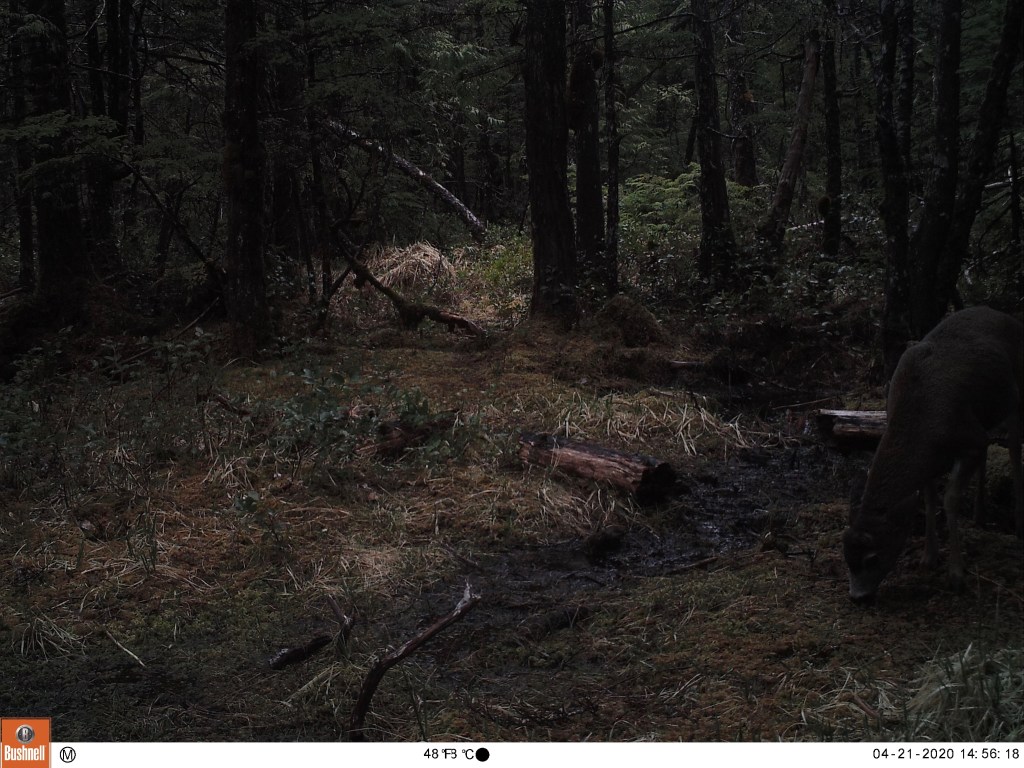


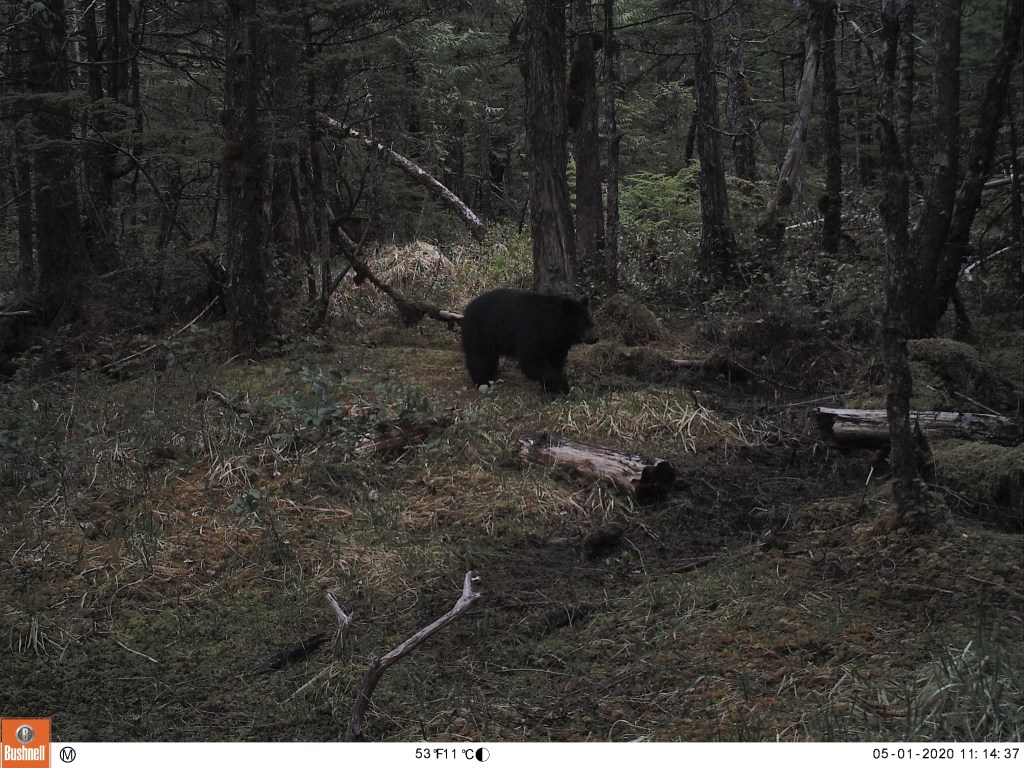
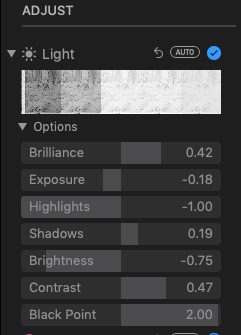
Another common problem I encounter is the infrared flash going off when it doesn’t need to. This happens most often under shadowy conditions in the timber, or when the camera is shaded but the subject or the background is well lit. Most of the time, adjusting the slider at the top of the tools is the best option to bring some sort of clarity to the image if it’s really bad, or make a mediocre image presentable, and it can make a good black and white image better.


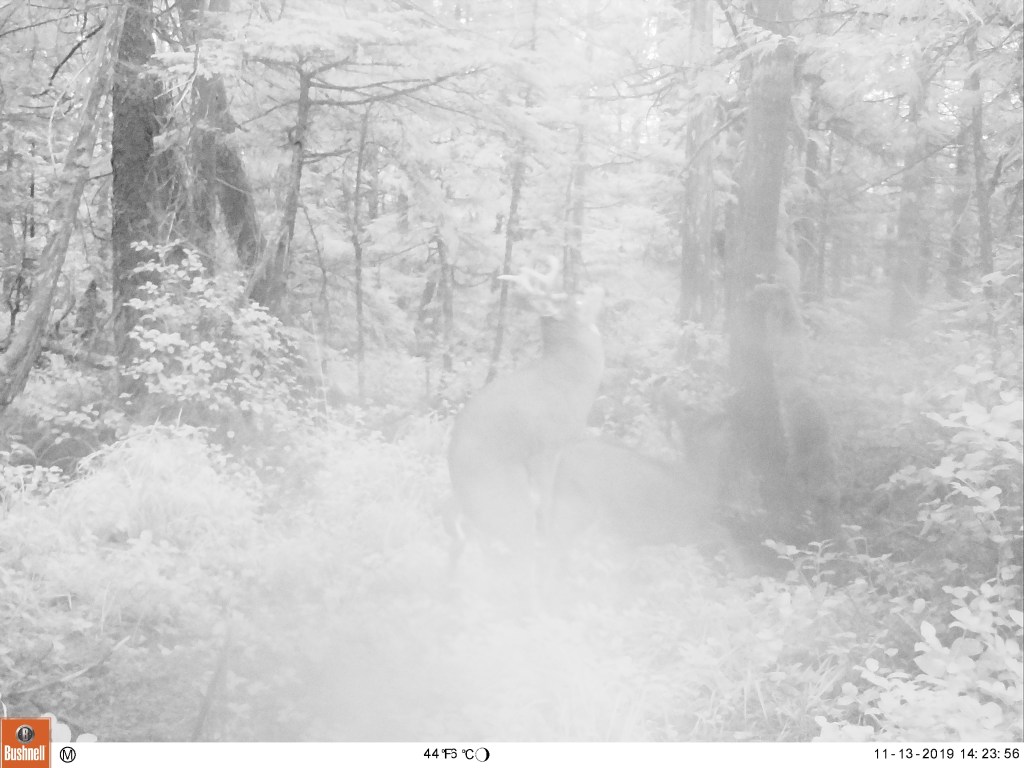
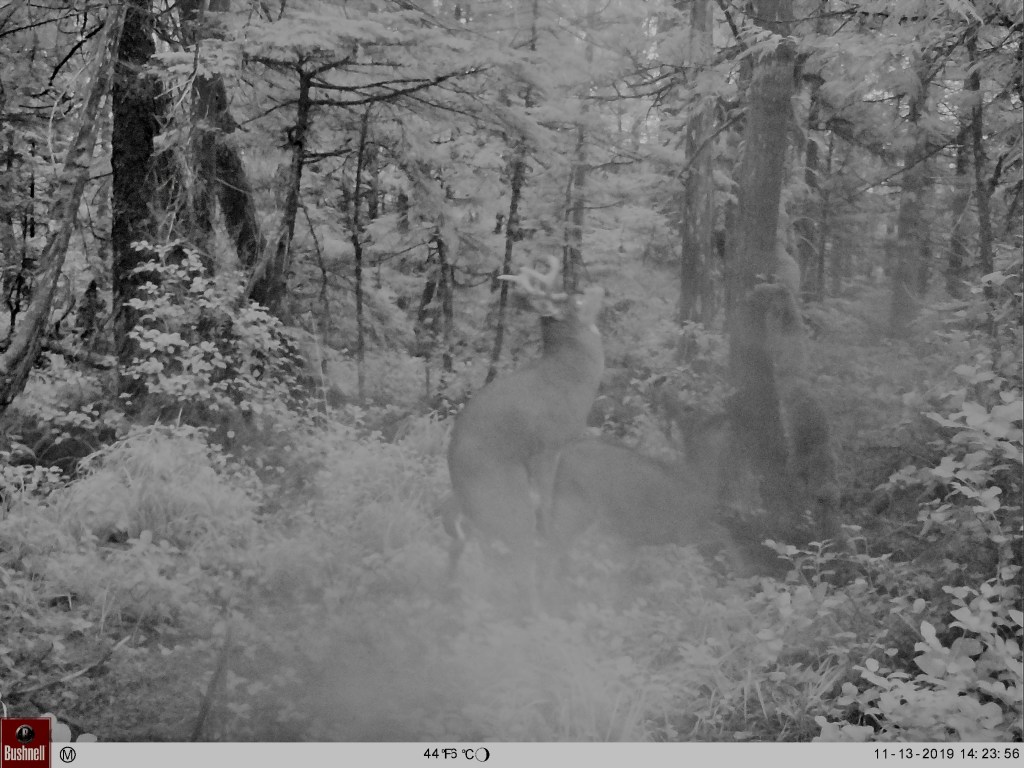
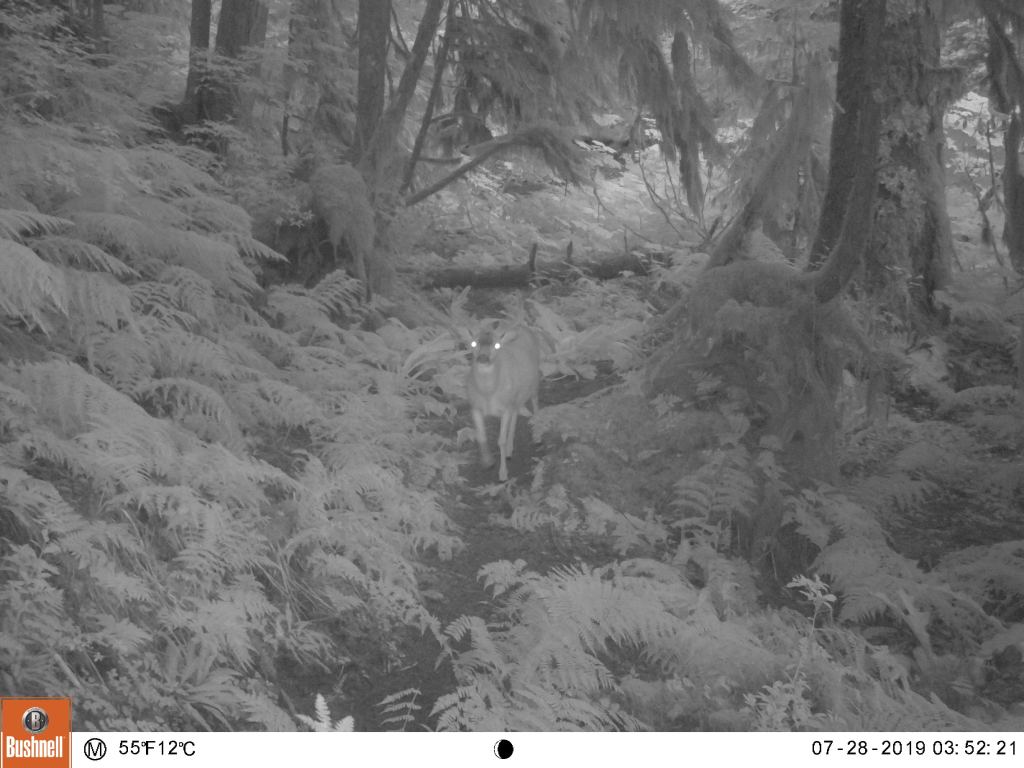

Bugs, falling branches and trees, and other acts of nature can cause problems that are best dealt with by checking your cameras often, but sometimes you just have to get lucky.

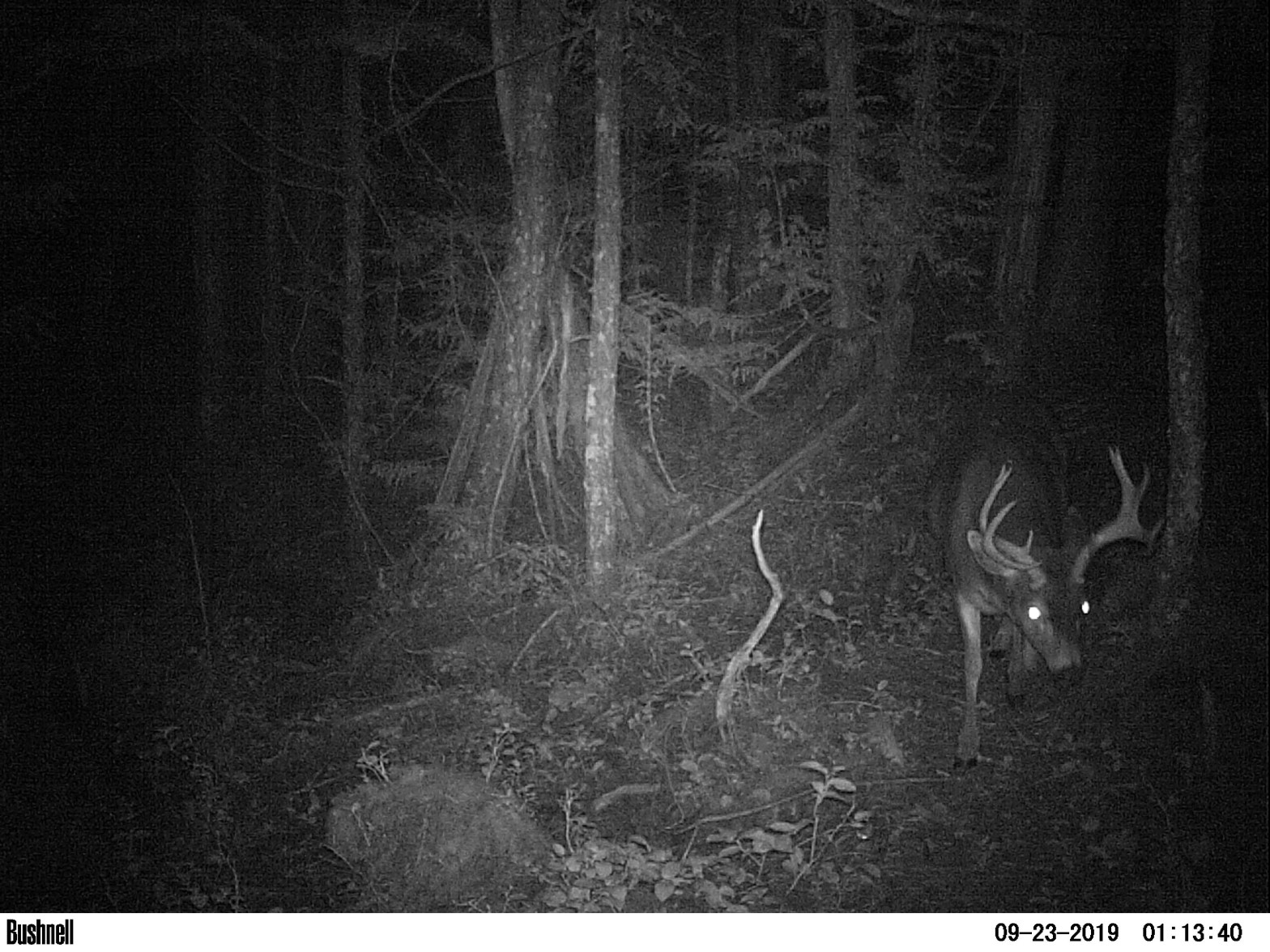
Sitka Blacktail Bucks on Revillagigedo and Gravina Island in Southeast Alaska

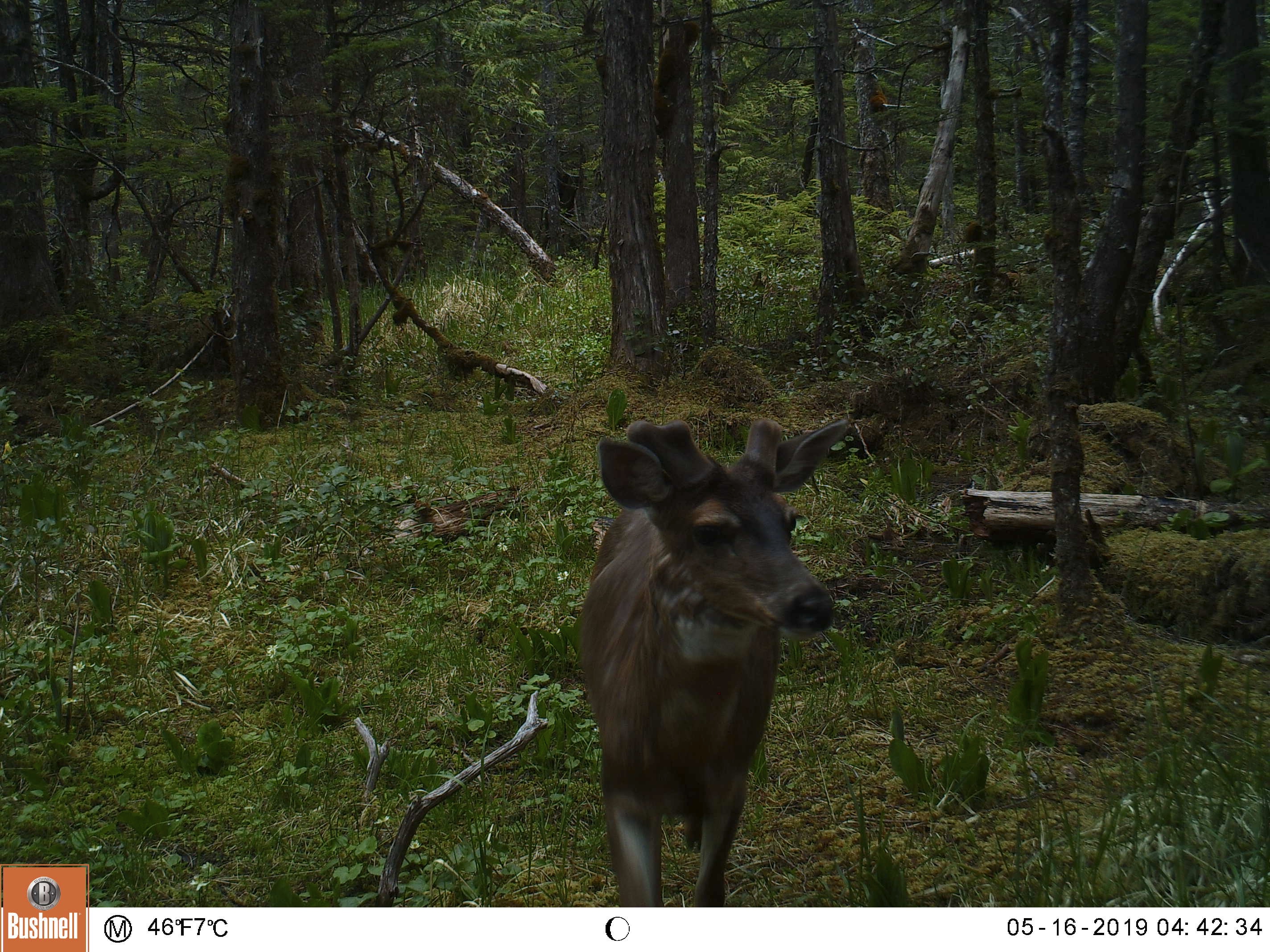
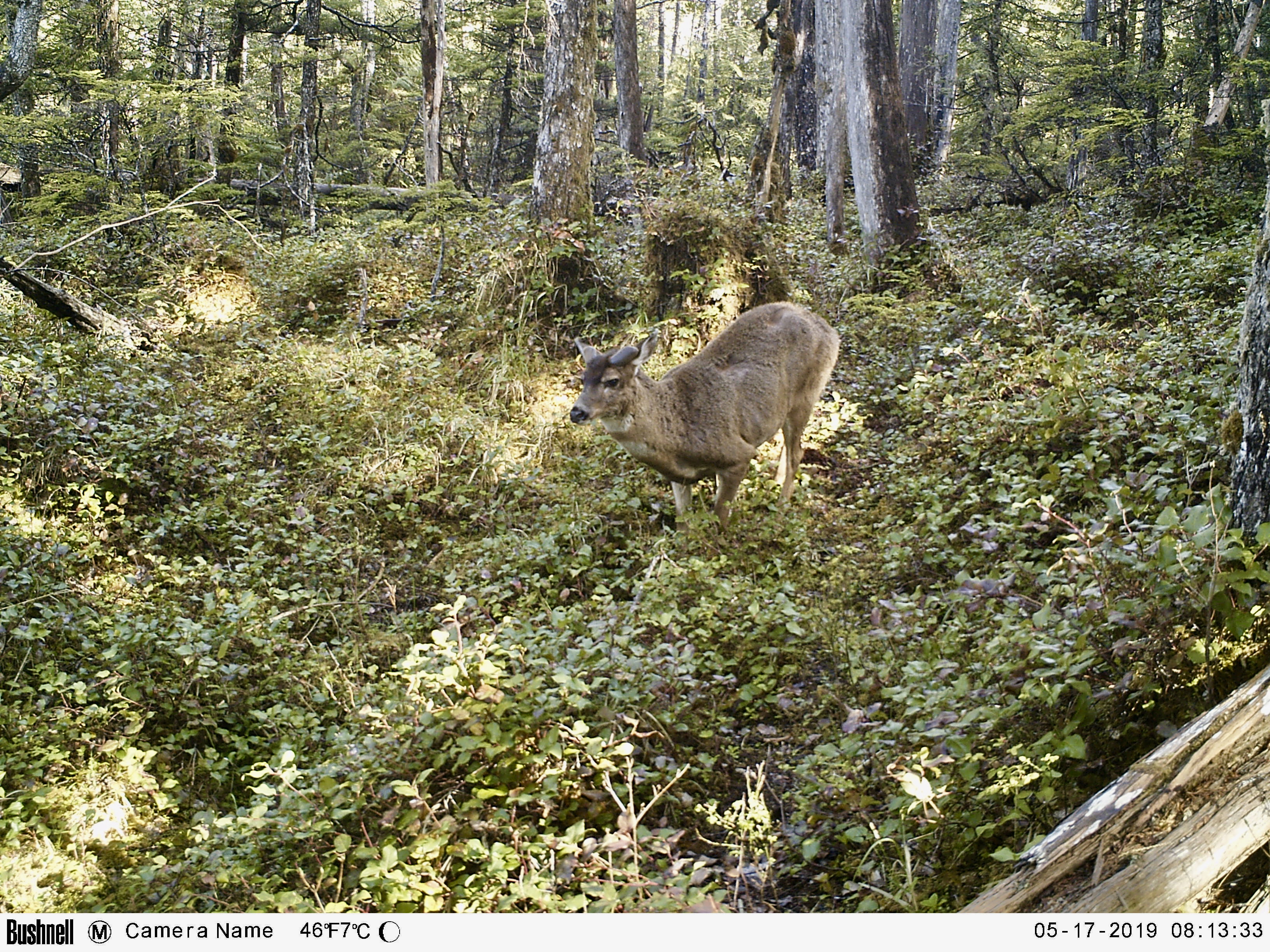


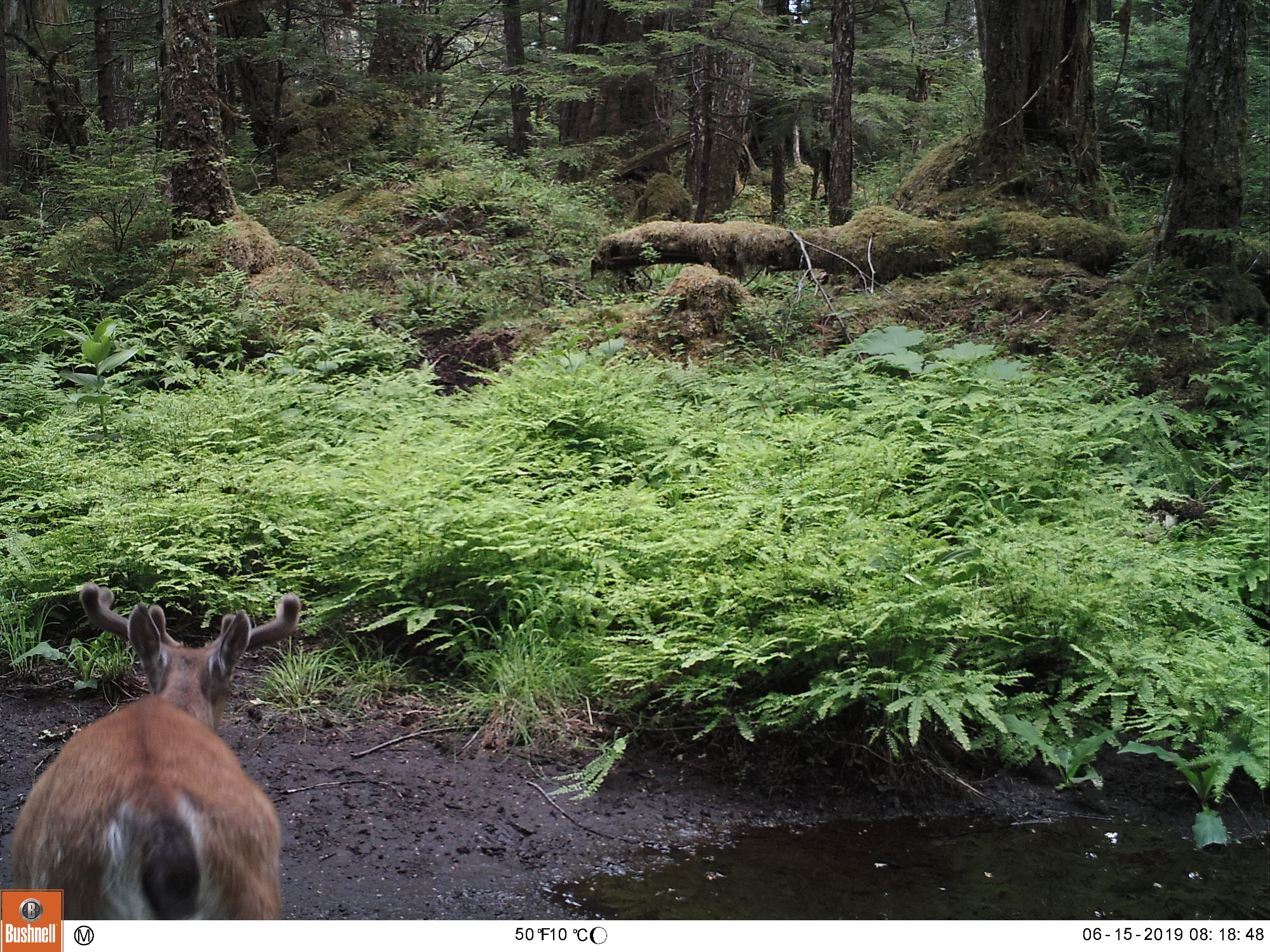


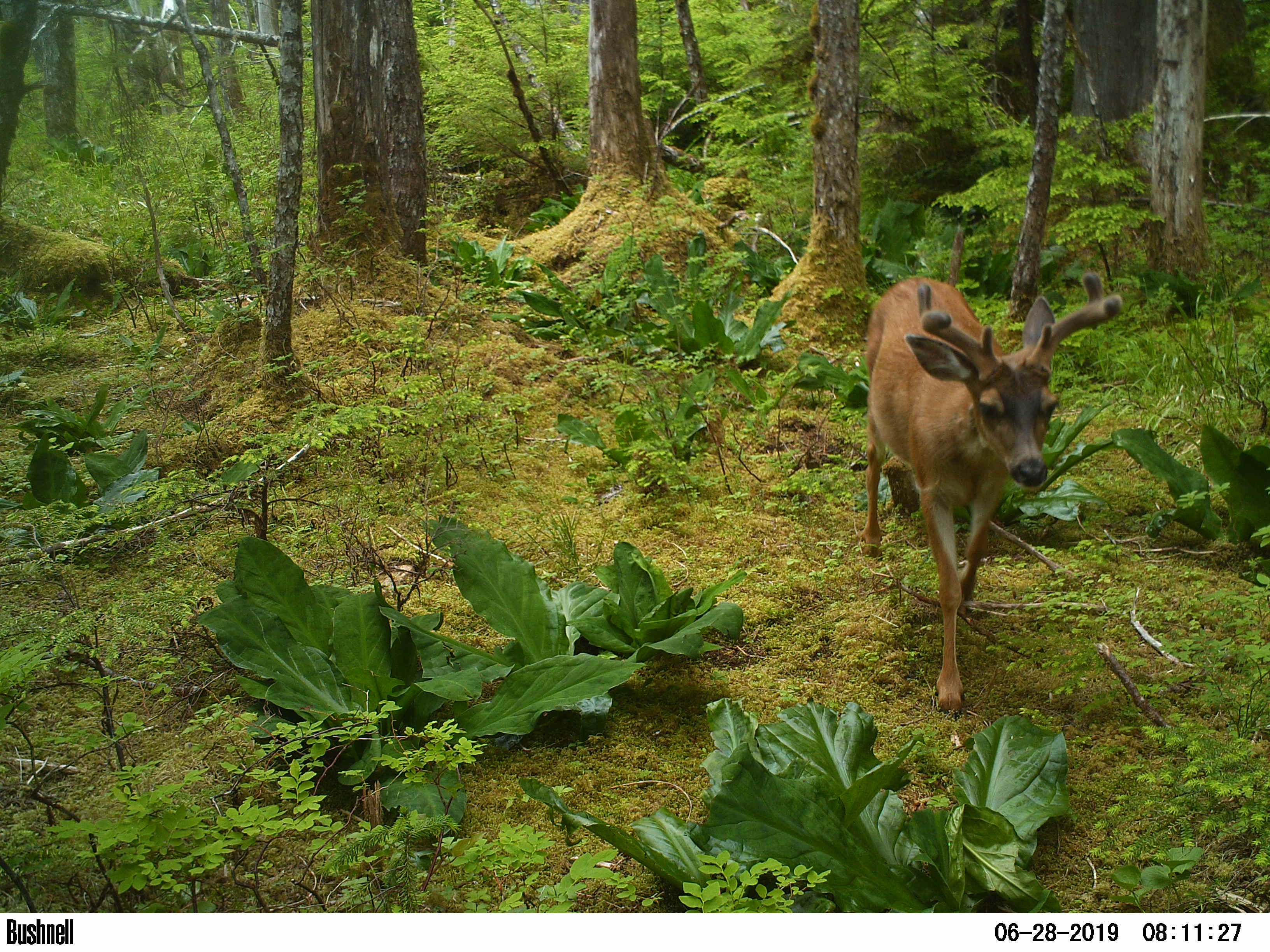
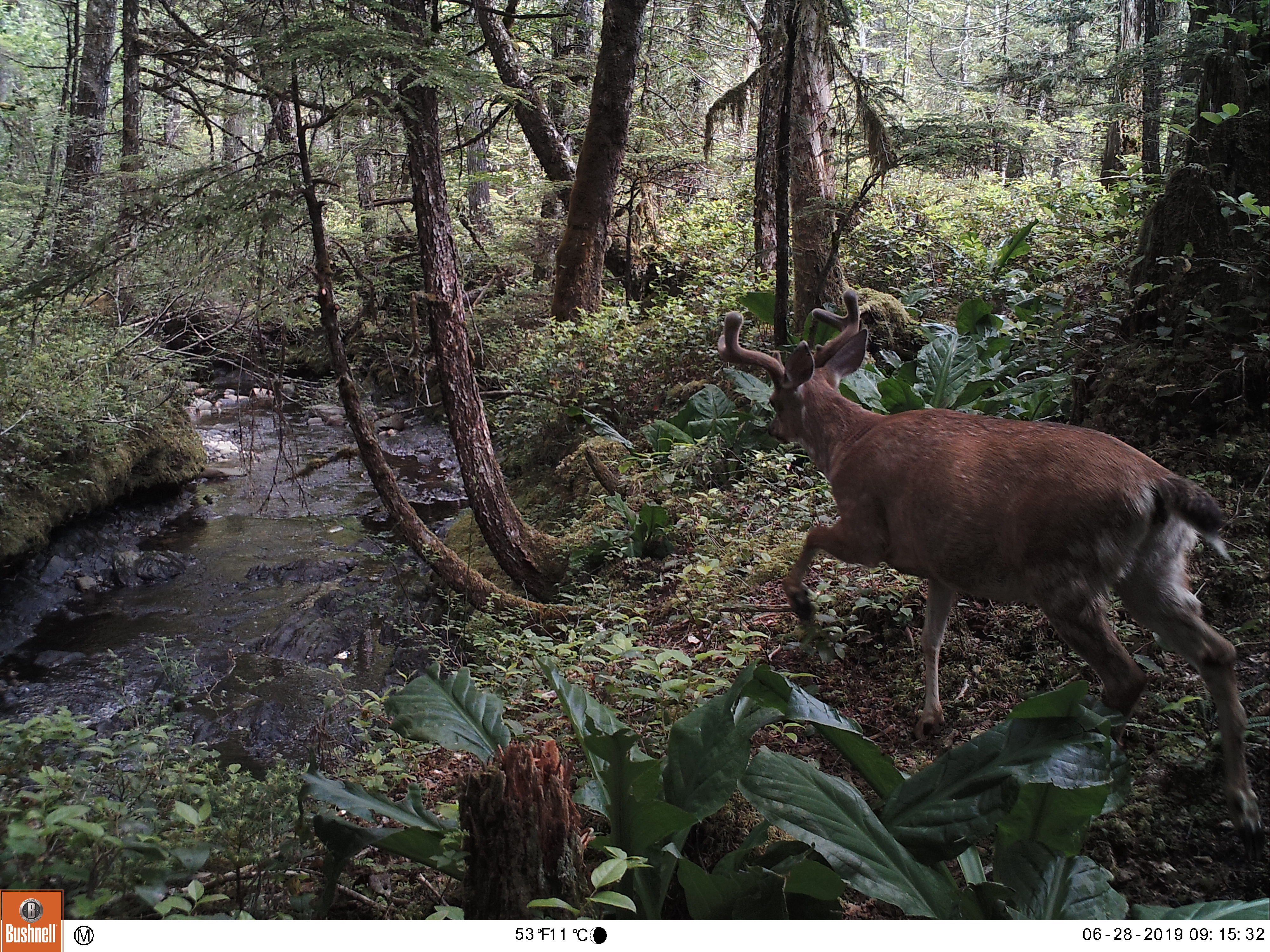
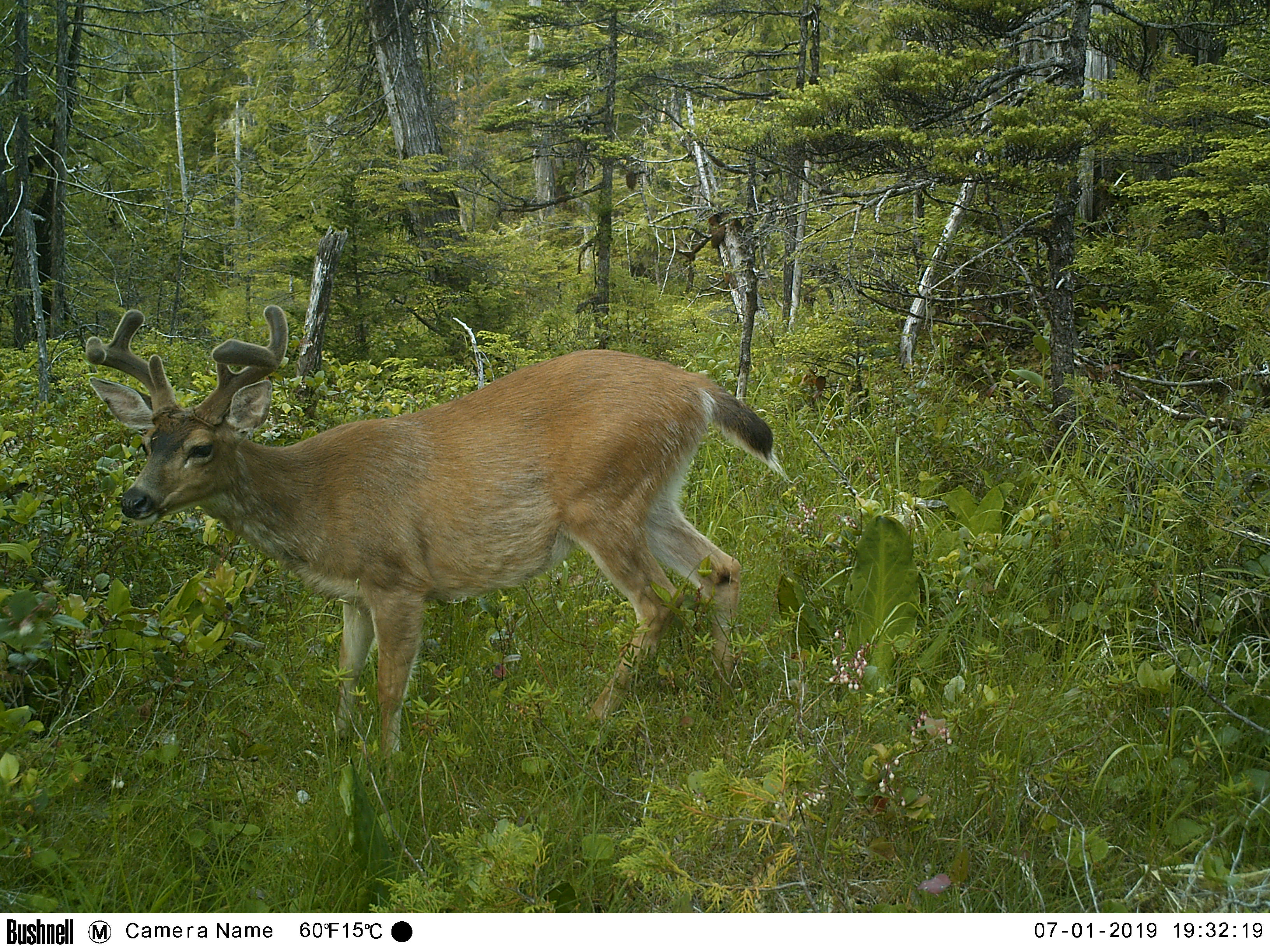
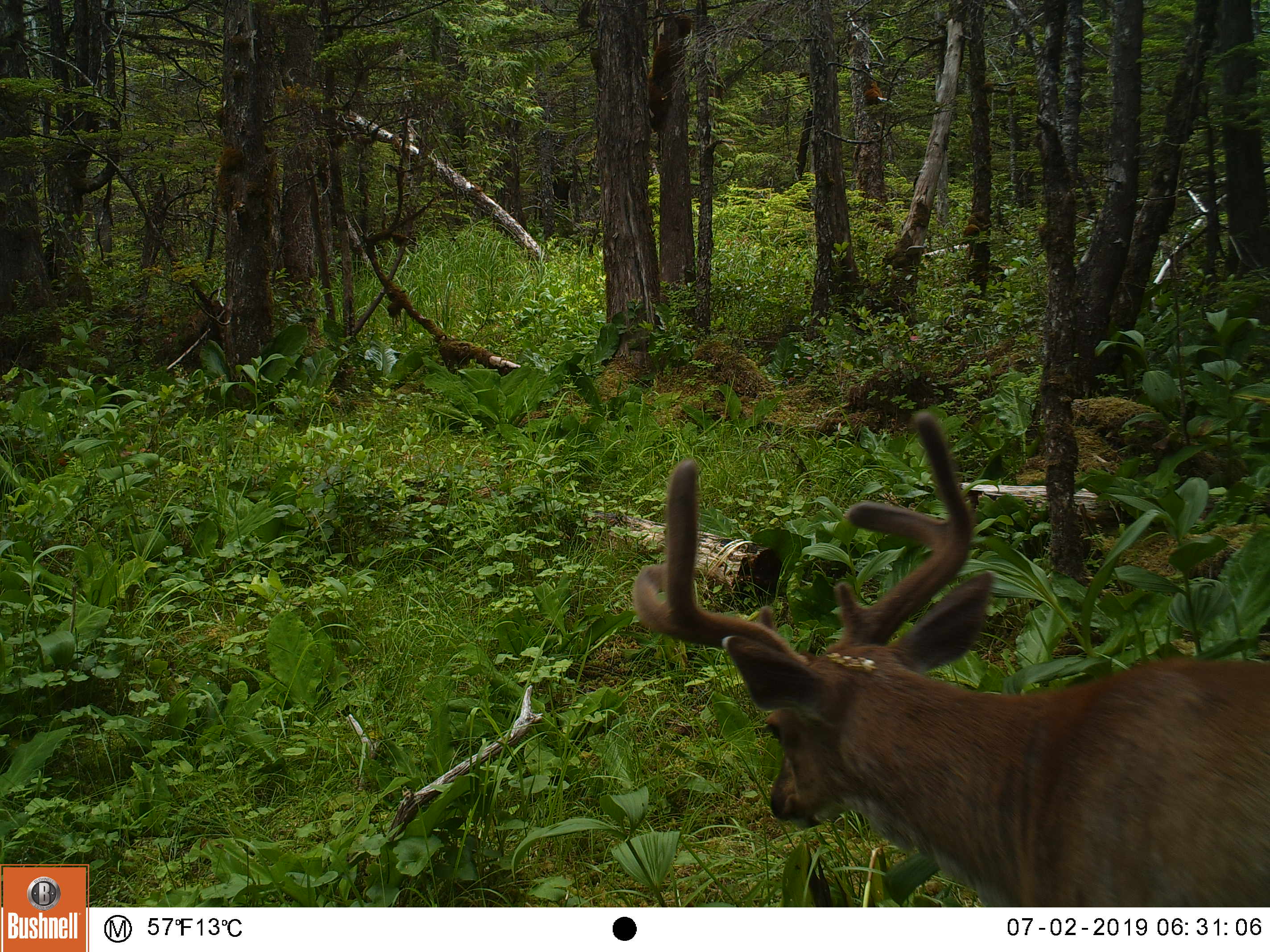
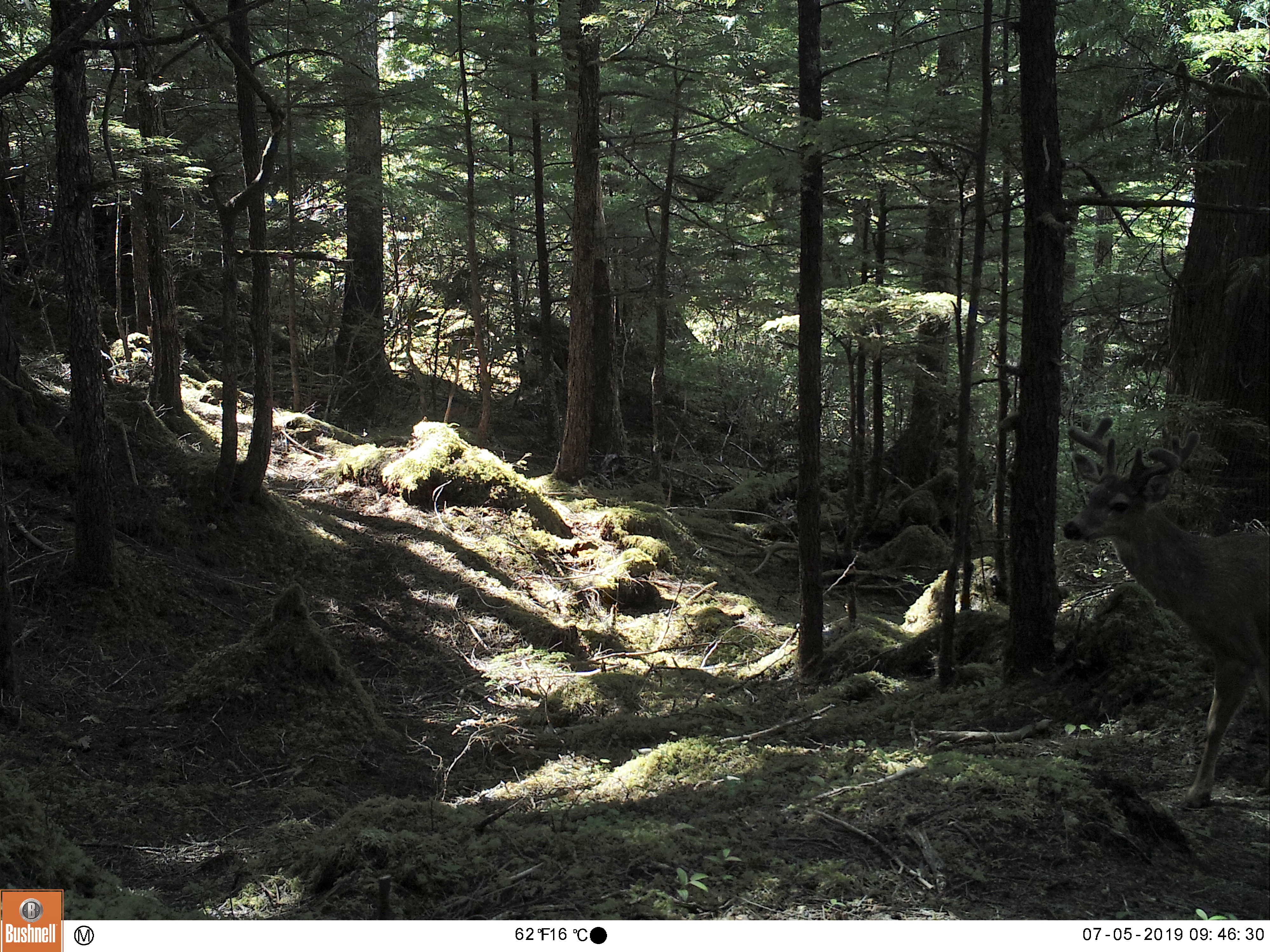

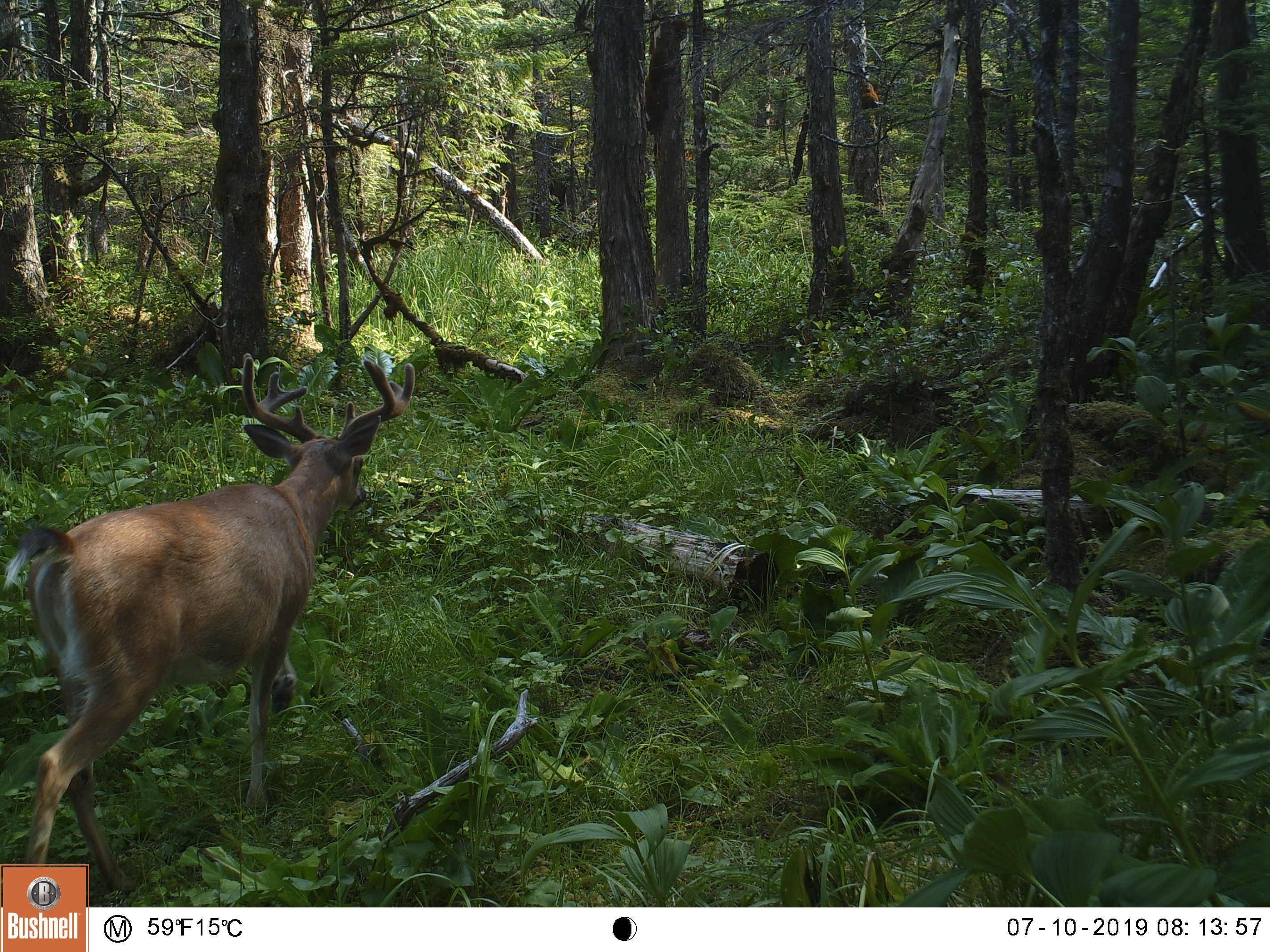
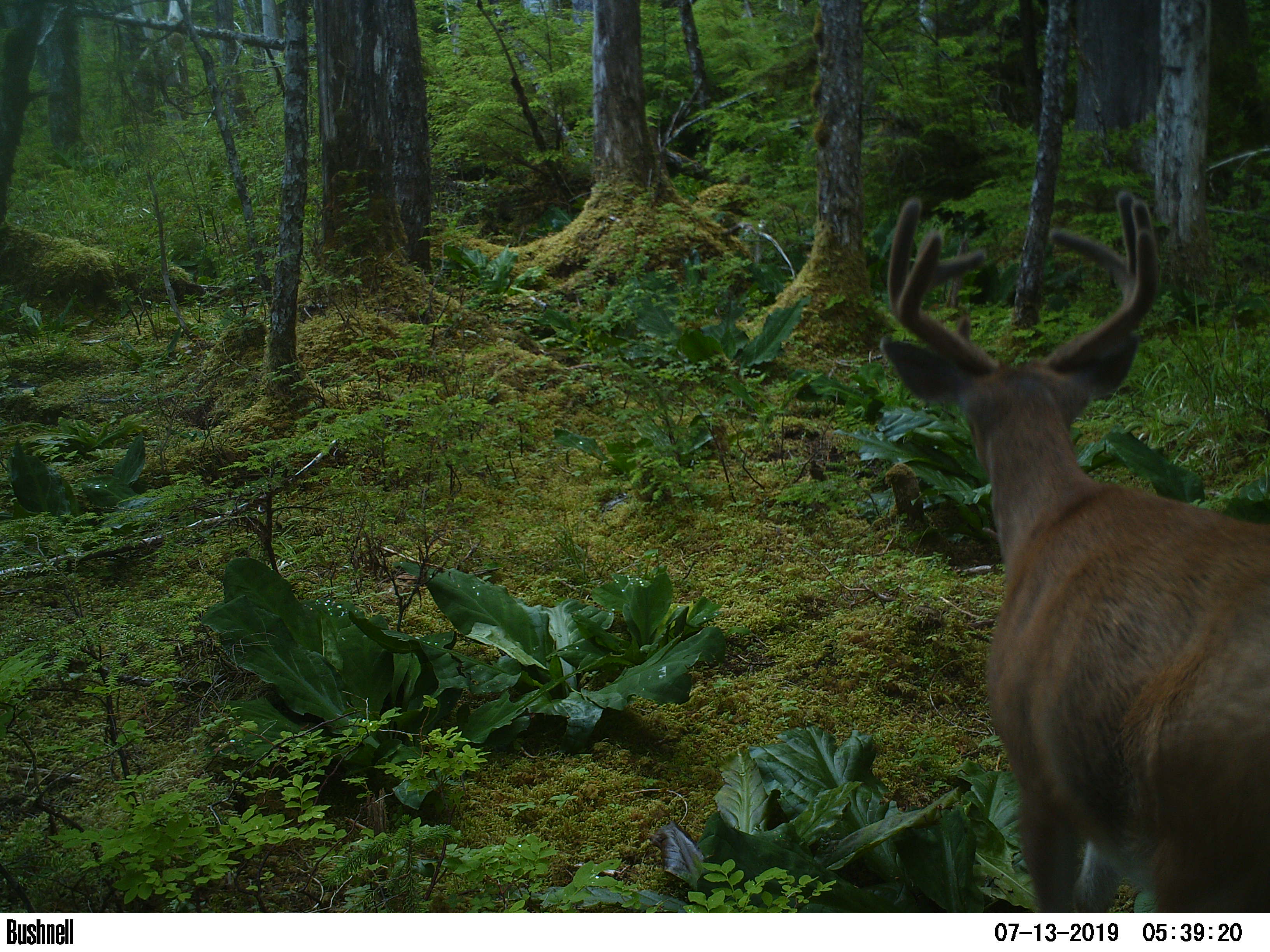
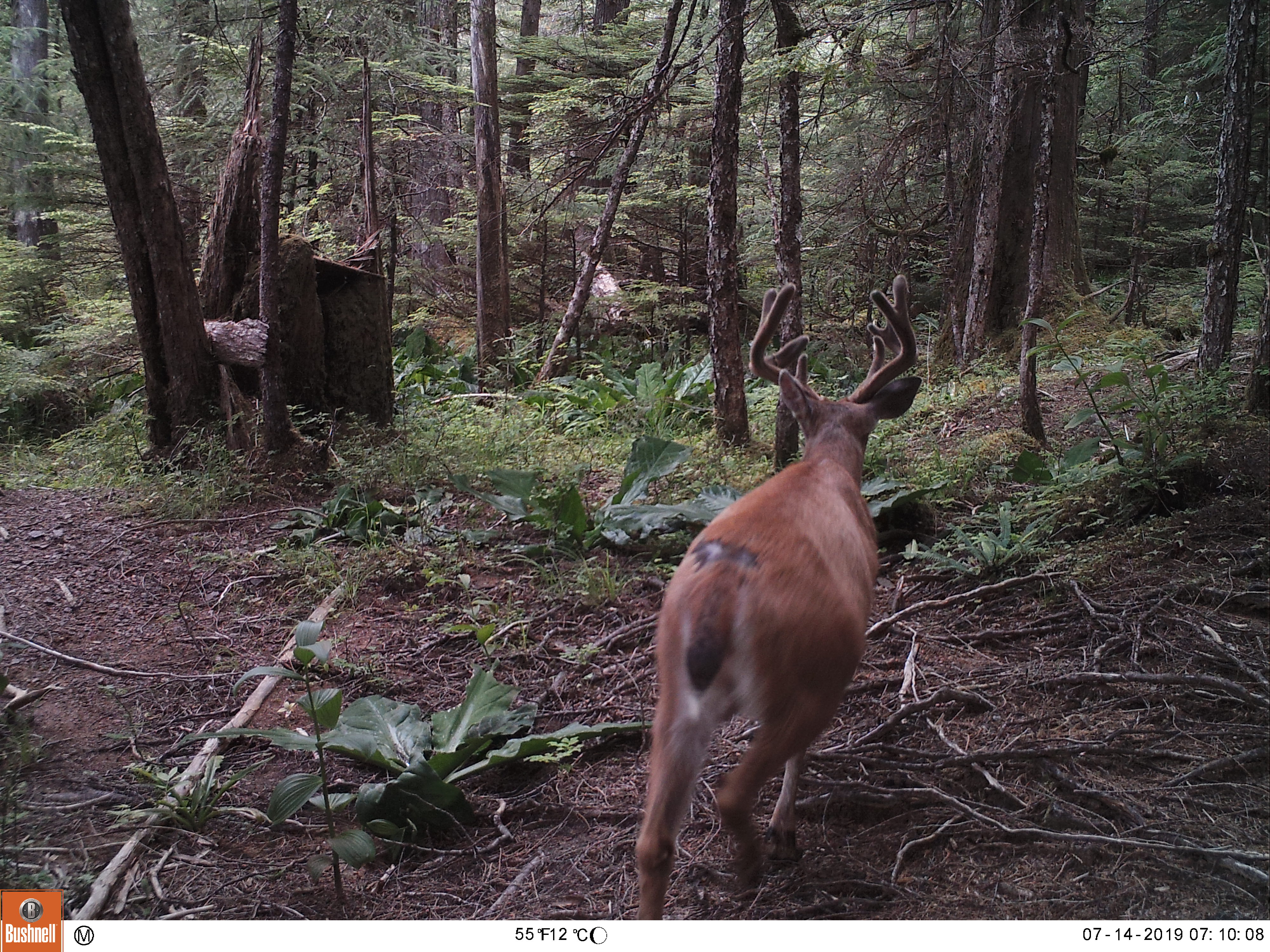
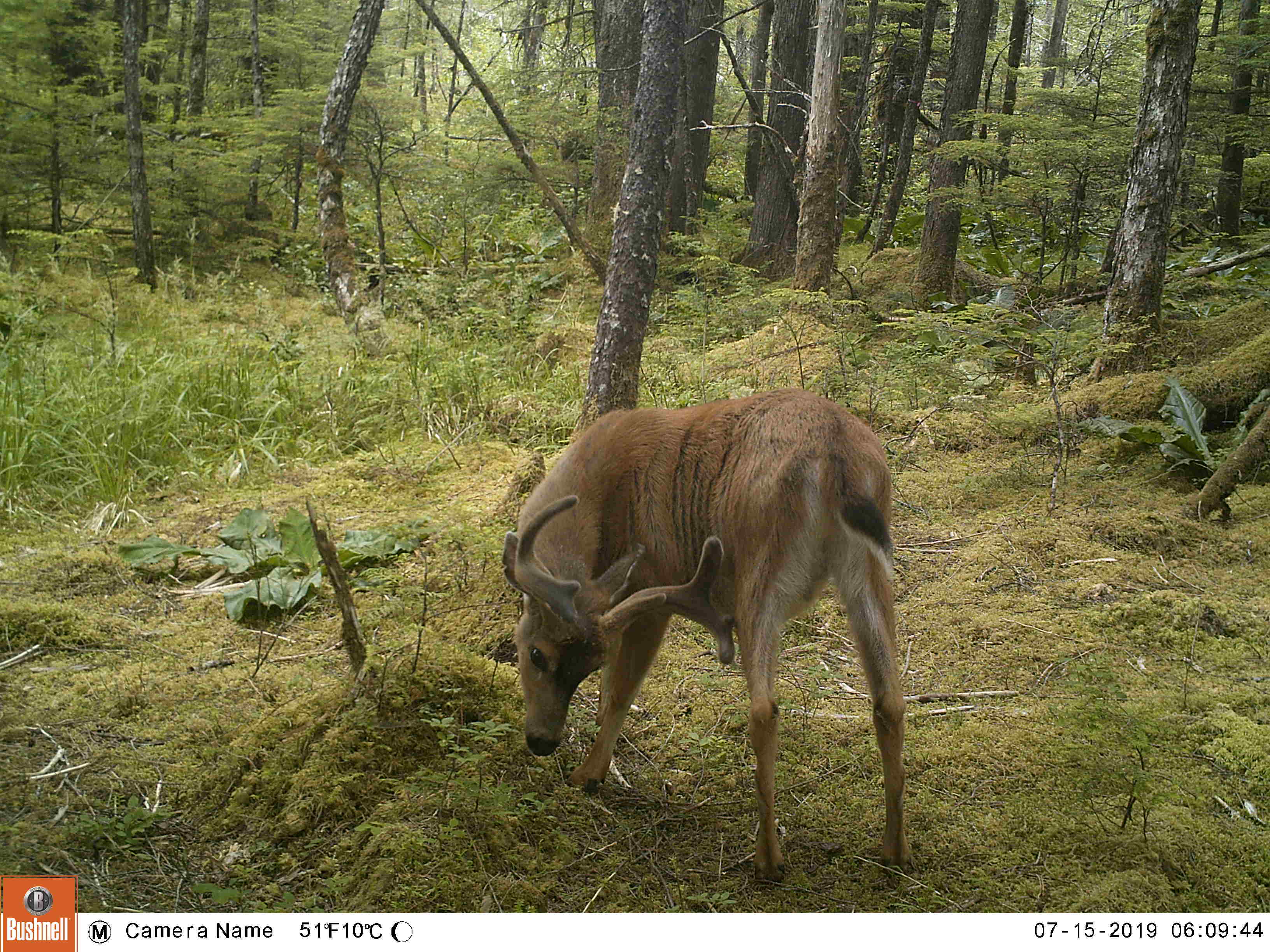
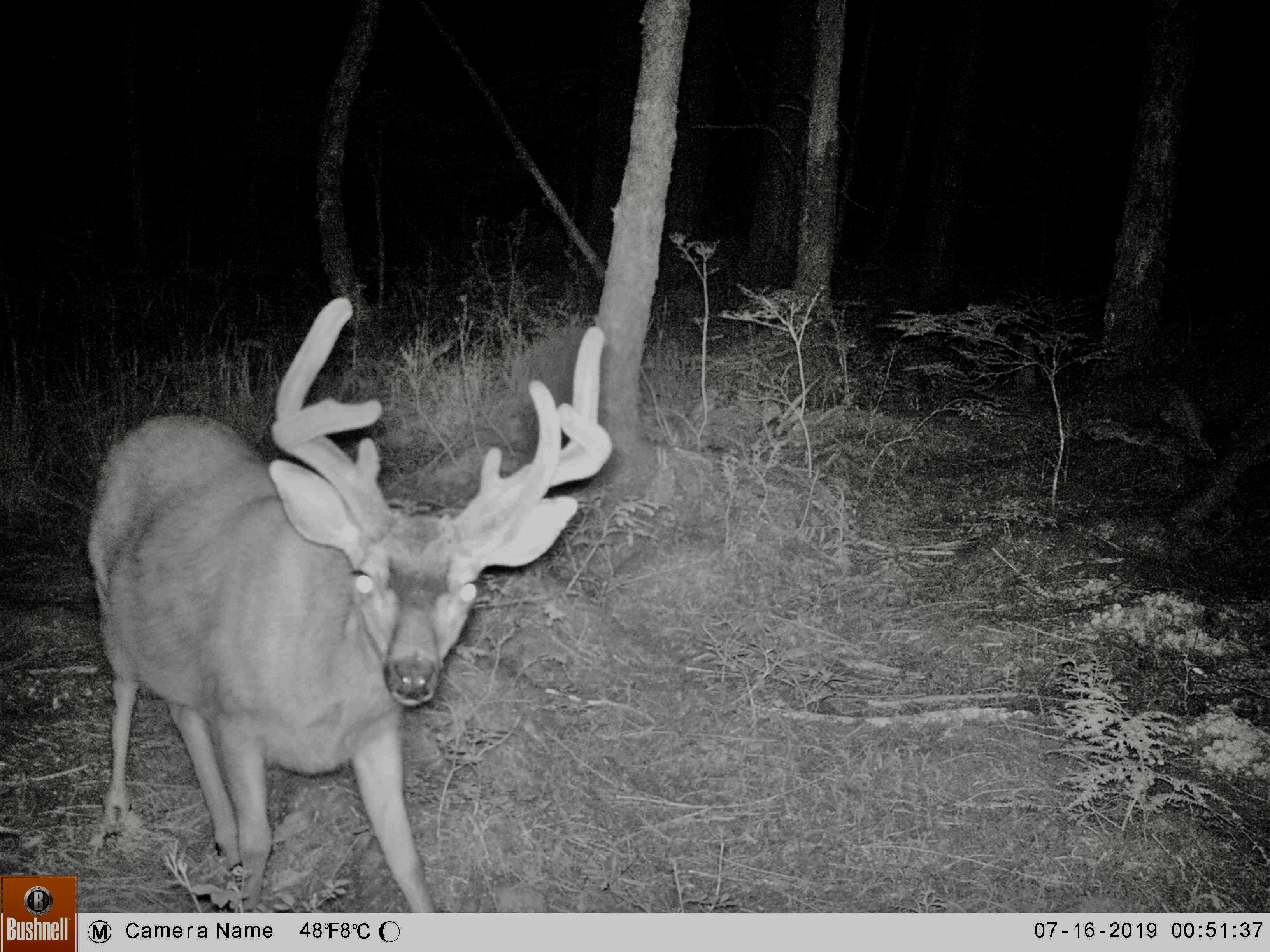

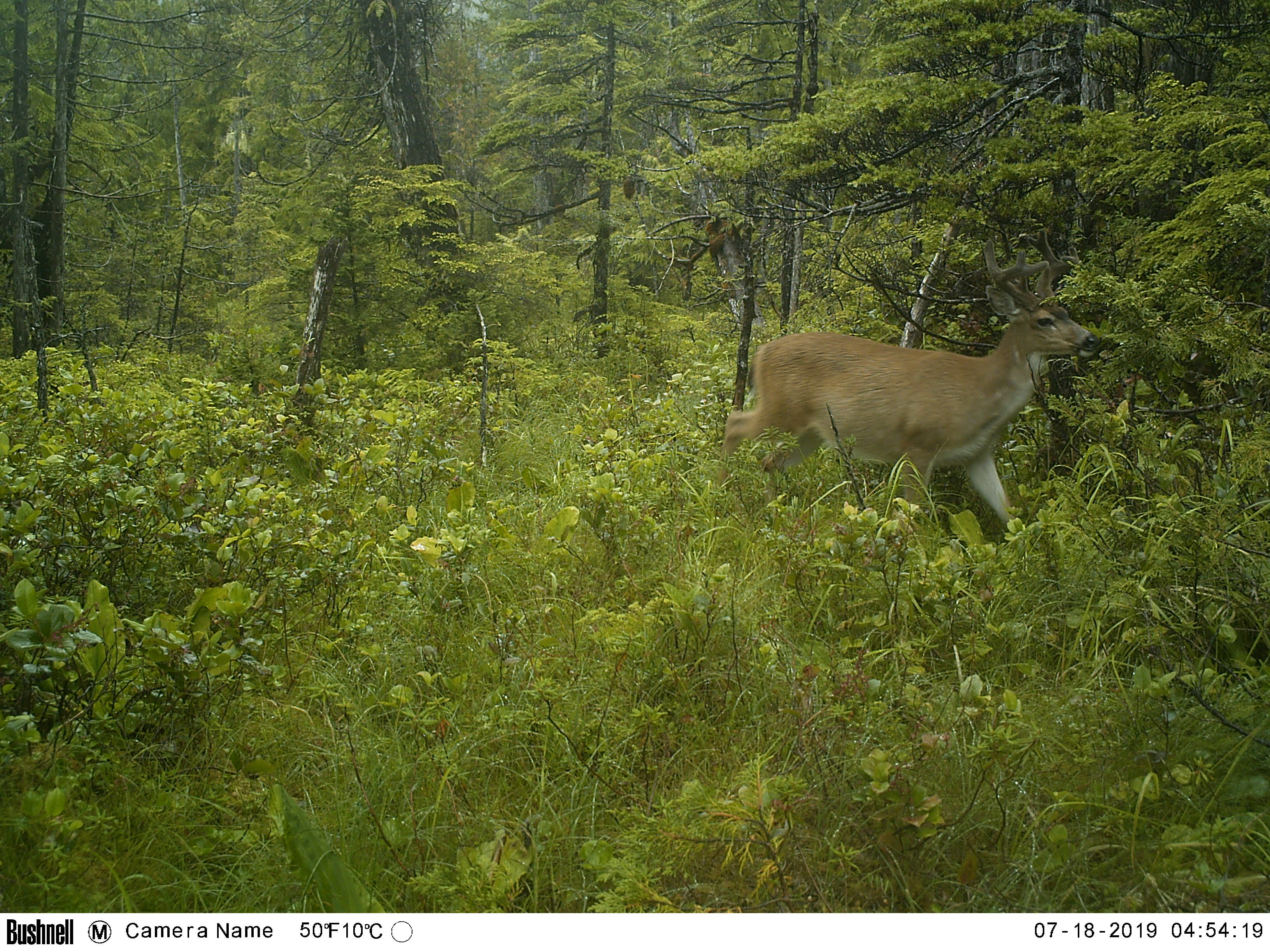


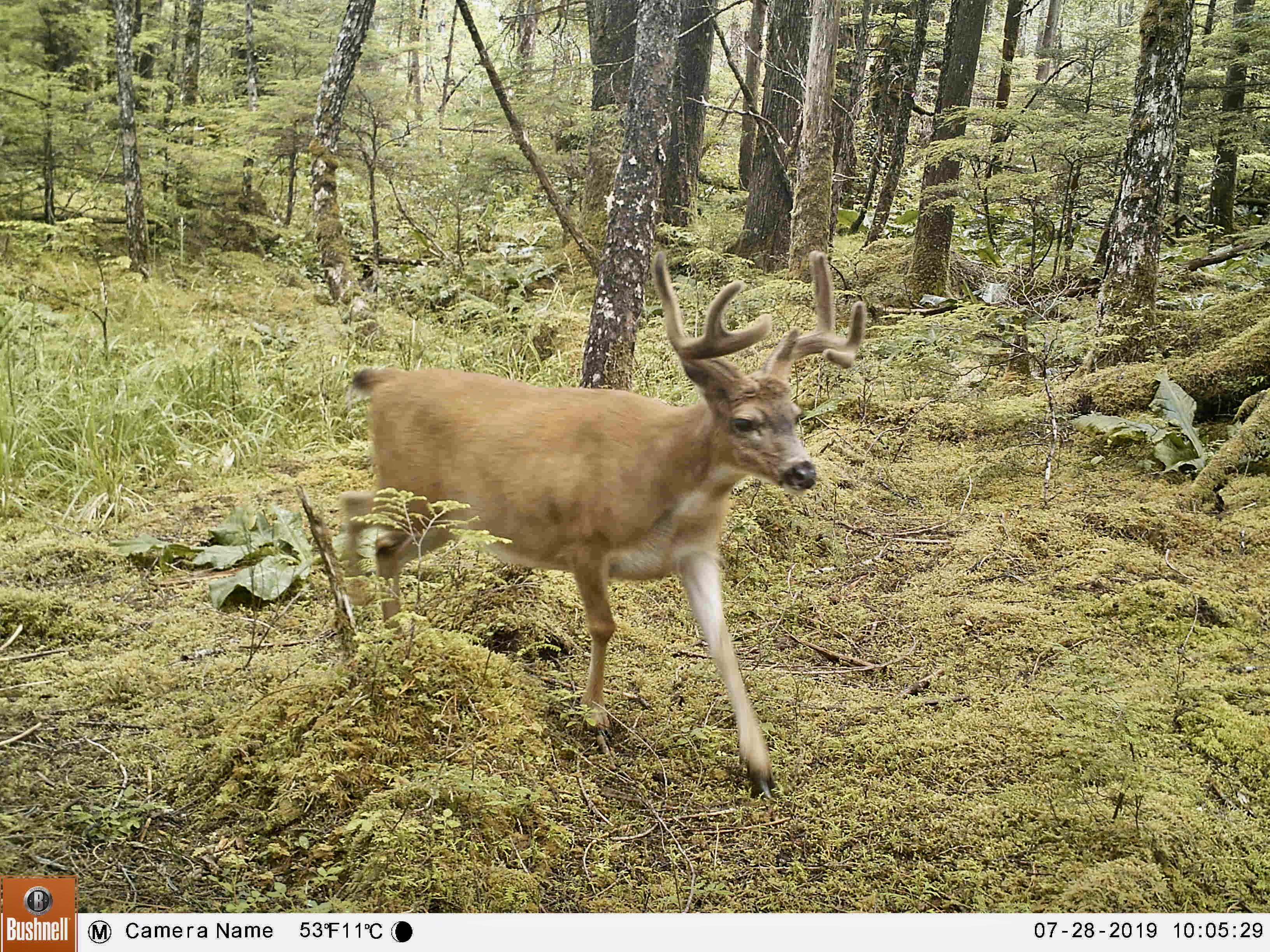
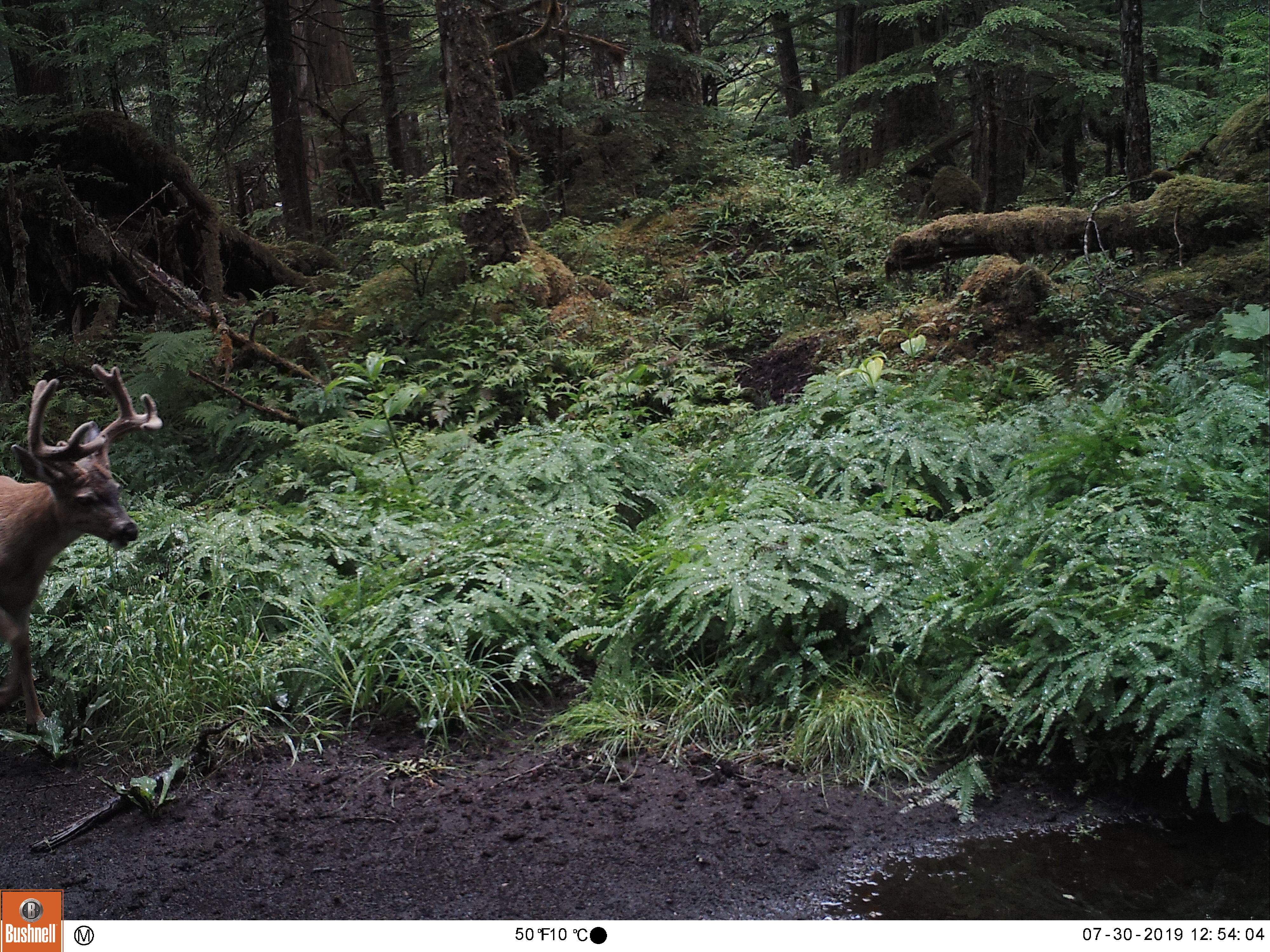
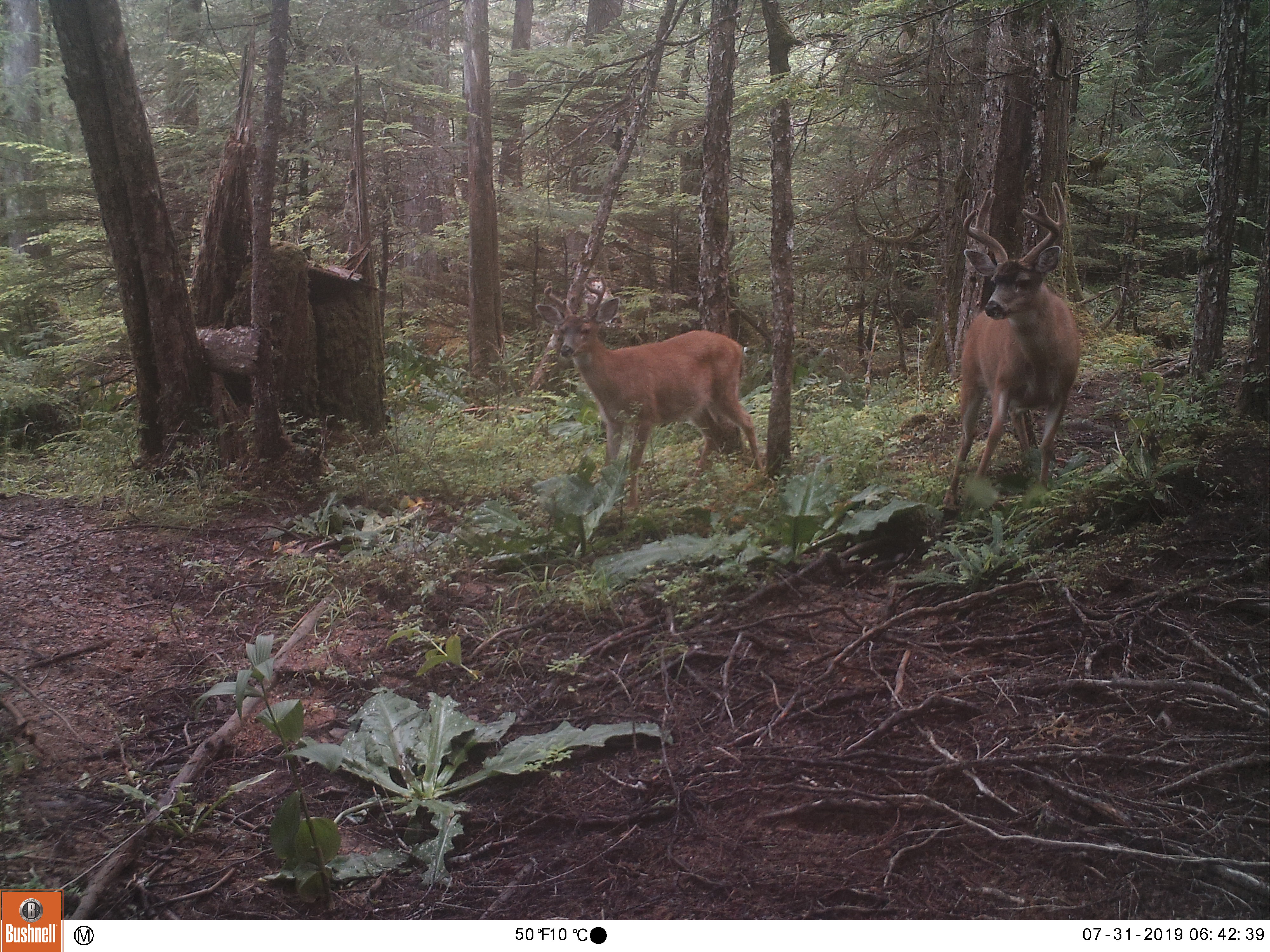


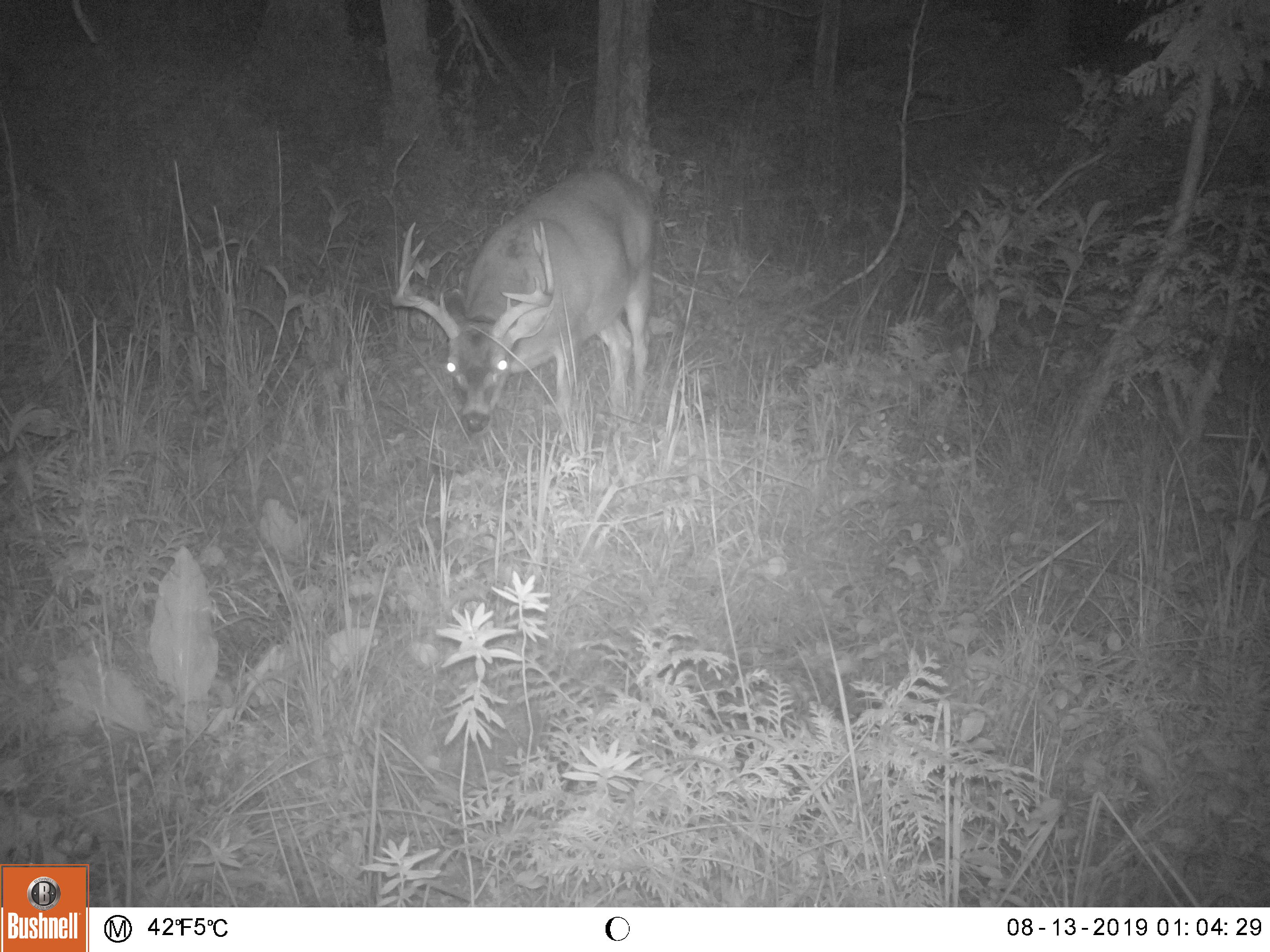


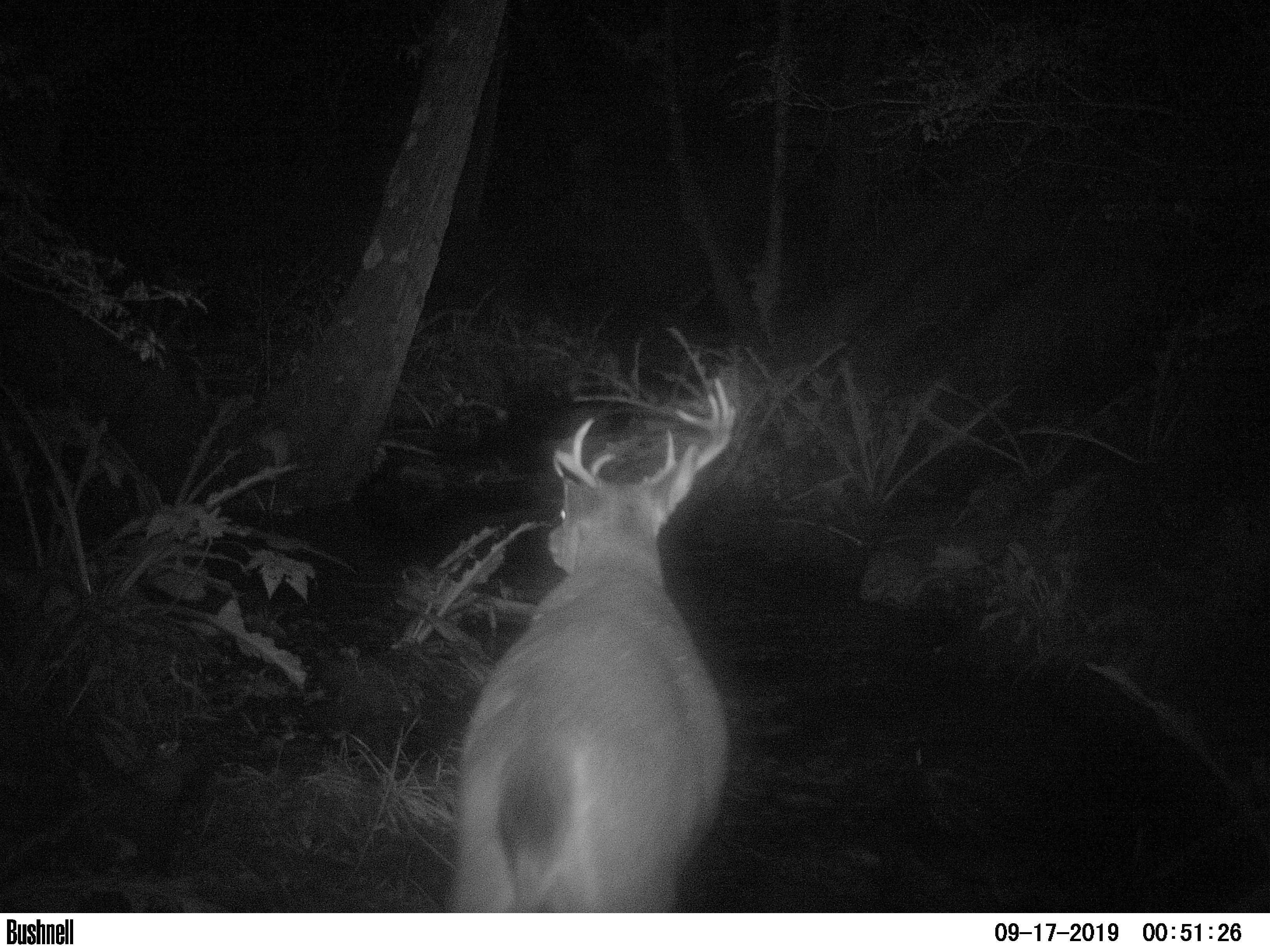
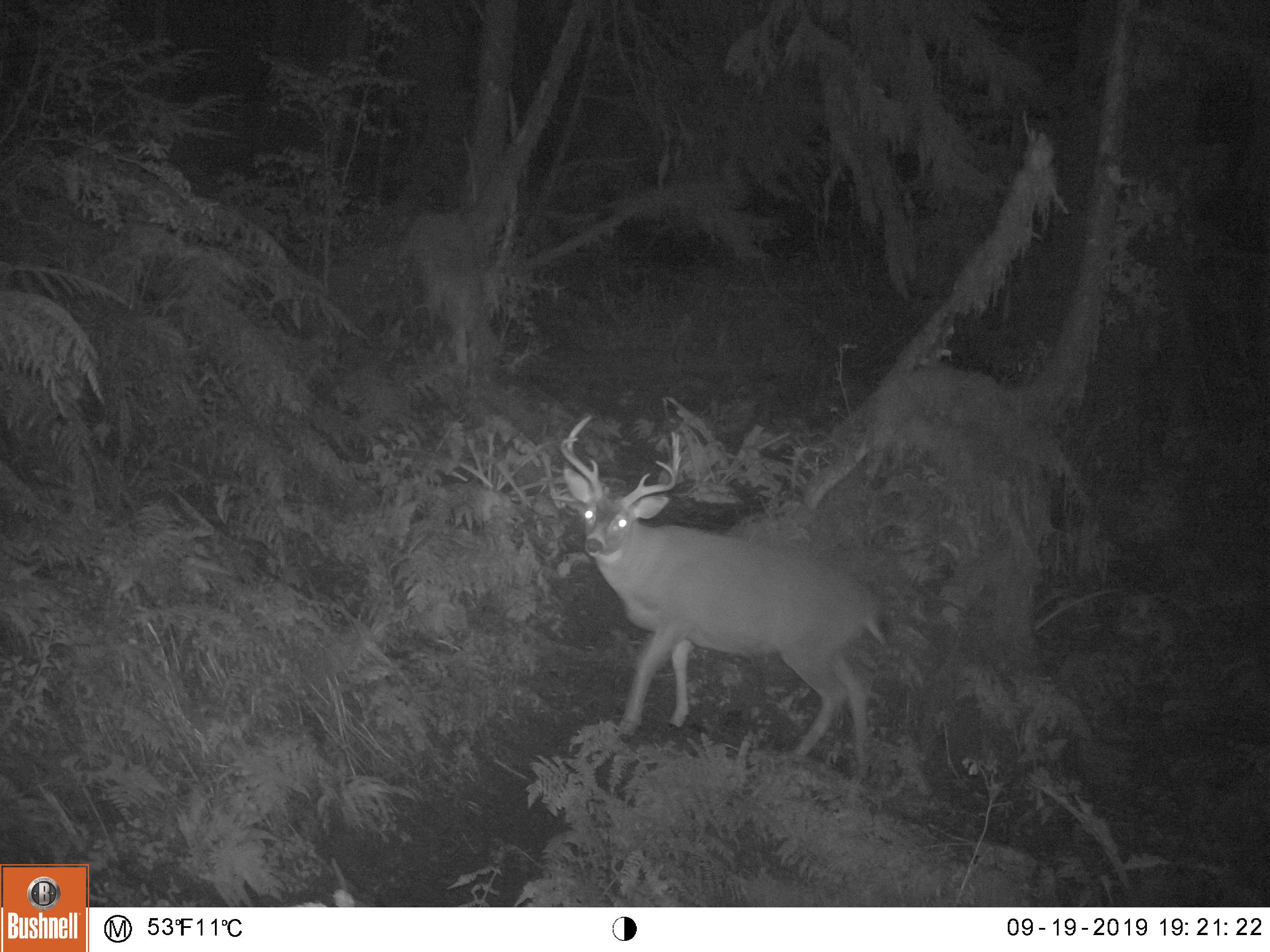


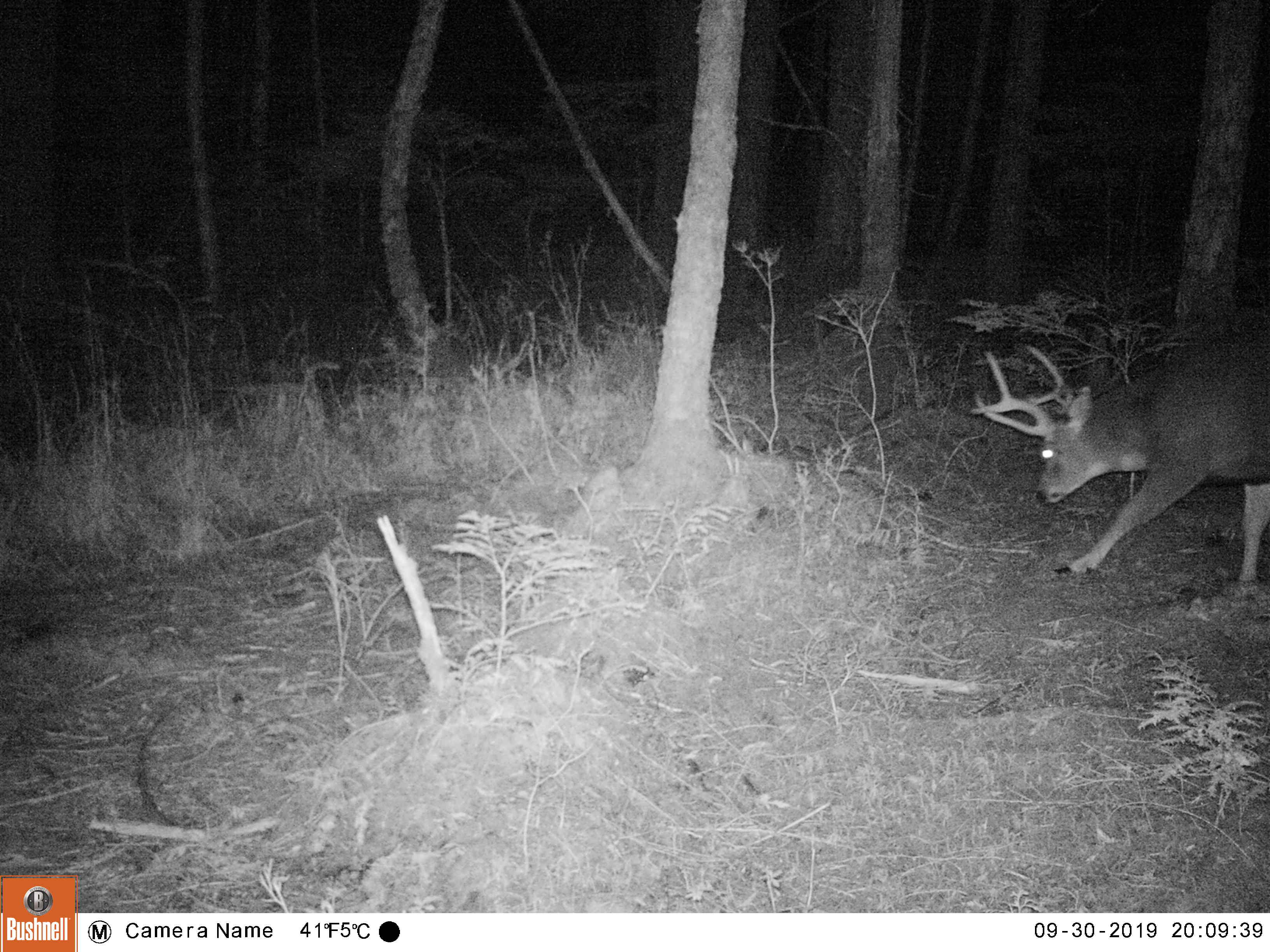

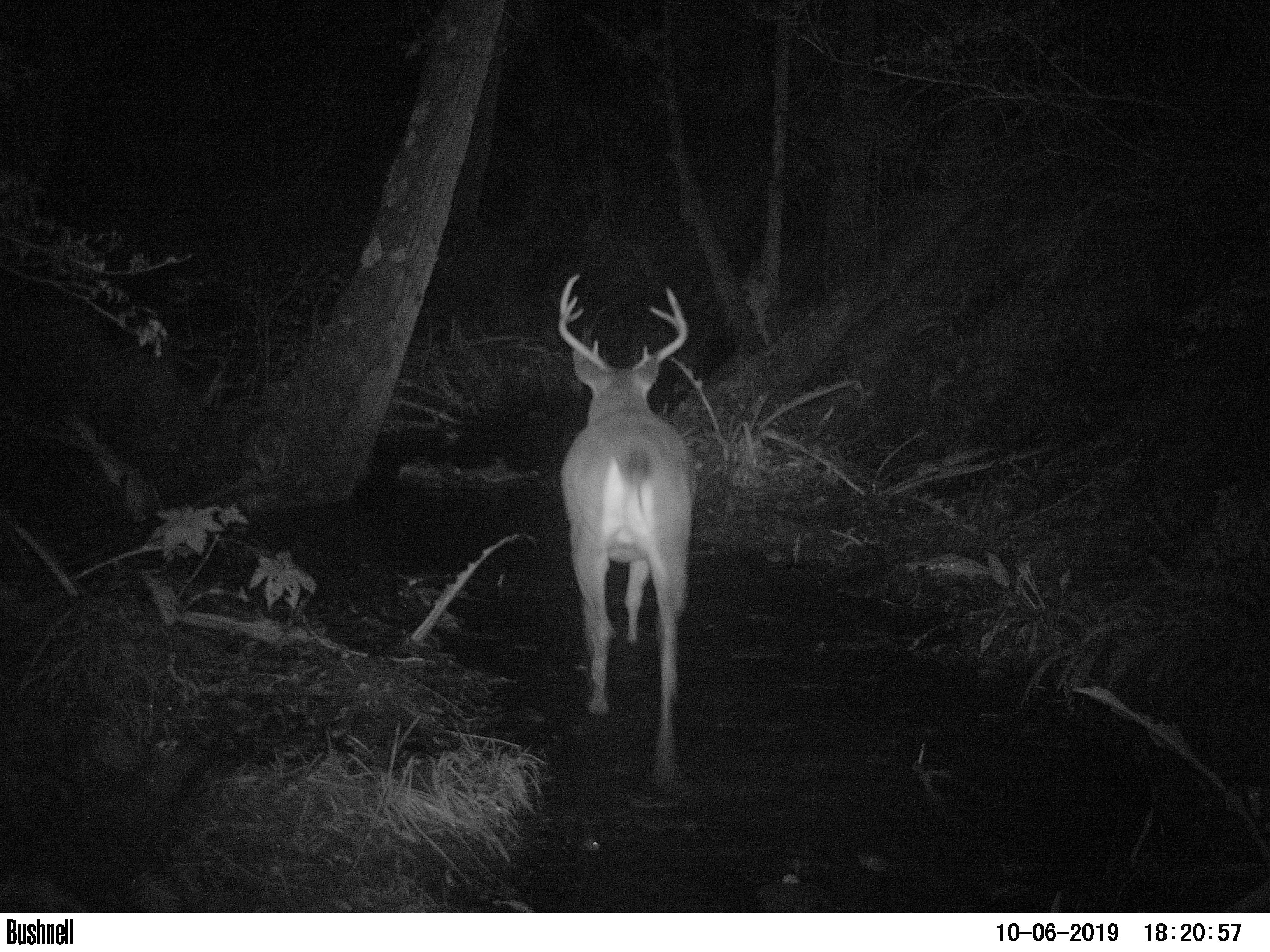


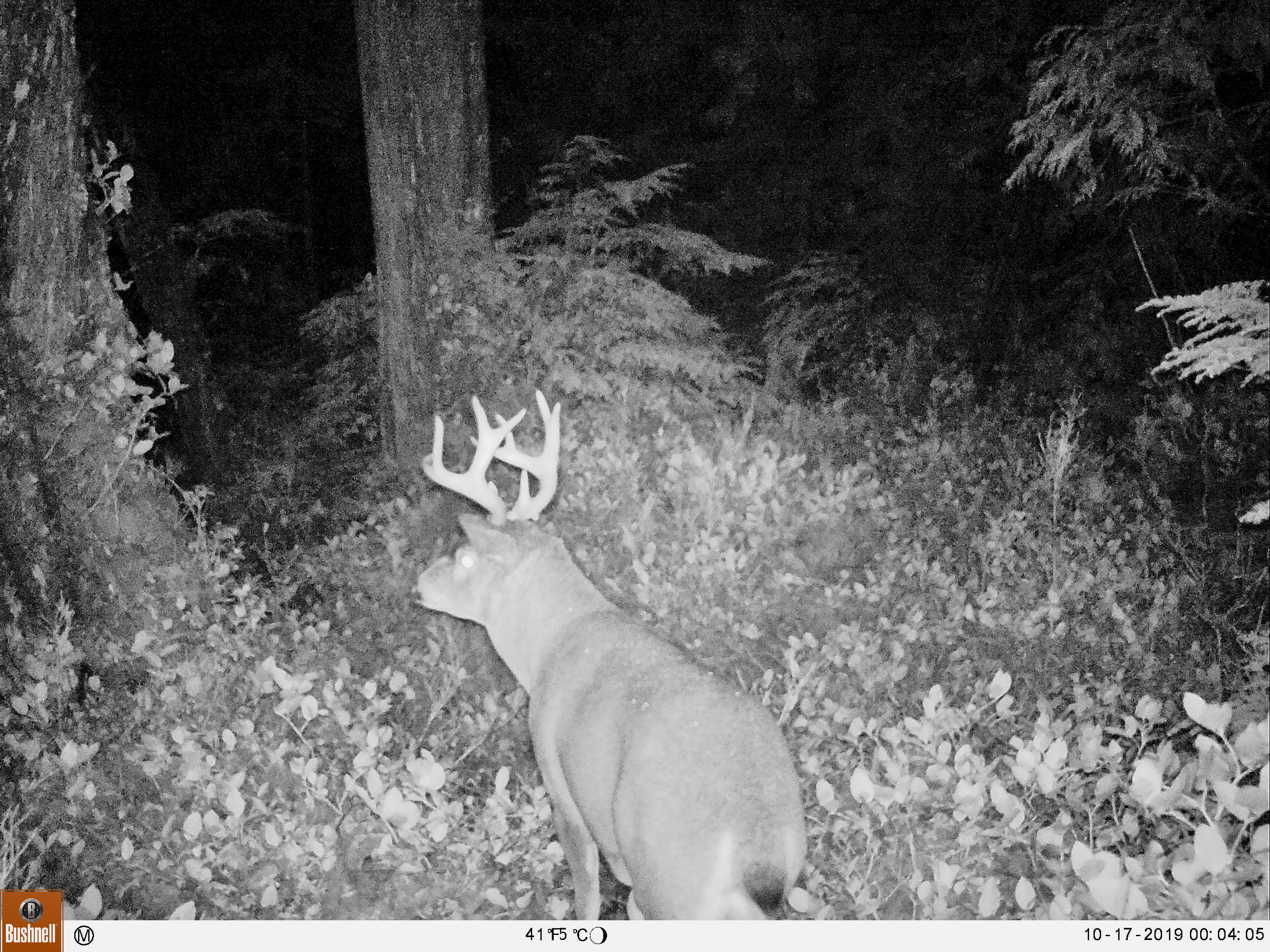


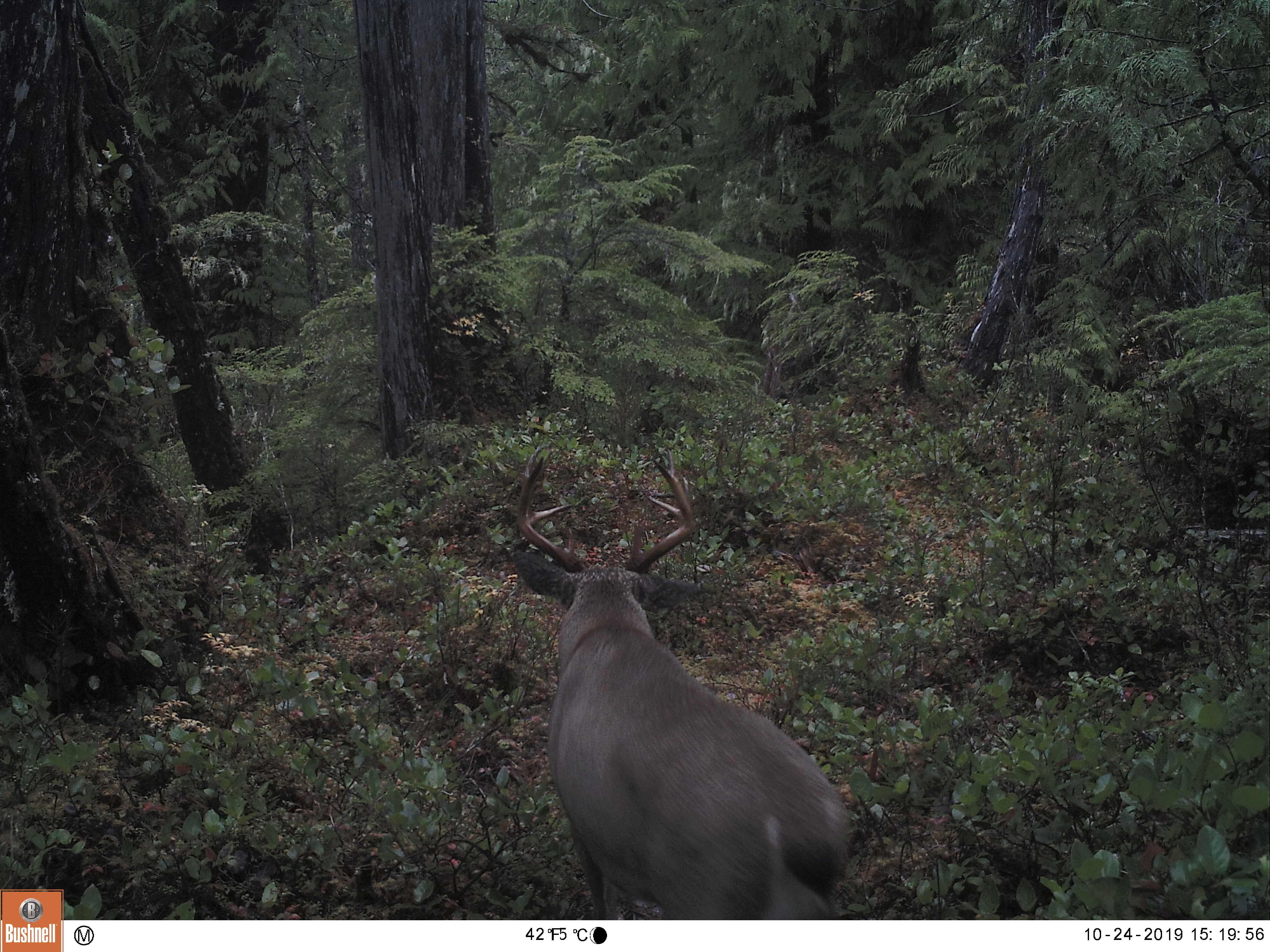
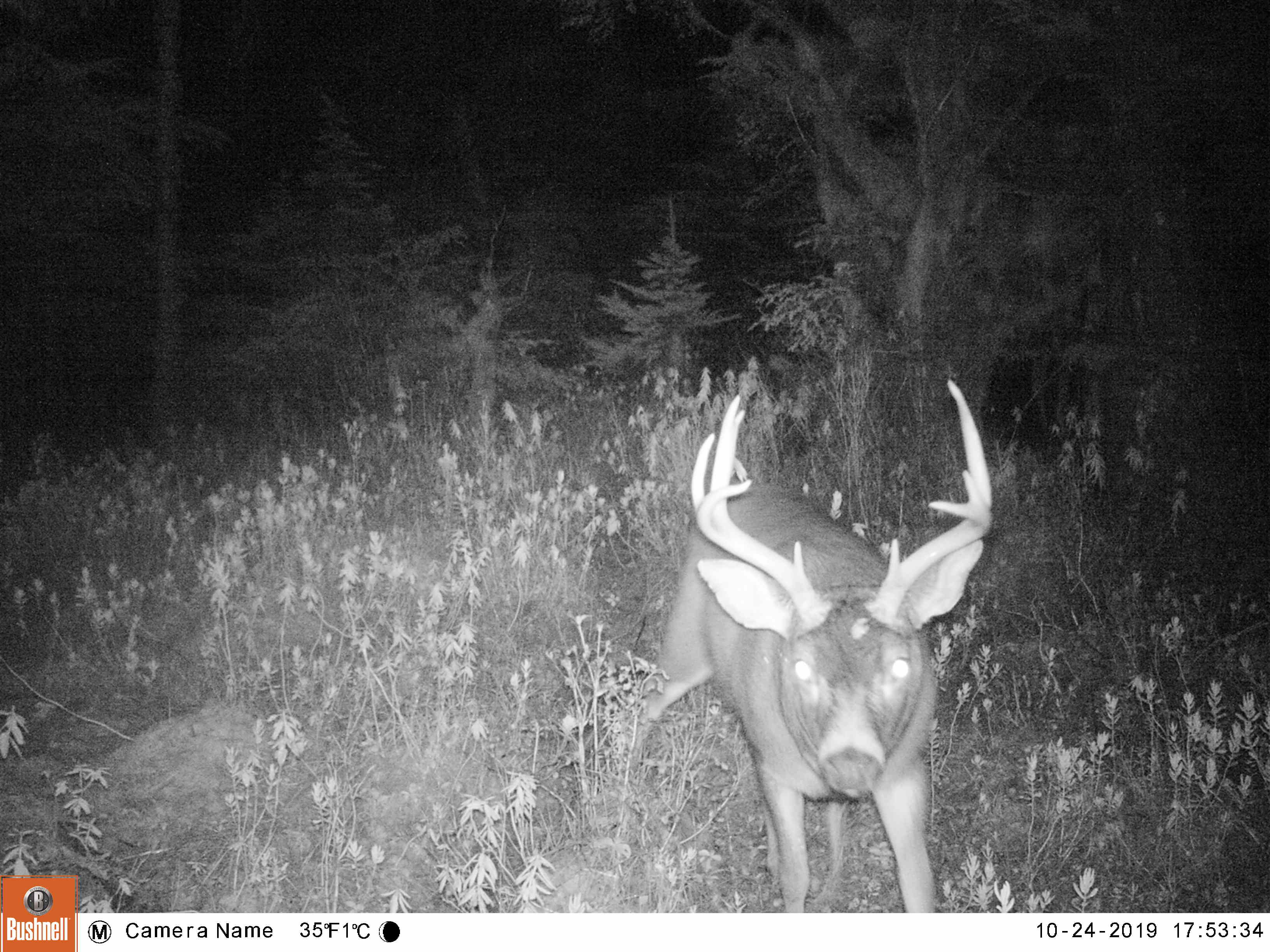
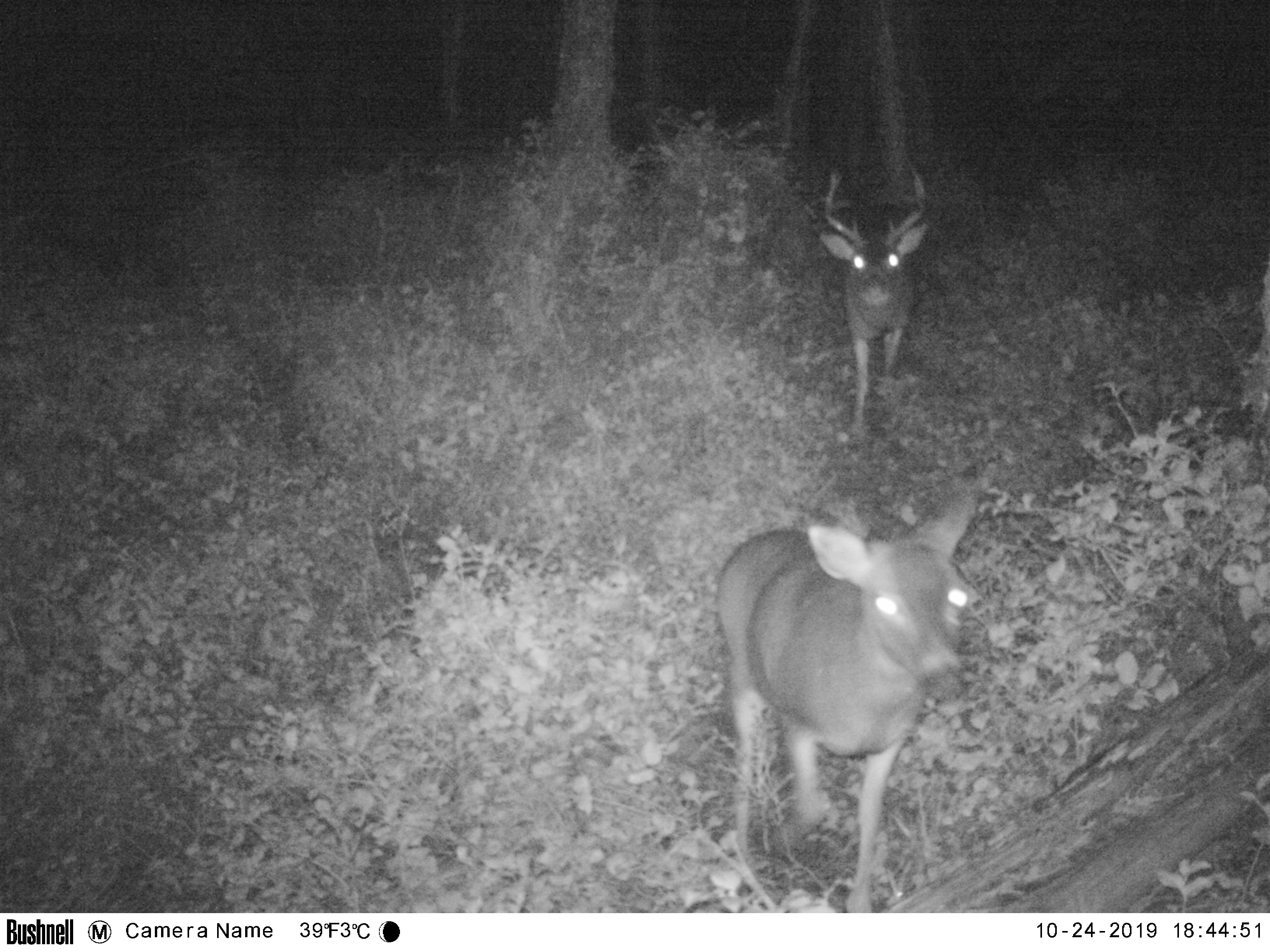
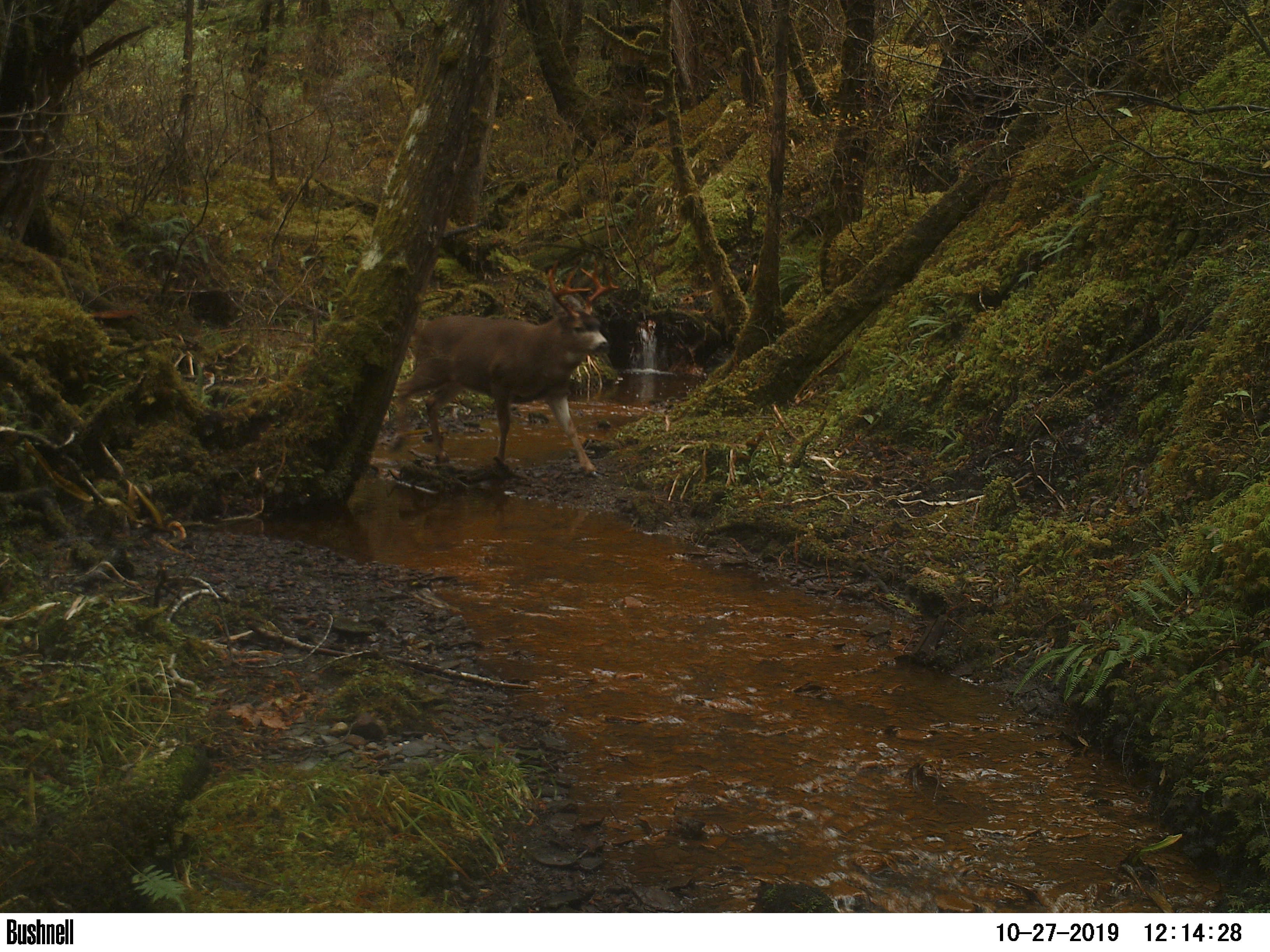

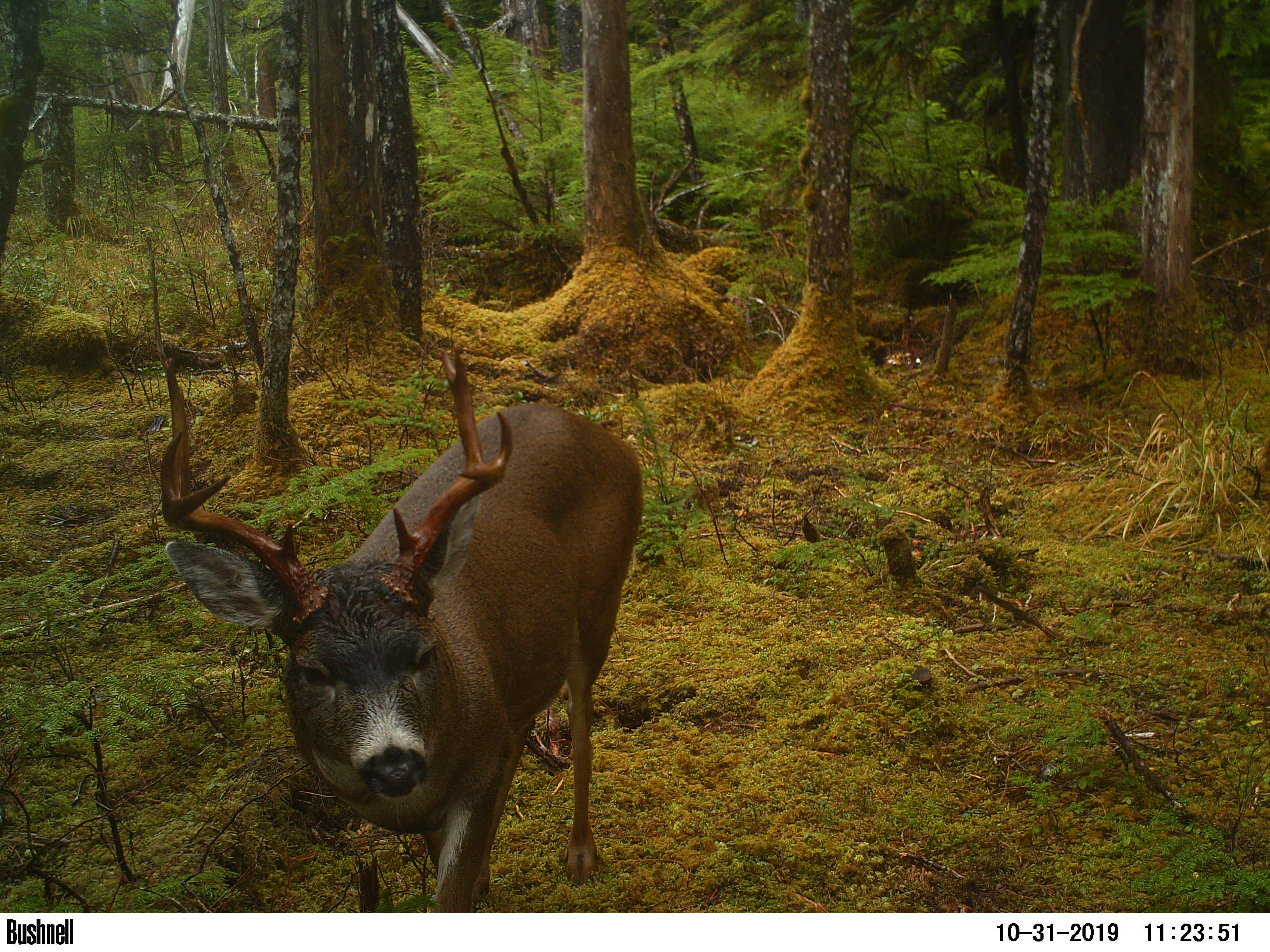

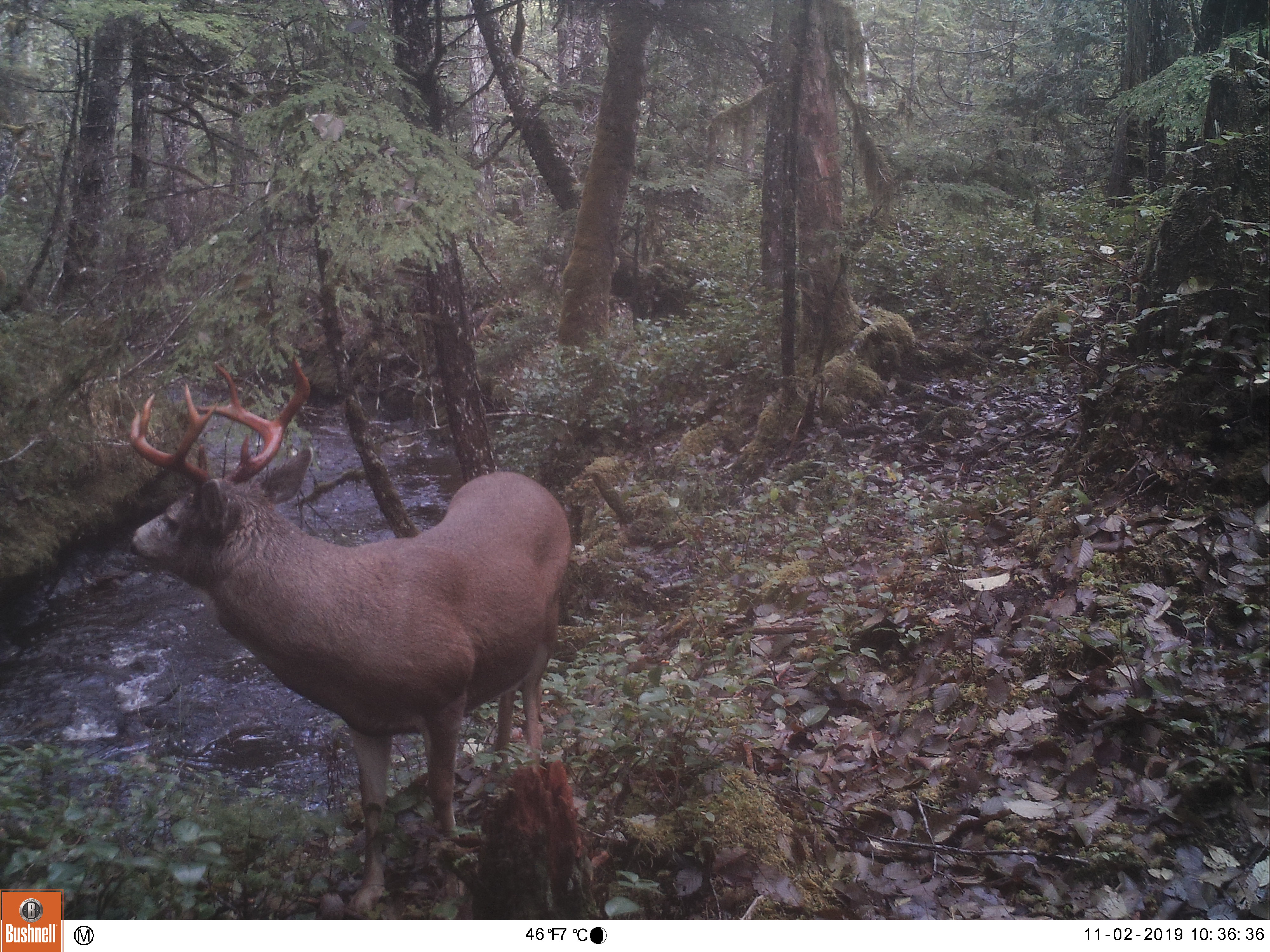
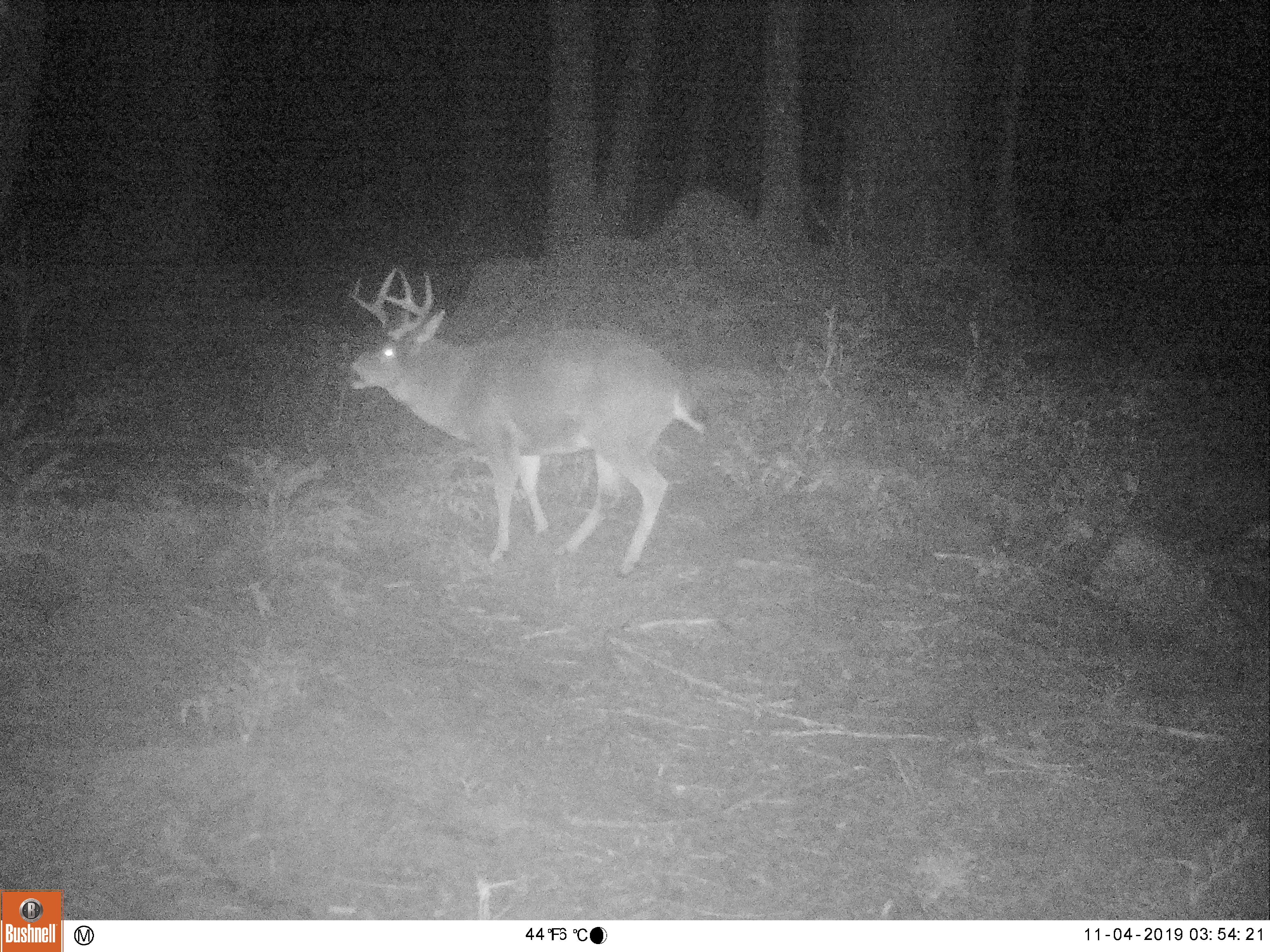


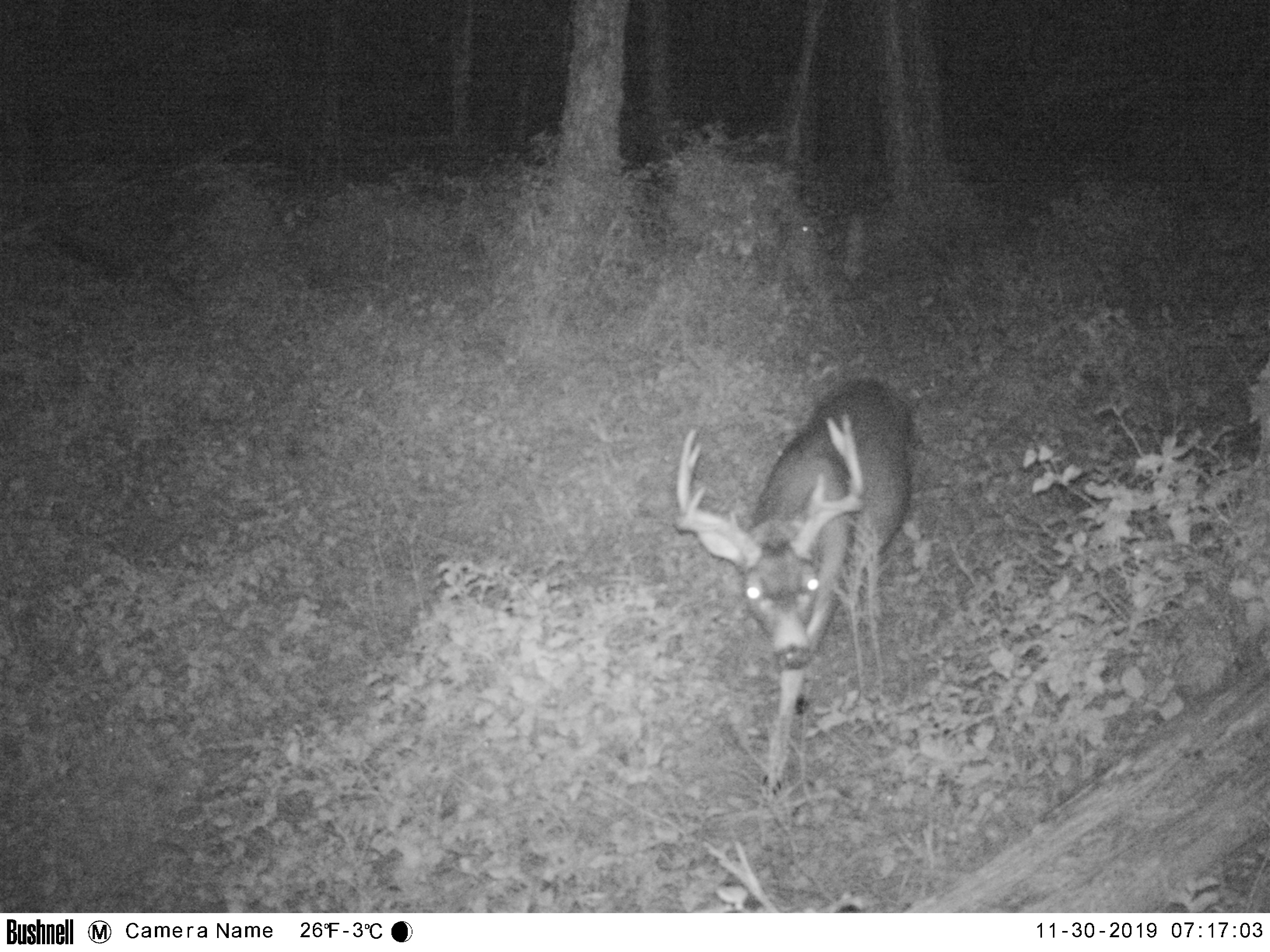
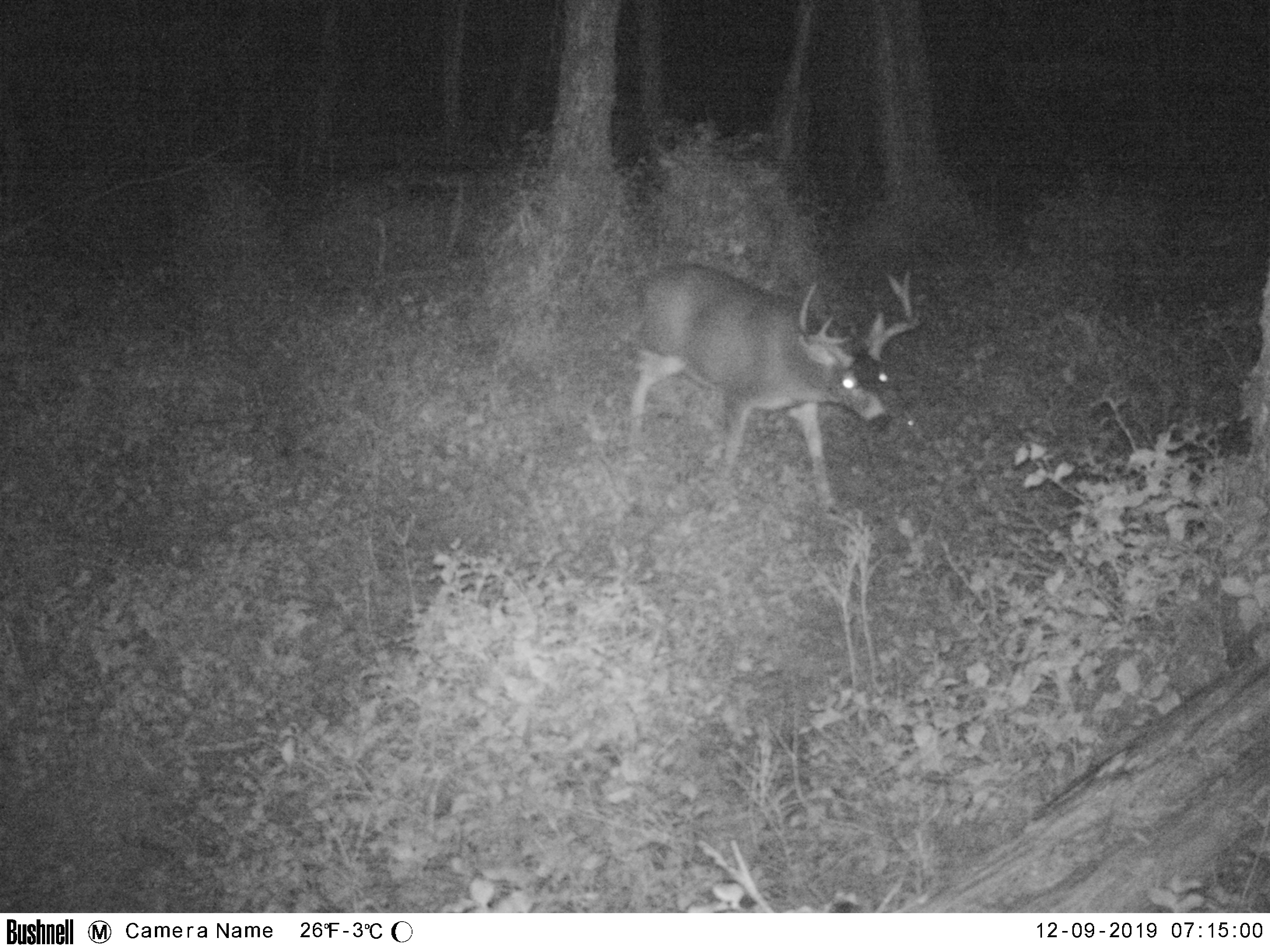
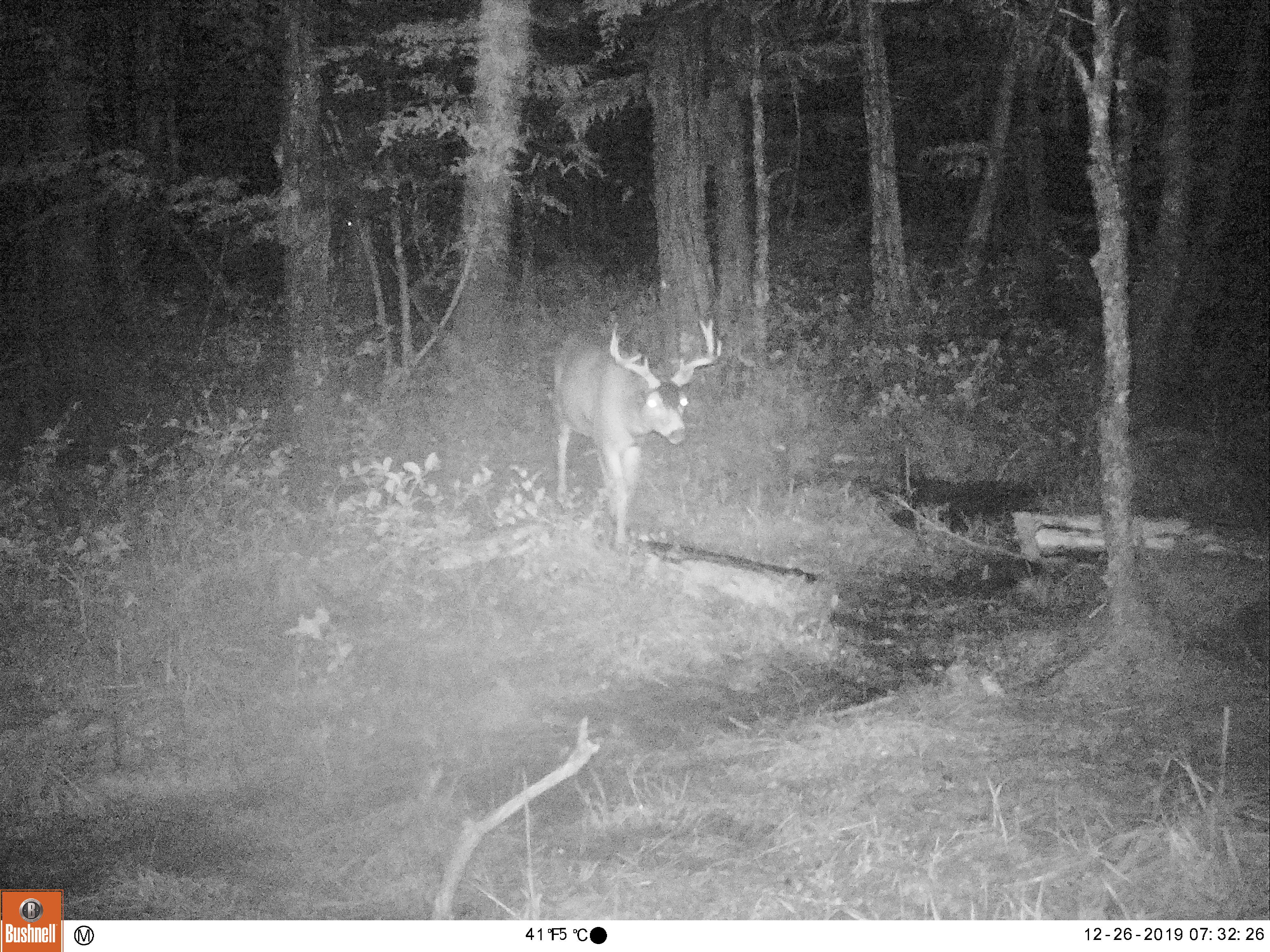
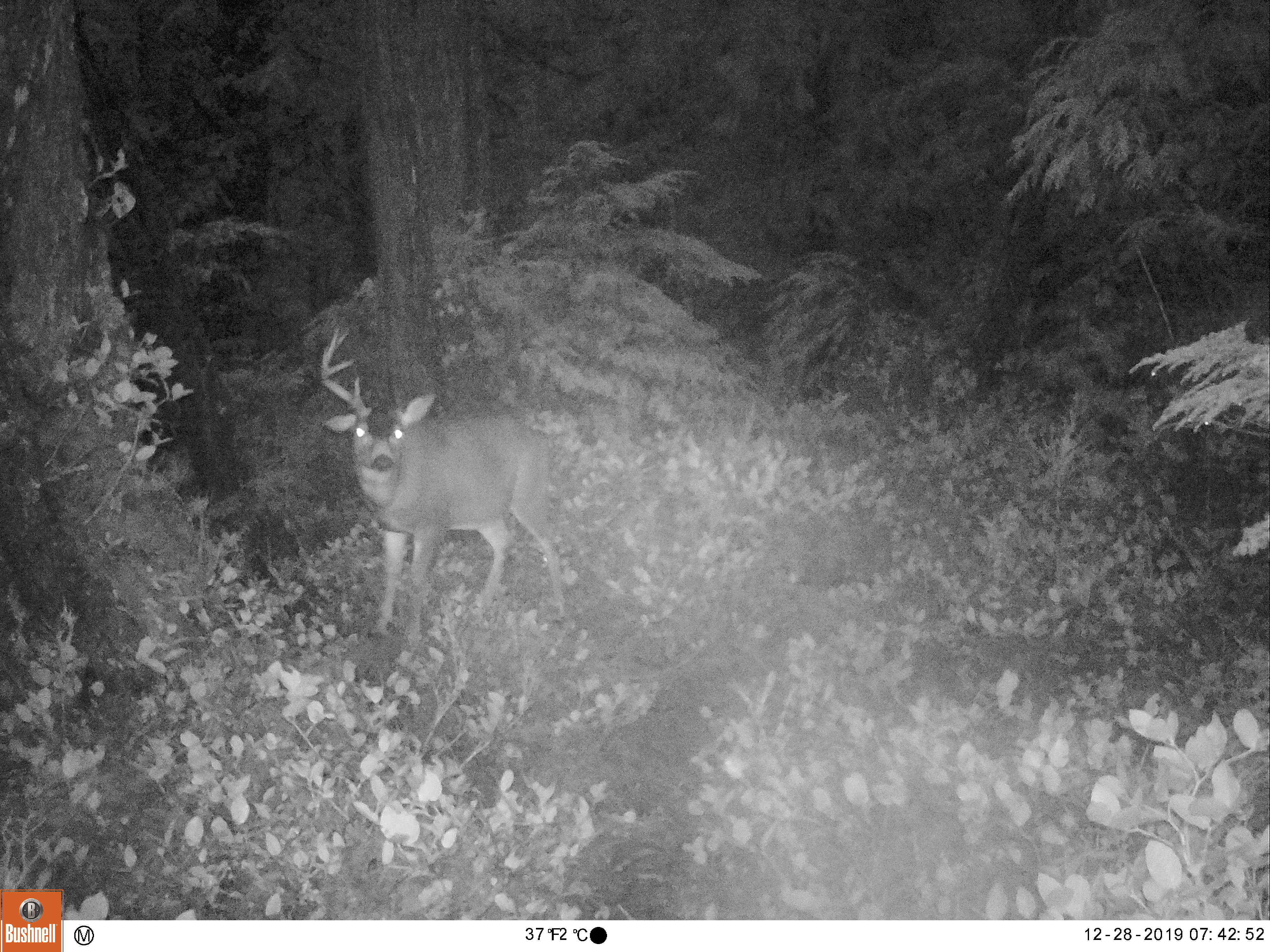
I set this camera in December but when I checked it I found someone else’s camera near by so even though there was plenty of action I moved it.


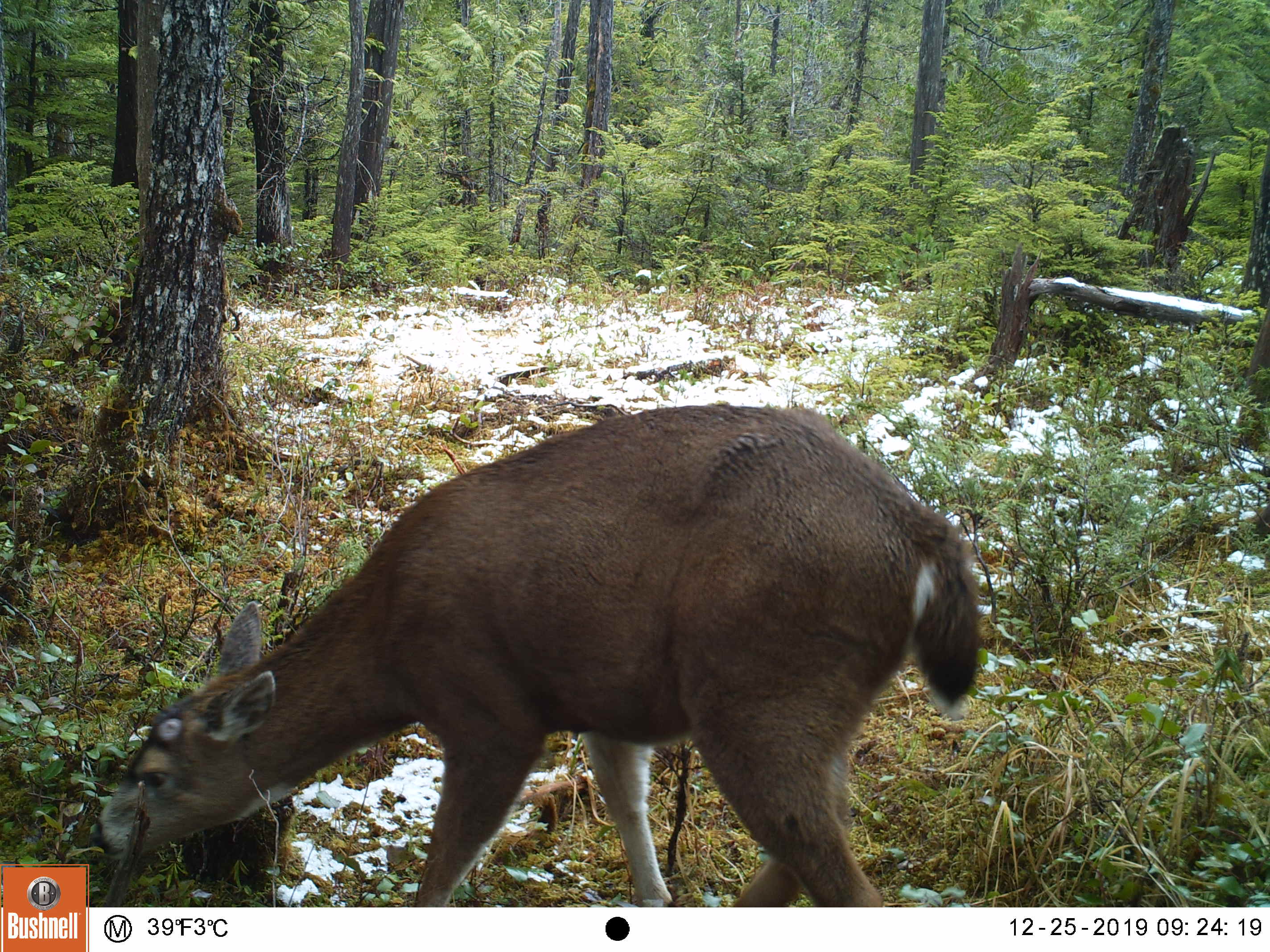
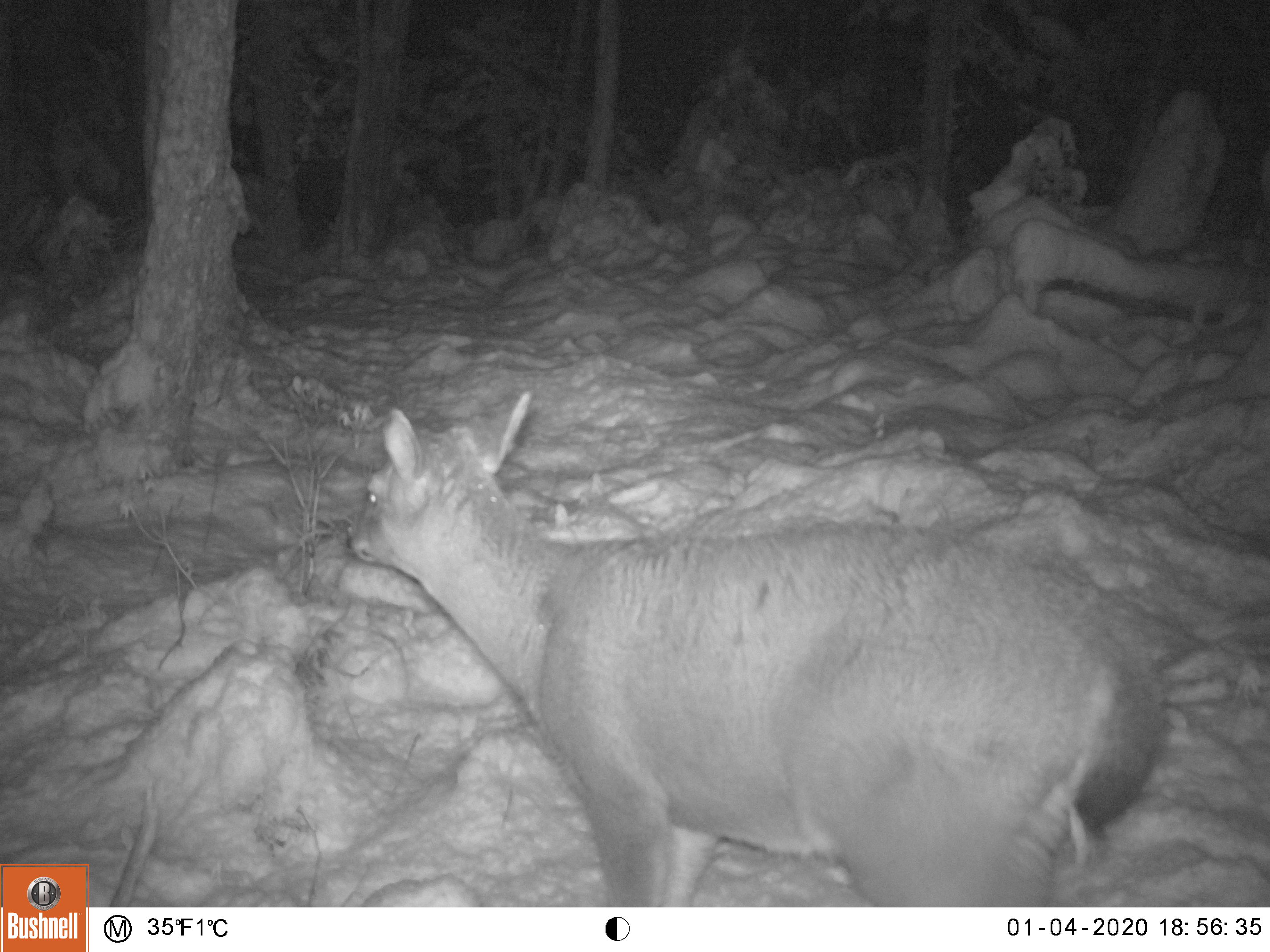
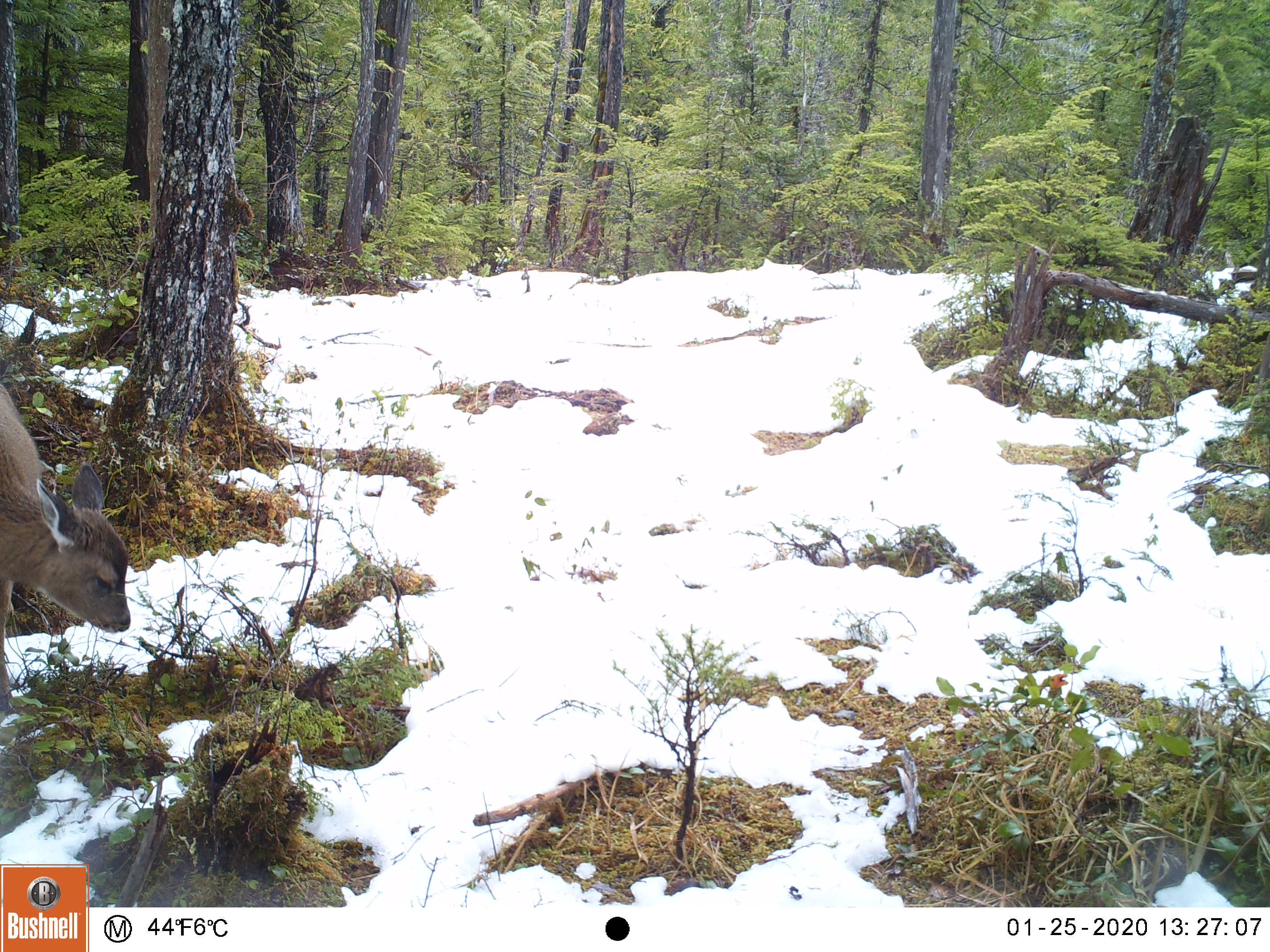
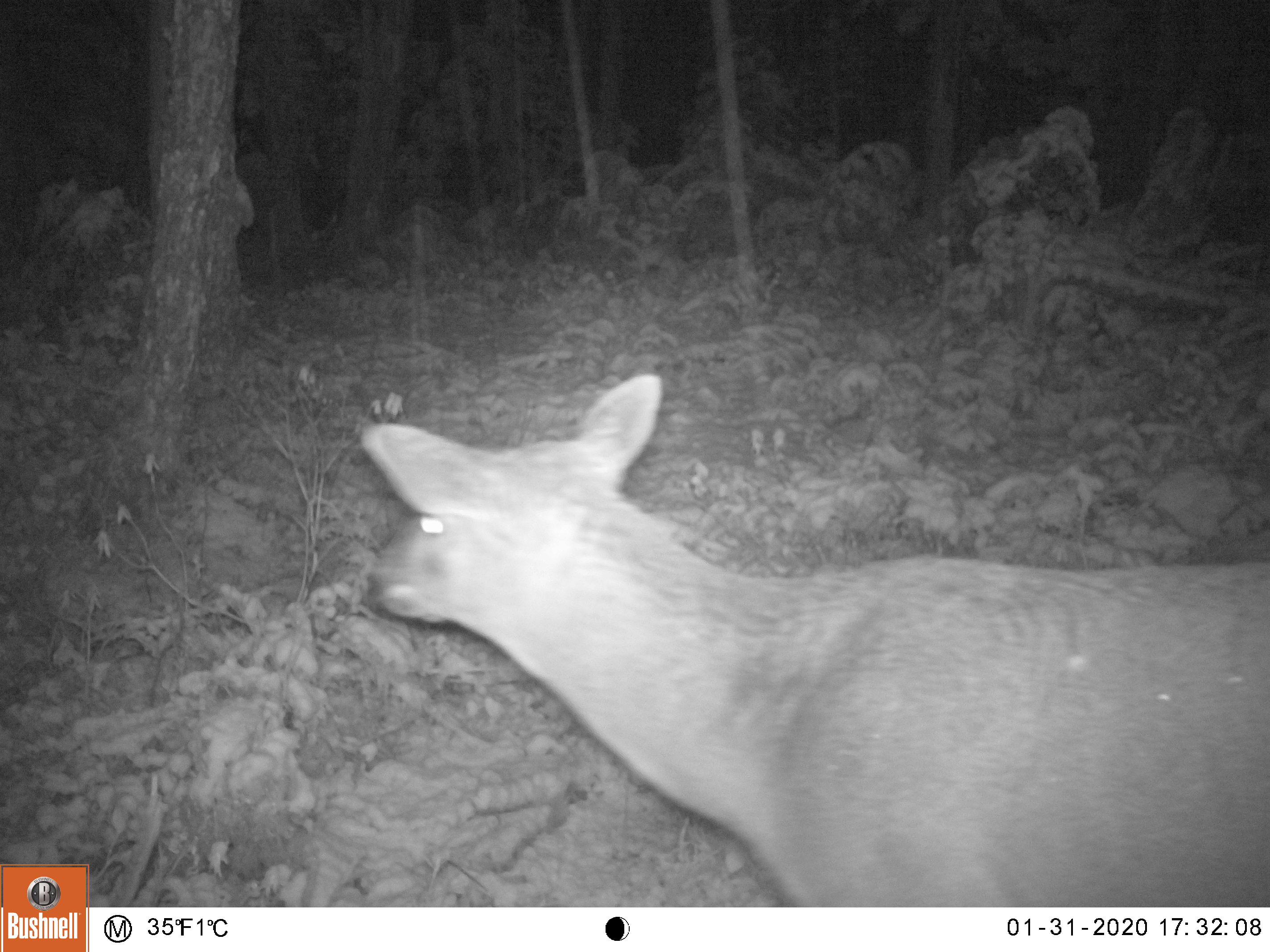

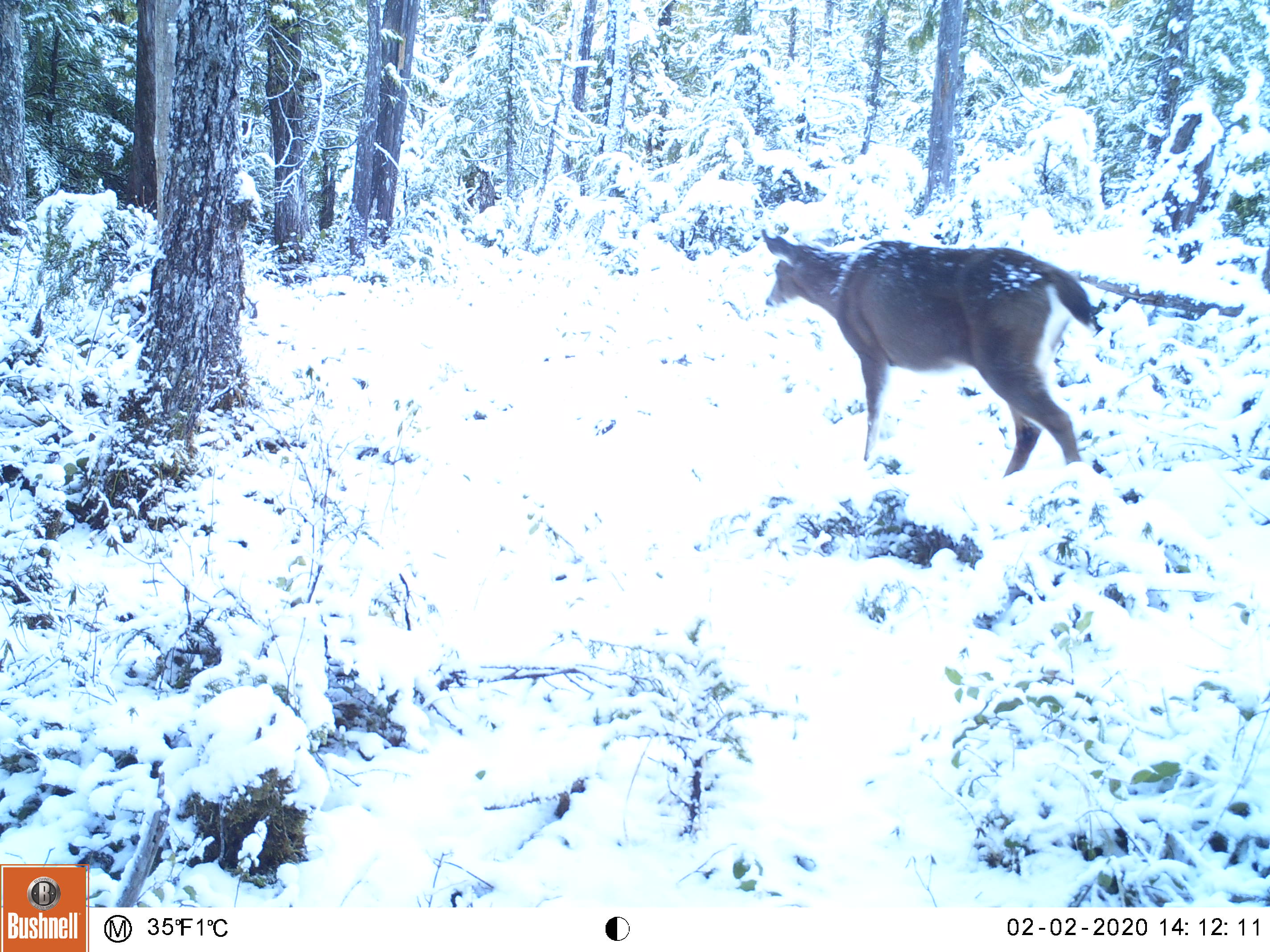


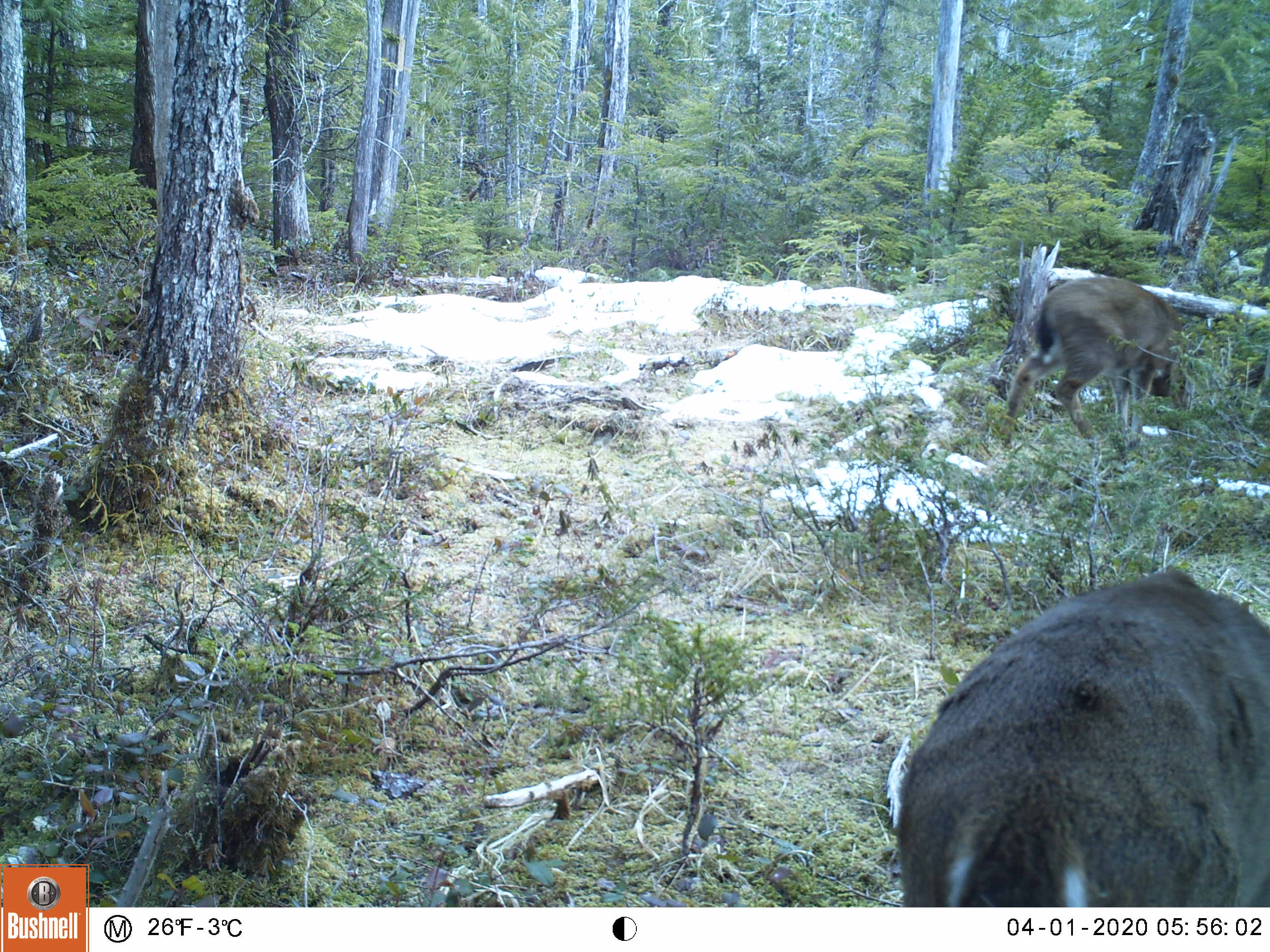
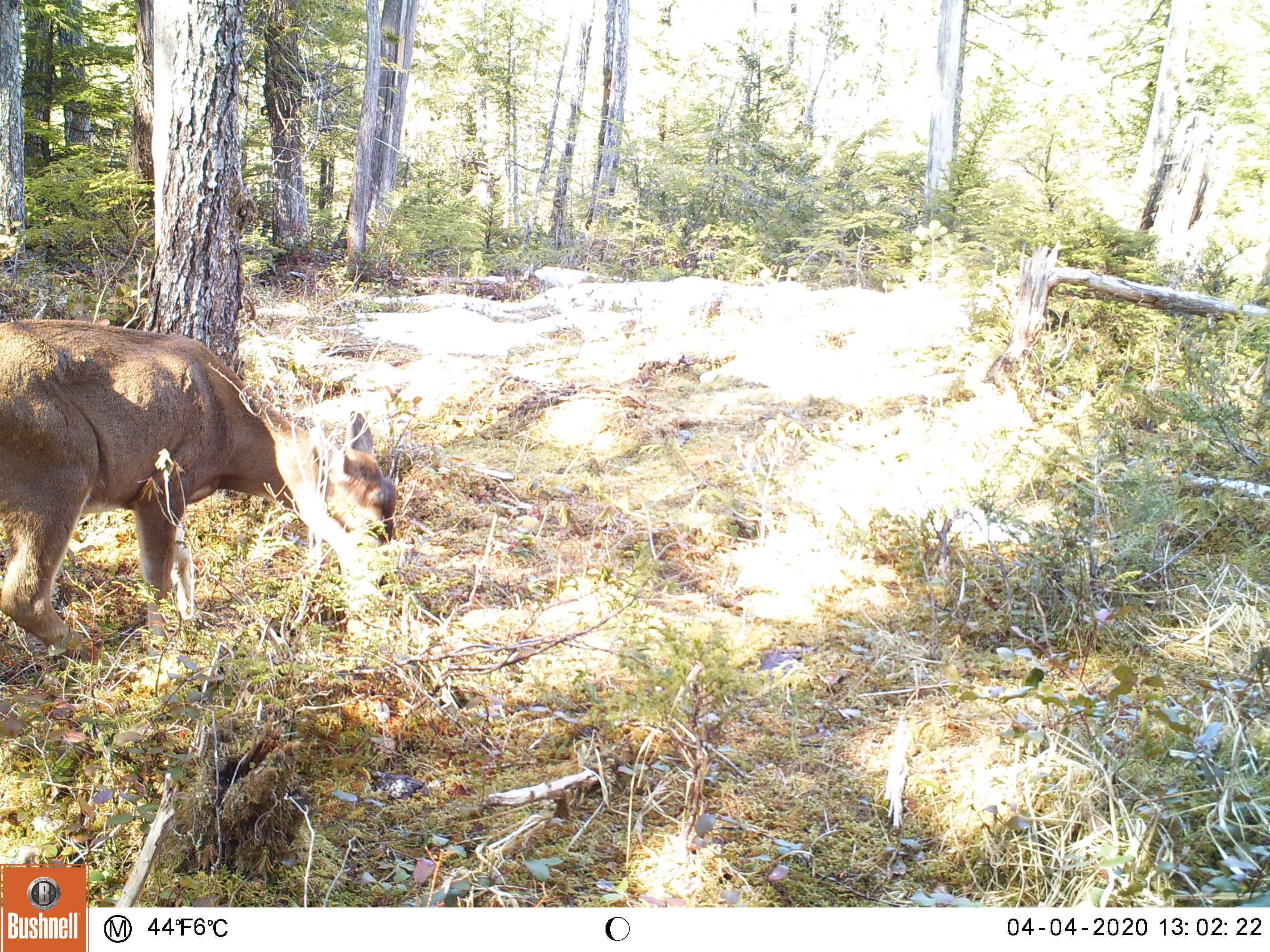
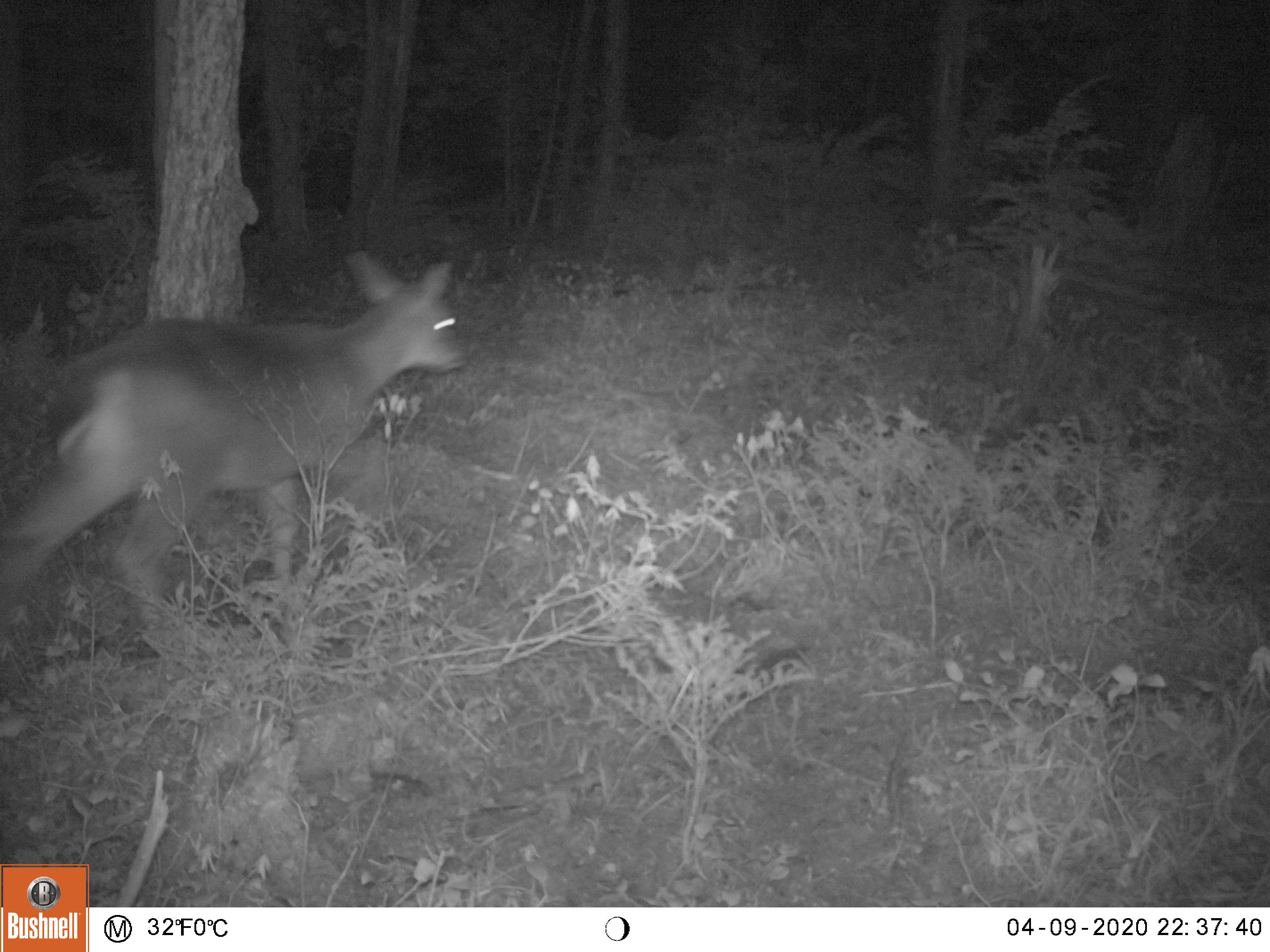
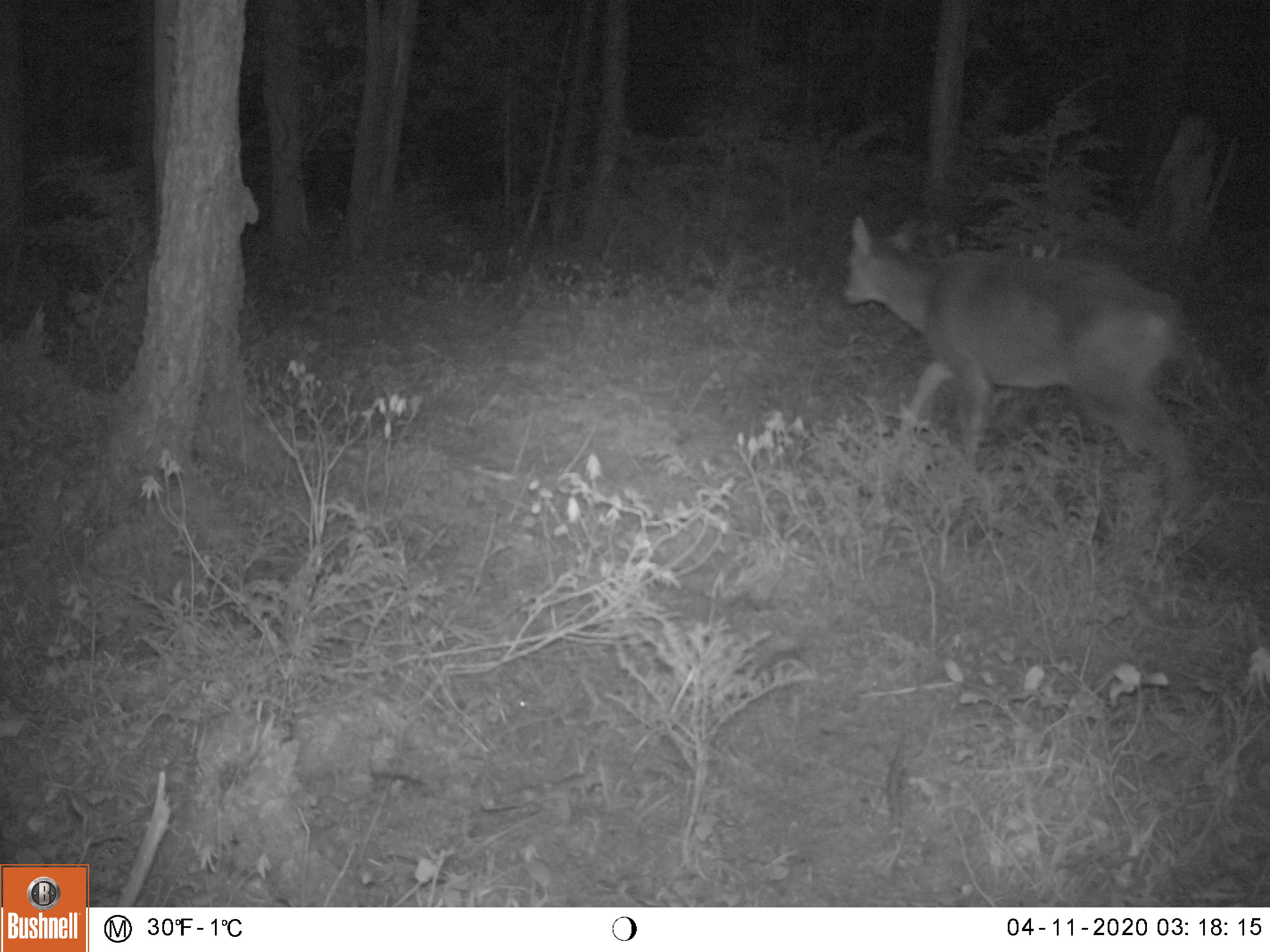
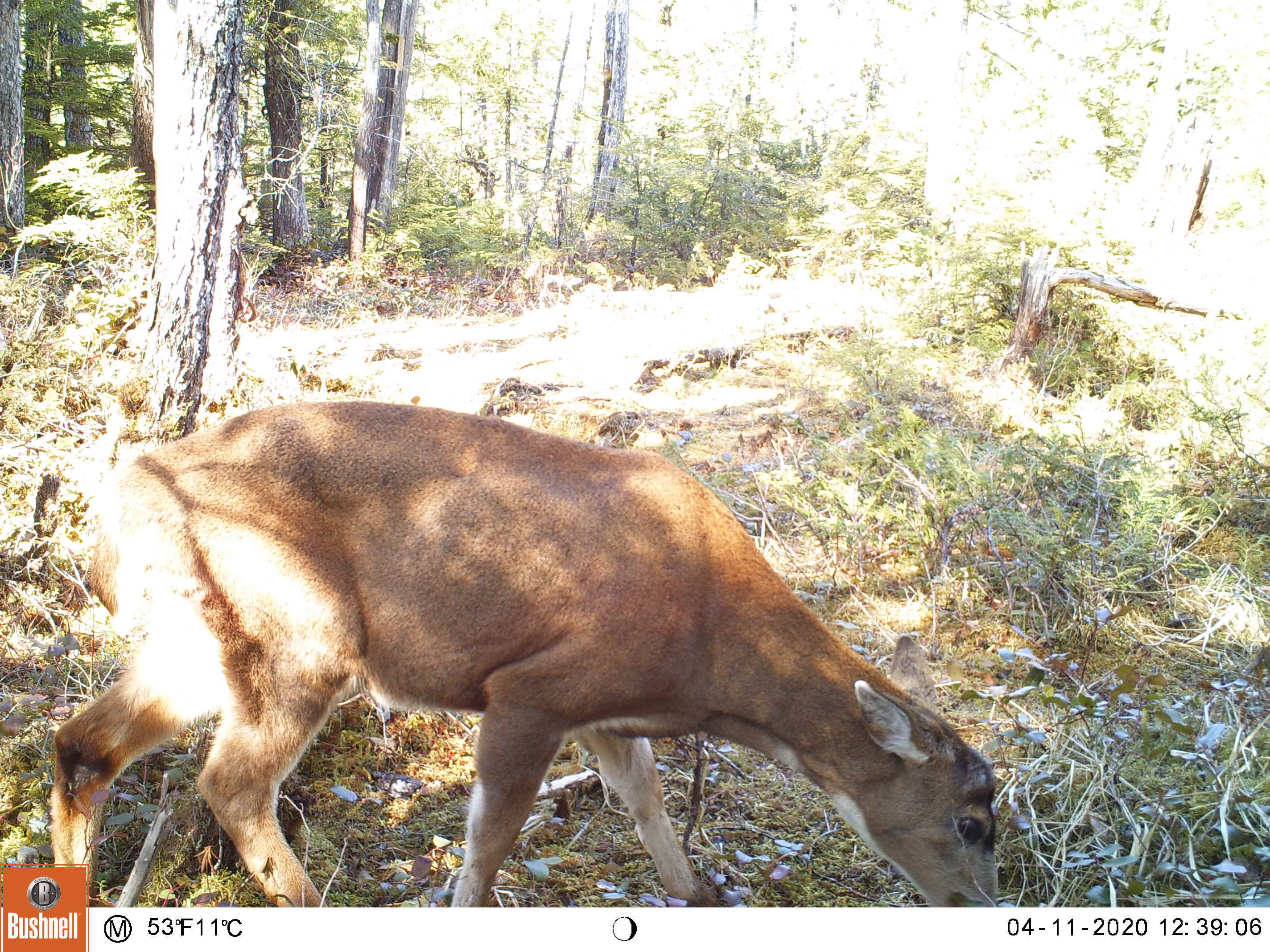
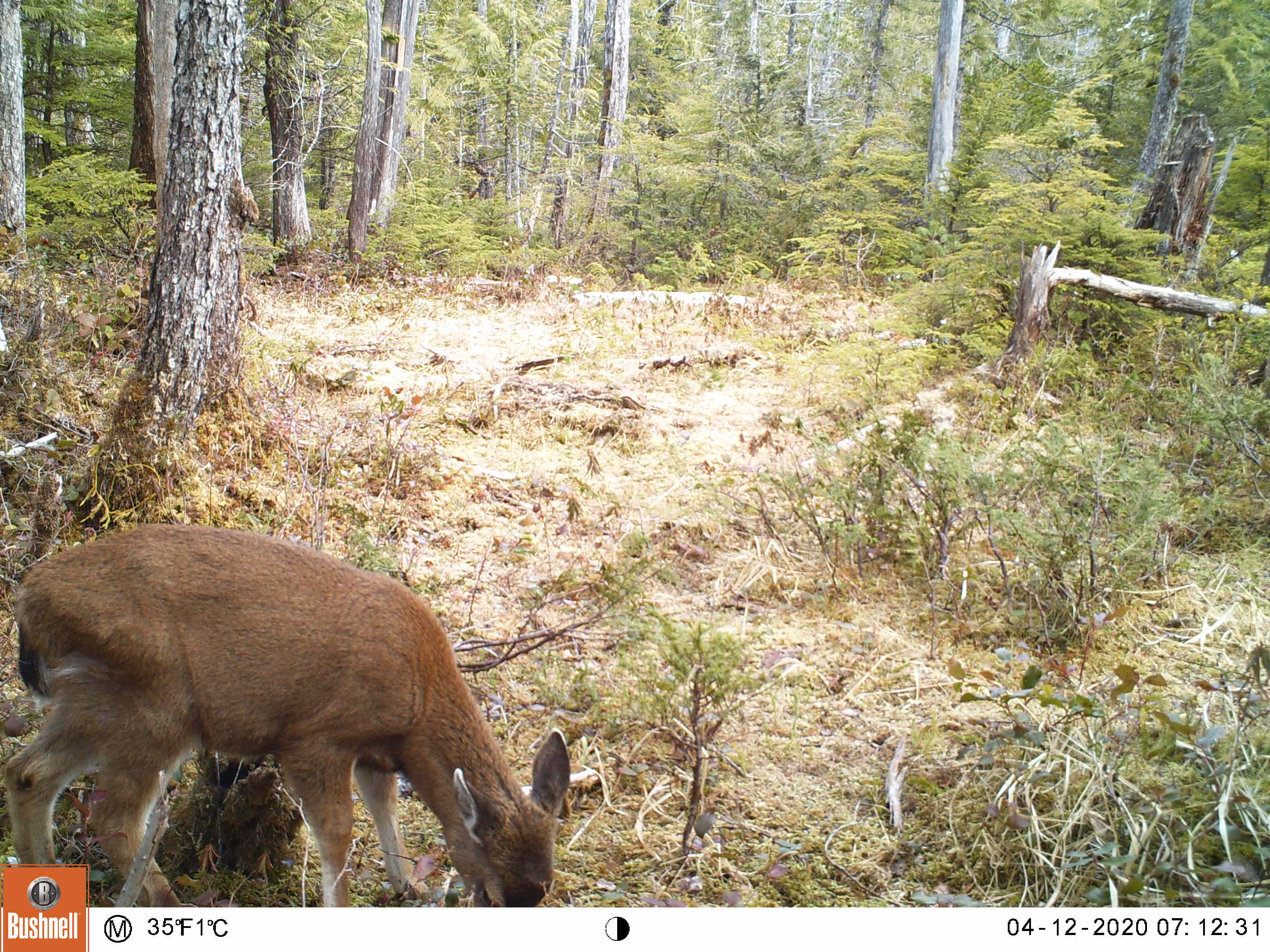


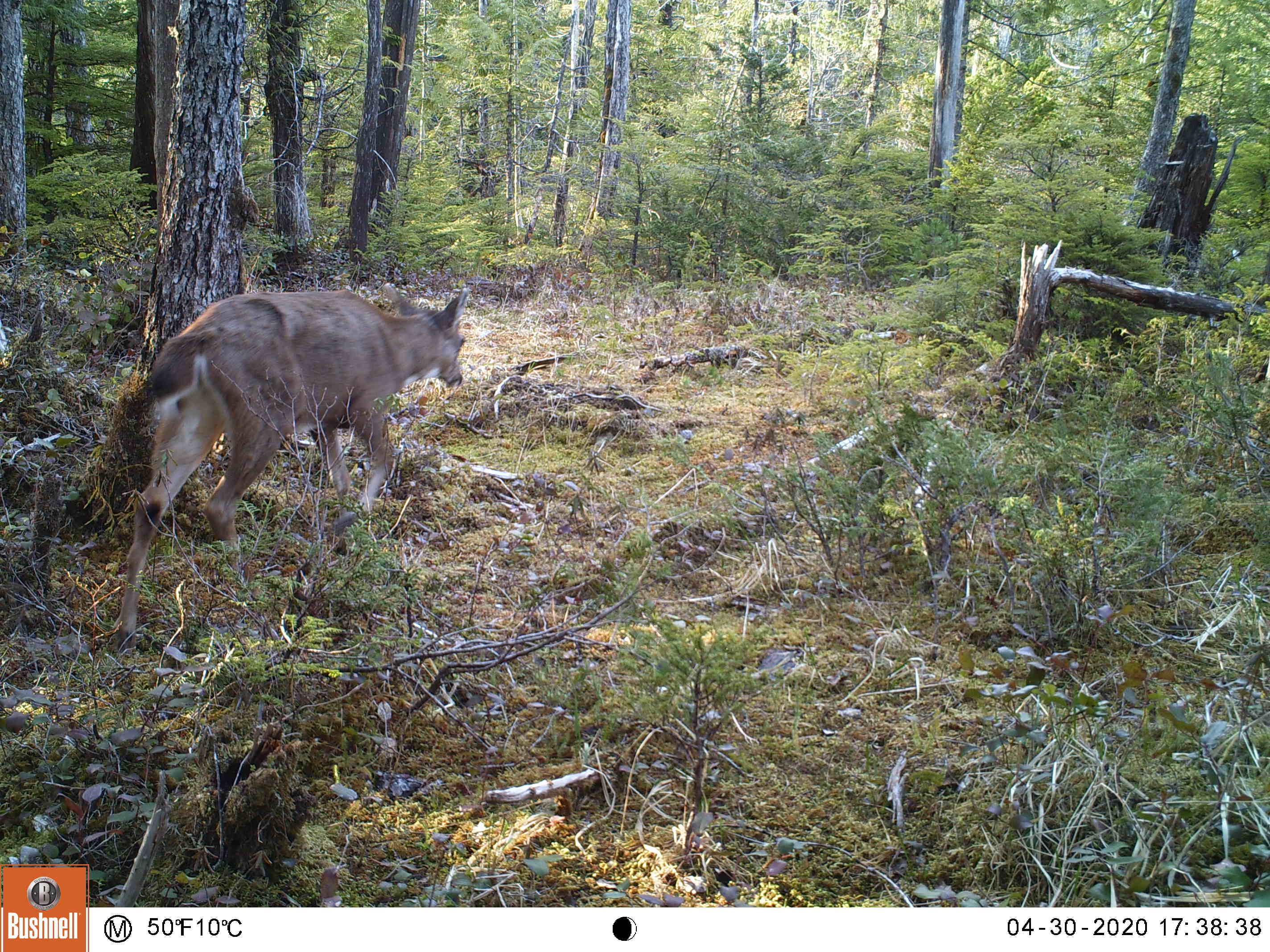


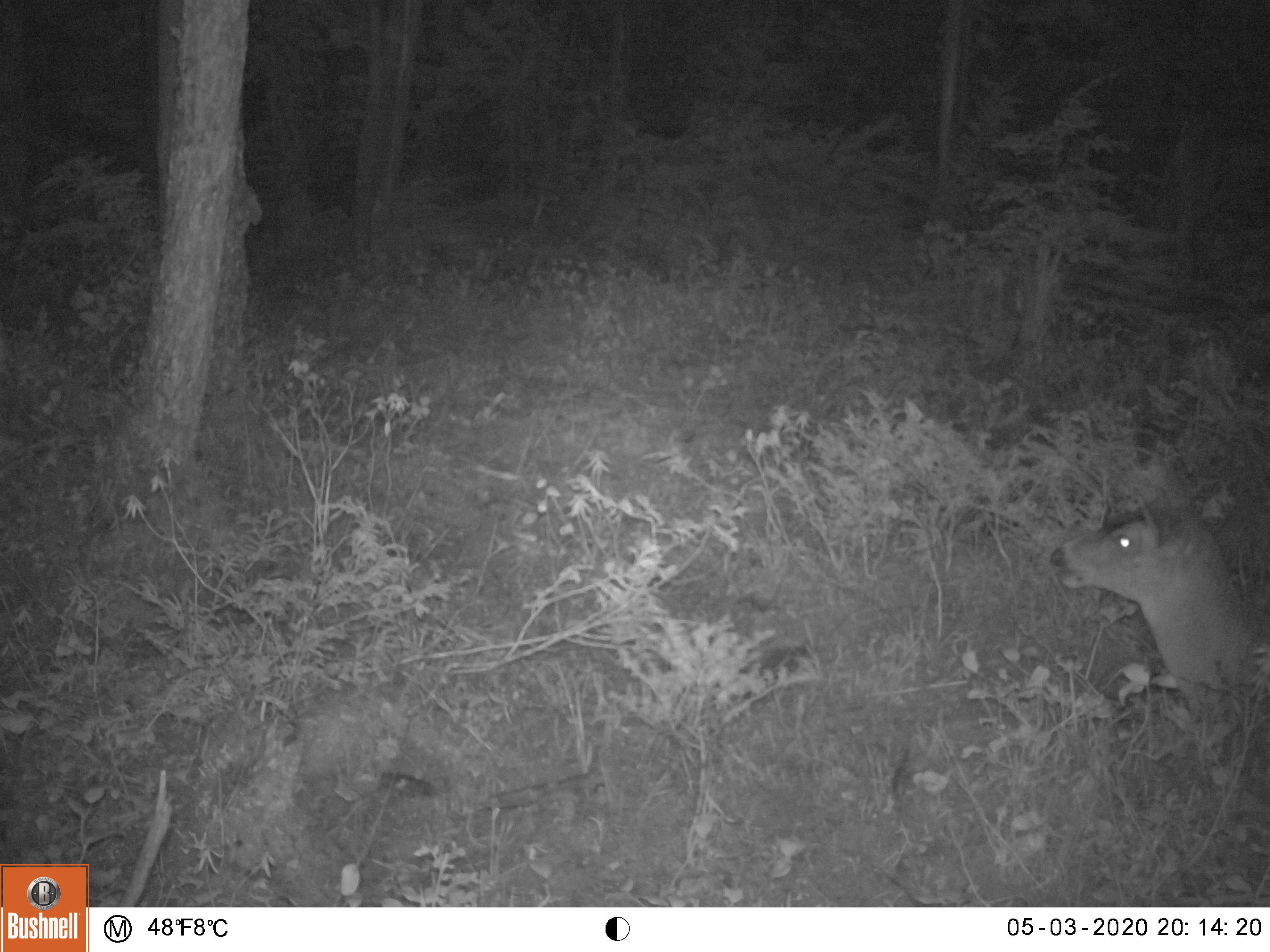

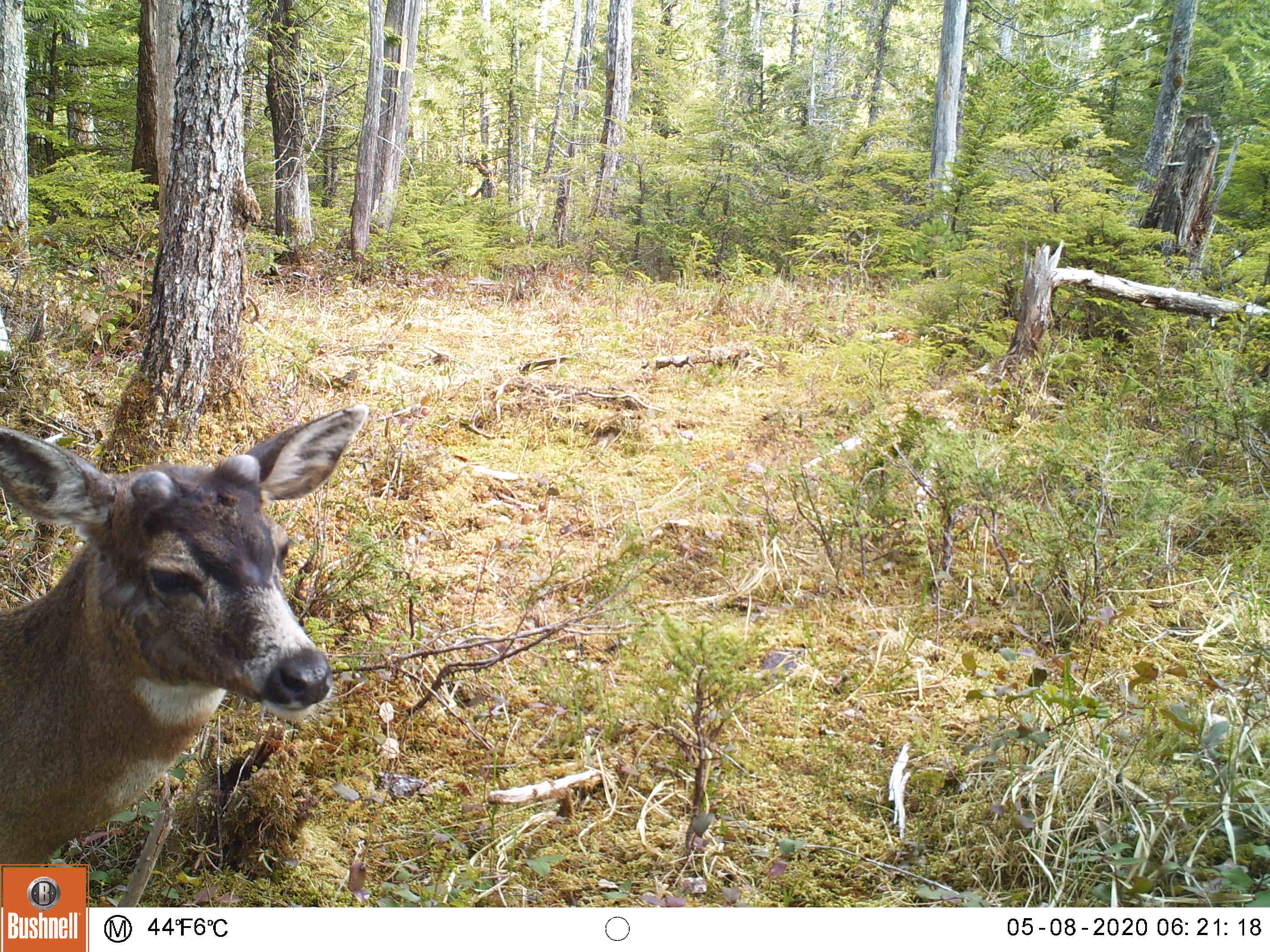
The new spot I found for this camera

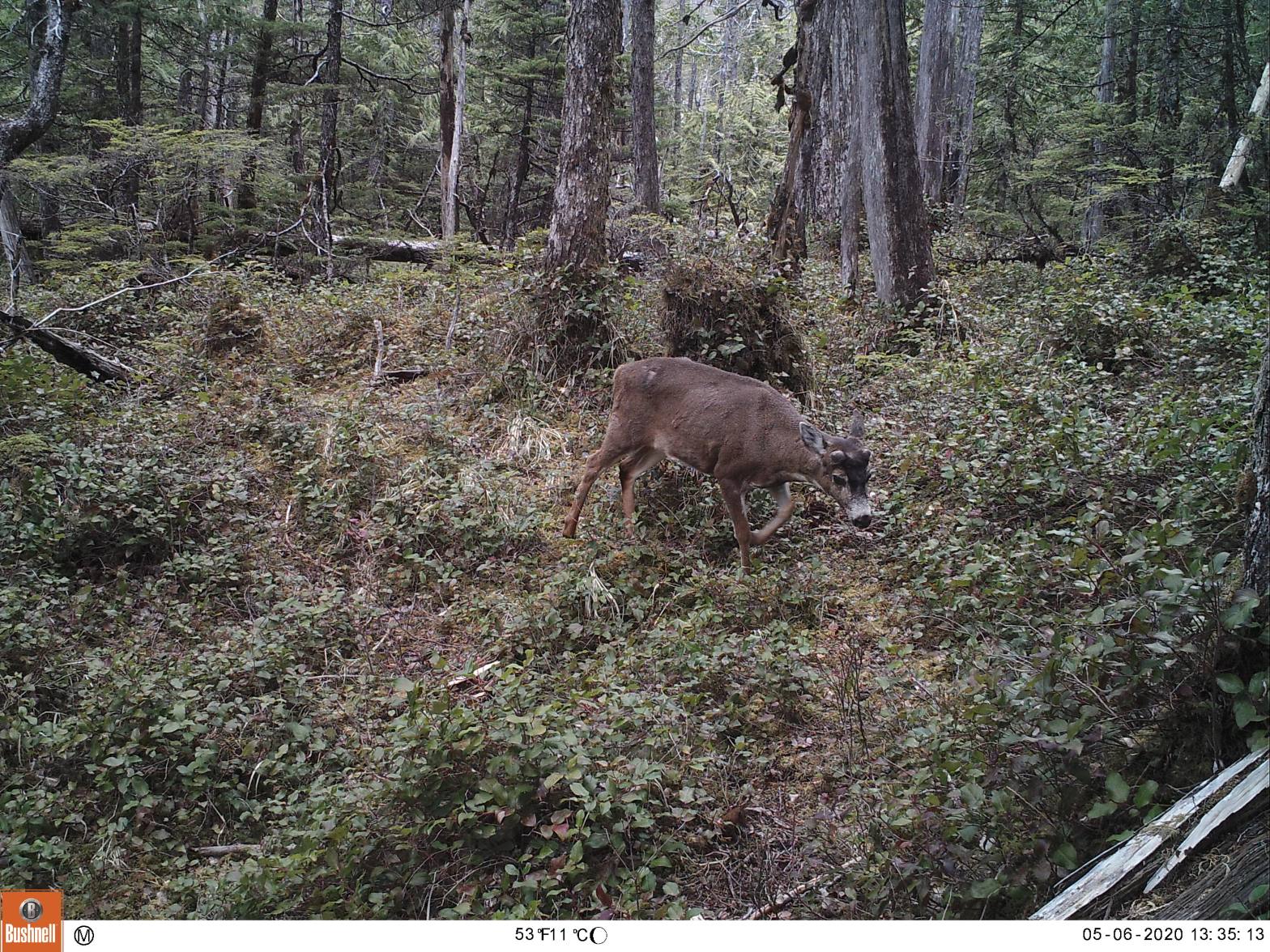
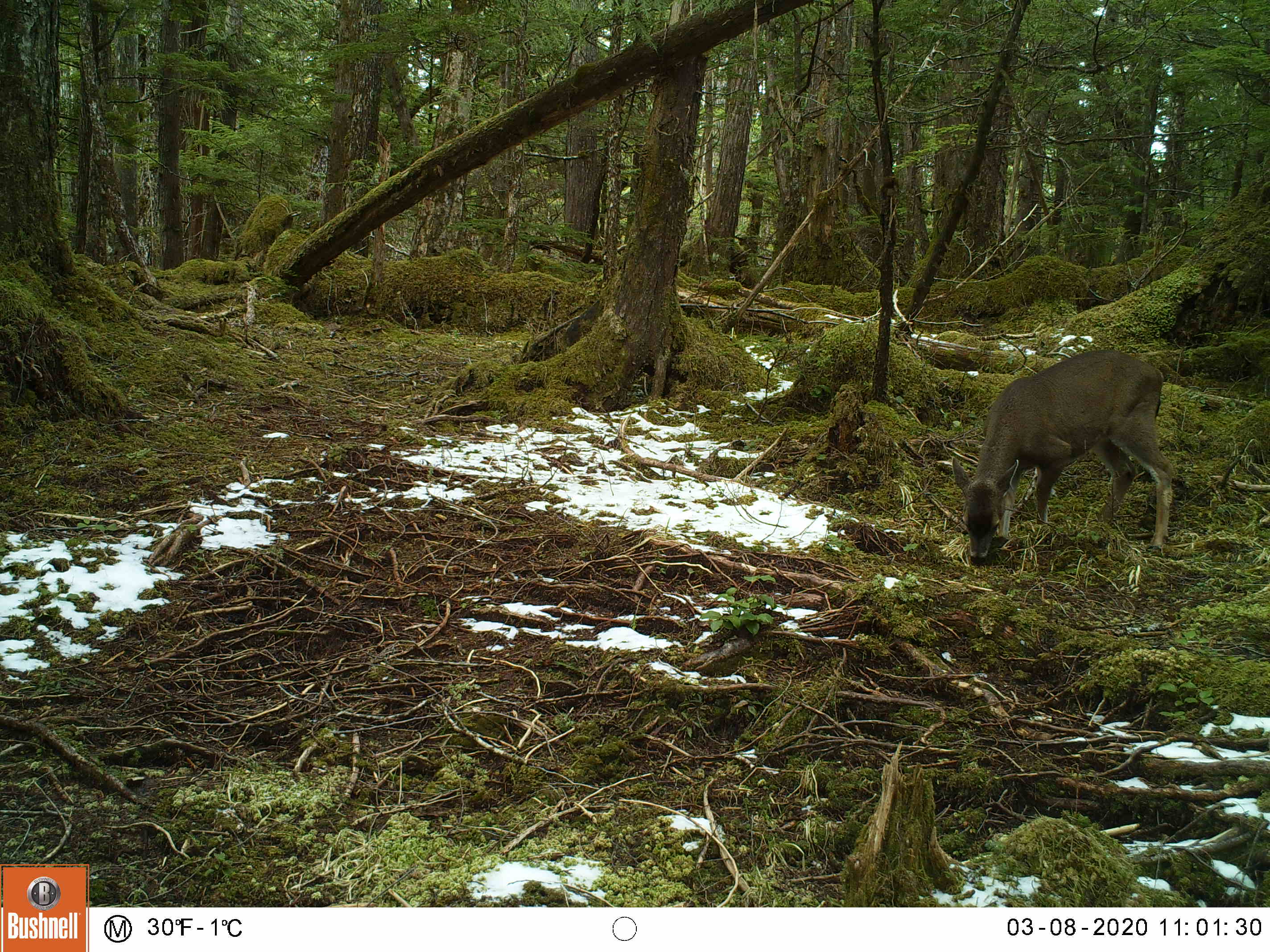
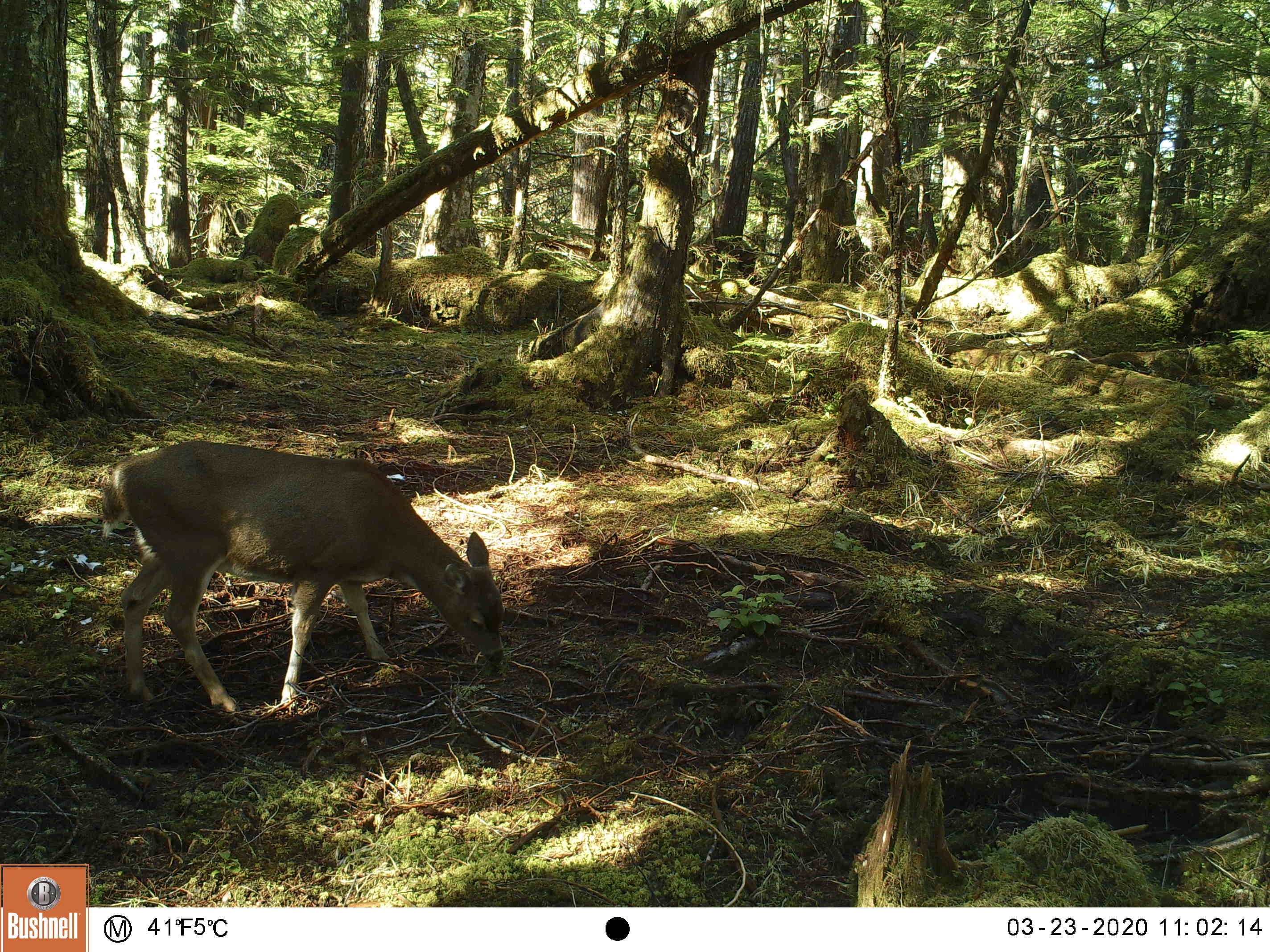
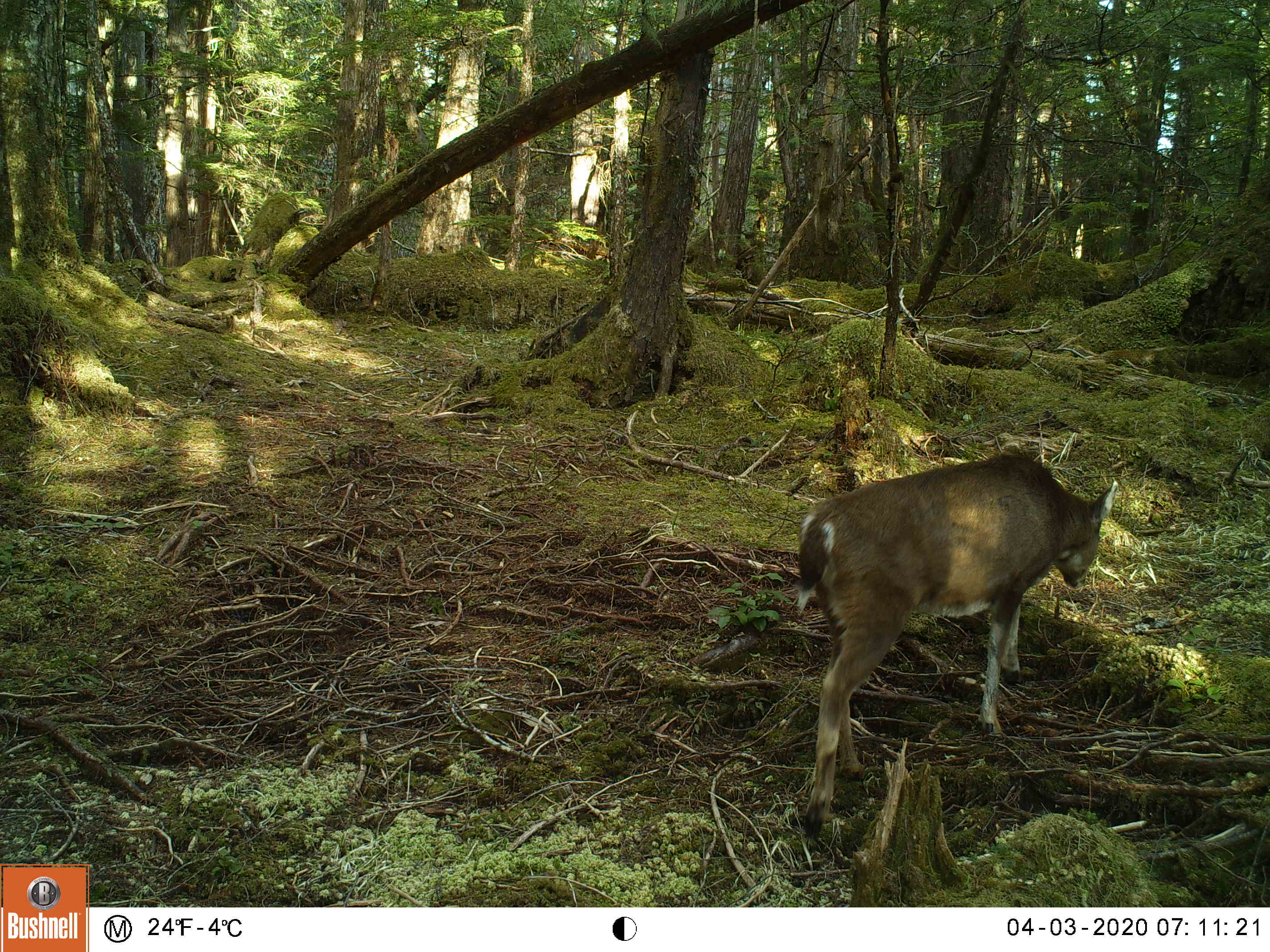
Sitka Blacktail Deer feeding and passing through a patch of salal in SE Alaska, January – Early May
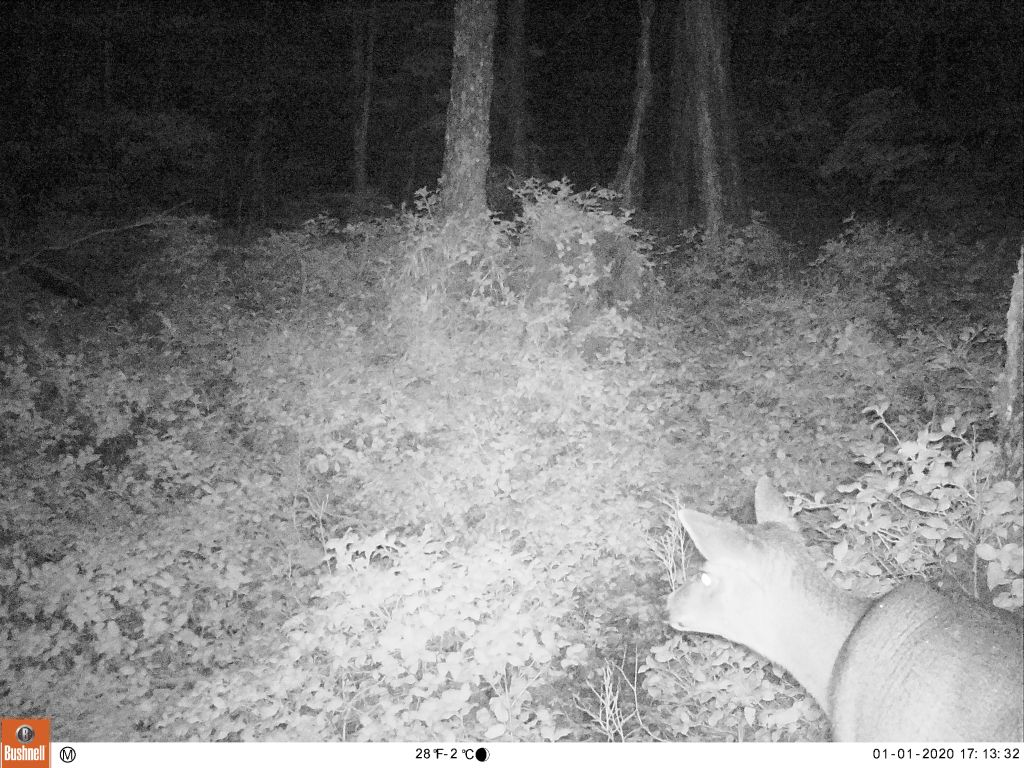

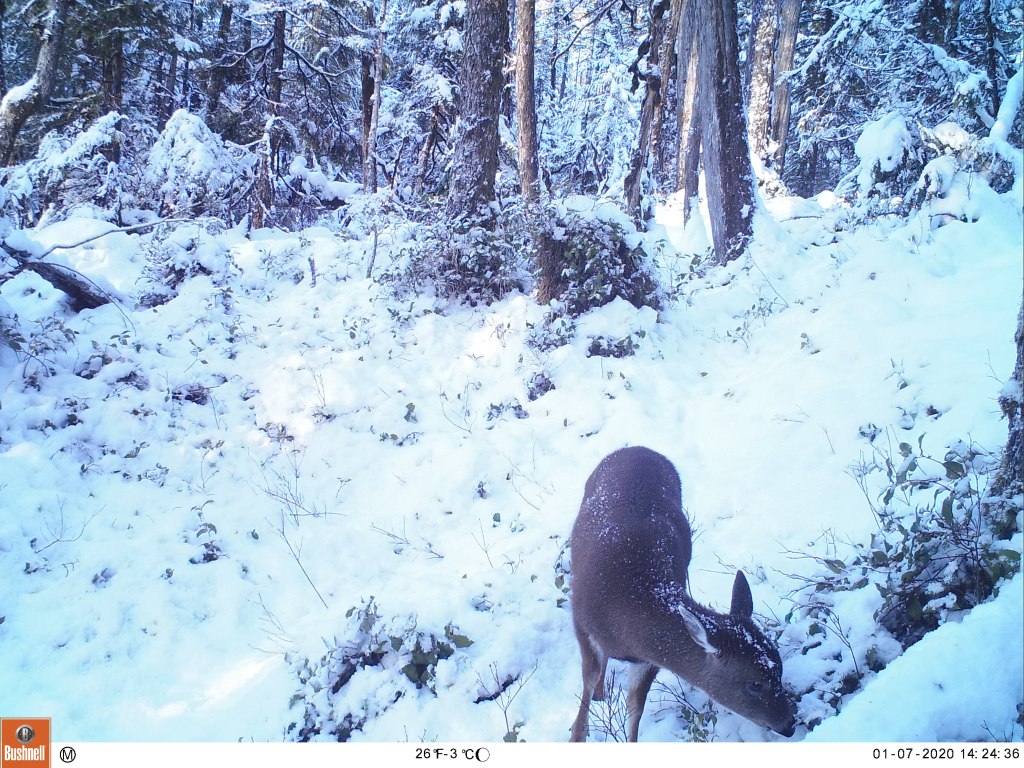


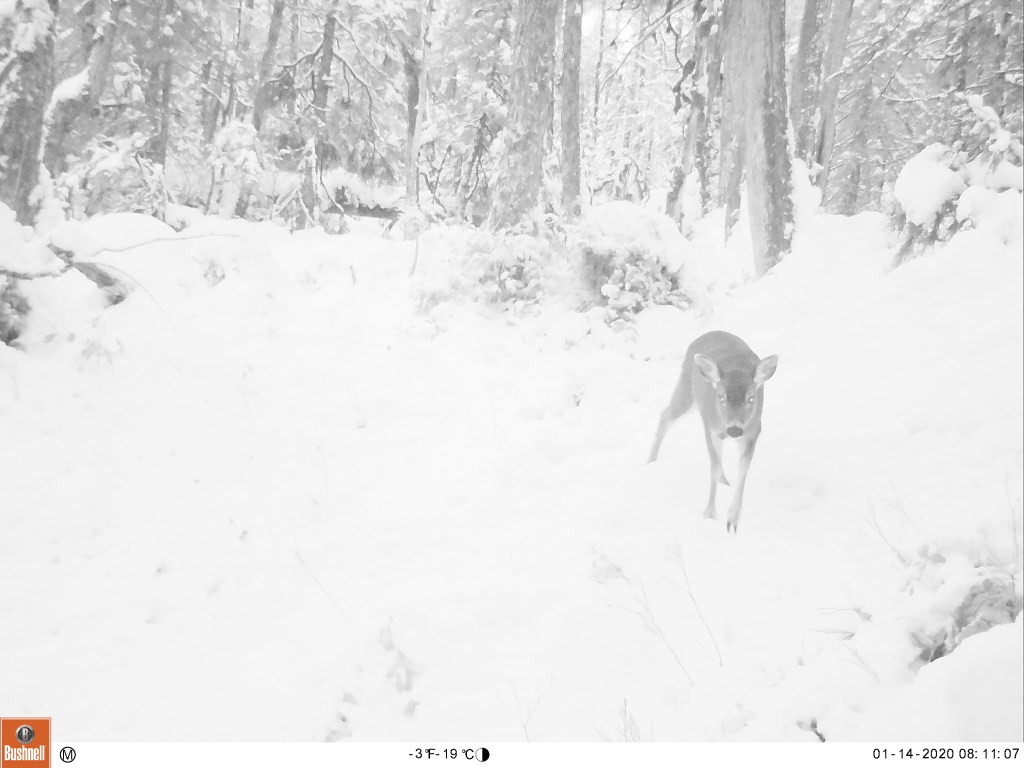
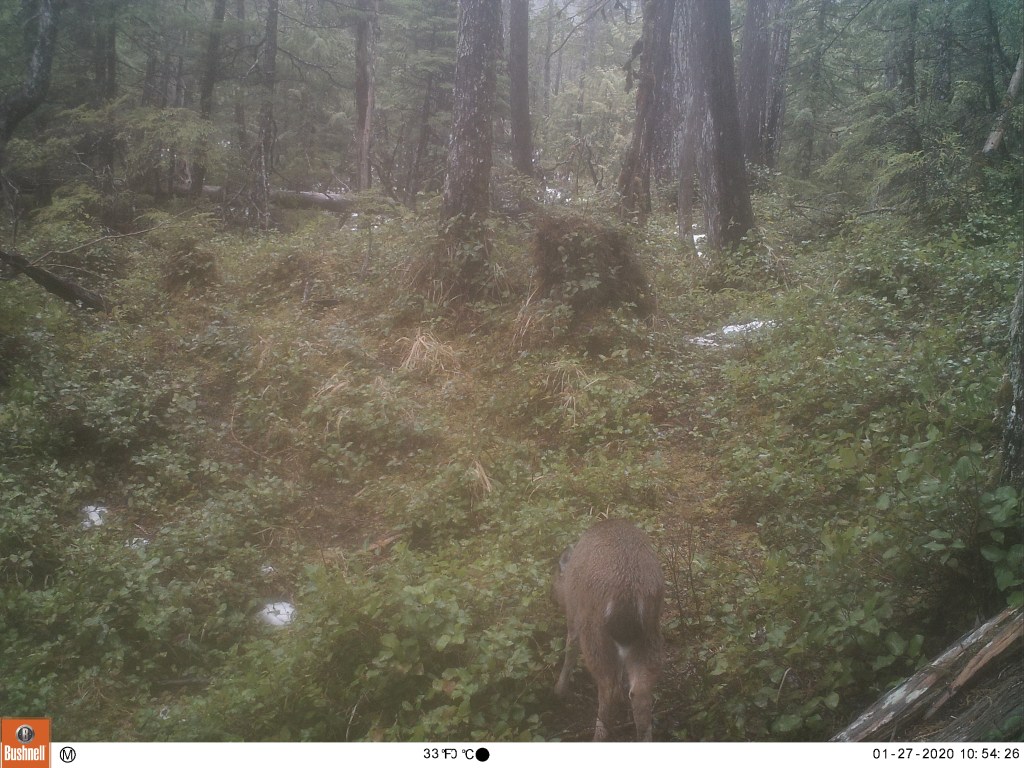


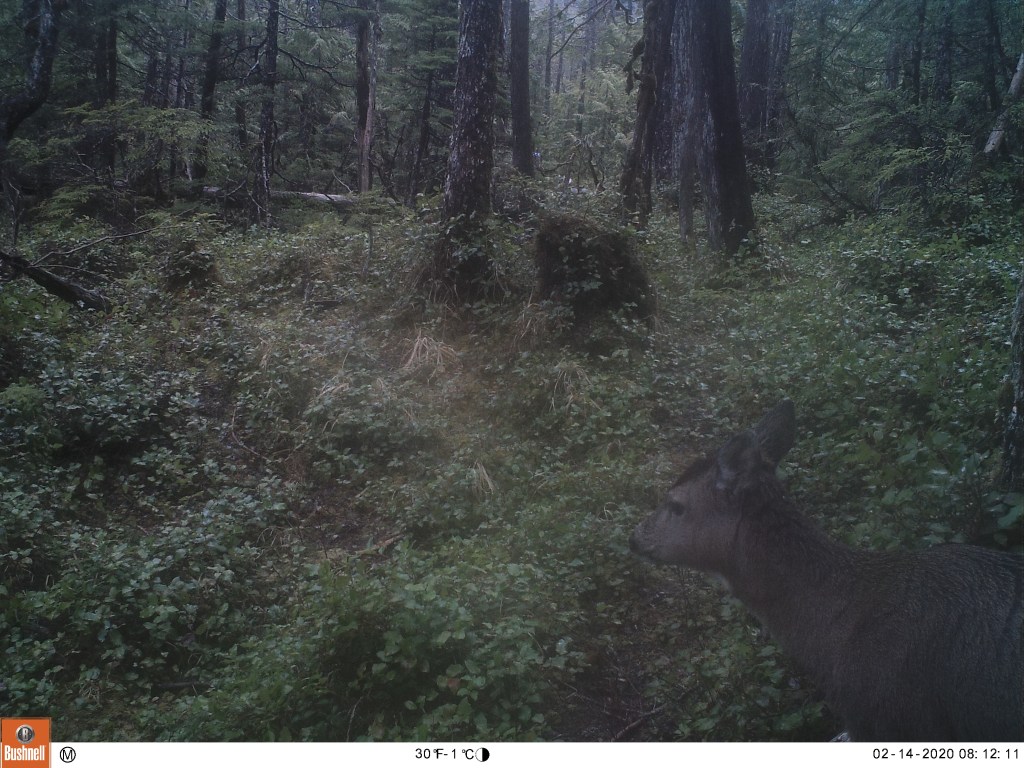

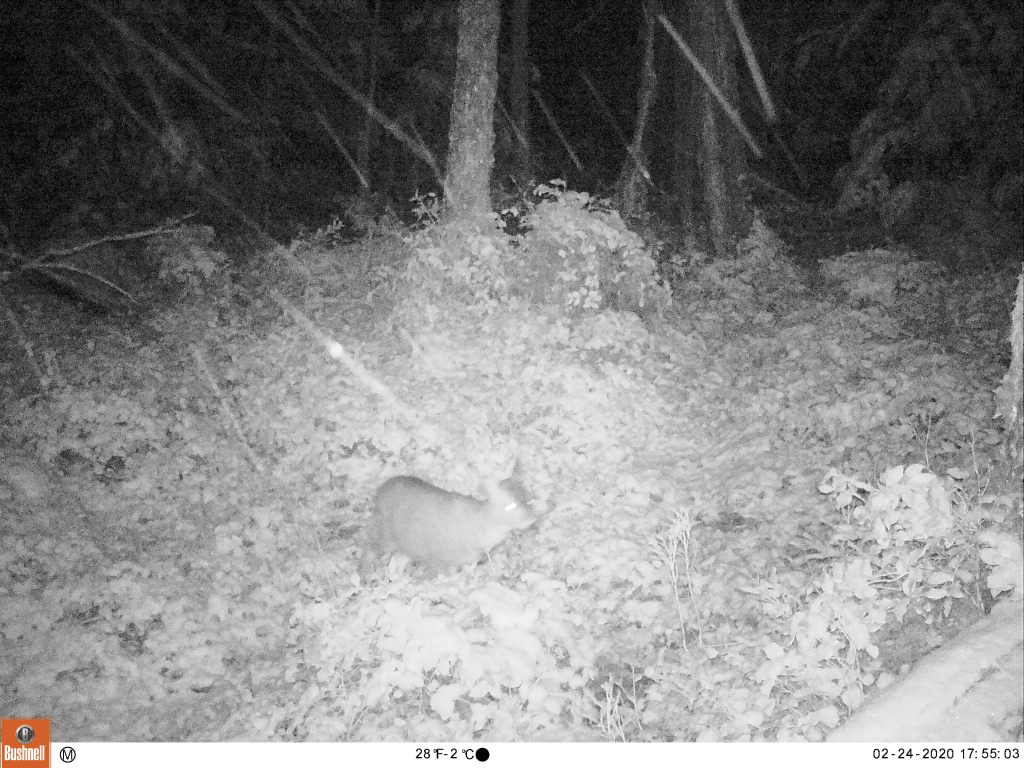
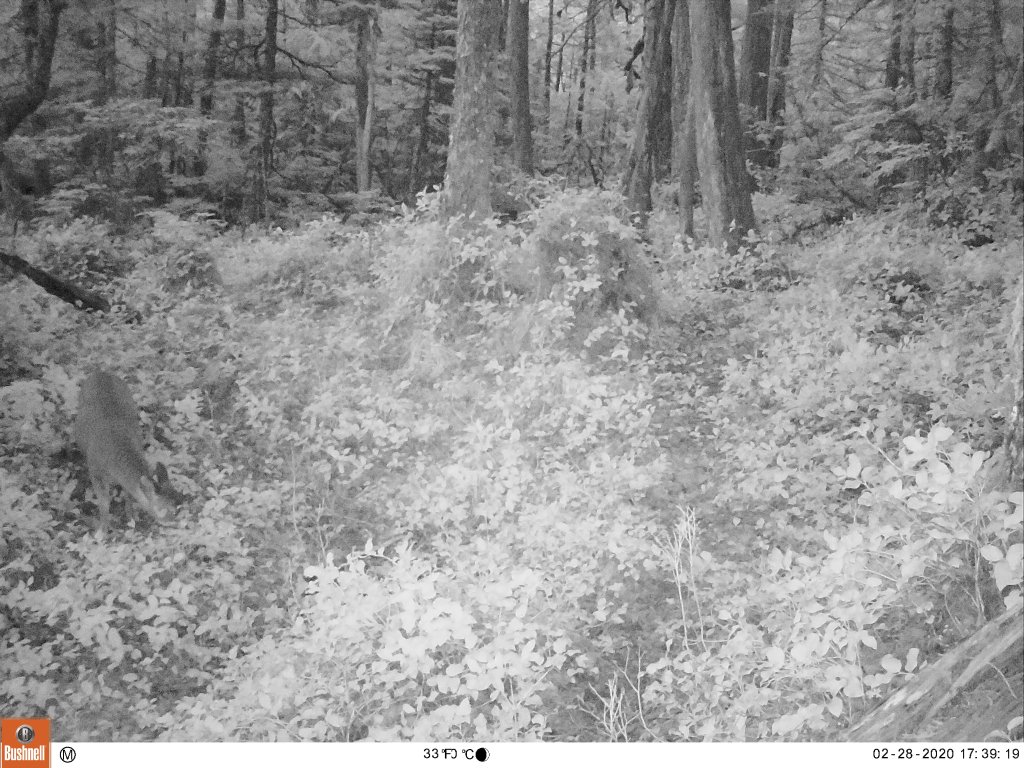


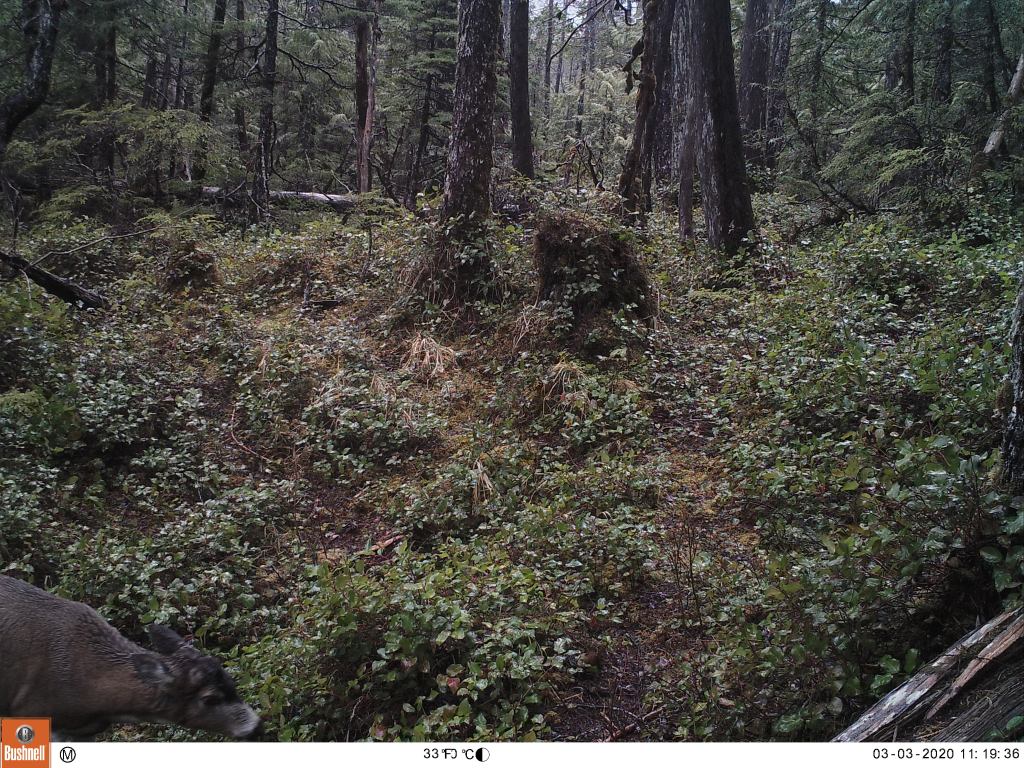
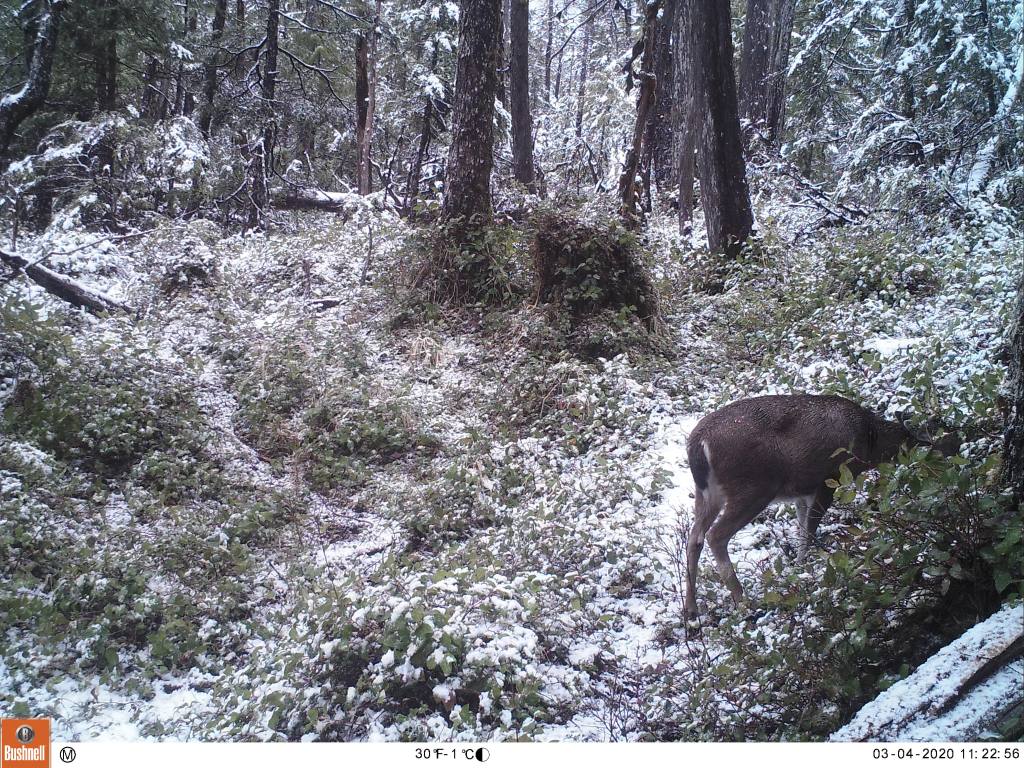
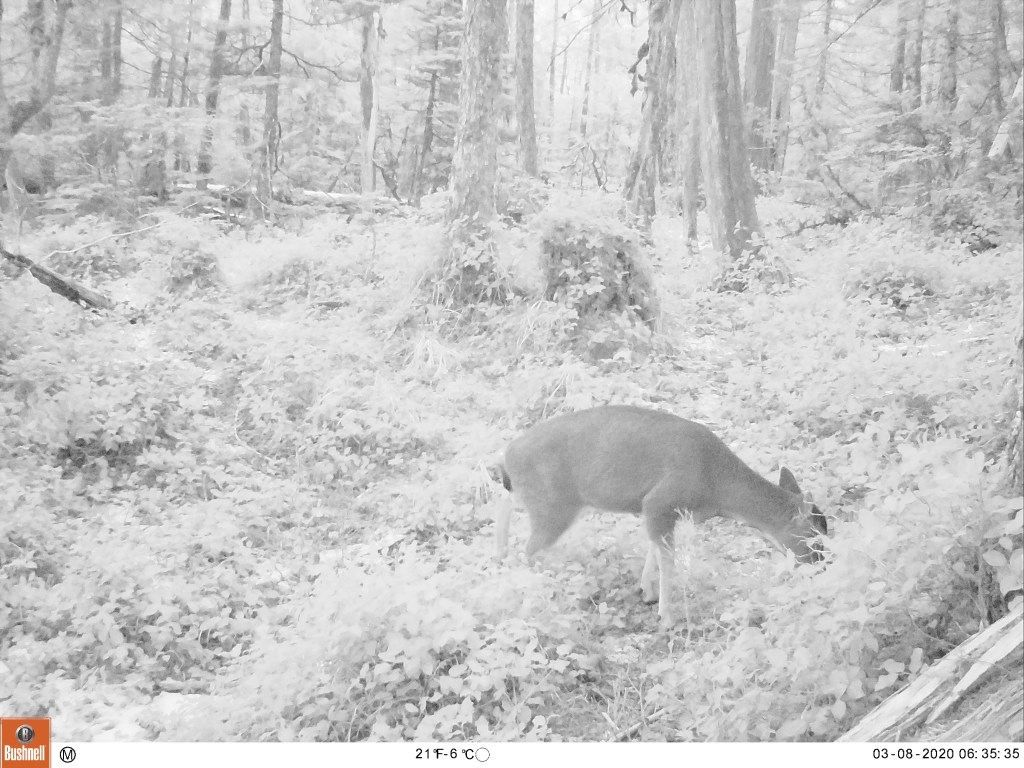

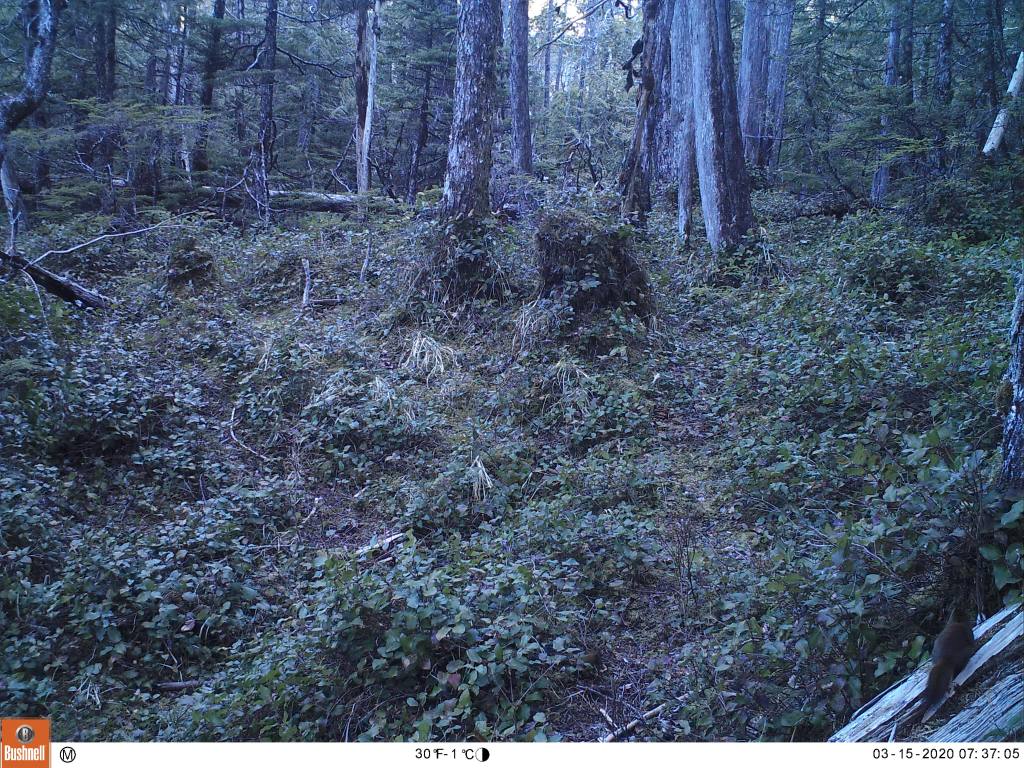
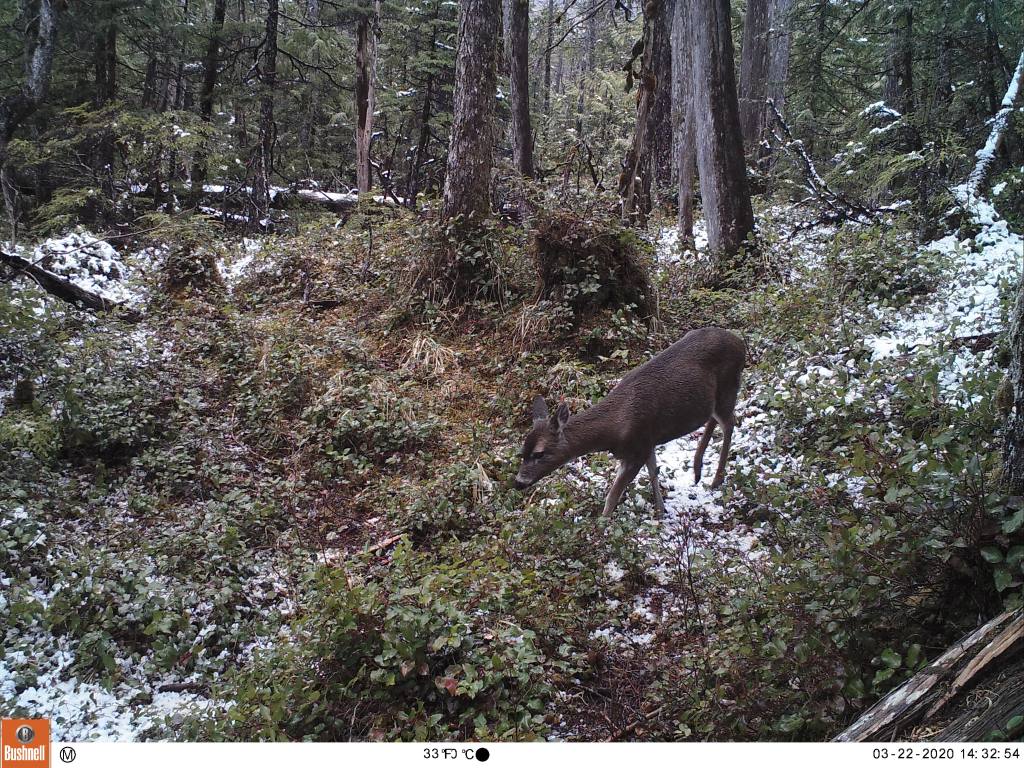


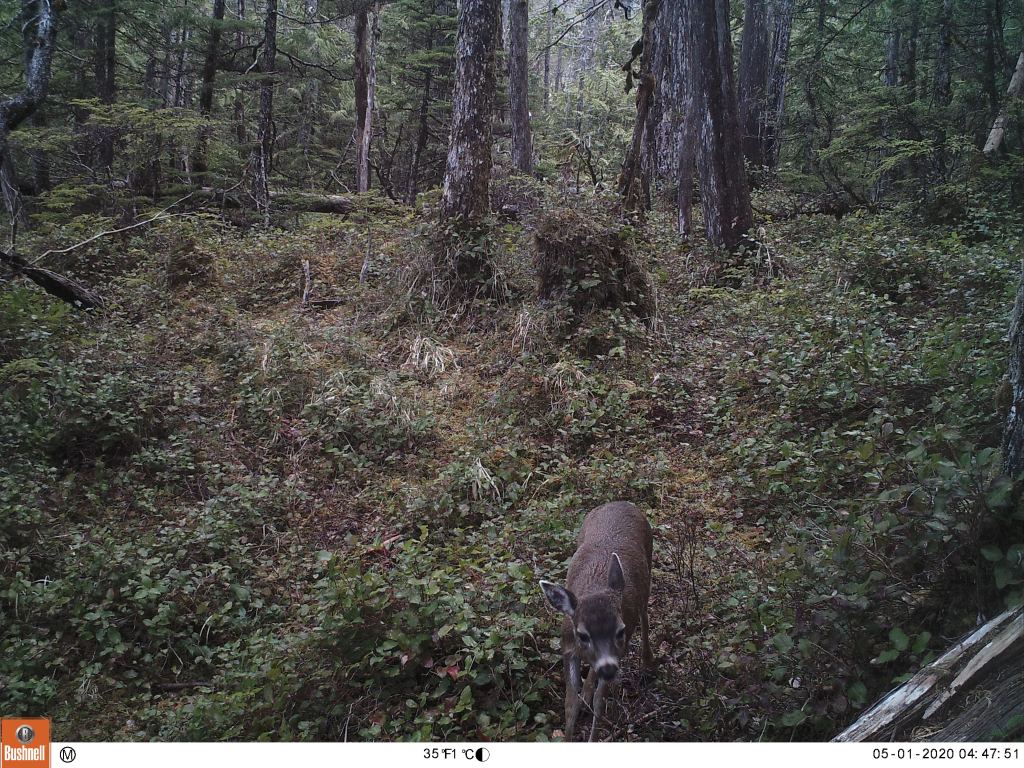


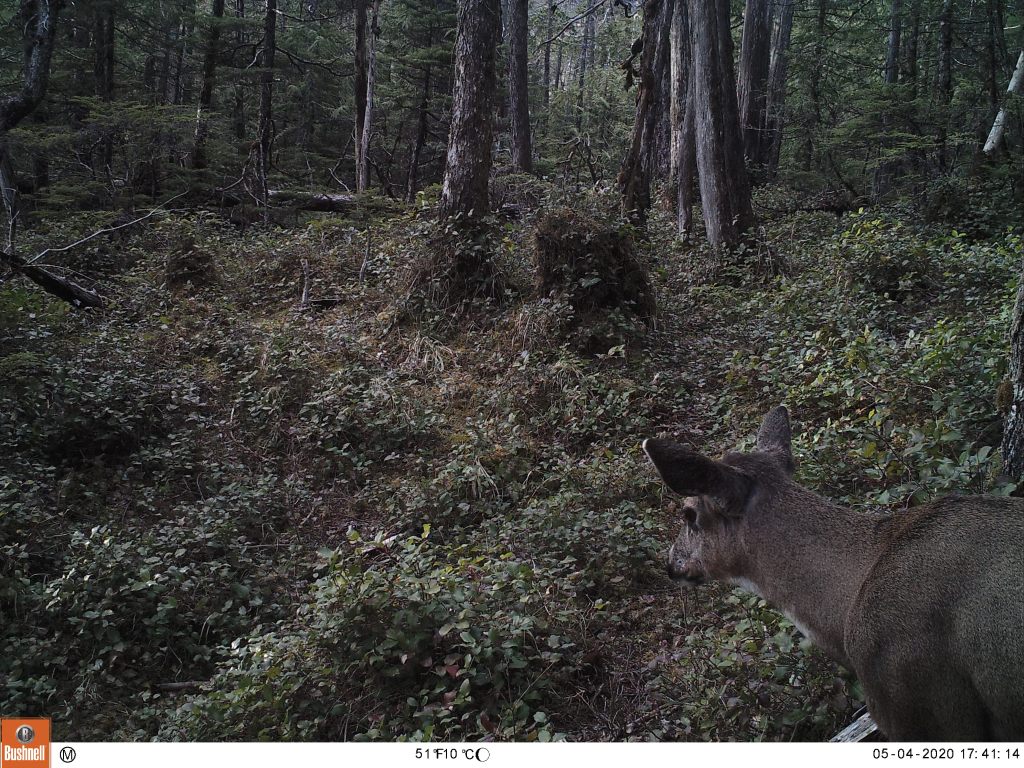
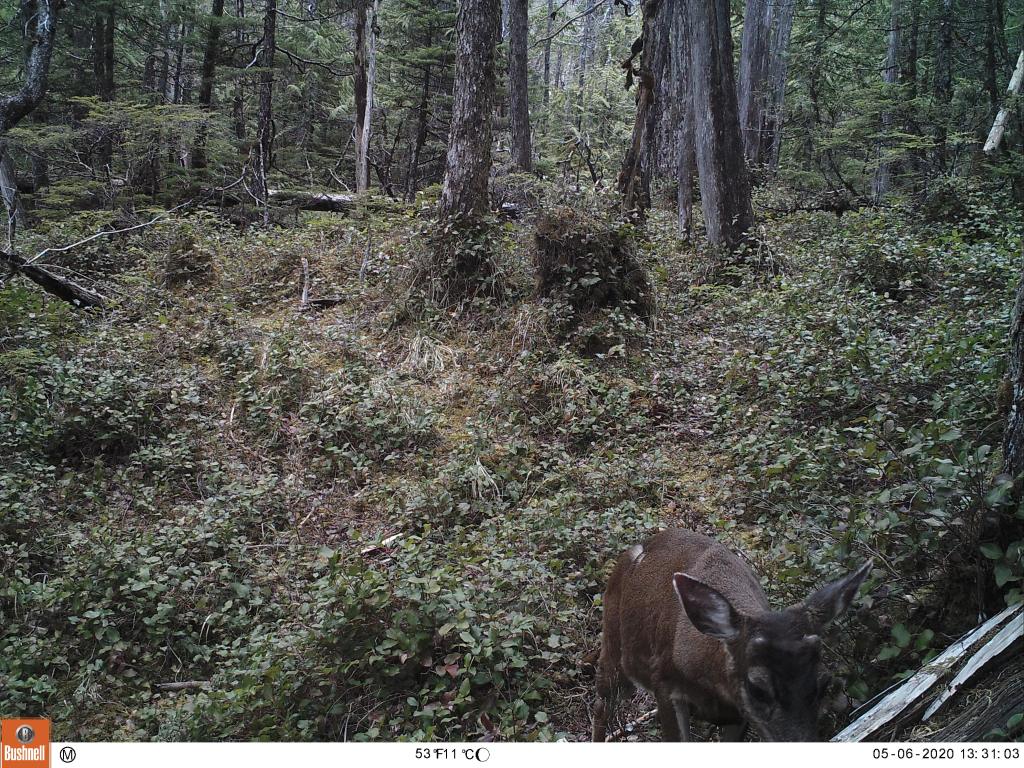

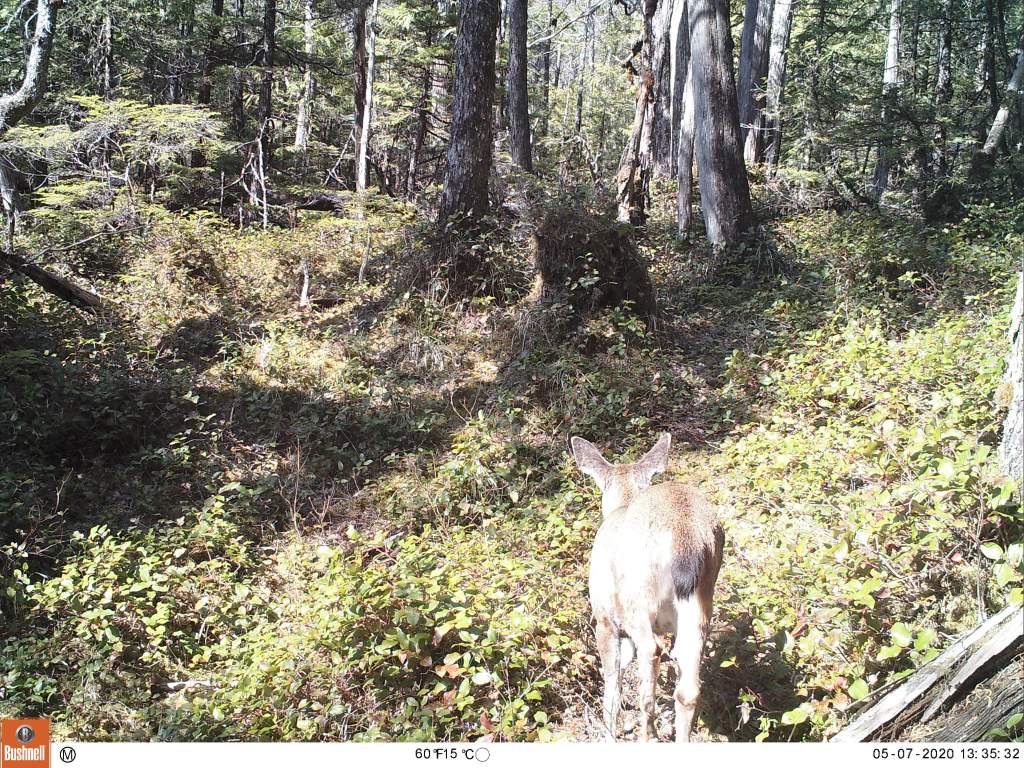

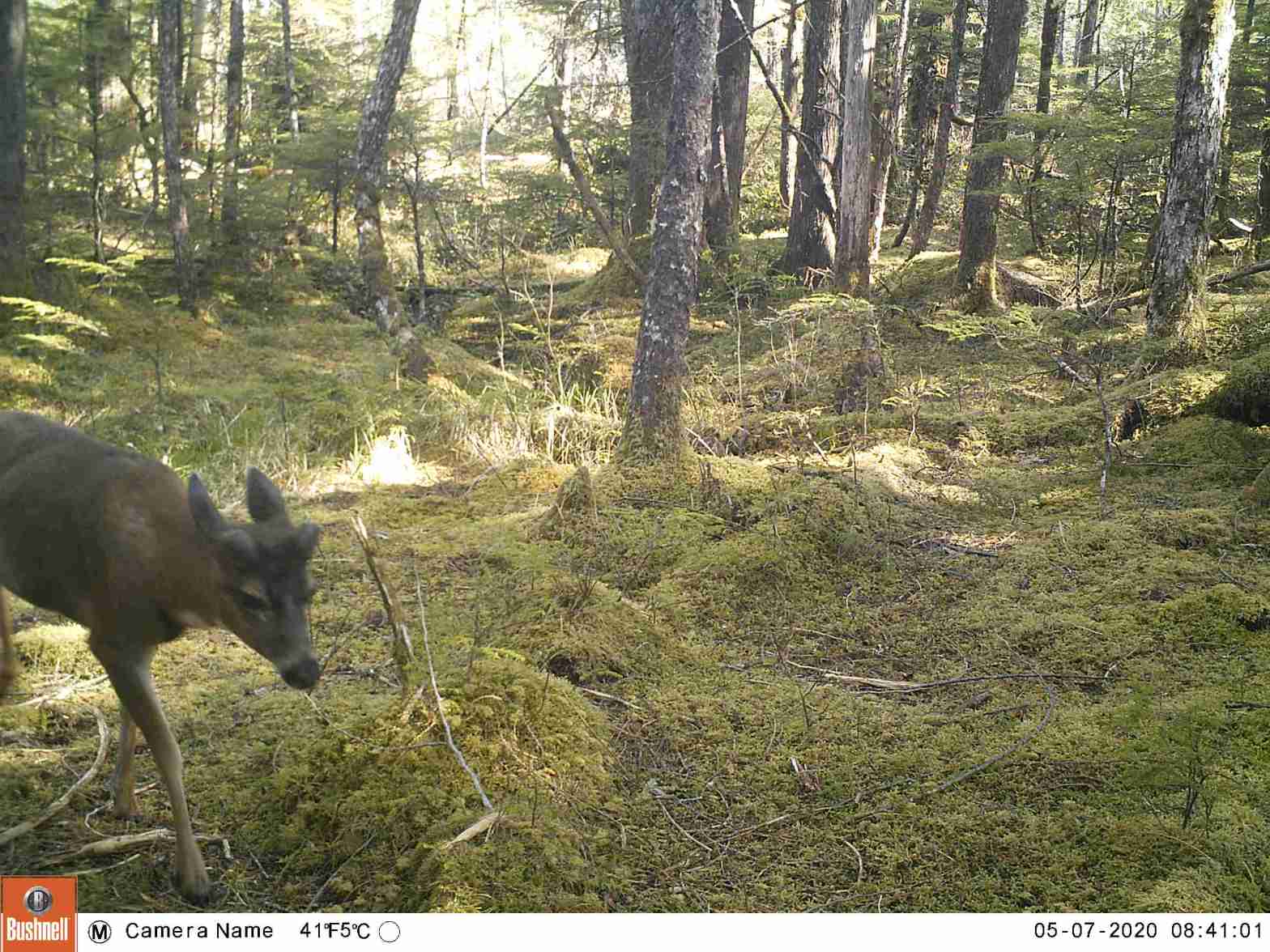
This camera has been really good for bucks, I have no idea why it’s better than the other cameras in this area for male deer.


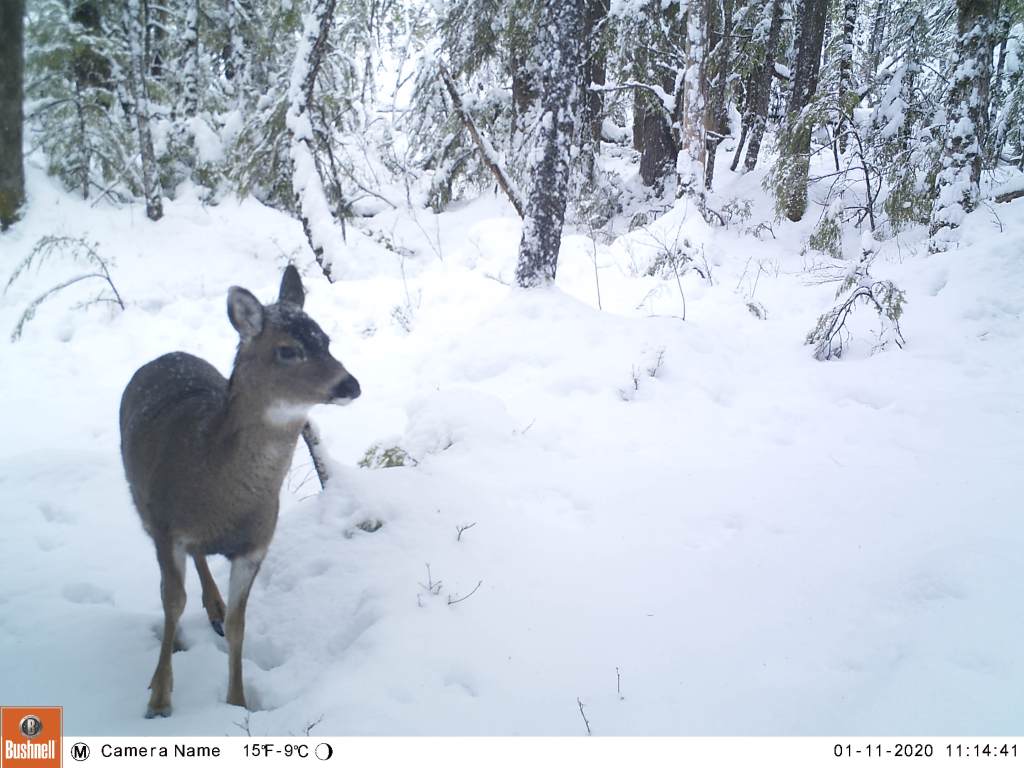


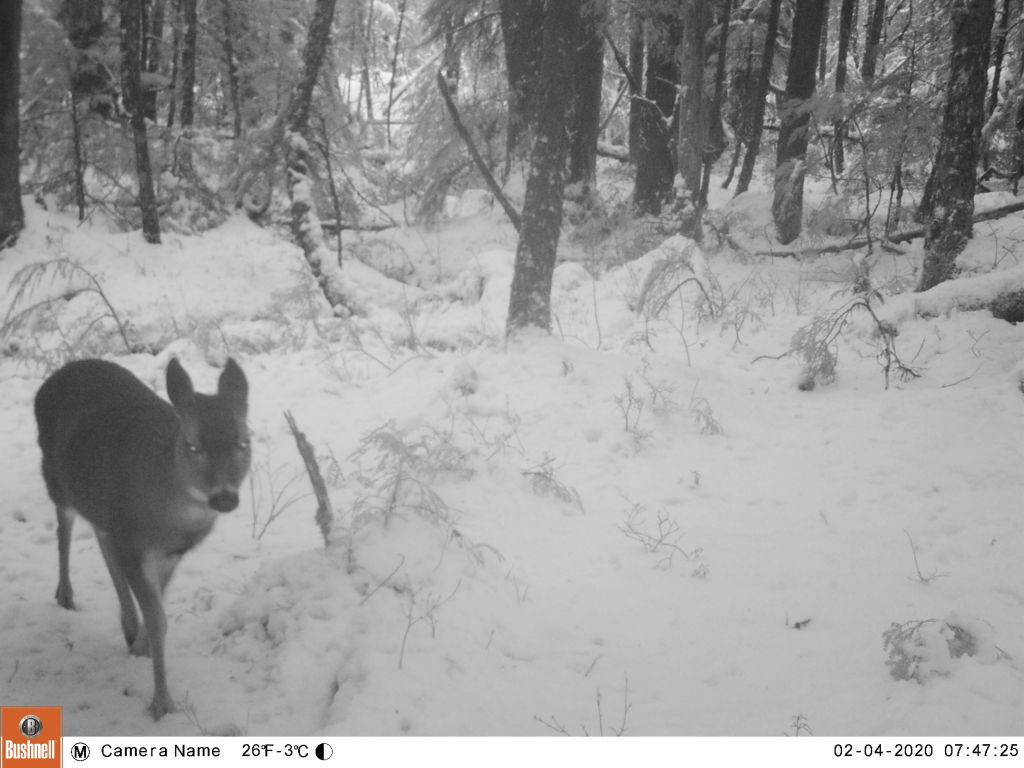
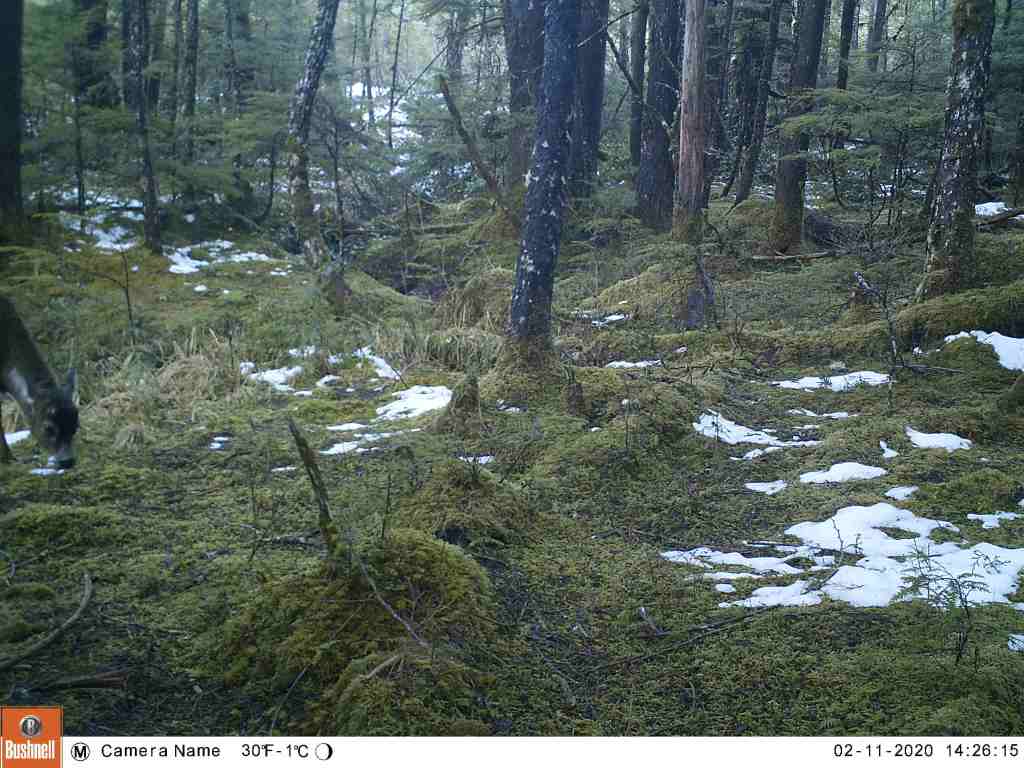

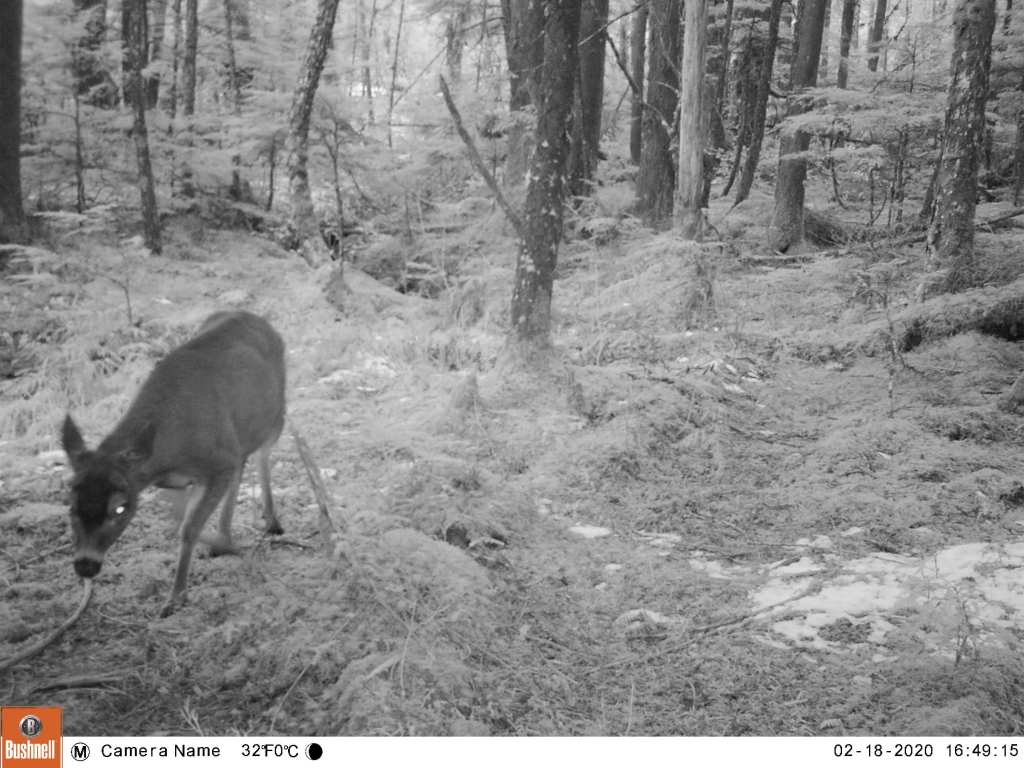


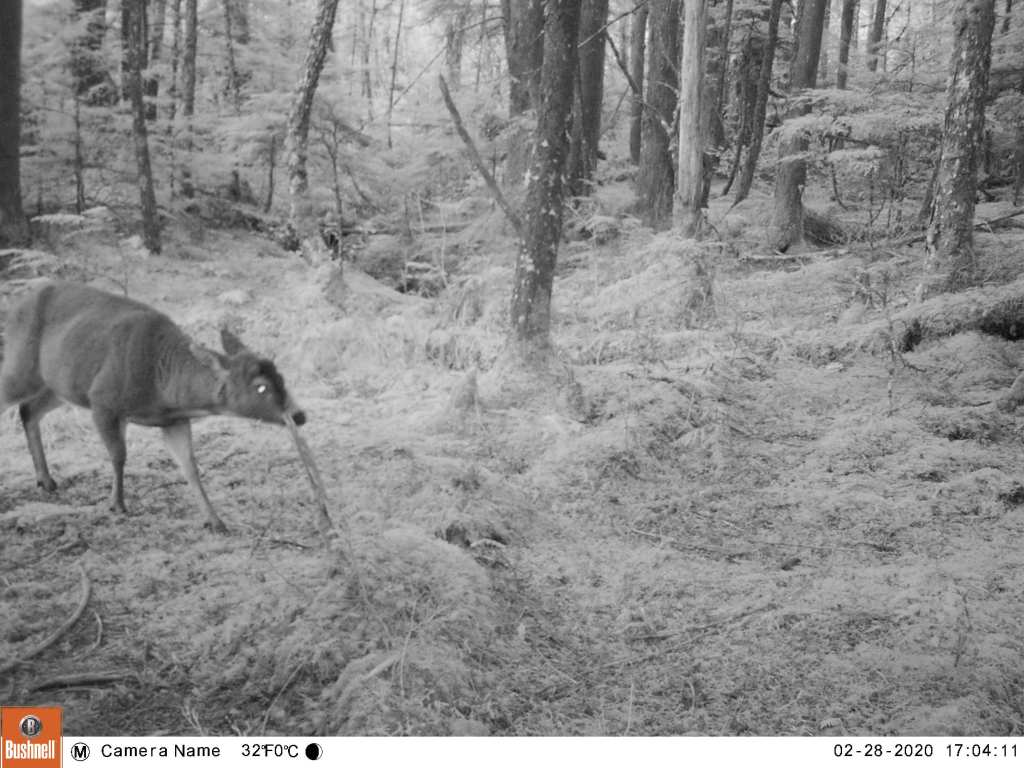

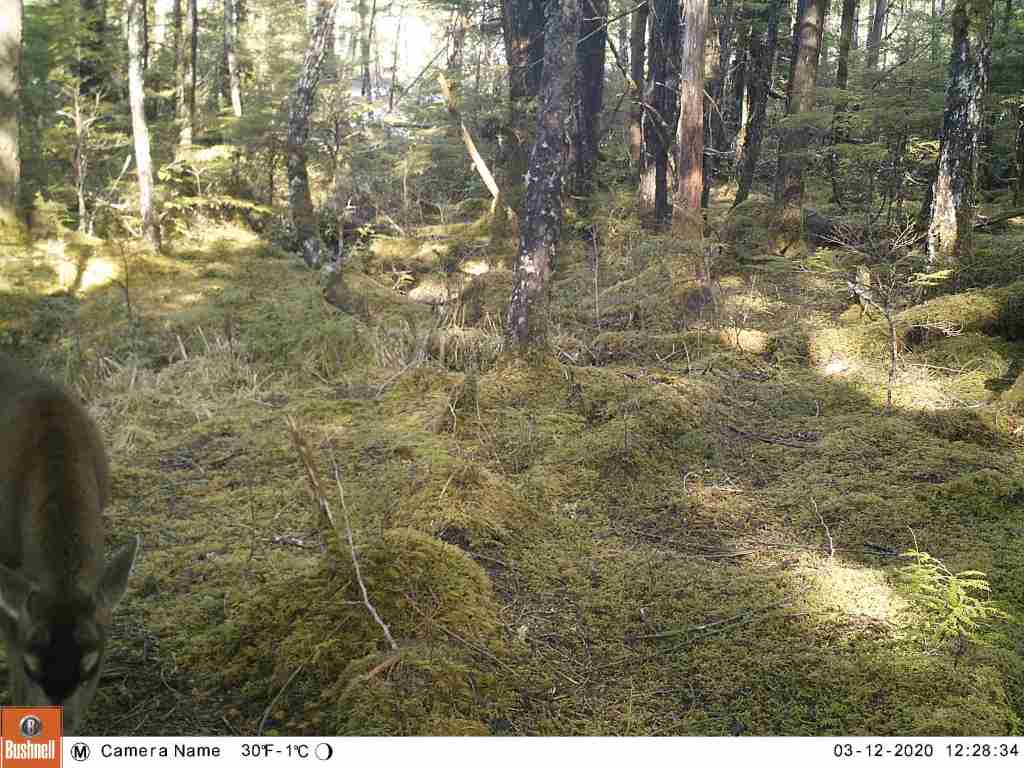
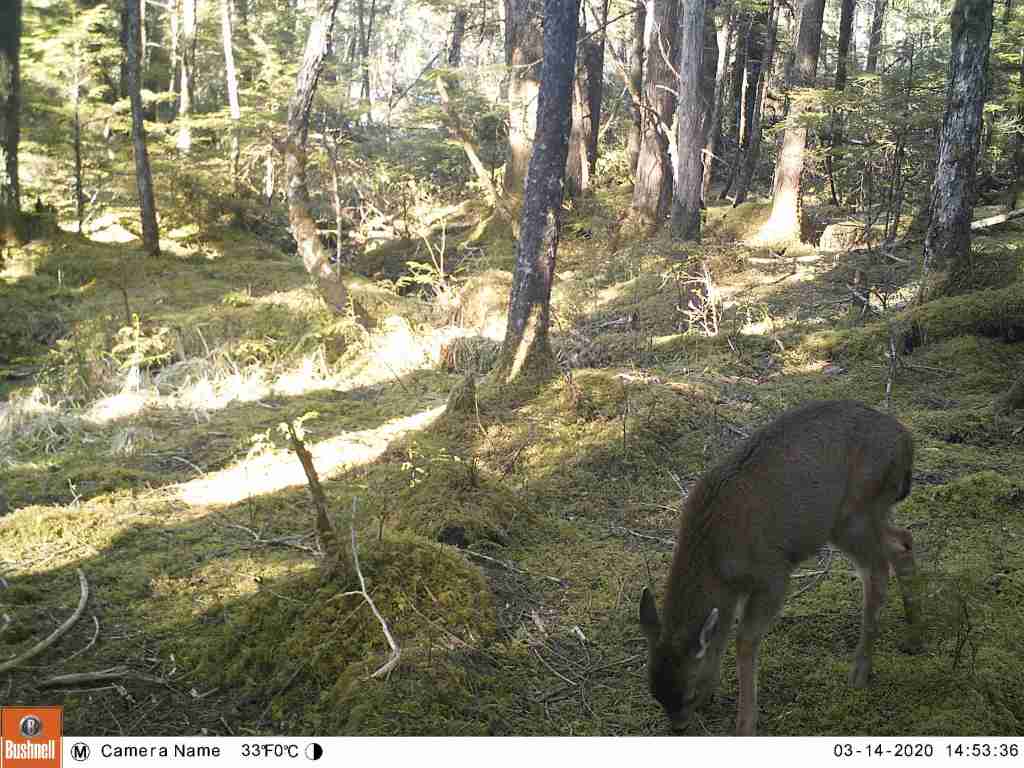


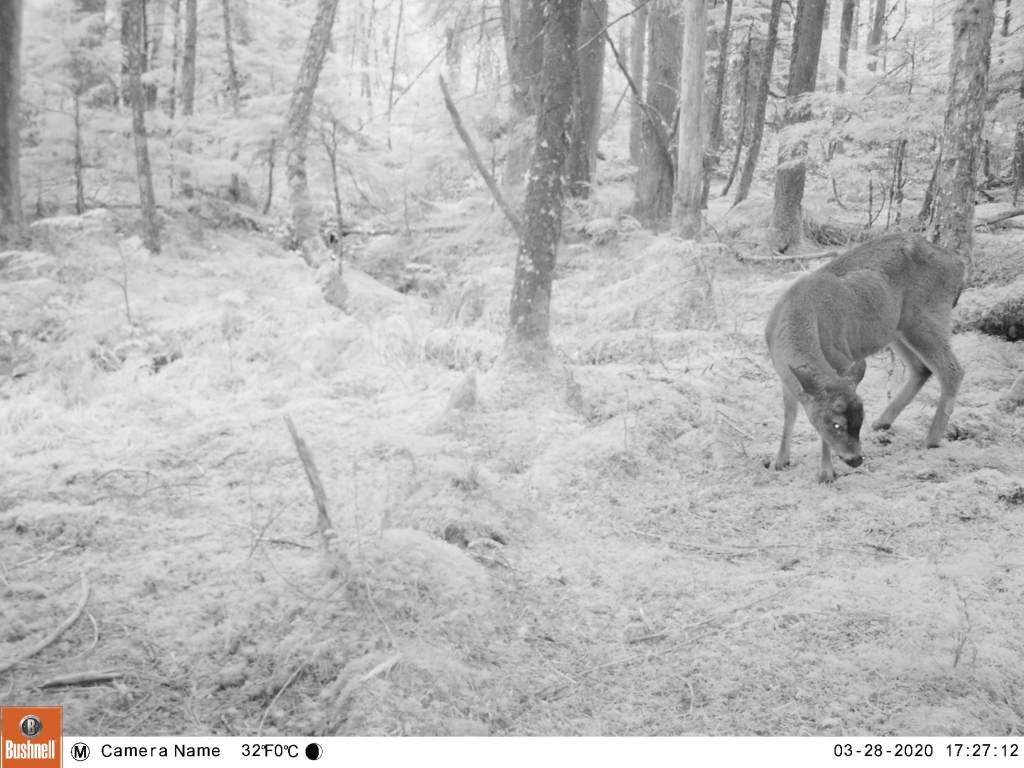


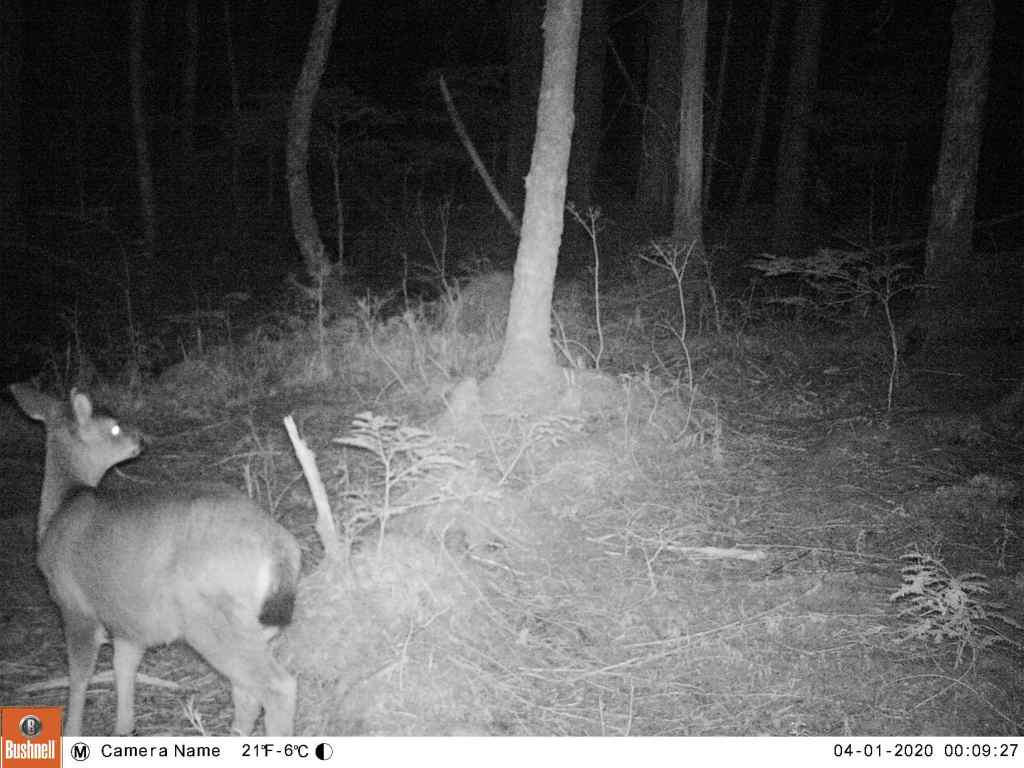
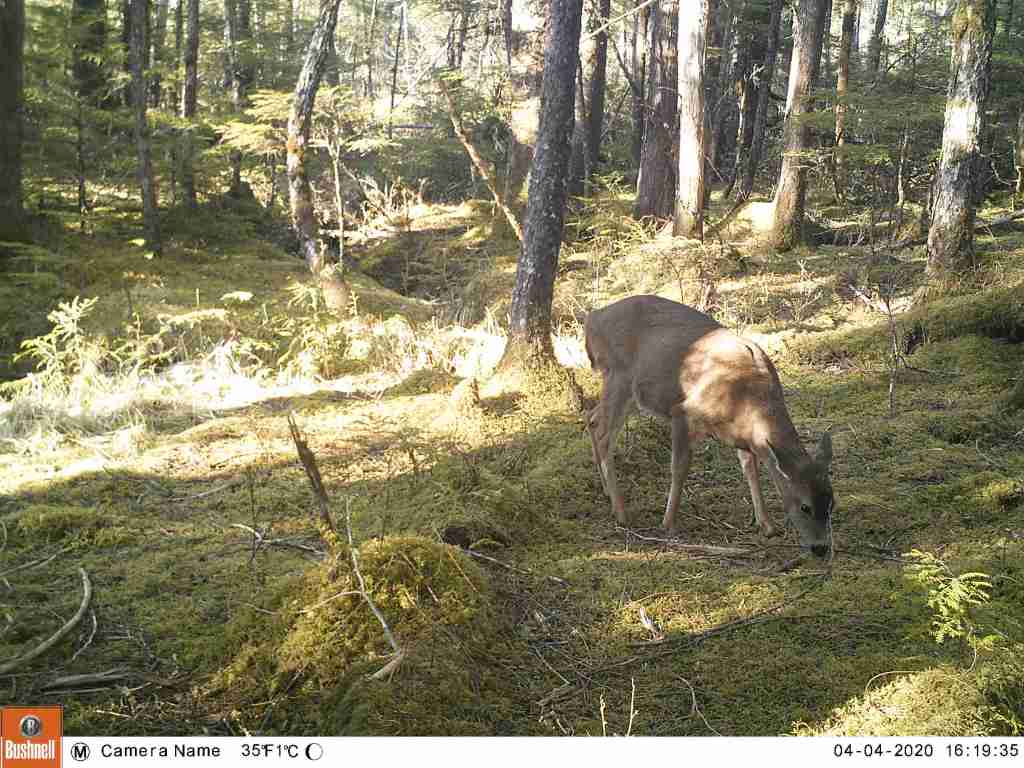

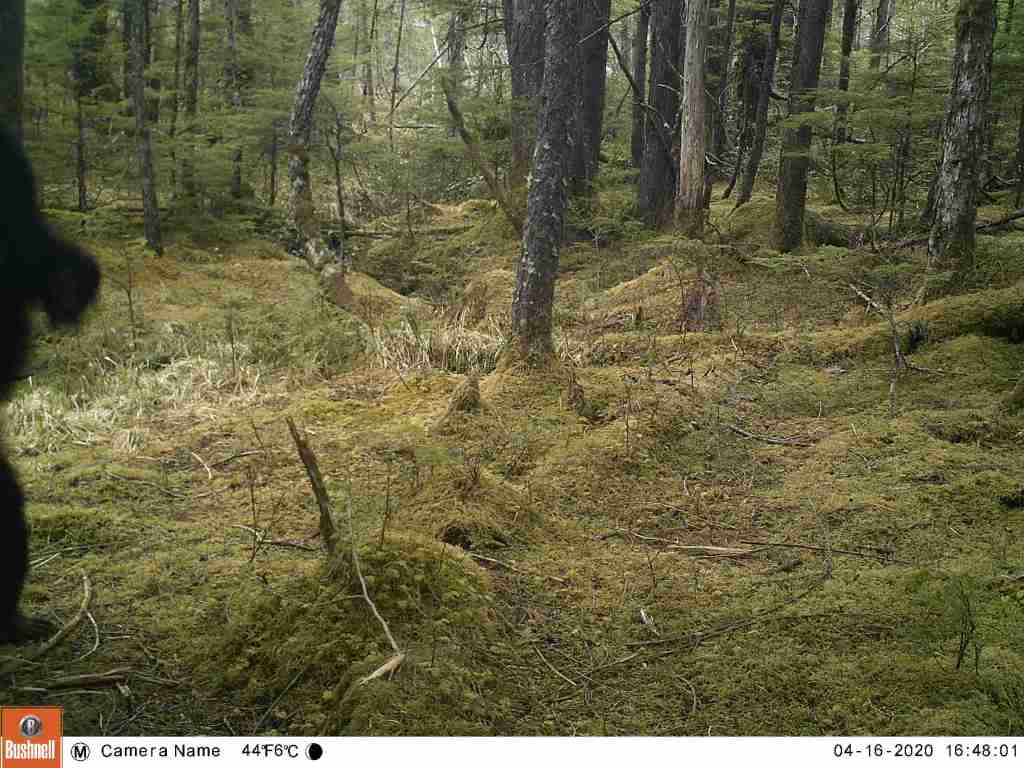

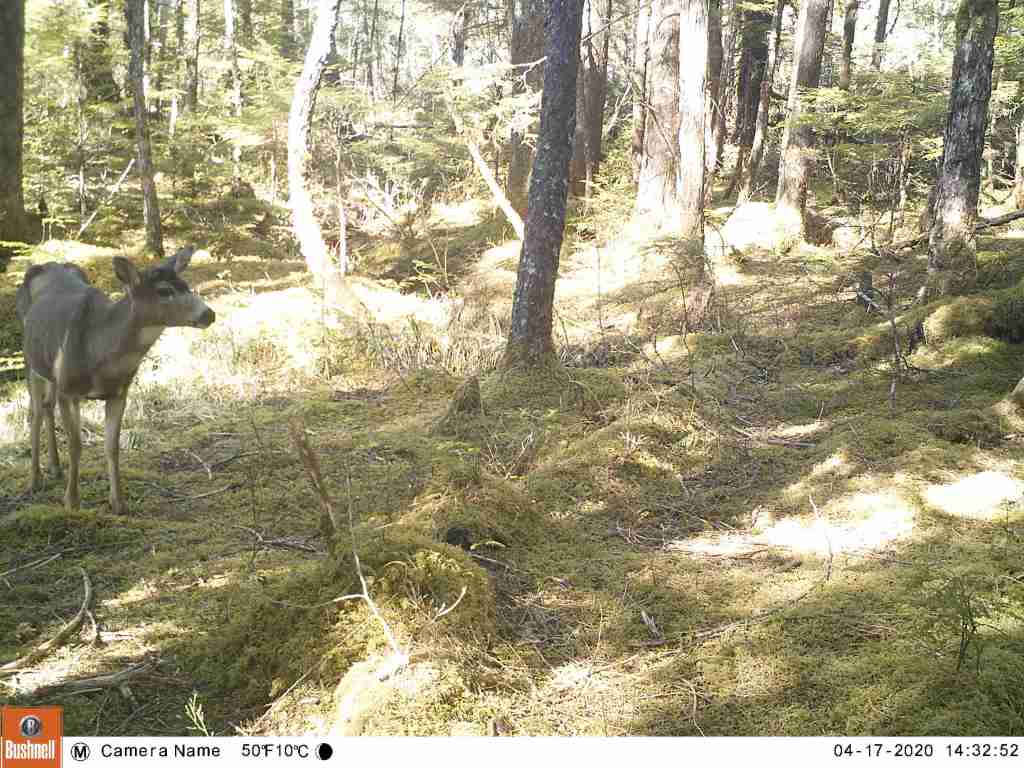

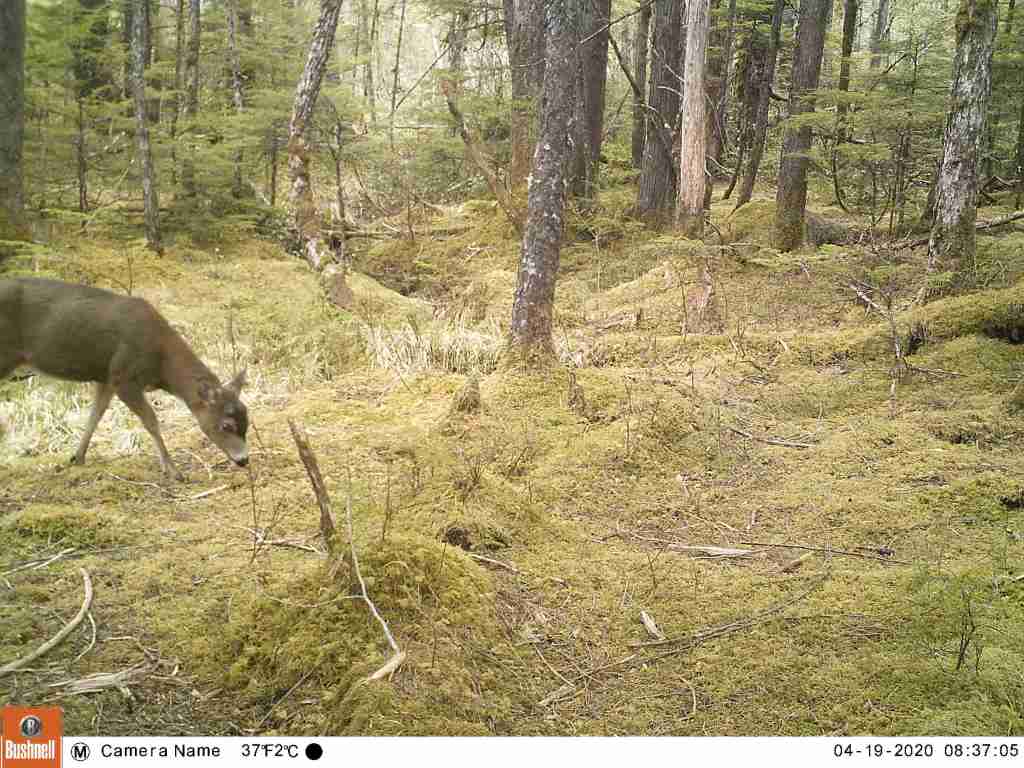


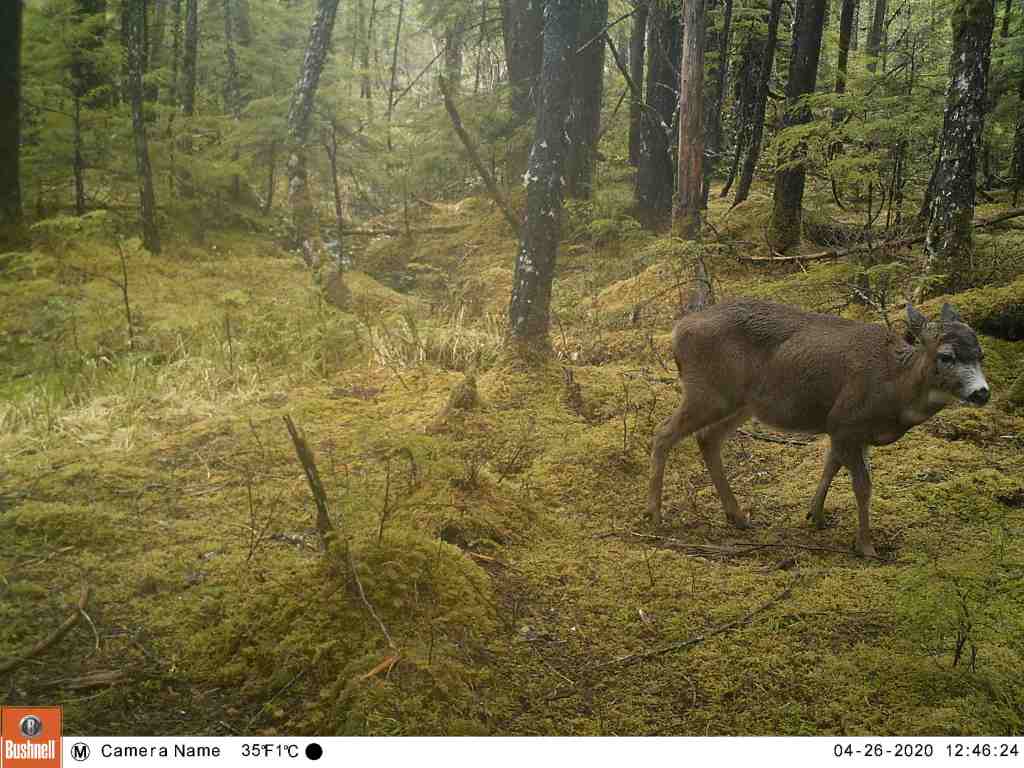


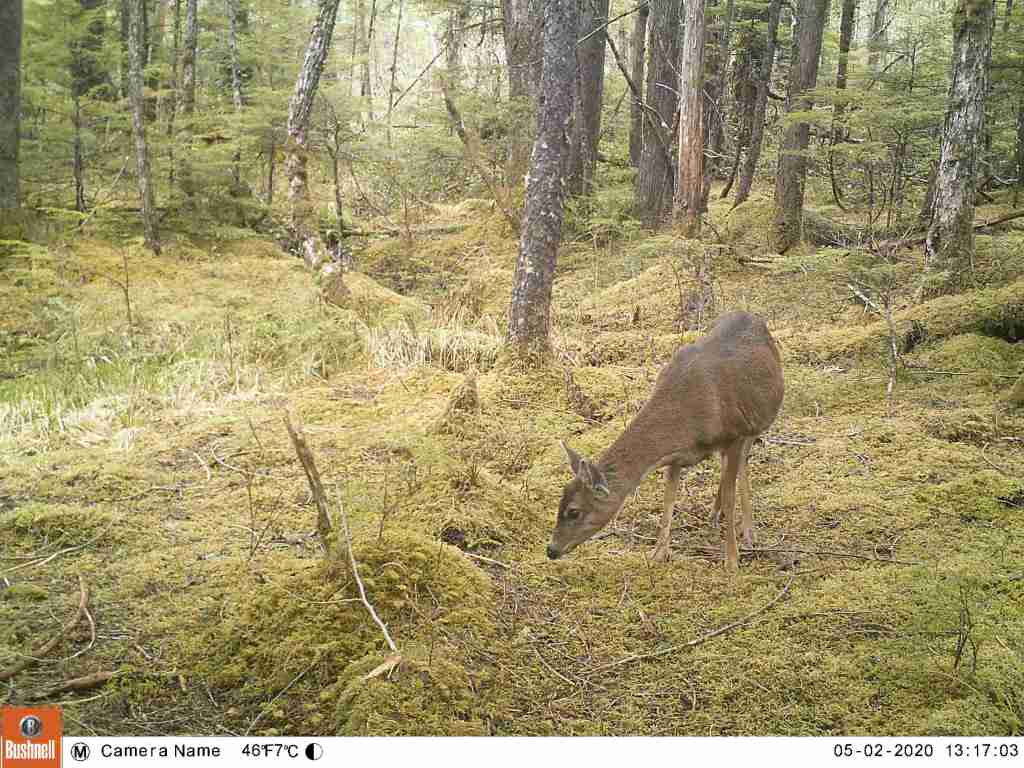

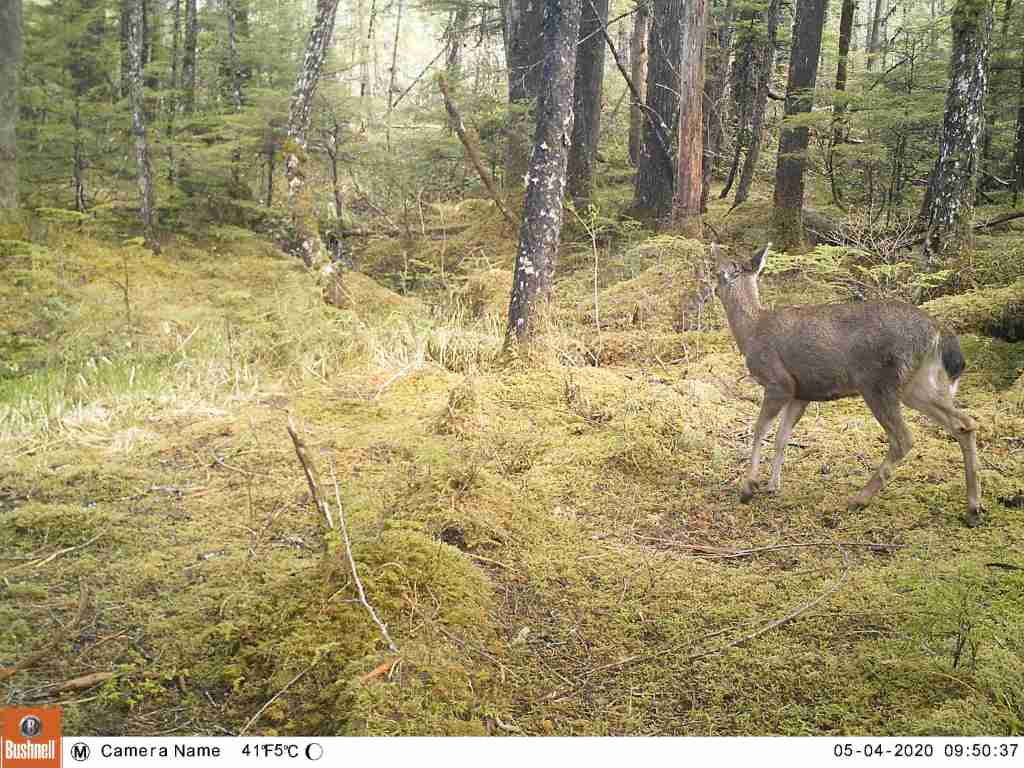


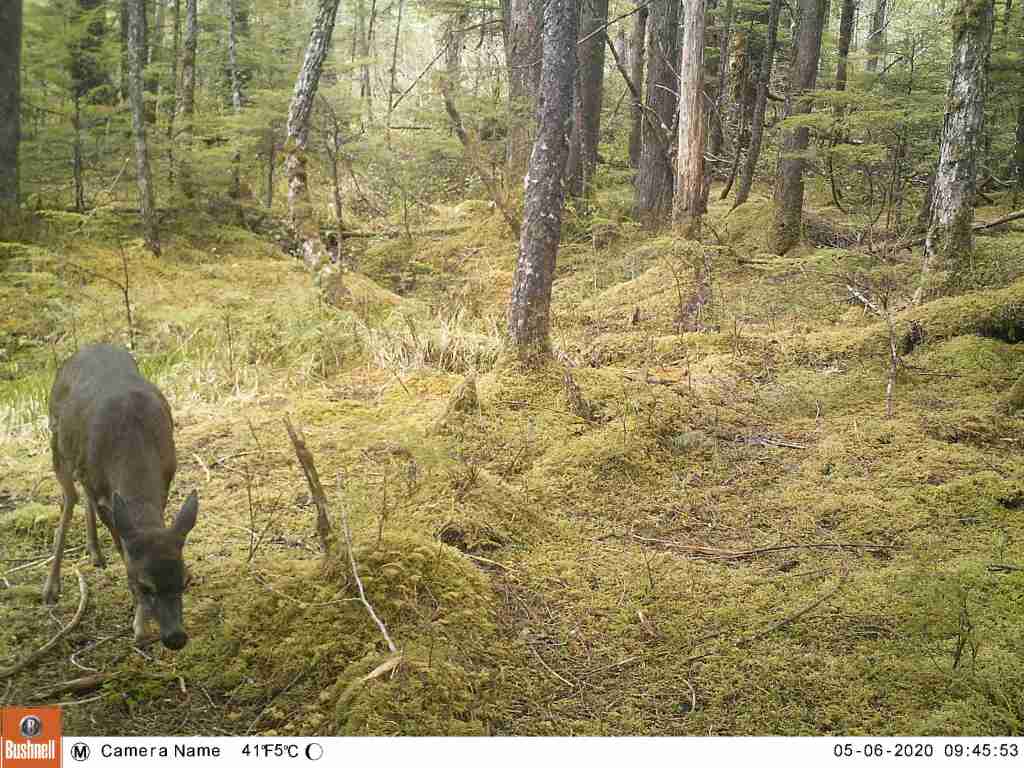
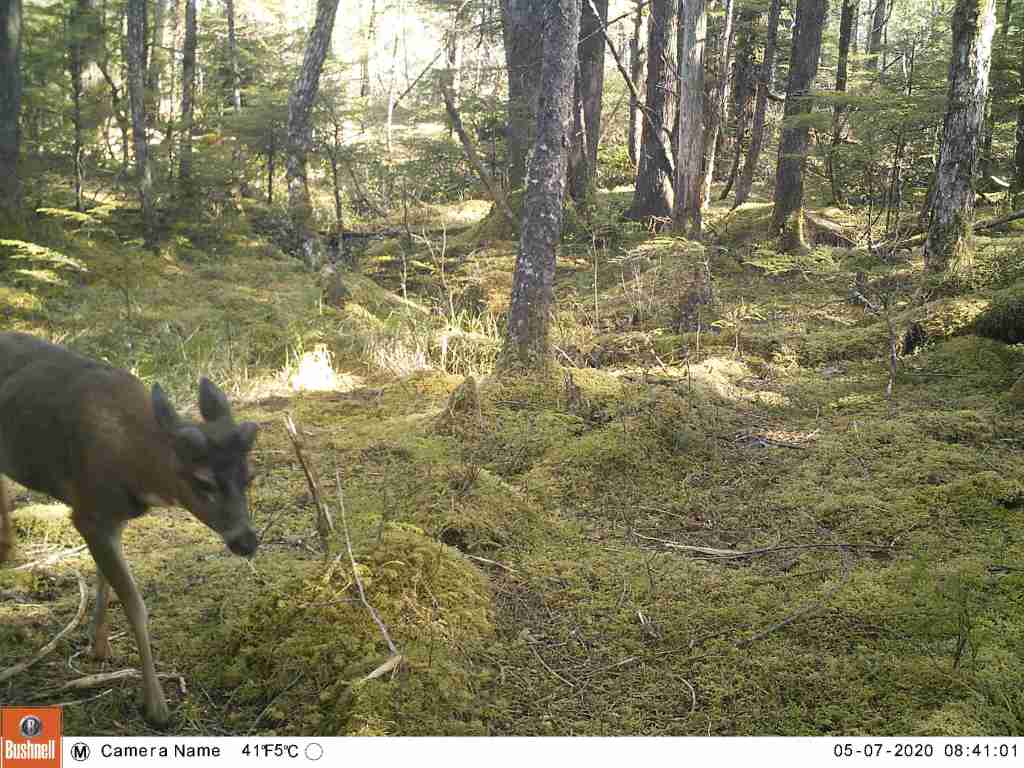
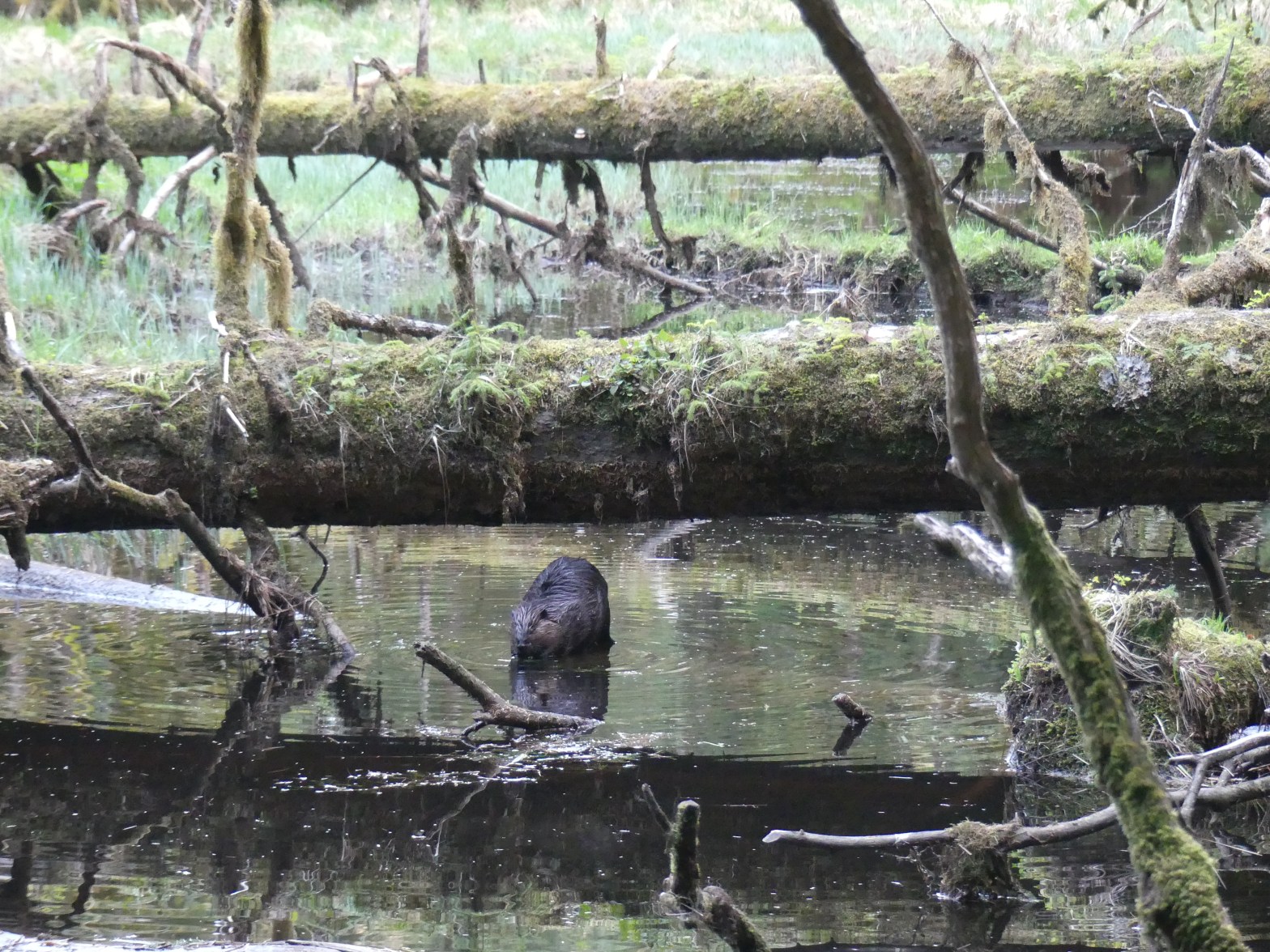
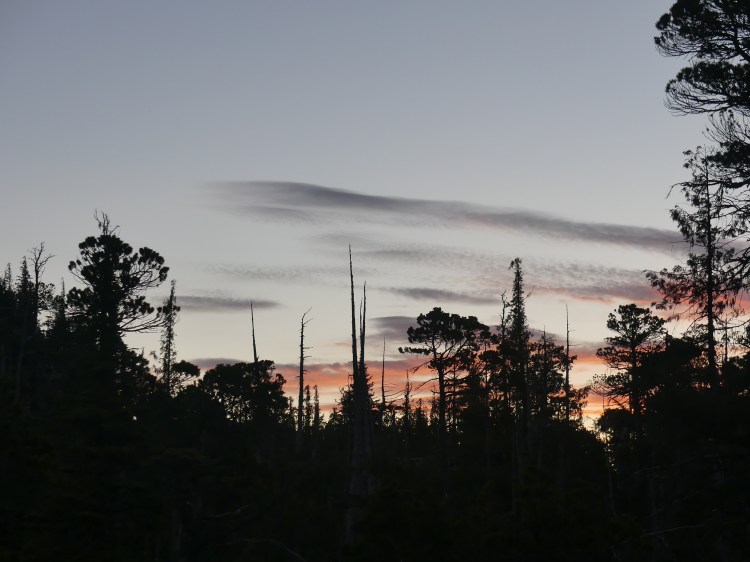
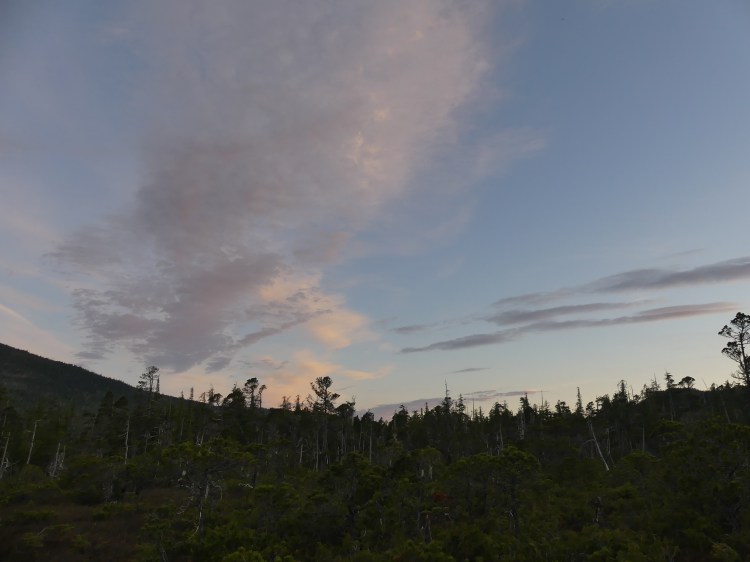
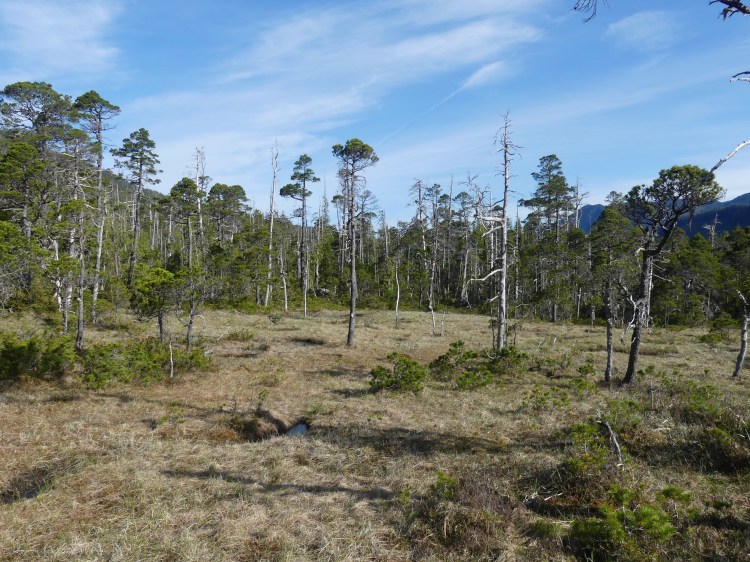
Spent a couple of days wandering around the rainforest near Ketchikan checking and moving cameras.
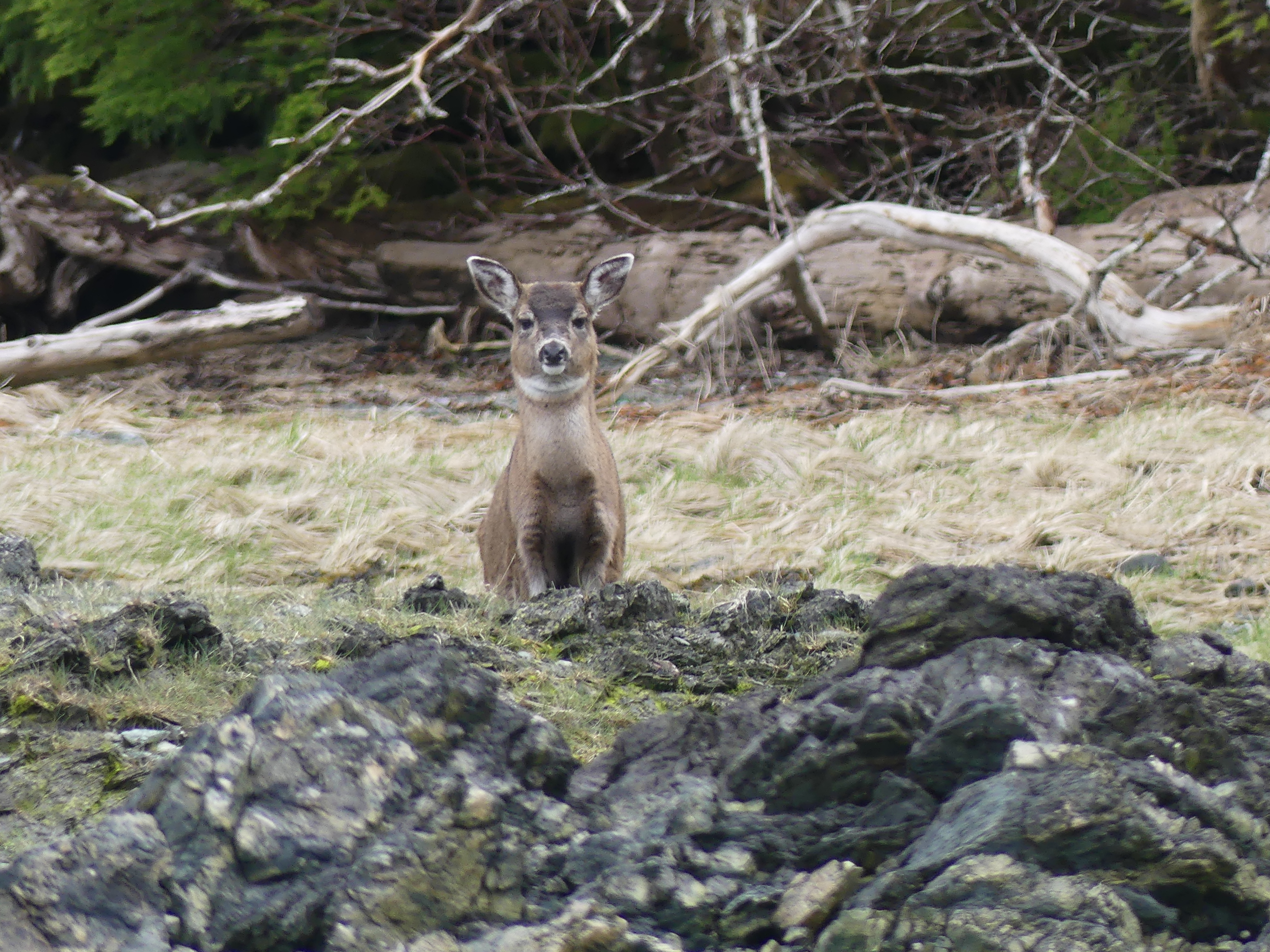


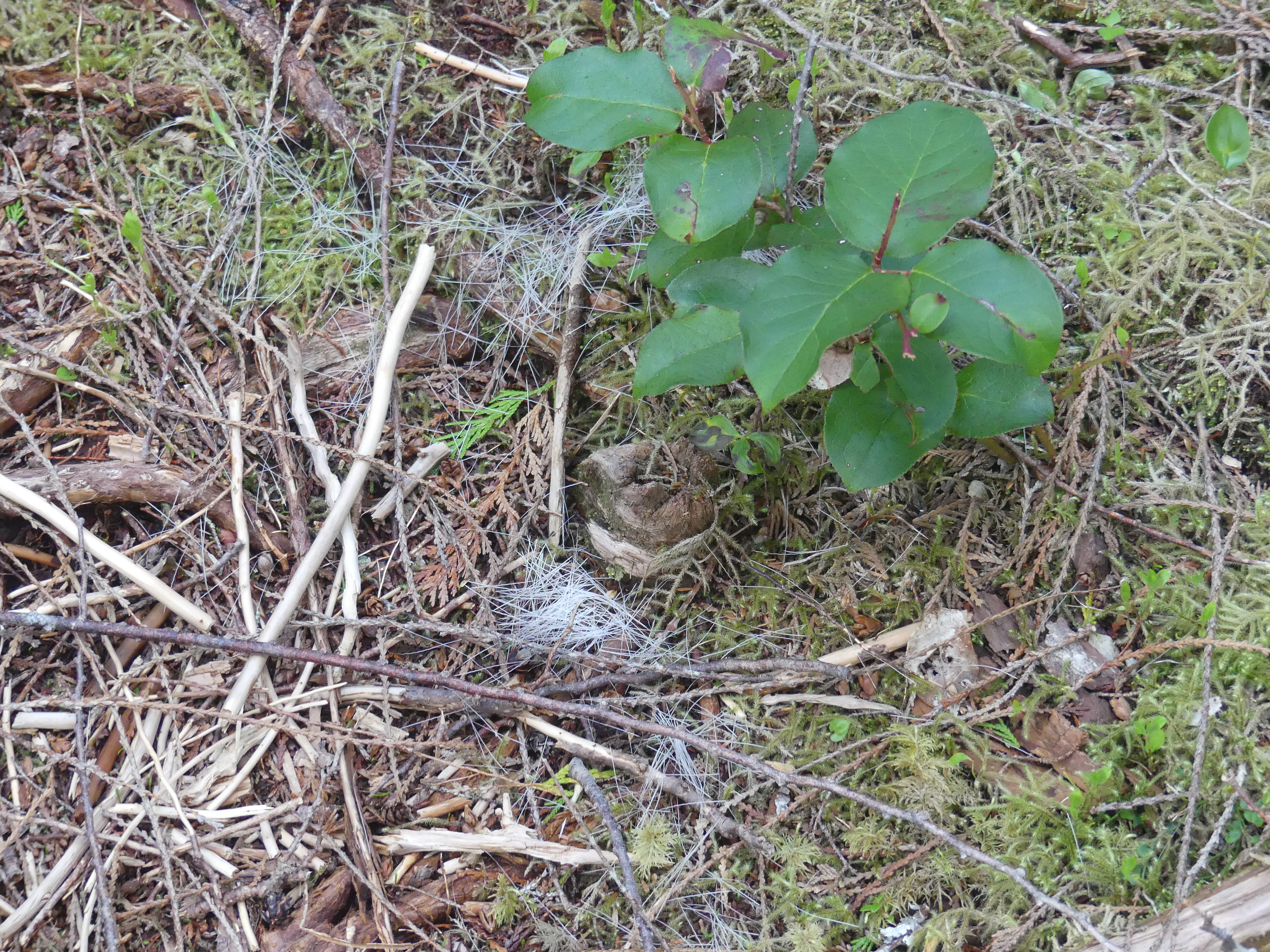

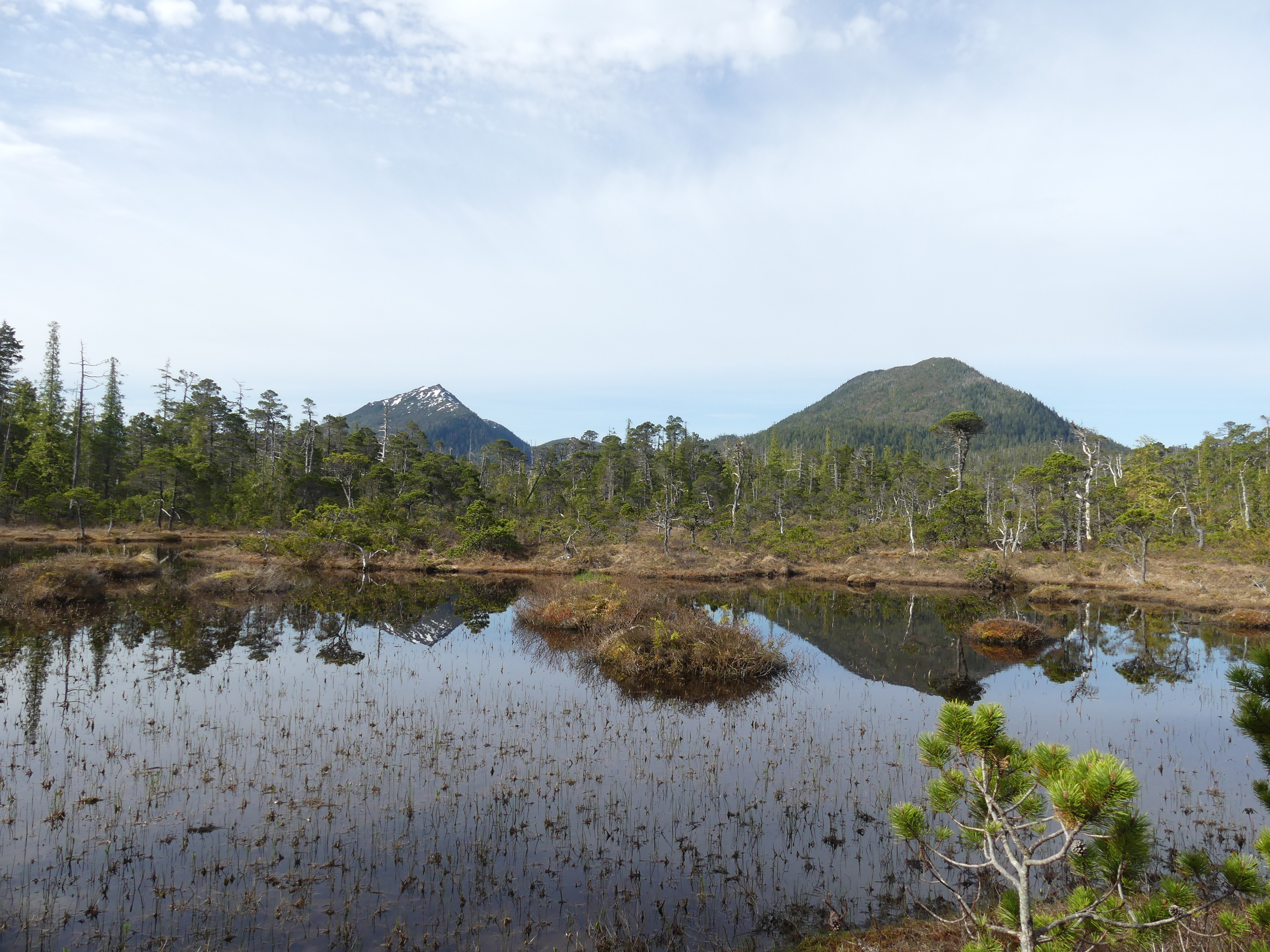


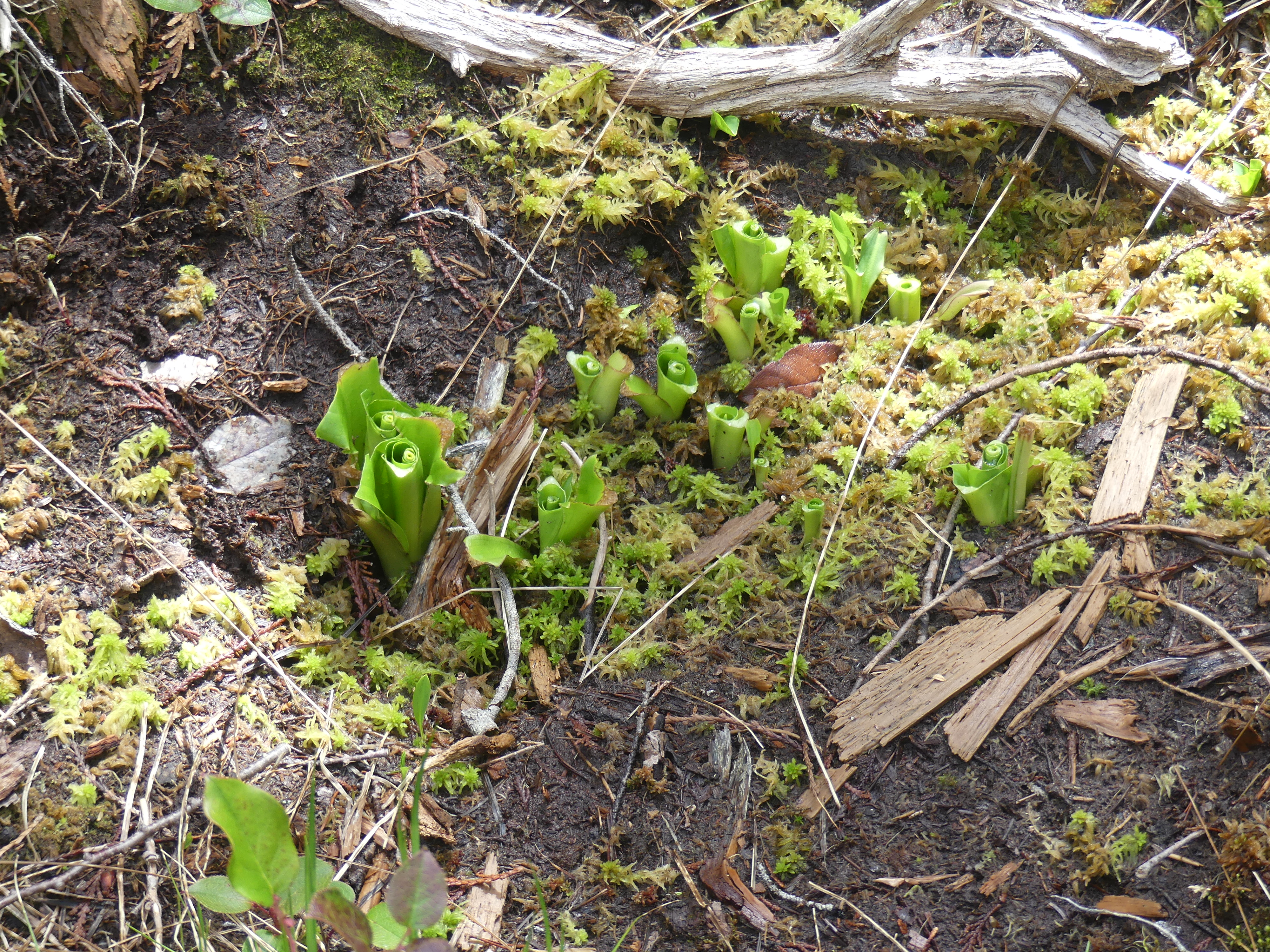
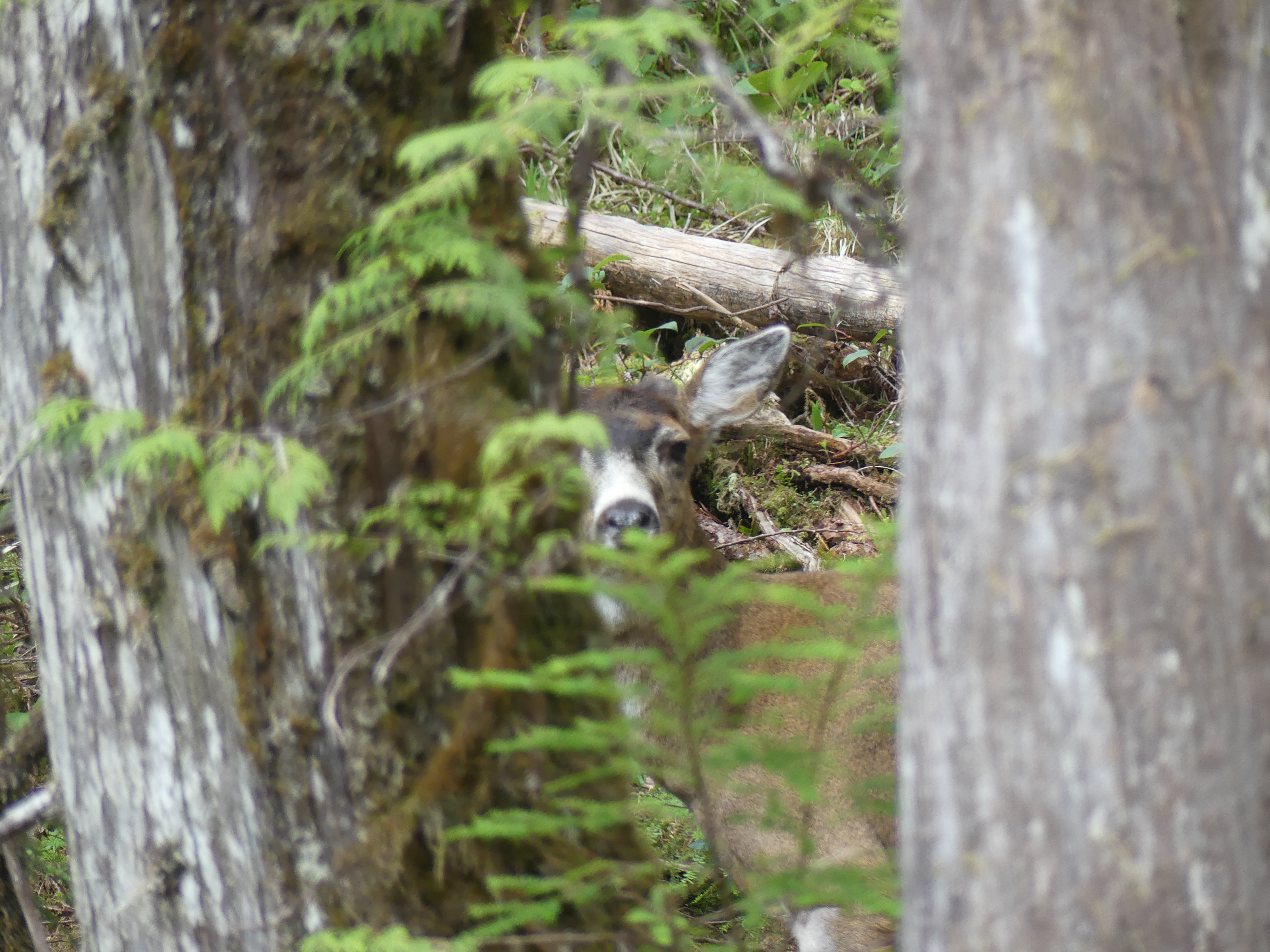
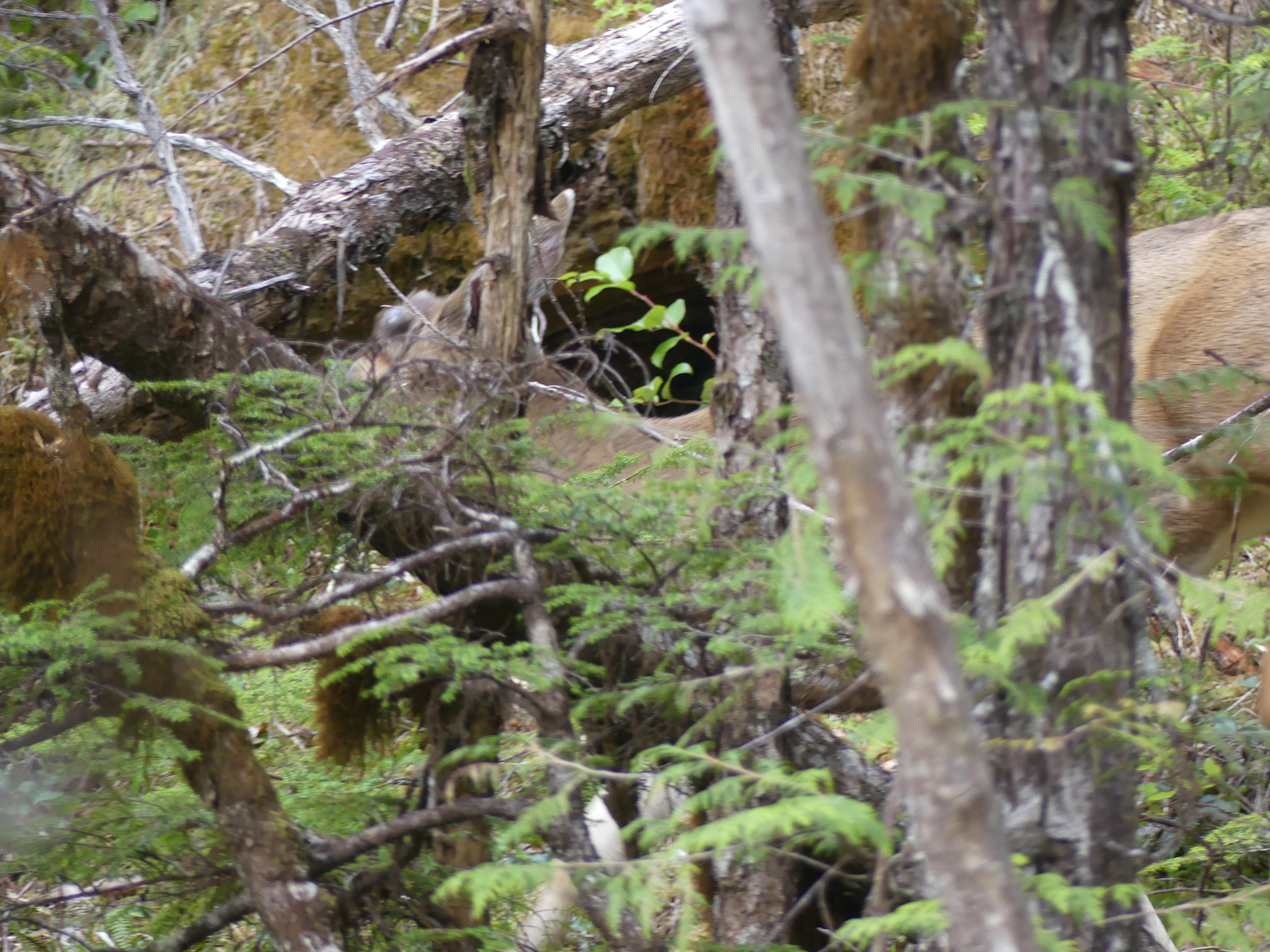
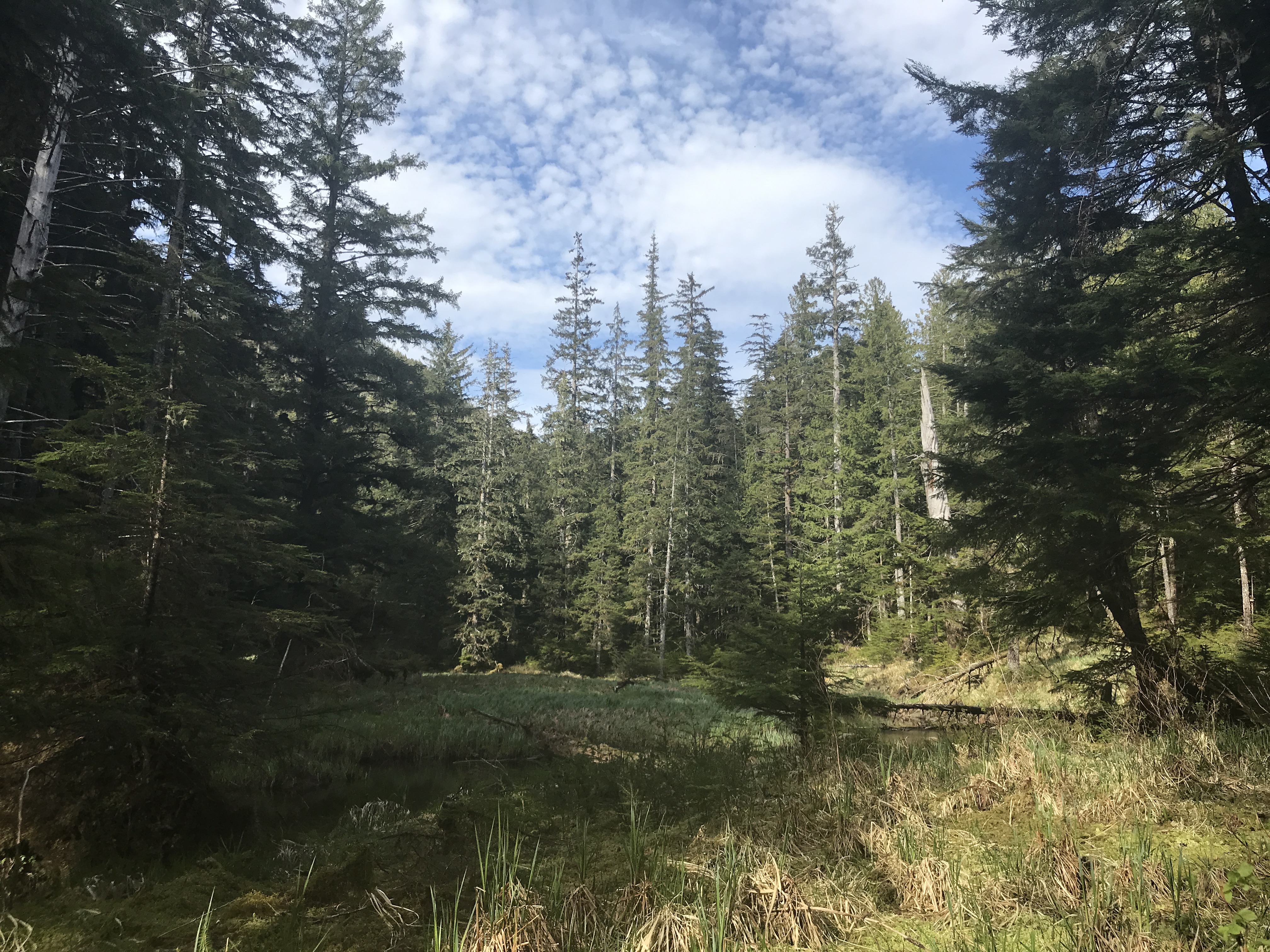
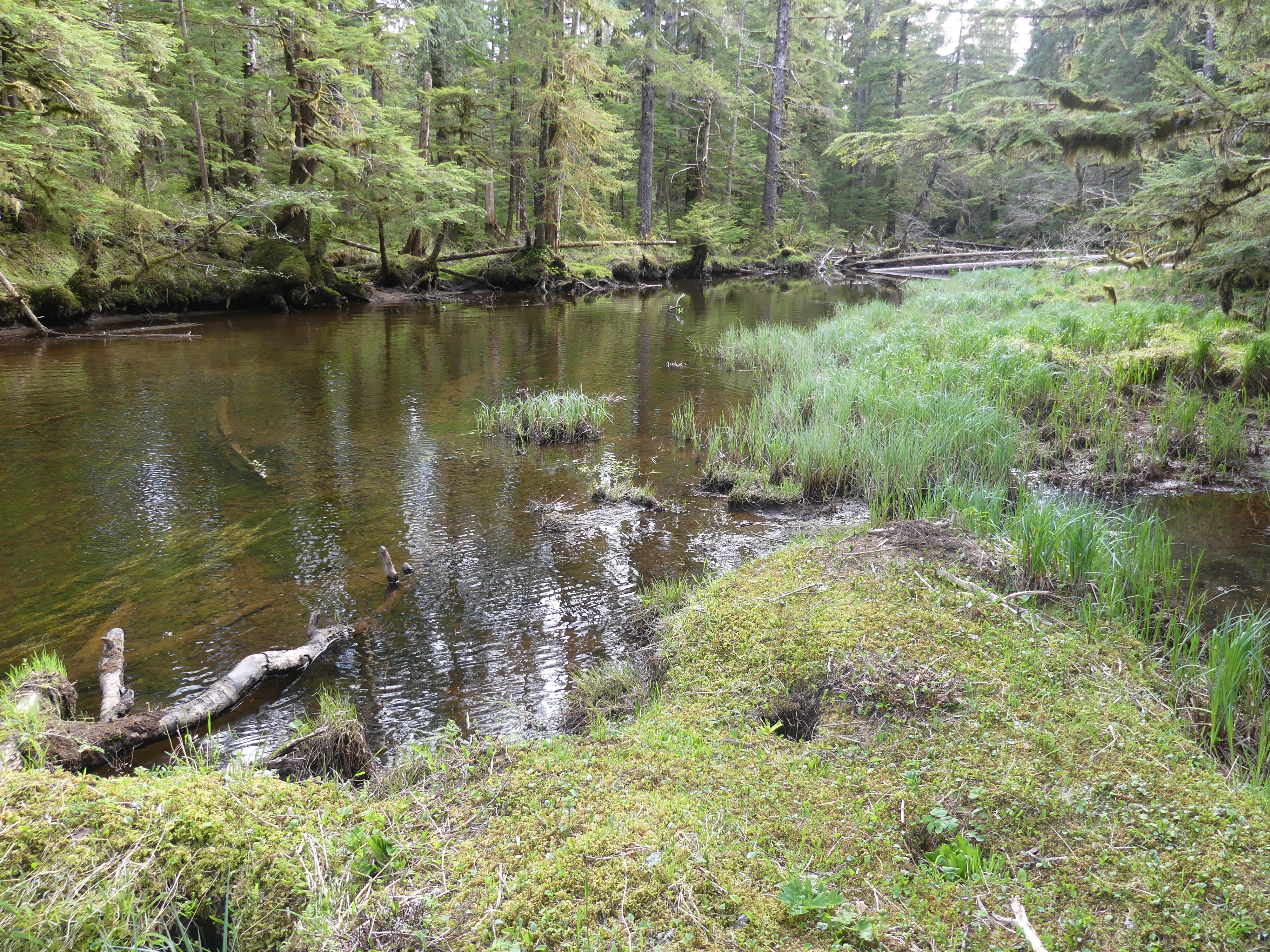


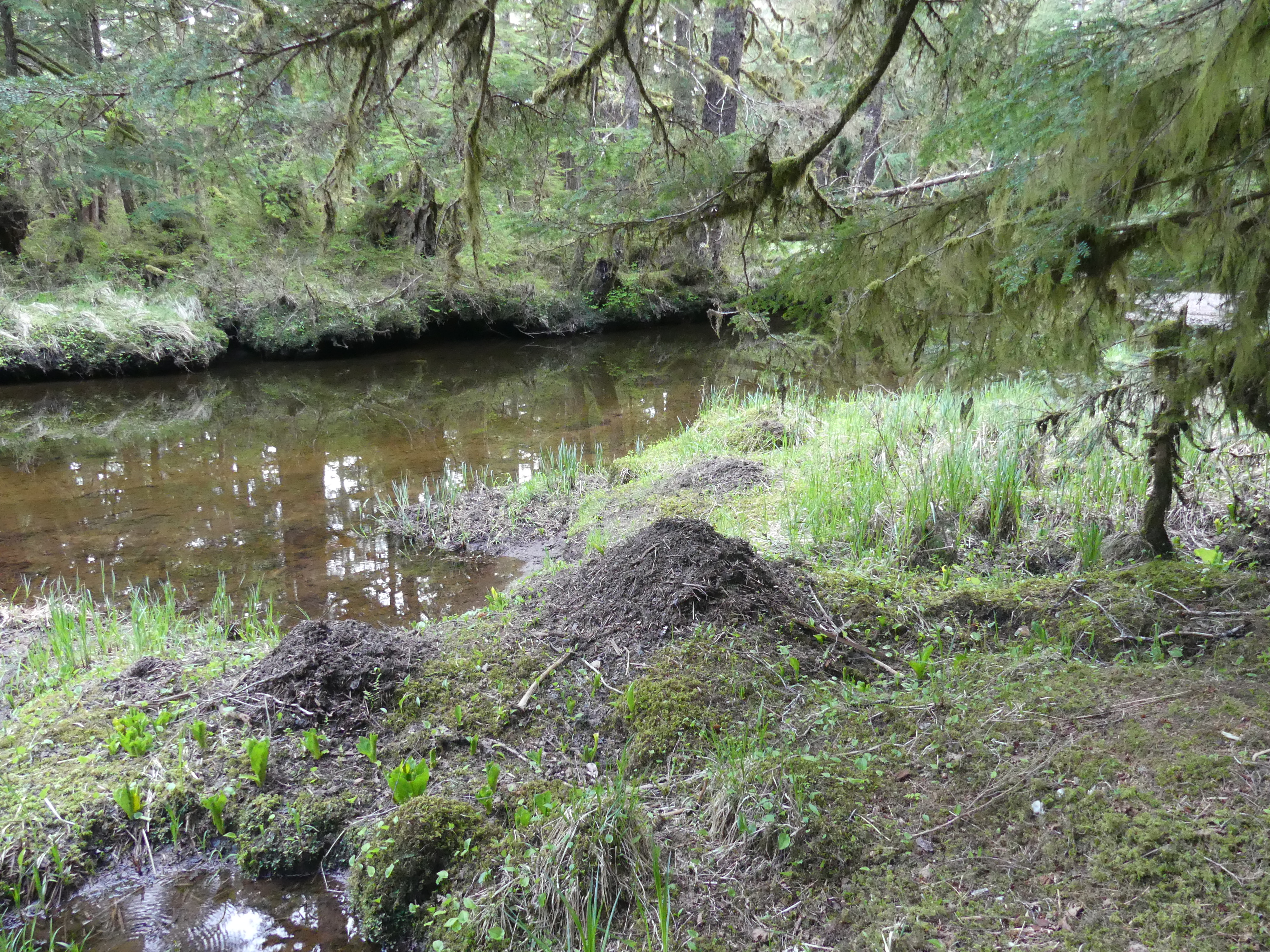
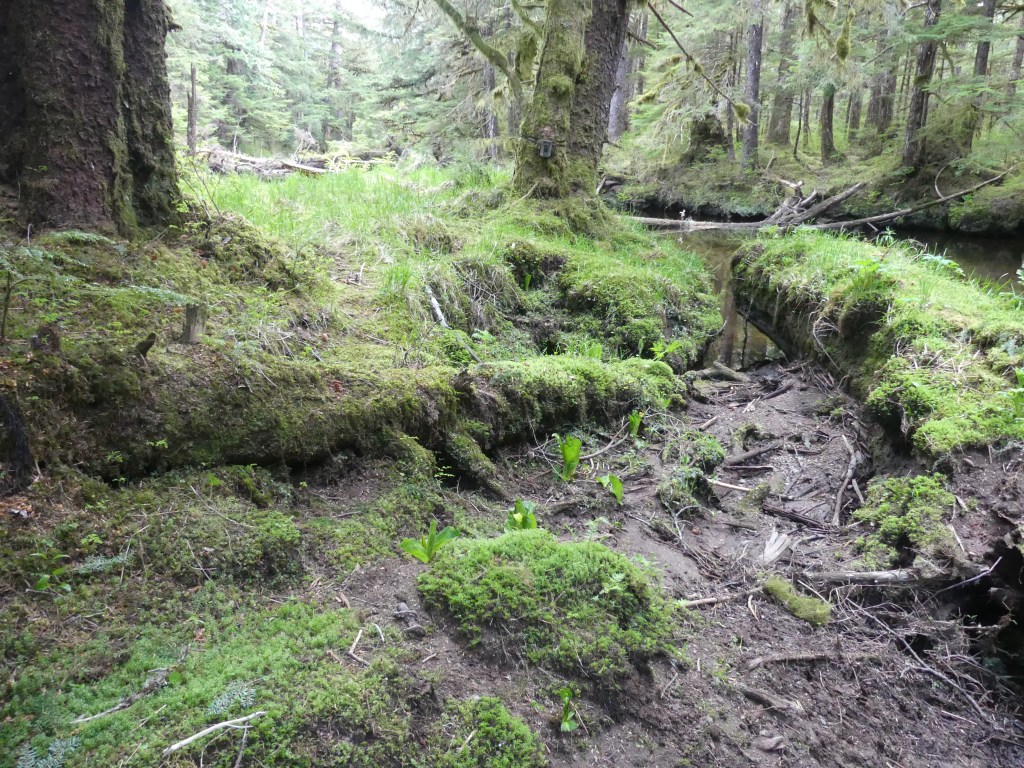
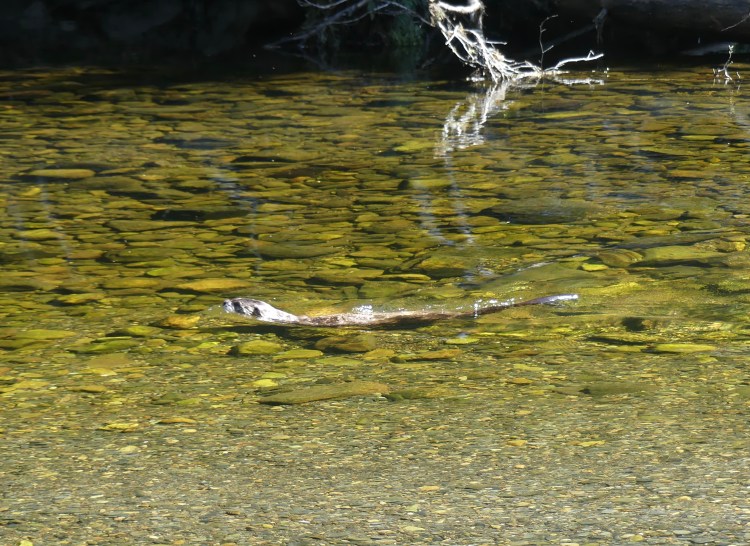
Set a camera here. A variety of critters should show up, including the usual deer and black bear; plus otters, mink, beaver and more.
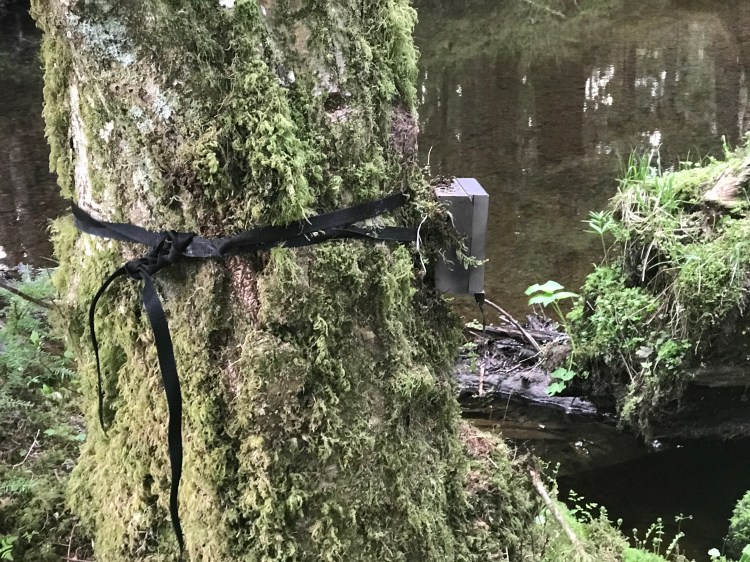
Security boxes with twisty ties help to prevent bears from damaging cameras. Cutting a small notch for the camera to sit in and packing the box with moss, leaves, or whatever is handy makes cameras hard for animals to move.

The gravel bar in the background is a popular place for animals to cross this creek. There is a good deal of traffic along this bank, so this setup should get a lot of action.
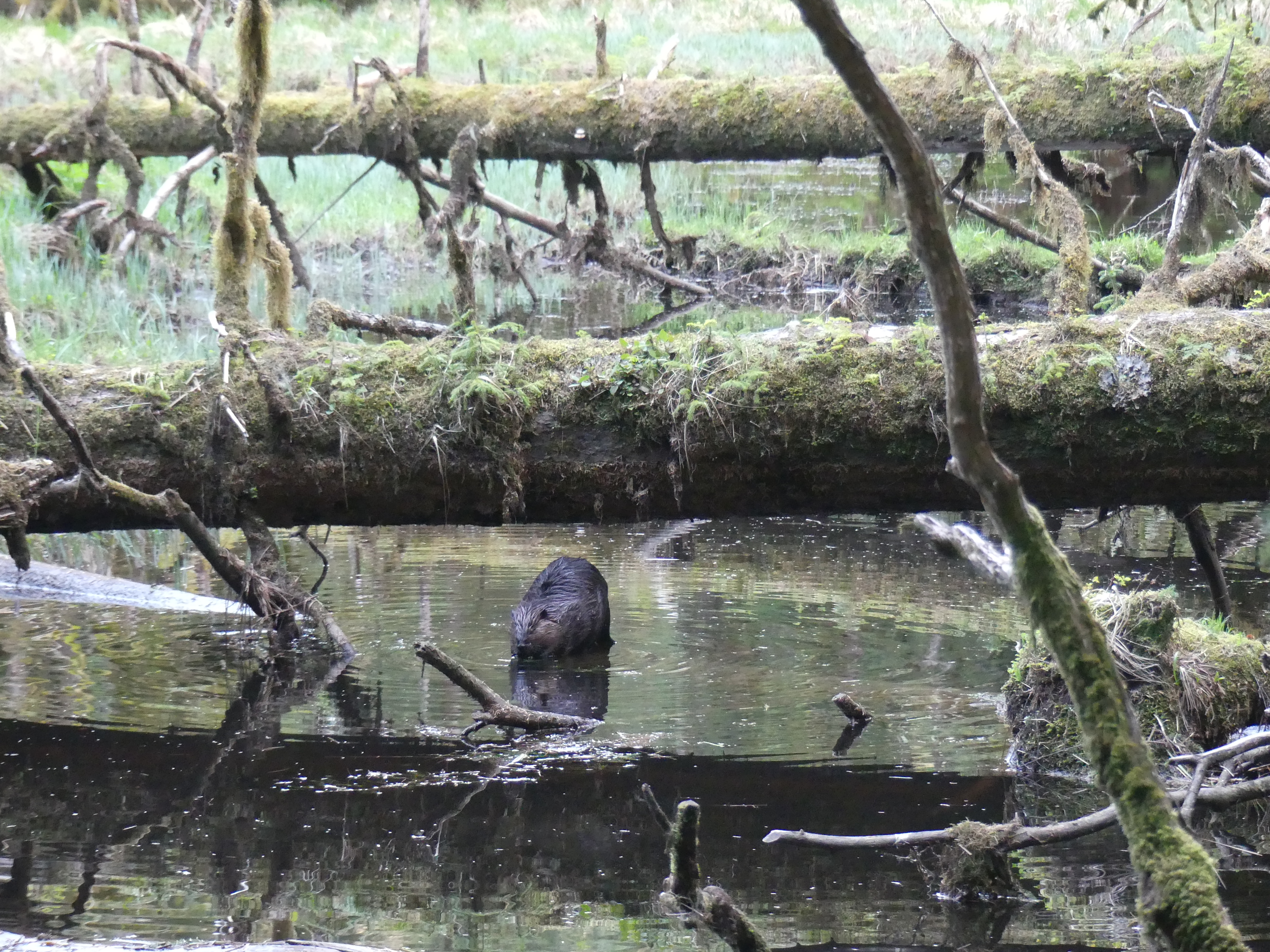


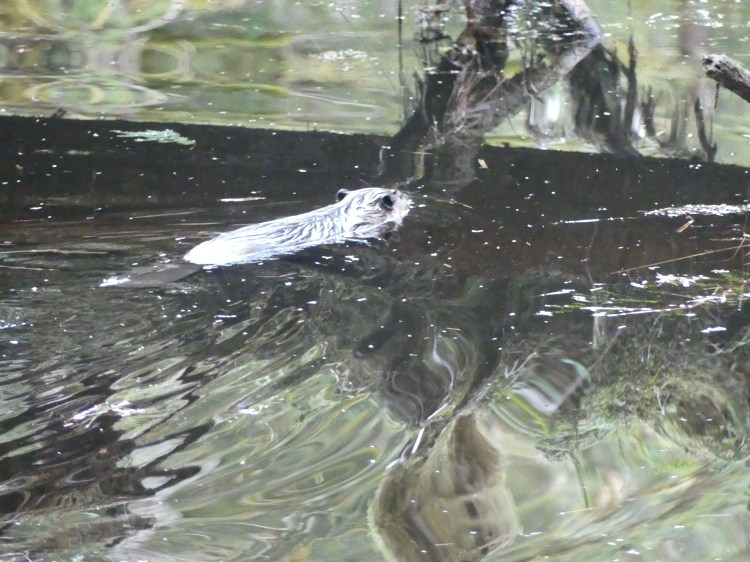
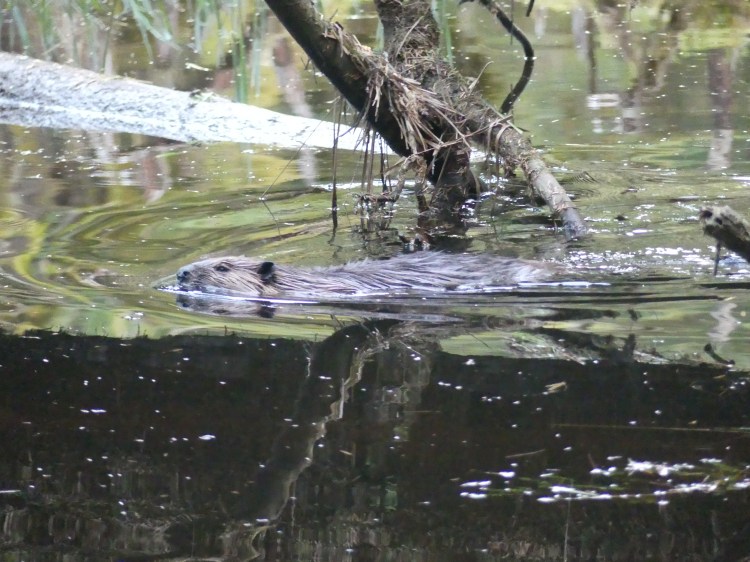




Set another camera here; this should be a good location, especially in the late summer and early fall when the creek is full of salmon.



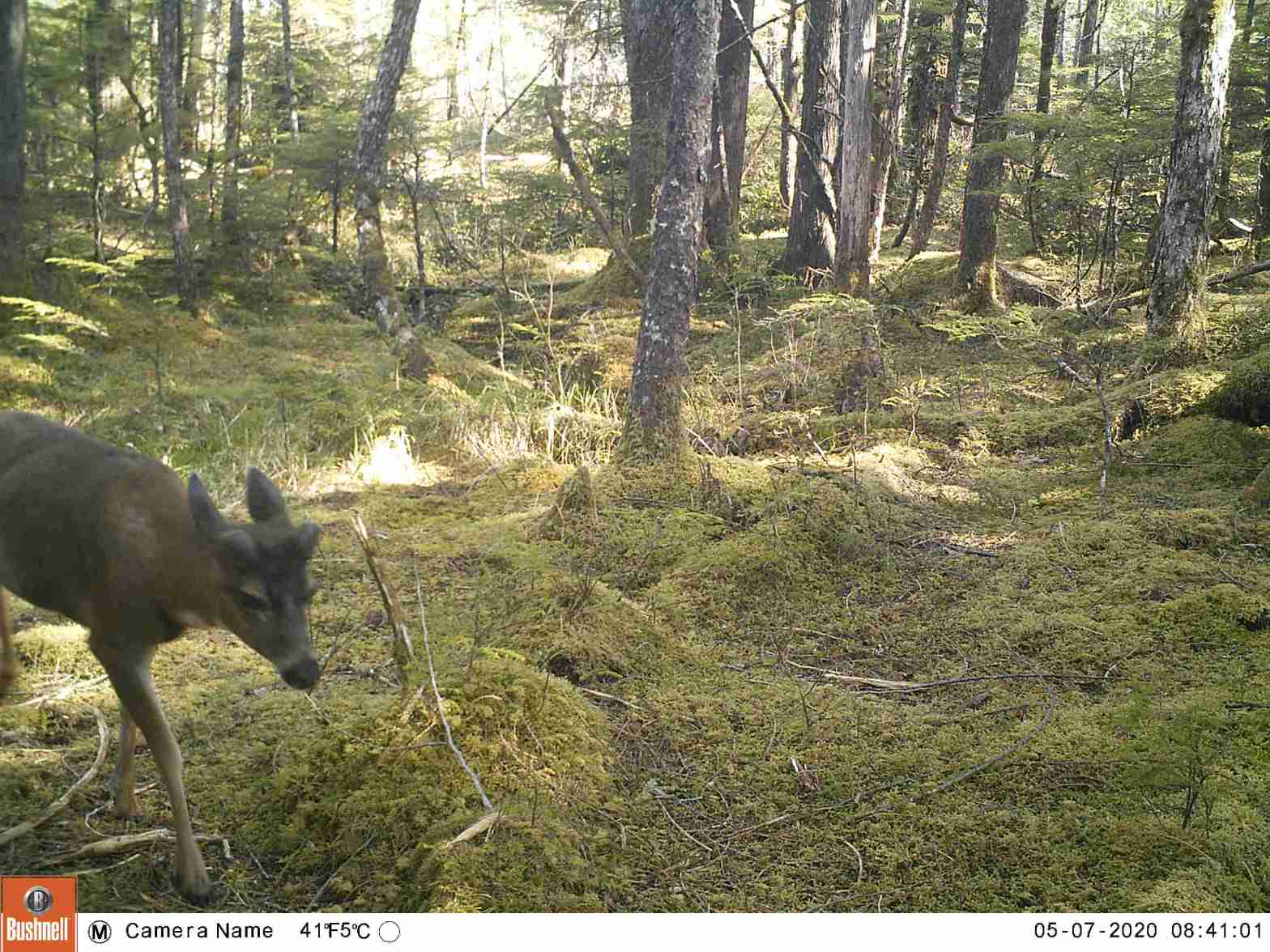
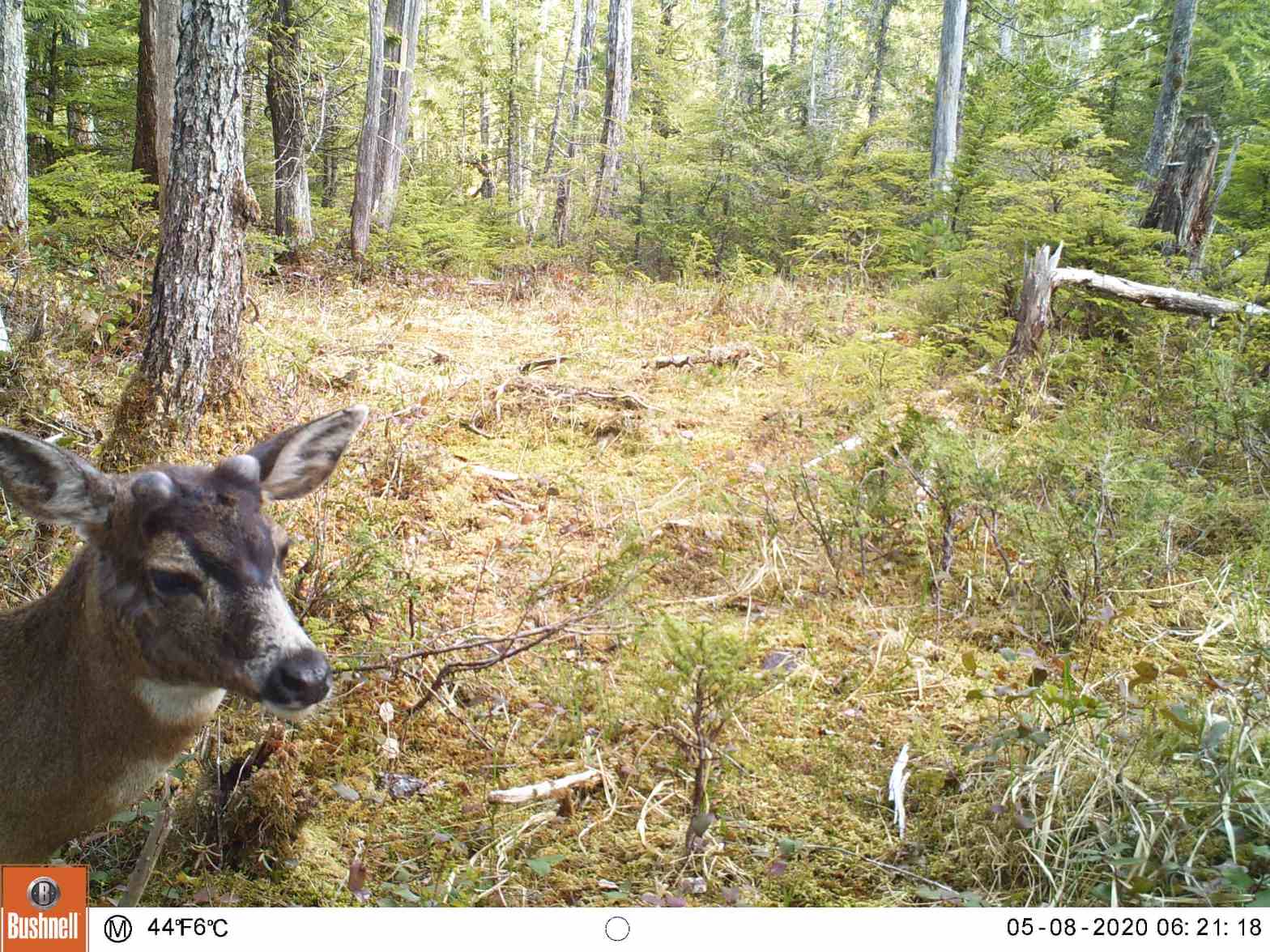
Got my first buck of the year who’s antlers have started growing! Trailcam photography is going to get more interesting now, finally.

Hopefully I have more than just this guy, I have 8 more SD cards from my last trip to the woods to go through.

 Joe's Trailcams